



Allegro Con Brio - Bernard Haitnik gibt Michael Young seine Analyse und sein Feedback
Das steckt im Kurs
14 Lektionen (3h 22m) · 1 gratis
01. Einführung von Bernard Haitink
Gratis-Lektion1:28
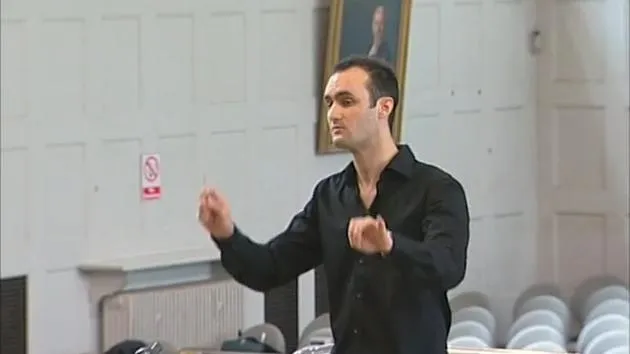
02. Allegro Con Brio - Bernard Haitink gibt Thomas Blunt seine Analyse und sein Feedback
5:54
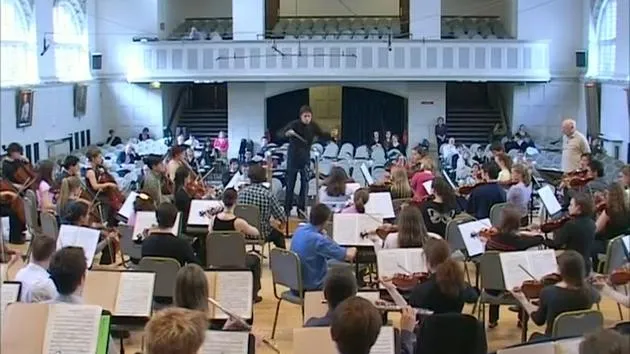
03. Allegro Con Brio - Bernard Haitnik gibt Leo McFall seine Analyse und sein Feedback
9:35
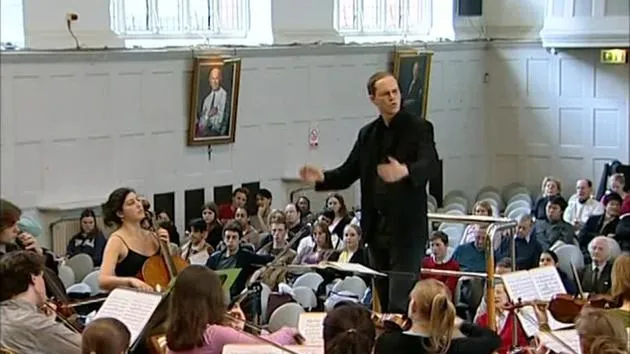
04. Allegro Con Brio - Bernard Haitnik gibt Timothy Henty seine Analyse und sein Feedback
19:49
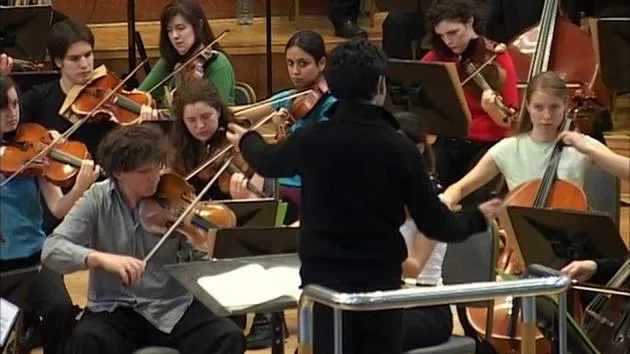
05. Allegro Con Brio - Bernard Haitnik gibt Karim Said seine Analyse und sein Feedback
10:54
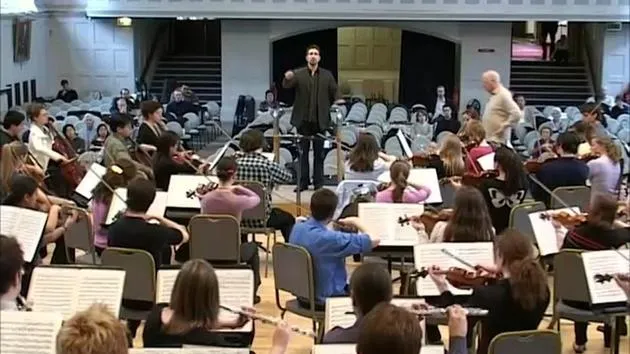
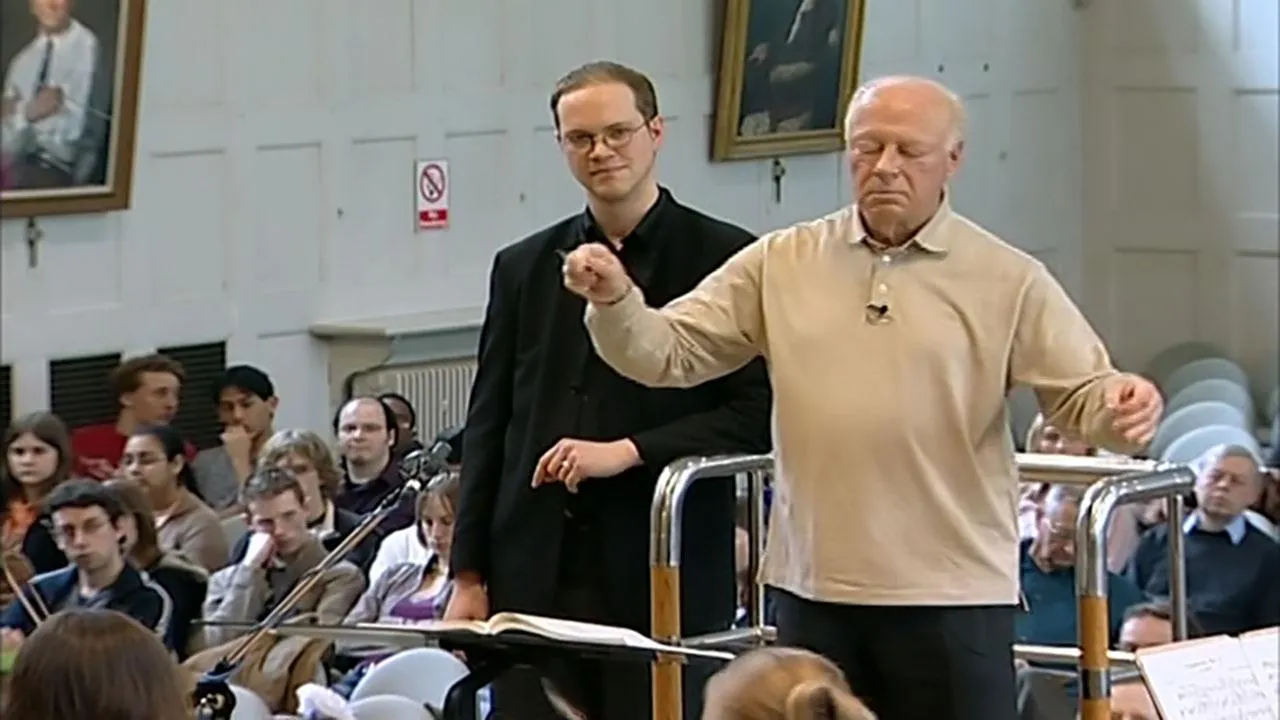
06. Allegro Con Brio - Bernard Haitnik gibt Michael Young seine Analyse und sein Feedback
Du bist hier15:03
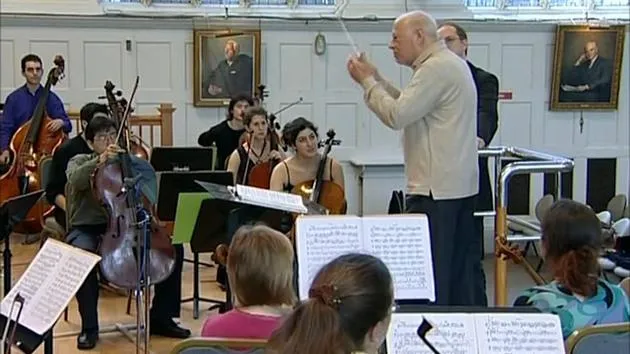
07. Andante - Bernard Haitnik gibt Timothy Henty seine Analyse und sein Feedback
18:49
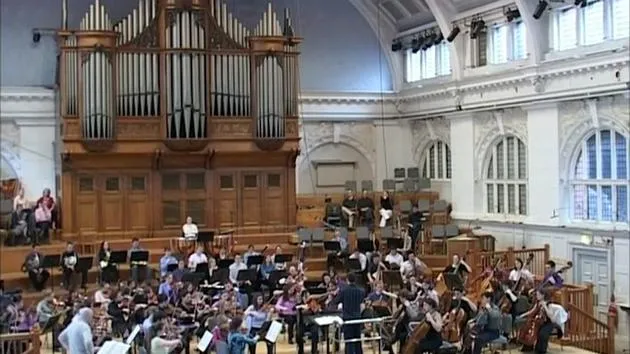
08. Andante – Bernard Haitink gibt Michael Young seine Analyse und sein Feedback
20:20
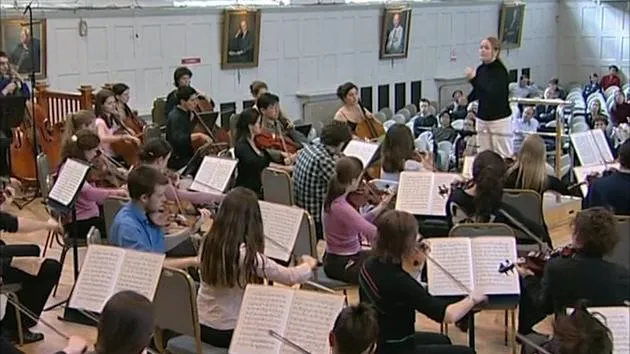
09. Poco Allegretto - Bernard Haitink gibt Anne-Marie Granau seine Analyse und sein Feedback
21:37
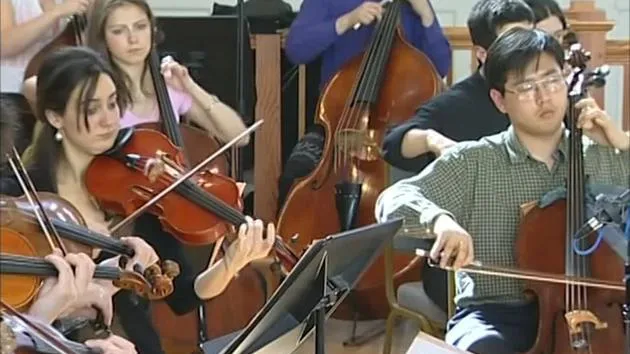
10. Poco Allegretto - Bernard Haitnik gibt Leo McFall seine Analyse und sein Feedback
7:02
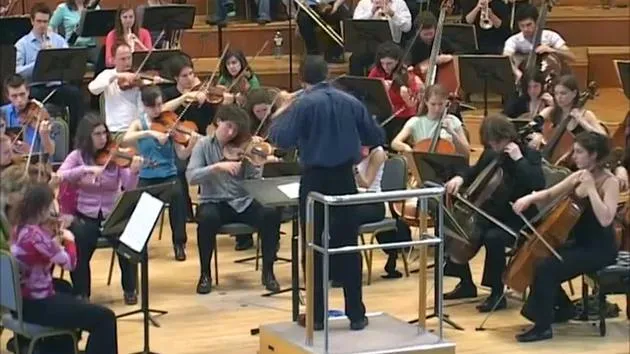
11. Allegro - Bernard Haitink gibt Leo McFall seine Analyse und sein Feedback
10:10
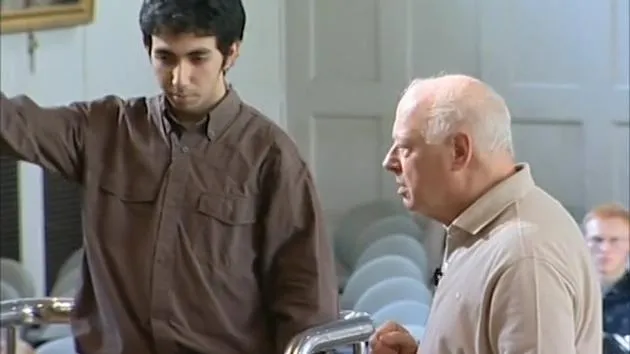
12. Allegro - Bernard Haitink gibt Karim Said seine Analyse und sein Feedback
7:52
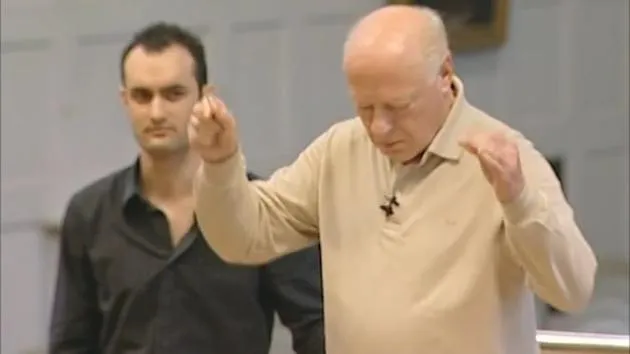
13. Allegro - Bernard Haitink gibt Thomas Blunt seine Analyse und sein Feedback
24:02
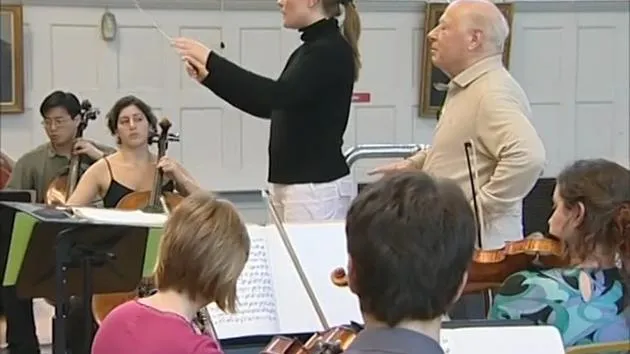
14. Allegro – Bernard Haitnik gibt Anne-Marie hGranau seine Analyse und sein Feedback
29:48
Transkript der Lektion
Music Lesson: First Movement
Location: Letter H
Instructions:
- "Okay, Michael, I would like you to do this once more. And start. Start at letter G."
Suggestions:
- This could have more suggestion. I mean H:
- Un poco sostenuto.
- More, more, more.
- Pianissimo and tangent.
Feedback:
-
"I find when I was standing very close to you... Yeah, by eye."
- I wish you would open up a little bit more.
- I know you have to baton difficult; it's the arm.
- I felt a bit stiff.
-
"Try... Even if you make bigger movements, that doesn't... I wouldn't mind that."
Practice:
-
"Not here. I'm not sure what you're doing, but try once."
-
"Yes. And then you go back to G and I stay in the environment."
-
"I will not pester you the whole time, just this beginning."
-
"Maybe a little bit more wrist would help to relax you a little bit."
- Because that's your problem; you feel a bit tense.
-
"Yeah, once. And then you go back to G. And then I disappear."
-
"Yeah, yeah. Try from the wrist. Here, let it go here, let it go here to the musicians."
- "Yes, there again, please."
Performance Focus:
-
"Okay, Michael. And I'll go from letter G with special attention to H."
- Is that Etodondo and really genic, first of all.
- "And that regards all of you."
-
"He plays that solo many times, very beautiful."
- "And nobody of you, as far as I could judge, has sentiment, loving."
- "It's always as if he's not there. He's there. He plays a solo, and you have to be with him."
- "I am with you, and you play."
Key Observations:
-
"Yeah, I think it's not because I was taught not to stare at the soloist."
- "I'll look at you lovingly."
-
"Okay."
-
"And there's another thing here: the poco ritardando."
- "Then give the clear one where the poco ritardando. You understand what I mean?"
Next Steps:
- "Yes. Okay."
- "Now you will not see me anymore. Well, I'm not sure. But I will try to be absent and let you play."
- "So same place now clear."
Final Instructions:
-
"Oh, Michael, I would like you to do with the orchestra in any case, the last eight bars."
- A little bit more:
- 1, 2, 3, 4, 5, 6, 7, 8, 9.
- A little bit more:
-
"In any case, start 10 bars before..."
- 1, 2, 3, 4, 5, 6, 7, 8, 9, 10, 11.
- "The last 11 bars because the winds all come too late."
- "So you must have authority to let them go in time."
Important Notes:
-
"You have the beats of the strings."
-
"Padam Tie embryonic."
-
"And also the last bar, as always, is Brahms danger when it ebbs away."
-
"The last chord takes endless poles."
-
"There should not be too much and young."
-
"I would like... Because it's difficult. I would like to try it myself."
- "Yes. The last... what did he say? 11 bars."
- "1, 2, 3, 4, 5, 6, 7, 8, 9, 10, 11."
- "Yeah. Off we go."
Reflection:
-
"Yeah, the last 11 bars."
-
"Not perfect, but maybe you..."
- "You know what I..."
- "You see what I have? Yeah, once more."
- "Yeah. Same place. Same place as before."
- "Yes. I like that more. Good."
-
"Okay. This is a difficult movement."
14 Lektionen
3 Std. 22 Min. strukturierte Videolektionen
Erweiterte Videofunktionen
Verlangsamen, Passagen loopen, mitlesen
Handy, Tablet & Desktop
Üben, wo du willst
100 % Zufriedenheitsgarantie
30 Tage Geld-zurück-Garantie
Lern deinen Guru kennen
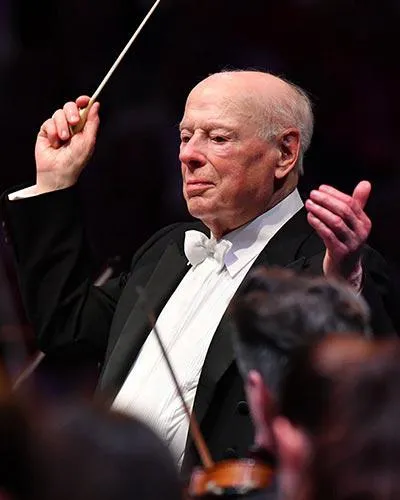
Lern deinen Guru kennen
Mit einer internationalen Dirigentenkarriere, die sich über mehr als fünf Jahrzehnte erstreckt, zählt der in Amsterdam geborene Bernard Haitink zu den gefeiertsten Dirigenten unserer Zeit.
Zu Beginn der Saison 2006/07 zum Chefdirigenten des Chicago Symphony Orchestra ernannt, hat er viele der bedeutendsten Orchester der Welt geleitet, darunter über 25 Jahre an der Spitze des Royal Concertgebouw als dessen Musikdirektor. Darüber hinaus hatte Herr Haitink zuvor die Posten des Musikdirektors der Staatskapelle Dresden, der Royal Opera, Covent Garden, der Glyndebourne Festival Opera und des London Philharmonic inne. Er ist Conductor Laureate des Royal Concertgebouw Orchestra, Conductor Emeritus des Boston Symphony Orchestra und Ehrenmitglied der Berliner Philharmoniker. Als Gastdirigent trat er häufig bei den Berliner Philharmonikern, den Wiener Philharmonikern, dem Bayerischen Rundfunk, dem London Symphony und anderen führenden Orchestern auf.
Herr Haitink hat umfangreich für die Labels Phillips, Decca und EMI aufgenommen, darunter Gesamtzyklen der Sinfonien von Mahler, Bruckner und Schumann mit dem Concertgebouw sowie ein umfassendes Repertoire mit den Berliner und Wiener Philharmonikern und dem Boston Symphony Orchestra. Seine jüngsten Aufnahmen sind die Gesamteinspielungen der Sinfonien von Brahms und Beethoven mit dem London Symphony Orchestra beim Label LSO Live. Seine Diskografie umfasst zudem zahlreiche Opernaufnahmen mit der Royal Opera und Glyndebourne sowie mit dem Symphonieorchester des Bayerischen Rundfunks und der Staatskapelle Dresden. Herrn Haitinks Aufnahme von Janáčeks Jenufa mit dem Orchester, den Solisten und dem Chor des Royal Opera House, Covent Garden, wurde 2004 mit einem Grammy Award für die beste Opernaufnahme ausgezeichnet.
Herr Haitink hat zahlreiche internationale Auszeichnungen in Anerkennung seiner Verdienste um die Musik erhalten, darunter sowohl einen Ehrenritterschlag als auch den Order of the Companions of Honour im Vereinigten Königreich sowie den Hausorden von Oranien-Nassau in den Niederlanden. 2007 wurde er von Musical America zum „Musiker des Jahres“ ernannt.
In seinem MusicGurus-Kurs über Brahms' Sinfonie Nr. 3 schöpft Haitink aus einem Leben am Dirigentenpult, um dich tief in die Partitur zu führen — wie er ihre Phrasierung, Balance, ihr Tempo und ihre Struktur formt — und gewährt seltene Einblicke, wie einer der großen Dirigenten eine Brahms-Sinfonie liest und zum Leben erweckt, ob du nun Dirigent, Orchestermusiker oder leidenschaftlicher Zuhörer bist.







