



Analyse der Klaviersonate Nr. 32 in c-Moll, Op. 111
Das steckt im Kurs
4 Lektionen (2h 40m) · 1 gratis
Transkript der Lektion
Music Lesson: Opus 111 in C Minor
And now we come to the very last of the sonatas, the rightly famous Opus 111 in C minor.
Overview of the Movements
Two movements, very much contrasting:
- First Movement: Starts with a Maestoso, a majestic introduction, like three colossal pillars of a cathedral, representing the three different possibilities of a diminished seventh chord:
- The first one
- The second one
- The third one
Together, they give us all the 12 tones that are possible in Western music, if we don't count the quarter notes. So, in a way, we have a forerunner of 12 Tone Music here.
Rhythm and Influence
The rhythm, this double dotting, is reminiscent of French overtures. For example, consider Bach's B Minor Suite.
"This is the French overture that we know from Lully and Rameau, and later from Bach."
Of course, maestoso is the instruction. There is not one word by Beethoven that would suggest slowness here. It's not adagio, it's not largo, and it's not grave.
Tempo Debate
So, why are so many people playing this so slowly?
- It's a good question.
- I cannot answer that, only that it should not be played too slowly.
Because we will come to that point slowly after many excursions. The intervals are getting nearer and nearer to each other, creating a sense of danger with no space left.
At last, we have reached the dominant of C minor, where we encounter these lamenting dissonances.
Following Beethoven's Intentions
Now, an octave lower, when this written-out tremolo starts with demisemiquavers, it's very important to follow exactly what Beethoven writes. He doesn't write an accelerando here; he could have written one had he wanted one.
At this point, we are at the threshold of total collapse, heading towards the beginning of the main part of this movement, which is allegro, comprillo et appassionato:
- So, an allegro with a lot of ?lan and passion.
- The main note values are semiquavers in the allegro.
Repetition and Structure
Those diminished seventh chords will appear again and again in this movement. However, as a section, this introduction maestoso will never return in that way.
It is very different from Opus 13, the Pathetic Sonata.
"You see, again we have the dimness and those exclamations."
Beethoven looks back to an earlier work, but formally he's abandoning it. The introduction is structurally different; it returns many times during the movement.
Let me do this again, going into the allegro.
This is not a small X position. It fits much more into the generally accepted picture of Beethoven: the titanic fighter who battles with the materials, fighting with the elements.
Exploring Musical Juxtaposition
Strictly musically speaking, it's fascinating to observe the juxtaposition of long passages in unison against long passages in counterpoint; it's really the absolute opposite of counterpoint when he writes unisons. Yet it's very dramatic, spiced with fantastically lively accents at the most unexpected places.
Because they are almost unmusical accents, I think he uses this to create the utmost tension.
Thematic Development
Then we have the theme orchestrated, like woodwind chords with little expressive retards. From there, we hear variations:
- Inverted counterpoint and the theme appearing in the bass.
- The second subject feels like an island, a flat major island.
Remember the Pathetic Sonata? We had the island as a second movement.
Variation Dynamics
However, the second theme doesn't last very long; he takes a little time and gives us a variation. The music slows down to adagio, but it comes back with the next outburst, returning to this inferno.
The music becomes incredibly orchestral. We hear the whole symphony orchestra, like the woodwinds in the opening movement of the Ninth Symphony.
Unique Exposition Repeat
We have an exposition repeat here, the only exposition repeat in all the last three sonatas.
It's interesting to observe Beethoven's approach to repeats:
- In earlier sonatas, he repeats expositions, development, and recapitulation according to convention.
- In later sonatas, he is more rhapsodic.
We performers must adhere to his intentions, word by word. If you don't like a certain repeat, then don't play the piece.
Now, let's revisit the development section. What's the opposite of unison? Strict counterpoint. Here he gives us another short fugato.
Fugato Connections
We had a fugato in Opus 109 in the A-flat Sonata. Here, we just have elements of a fugue. The first four notes turned around create a mysterious unison.
"To me, they represent the four letters of Bach's name, B-A-C-H."
The Final Movement
As we reach the threshold of the recapitulation, we hear the main rhythm again with those diminished seventh chords.
"He screams it out to the world in quadruple octaves."
After the recapitulation, it feels as though a huge storm has passed, leaving the elements tired.
Beethoven's Achievements and Gratitude
And again I ask: when does Beethoven introduce the subdominant? Here, at the very end, we see how touching it is to have this different color of the F minor subdominant.
Then, without a break, we come to the final movement in all Beethoven sonatas. Nothing could be more moving, more touching, more wonderful than this Arietta.
Reflective Closing
Indeed, to me, words fail, and you have to be somebody like Thomas Mann to express this music with words.
In that novel, in a little German town, a music teacher named Kretschmark gives wonderful classes, explaining why Beethoven didn't write a further movement.
None of these were his last words in piano music, as he still wrote the Bagatelles Opus 126 and the glorious Diabelli Variations.
"Why do I play this? Because, let's listen to the theme of the Arietta."
This theme sounds like a trivial joke. Beethoven managed to create a masterpiece from Diabelli's very trivial, almost silly theme.
Final Thoughts on Simplicity
In German, we would say Habe Dank, thank you. The instruction of Beethoven is adagio molto simplice e cantabile, so slowly, very simply, and in a singing way.
However, the crucial point is that it must evolve simply, what's the opposite of simplicity? Complexity.
Now, as I play the second part...
Again, there's a symmetrical structure:
- Eight bars of the first half, repeated twice.
- Eight bars of the second half, also repeated twice.
The time signature is 9/16. Listen carefully as it starts with an upbeat.
"So, that's how you have to listen to it."
The strategy differs from Opus 109; the first three variations constitute a certain unity beneath a single arch. Beethoven keeps the pulse of this 9/16.
The Dance of Variations
As the variations progress, he uses smaller and smaller note values. The first one is like a lullaby, a rocking iambic figure. The second variation employs half of these note values, reminiscent of all Menschen werden Br?der in the Ninth Symphony.
The next variation features even smaller note values, transitioning from the Apollonian to the Dionysian.
"And still, I resist the analogy of thinking of jazz and the pre-echo of boogie woogie."
After the ecstasy of Variation Three, a huge change of mood occurs, darkness arrives, featuring little triplets in the bass, evoking the murmuring of the ocean.
Embracing Light and Shadow
Above that, we hear fragments of the theme, like sighs. Expecting mechanical repetition, Beethoven shifts from darkness into light.
This dualism of darkness and light, earth and heavens with stars emanating, creates an unreal landscape, transcendent music.
Again we remember the melody and relate it to this musical exploration, reaching for the stars.
As we get to the second part of the variation, we revert to darkness, filled with suspensions.
The Evaporating Arietta
At the end of this Arietta, Beethoven, much like in Opus 110, throws away the chains of the variation and enters a free fantasy.
Then, this thrill, Beethoven's remarkable invention, comes to the forefront.
"This is Beethoven's invention, for he was such a magnificent pianist."
He ingeniously combines trills and melodies, utilizing double and triple trills, not merely decorative but deeply expressive.
Closing Reflections
Let's go back to the end of Opus 111.
This moment, where the trill turns to minor, is quintessential.
As we vacillate from E-flat major back to C major, the series of modulations leads to a low point.
Here, we feel very close to home, bringing back our Arietta theme, infused with a sense of gratitude and forgiveness.
Forgive me for sounding sentimental, but it's a poignant example of a human spirit overcoming adversity and creating extraordinary music.
At its conclusion, it conveys a message of hope, a believer's music that reaches the end of this Arietta, evaporating into the air:
Sa, sa, sa.
4 Lektionen
2 Std. 40 Min. strukturierte Videolektionen
Erweiterte Videofunktionen
Verlangsamen, Passagen loopen, mitlesen
Handy, Tablet & Desktop
Üben, wo du willst
100 % Zufriedenheitsgarantie
30 Tage Geld-zurück-Garantie
Lern deinen Guru kennen
Lern deinen Guru kennen
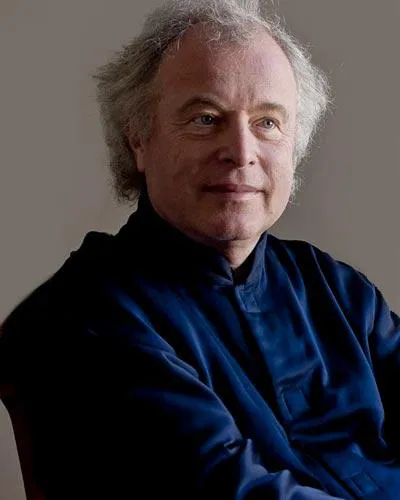
András Schiff ist eines der herausragendsten Mitglieder einer Generation ungarischer Pianisten, die in den Jahren nach dem Zweiten Weltkrieg geboren wurden, neben Künstlern wie Zoltán Kocsis, Dezso Ránki und Jenő Jandó. Aus dieser bemerkenswerten Gruppe hat Schiff das größte internationale Ansehen erlangt, nicht nur wegen seiner Entscheidung, seine Karriere außerhalb Ungarns zu verfolgen, sondern auch dank seines fein abgestuften Anschlags und eines beeindruckenden Gedächtnisses, das es ihm erlaubt, in Konzerten und Aufnahmen große Teile des Œuvres eines Komponisten darzubieten.
Schiff wurde am 21. Dezember 1953 in Budapest geboren und studierte beim ungarischen Komponisten Pal Kadosa und bei Ferenc Rados (die beide auch Kocsis und Ránki unterrichteten) sowie beim englischen Cembalisten George Malcolm. Sein Debüt gab er mit 19 Jahren in Budapest, gefolgt von Konzertauftritten in ganz Europa und den Vereinigten Staaten. Sein Ansehen wuchs mit preisgekrönten Auftritten beim Moskauer Wettbewerb 1974 und beim Leeds Festival 1975.
András Schiff arbeitet mit den meisten großen internationalen Orchestern und Dirigenten, doch die meisten seiner Aufführungen von Klavierkonzerten von Bach, Beethoven und Mozart leitet er selbst. 1999 gründete er sein eigenes Kammerorchester, die Cappella Andrea Barca, mit der er jährlich als Dirigent und Solist arbeitet, ebenso wie mit dem Philharmonia Orchestra und dem Chamber Orchestra of Europe.
Schiffs Stil, in dem sich ein ungewöhnlich sensibler Anschlag mit einem Gespür für kontrapunktische Klarheit verbindet, hat ihn zu einem der bedeutendsten Bach-Interpreten der Gegenwart gemacht. Er hat die gesamte Klaviermusik von Bach eingespielt, ebenso wie die vollständigen Sonaten und Sonatenfragmente von Franz Schubert, dessen introspektive Klaviermusik Schiffs Temperament gut entspricht. 2009 vollendete er bei ECM einen Beethoven-Sonatenzyklus, und 2011 wurde ihm der Schumann-Preis der Stadt Zwickau für seine Interpretation und Förderung der Musik Schumanns verliehen. 2001 begann Schiff, die Werke Bachs erneut zu betrachten und neu einzuspielen. Neben den erwartbaren mitteleuropäischen romantischen Werken nimmt die Musik von Béla Bartók und Leos Janácek einen prominenten Platz in Schiffs Repertoire ein.
In seinen MusicGurus-Kursen zu Schuberts Moments Musicaux Nr. 1, 3 und 4, Bachs Partita Nr. 2 und Beethovens späten Klaviersonaten holt Schiff dich in diese interpretatorische Welt – er teilt, wie er über Stimmführung, Anschlag, kontrapunktische Klarheit und Struktur denkt, damit du diesen Werken am Klavier echte Tiefe und echtes Verständnis verleihen kannst.







