



Einführung von András Schiff zu Beethovens Sonaten
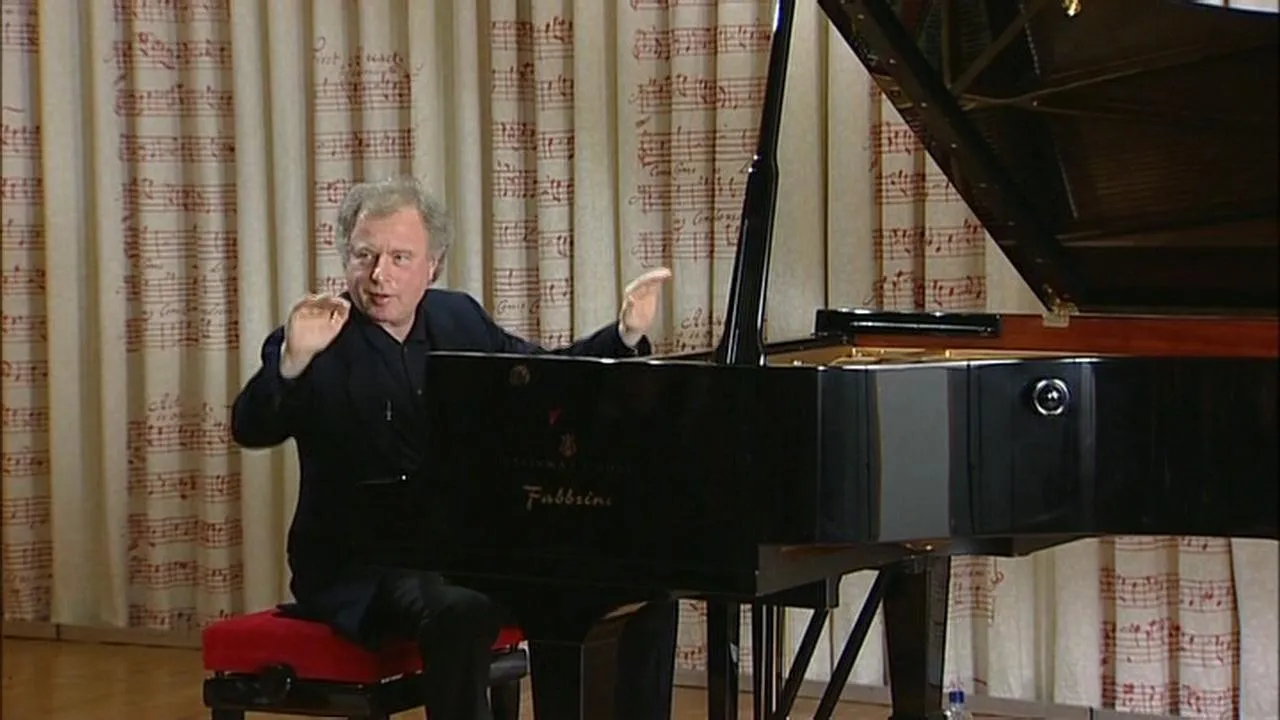
Das steckt im Kurs
4 Lektionen (2h 40m) · 1 gratis
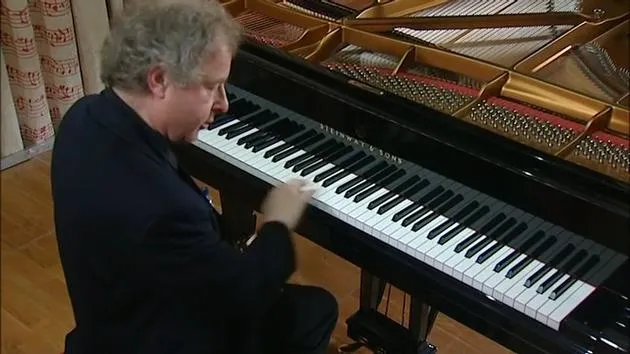
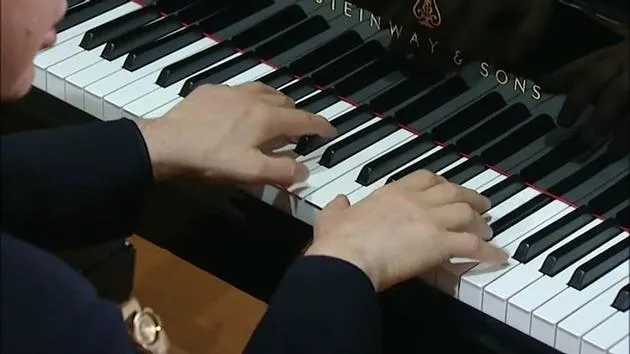
Transkript der Lektion
Exploring Beethoven's Last Three Sonatas
Good evening, ladies and gentlemen.
We are here to explore the wonders and the mysteries of Beethoven's last three of his 32 piano sonatas. As you all know, Hans von B?low called the 32 Beethoven Sonatas the "New Testament of keyboard music," with Bach's Well-Tempered Clavier, 48 Preludes and Fugues, being the "Old Testament."
It's a very fitting metaphor. The last three sonatas have been surrounded by a sense of mystery and reverence. You could ask why that is. I would say that too much reverence is always better than too little.
On Studying Beethoven's Sonatas
Being in one of the best music schools in the world, it's appropriate to say that there are probably many students among us today, or in this building, who are studying these sonatas and playing them in concert.
In my modest opinion, there is nothing wrong with studying this music when you are young, but I would dare to say: wait a little bit before you play it in public. There is no rush.
This brings us back to respect and reverence. Beethoven lived a relatively long life, relatively long for his time.
- Consider Mozart, who only lived 35 years
- Or Franz Schubert, who only lived 31
- Compared to these lives, or indeed to other artists earlier, like Pergolesi or Arriaga, or Masaccio, a painter, who all died in their 20s,
- Beethoven's 57 years meant that this had not been a short life.
There is a real sense of evolution in Beethoven's output. The two genres in his oeuvre, the piano sonata and the string quartet, run through his life like a red thread. He started writing piano sonatas in the early 1790s, just a little over 20 years old.
He was a phenomenal pianist himself, a wonderful improviser. These were works he wrote basically for his own use, as he came from Bonn in Germany and settled in the imperial city of Vienna. This was his way, his calling card, to get into Viennese society through these piano sonatas.
The Early vs. Late Sonatas
There are many years between the first sonata, which begins in F Minor, Opus 2, Number 1. I assume that all of you know the Beethoven sonatas. This is a starting point. I'm sure you do, but you cannot know them well enough.
This is my purpose and journey here and now. I have spent many years, decades, with Beethoven and I found that before the age of 50, I was just not ready to tackle the 32 sonatas. This may be subjective; other people may find they are ready for it younger.
But certainly, these last sonatas, not just because they are the last ones. They are not accidentally the last sonatas. Beethoven knew very well when he wrote Opus 111, which is only in two movements.
It is not an unfinished sonata, as some musicologists speculate. I would agree with one of the great writers of all time, Thomas Mann, who, in his great novel Dr. Faustus, offers a poetic explanation of why Beethoven's last piano sonata had to be in two movements. Anything further would be redundant and superfluous.
On Performing Late Sonatas
I'm always a little surprised when I see young pianists opening a recital with one of these late sonatas. To me, it's a sign of a lack of understanding or a lack of respect. As I said, too much respect is better than too little.
What can you play after Opus 111? Certainly not Rachmaninoff, certainly not Chopin, with all respect. These are not composers that can be mentioned on the same day with Beethoven and not with the late sonatas.
As Thomas Mann said in Dr. Faustus, he finished the last movement, the arietta of Opus 111, and there is nothing more to be said. I find also in a concert, when I play the last three sonatas, there is nothing more to be played.
There shouldn't even be applause. There should be just silence. We should all sit together in silence and think about what we heard. Hopefully, it is something wonderful and valid. I believe this is music that can make people, at least for a short period, better human beings.
The Essence of Beethoven
That was certainly Beethoven's purpose: the expression of a man who lived long and suffered terribly. We must never forget Beethoven's deafness, a condition that is terrible for anyone, but especially so for a musician and a great composer.
The miracle is how Beethoven turned this around and made a virtue out of a terrible shortcoming. He had an extraordinary inner hearing. I will try to show you the kinds of ideas and sounds he discovered, which I believe he couldn't have done had he had perfectly healthy hearing.
The Last Three Sonatas
The three sonatas, Opus 109, 110, and 111, are in E major, A-flat major, and C minor. So, two in the major key and one in the minor. There had been earlier piano sonatas of Beethoven, three under the same opus number.
The first one begins with F minor, then the second and third. We had F minor, A minor key sonata, then A major and C major, two in the major. Similarly, in Opus 10, there had been three sonatas, and in Opus 31, also three sonatas.
In the world of string quartets, you are all familiar with the three Rasumovsky quartets, Opus 59, again, three huge works under the same opus number. There were also practical reasons for this since Beethoven had to write for the publisher and had to sell his works.
- There's a pragmatic side; he had to make his living from composition.
- It is very hard to make a living off composition even today. Ask any composer.
However, when it comes to these late sonatas, Beethoven refuses to unite them under the same opus number because he feels they are just too important.
He wrote these works between the years of 1820 and 1822, and we know from his sketches that he worked on these sonatas simultaneously. They constitute a triptych, similarly to Wolfgang Amadeus Mozart's last three symphonies or Franz Schubert's three piano sonatas.
The Magical Quality of Three
There is something about the magical quality of the number three. We can see that in all cultures, and we find it in fairy tales, there are always, you know, three princes and three princesses. Dante's La Divina Commedia has three parts: Inferno, Purgatorio, and Paradiso, all written in Cantos, which are in three-line verses.
So, everything is three. And there is a German saying: "Alle guten Dinge sind drei." So, all good things come in three. So do these sonatas.
4 Lektionen
2 Std. 40 Min. strukturierte Videolektionen
Erweiterte Videofunktionen
Verlangsamen, Passagen loopen, mitlesen
Handy, Tablet & Desktop
Üben, wo du willst
100 % Zufriedenheitsgarantie
30 Tage Geld-zurück-Garantie
Lern deinen Guru kennen
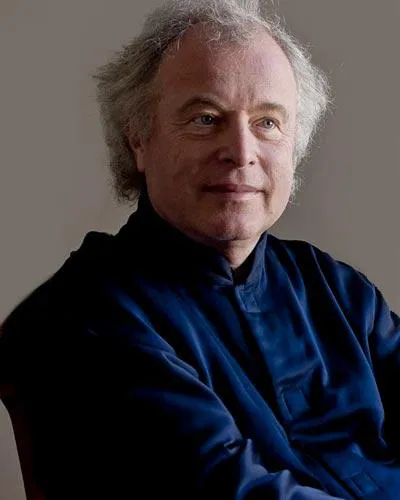
Lern deinen Guru kennen
András Schiff ist eines der herausragendsten Mitglieder einer Generation ungarischer Pianisten, die in den Jahren nach dem Zweiten Weltkrieg geboren wurden, neben Künstlern wie Zoltán Kocsis, Dezso Ránki und Jenő Jandó. Aus dieser bemerkenswerten Gruppe hat Schiff das größte internationale Ansehen erlangt, nicht nur wegen seiner Entscheidung, seine Karriere außerhalb Ungarns zu verfolgen, sondern auch dank seines fein abgestuften Anschlags und eines beeindruckenden Gedächtnisses, das es ihm erlaubt, in Konzerten und Aufnahmen große Teile des Œuvres eines Komponisten darzubieten.
Schiff wurde am 21. Dezember 1953 in Budapest geboren und studierte beim ungarischen Komponisten Pal Kadosa und bei Ferenc Rados (die beide auch Kocsis und Ránki unterrichteten) sowie beim englischen Cembalisten George Malcolm. Sein Debüt gab er mit 19 Jahren in Budapest, gefolgt von Konzertauftritten in ganz Europa und den Vereinigten Staaten. Sein Ansehen wuchs mit preisgekrönten Auftritten beim Moskauer Wettbewerb 1974 und beim Leeds Festival 1975.
András Schiff arbeitet mit den meisten großen internationalen Orchestern und Dirigenten, doch die meisten seiner Aufführungen von Klavierkonzerten von Bach, Beethoven und Mozart leitet er selbst. 1999 gründete er sein eigenes Kammerorchester, die Cappella Andrea Barca, mit der er jährlich als Dirigent und Solist arbeitet, ebenso wie mit dem Philharmonia Orchestra und dem Chamber Orchestra of Europe.
Schiffs Stil, in dem sich ein ungewöhnlich sensibler Anschlag mit einem Gespür für kontrapunktische Klarheit verbindet, hat ihn zu einem der bedeutendsten Bach-Interpreten der Gegenwart gemacht. Er hat die gesamte Klaviermusik von Bach eingespielt, ebenso wie die vollständigen Sonaten und Sonatenfragmente von Franz Schubert, dessen introspektive Klaviermusik Schiffs Temperament gut entspricht. 2009 vollendete er bei ECM einen Beethoven-Sonatenzyklus, und 2011 wurde ihm der Schumann-Preis der Stadt Zwickau für seine Interpretation und Förderung der Musik Schumanns verliehen. 2001 begann Schiff, die Werke Bachs erneut zu betrachten und neu einzuspielen. Neben den erwartbaren mitteleuropäischen romantischen Werken nimmt die Musik von Béla Bartók und Leos Janácek einen prominenten Platz in Schiffs Repertoire ein.
In seinen MusicGurus-Kursen zu Schuberts Moments Musicaux Nr. 1, 3 und 4, Bachs Partita Nr. 2 und Beethovens späten Klaviersonaten holt Schiff dich in diese interpretatorische Welt – er teilt, wie er über Stimmführung, Anschlag, kontrapunktische Klarheit und Struktur denkt, damit du diesen Werken am Klavier echte Tiefe und echtes Verständnis verleihen kannst.







