



Using strings to effect your sound
With
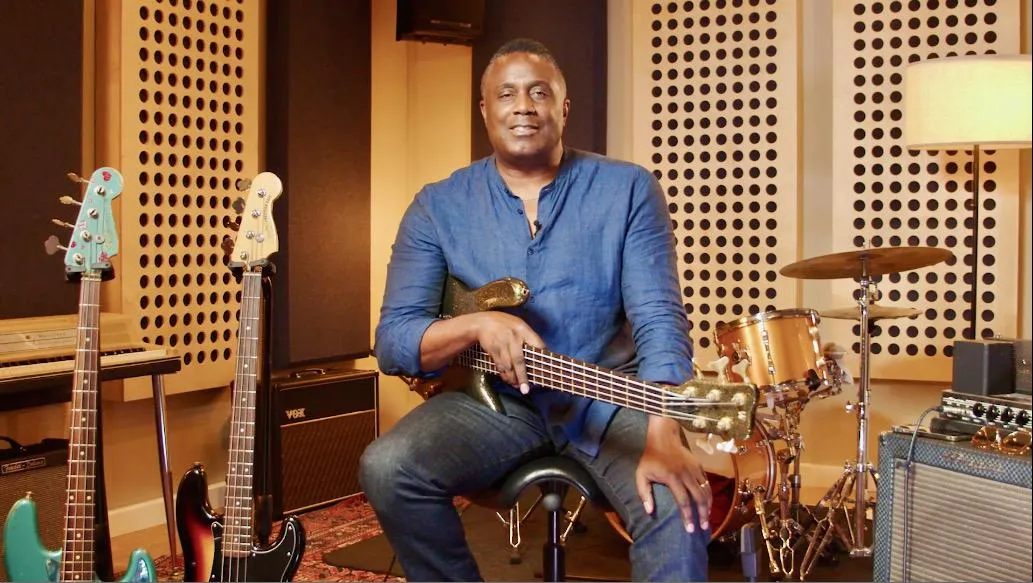
Andrew LevyAndrew Levy explains how your strings shape your funk bass tone - flatwound versus roundwound, and how fresh or worn strings change the sound.
What's in the course
14 lessons (1h 7m) · 1 free
Lesson transcript
Understanding Bass Strings and Sound
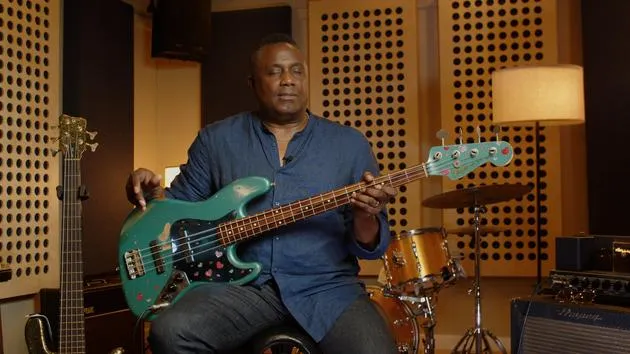
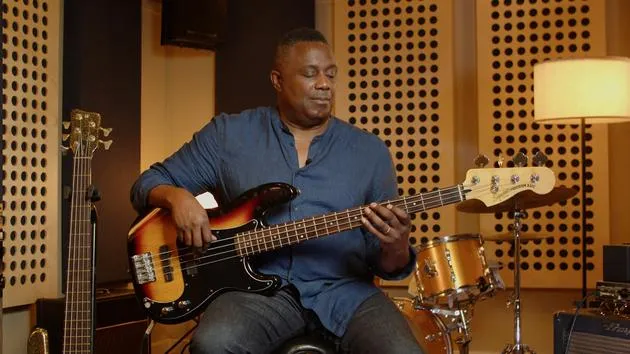
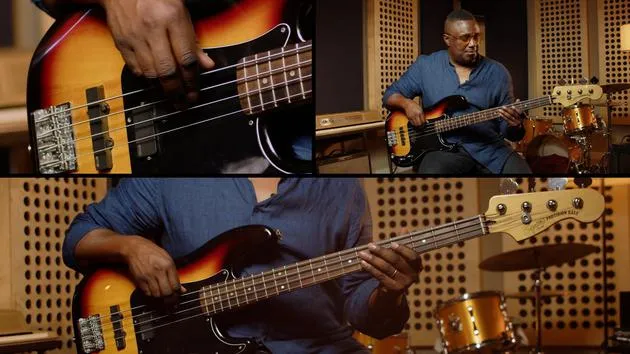
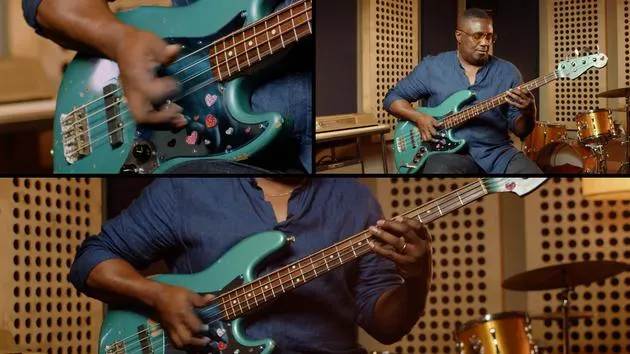
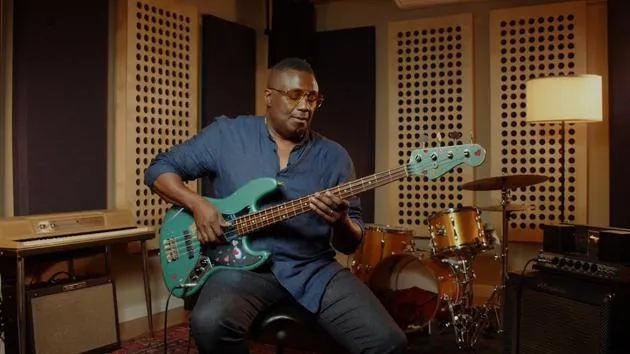
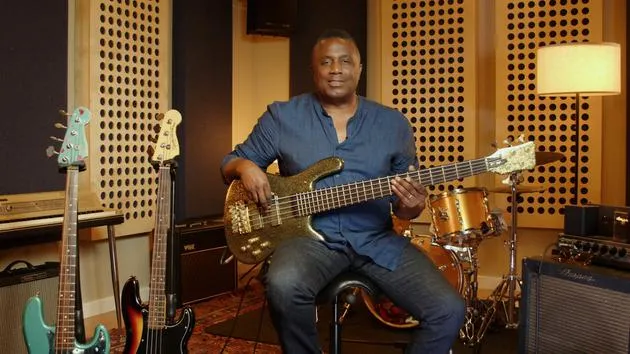
The biggest part of your sound on the bass is actually the strings. I know there are thousands of different types of strings and brands, from nickel-plated options to even colored strings, which you might have seen in some of my performances.
String Longevity
On the bass, I don't tend to change my strings until they start sounding a bit dull. Once, I had a set of strings that lasted a couple of years, and they sounded really good, especially on the kind of dubbier sounds.
For example, there's a song called Brother Sister, where everything's rolled off, the highs are rolled off, and it features very short notes. Even if you have a round wound string, you can still make it sound quite dubby.
Types of Strings
-
Flat Wound Strings:
- Tend to have that really dead sound, very dubby and deep.
- Nice for slower songs, but most of our songs aren't like that.
-
Round Wound Strings:
- These are the scrapey ones.
- Essential for the classic jazz Fender jazz sound.
I can play anything, just get used to playing anything. You might get called up for a session where they have a bass that fits the track's sound. It's crucial to learn to adapt and pick up any bass and make it sound good.
The sound of the strings can dictate what type of bass line you're playing, making strings incredibly important. However, it's essential not to get too hung up on the technical aspects. Just play funkily.
Focus on Playing
As I've mentioned before, don't get too caught up in the technical side of your bass, whether it's the controls or the strings. It's really about your hands, your soul, and your spirit.
During touring, sometimes you don't get a long sound check. The singer might have a problem with a microphone, or the brass section needs more in their monitors.
- Preparation Tips:
- Flat Settings: I usually keep everything flat on the amp. I've trained myself to have all my controls on full.
- Focus on Playing: This way, there's less to fiddle around with, allowing you to focus on playing, especially during sound checks.
If your guitar isn't bright enough or bassy enough, you can still make it sound bassy without having time to adjust your amp or get the right EQ.
Techniques for Adjusting Sound
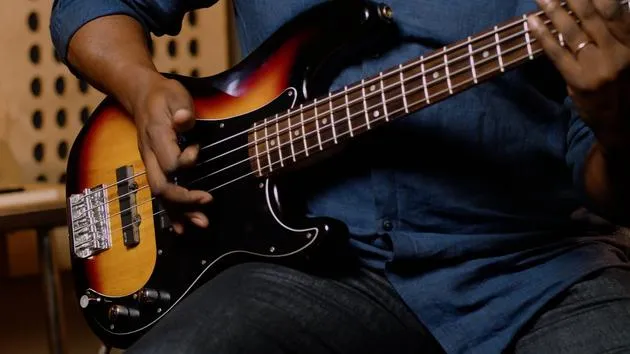
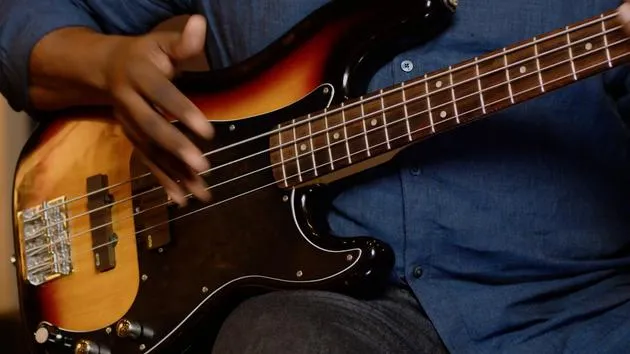
I have a little technique I use to increase the sound of the bass on the low strings by playing away from the pickup. Here's how:
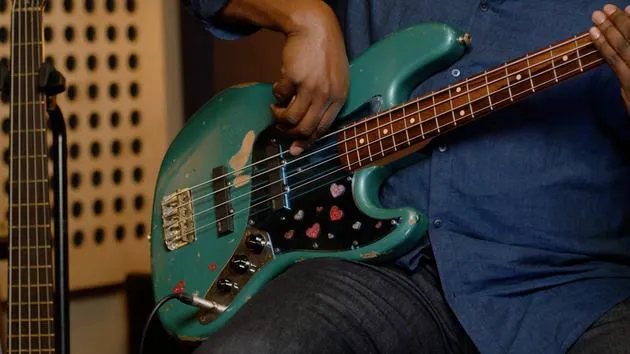
- I play with this part of my finger to soften the sound by taking away the transient.
- I started using this technique out of desperation during a song, I think it was B and H, when I realized that my treble was too high.
- I moved my hand away from the pickup while playing on the scratch plate, effectively deadening the sound with my fingers.
As you adjust your position:
- Playing higher up the neck will give a brighter sound.
- Playing lower down results in a softer tone.
Exploring Different Sounds
You have the ability to change your sound without adjusting the EQ or volume.
- Playing Techniques:
- If a part requires a plucky and syncopated sound, playing down here will yield a short, dry sound.
- Conversely, if you're playing a lead or chorus part, you can achieve a different tonal quality by positioning your fingers better and using more skin on the strings.
In summary, the way you approach your bass and string choice is crucial, but the fundamentals of your sound come from your technique, so harness that power for a wide variety of tones!
14 lessons
1h 7m of structured video lessons
Advanced video features
Slow down, loop a passage, follow along
Mobile, tablet & desktop
Practise wherever you are
100% satisfaction guarantee
30-day money-back guarantee
Meet your guru
Meet your guru
Andrew Levy is a founder member and bass player in the acid jazz group The Brand New Heavies. He also co-writes the band's original music with Simon Bartholomew.
A self-taught musician, Andrew grew up listening to reggae, British pop radio, classical music, jazz funk, 'Lovers' Rock', jazz fusion, house, American folk, hip hop and acid house - an eclectic mix from growing up in London with parents from Jamaica!
His biggest musical influences are James Brown, Vicki Anderson, Earth Wind and Fire, Level 42, Shalamar, Chic, Herbie Hancock, George Duke, George Benson, Marvin Gaye, Thin Lizzy, Miles Davis and Phyllis Hyman.
In his course, Andrew shares what really makes funk bass move: how to lock in with the drums, sit deep in the pocket, and hold down the groove as part of a tight rhythm section - the feel, the discipline and the choices behind the sound that made The Brand New Heavies famous.
Andrew lives in South West London with his wife Melissa and their two sons.
About The Brand New Heavies
The Brand New Heavies, founded by Andrew Levy and Simon Bartholomew, pioneered the acid jazz music scene of the 1990s.
The pair met at school in Ealing in 1985 before going on to release top 10 albums in the UK, US and Japan, and in 2020 they signed a seven-figure deal with international label Edel Records to produce five new albums, with the first out in spring 2022.
The band prides itself on playing real instruments - not computer-synthesised or programmed music. As a result, they have many renowned fans within the music industry, including super producer Mark Ronson, who cites their eponymous album as one of his top 10 records of all-time and credits the band with turning him onto funk from rock music back in the early 1990s. Ronson produced the band's 2019 cover of Kendrick Lamar's "These Walls", which gained a cult following on Radio 2.







