



Preparing for a writing session
With
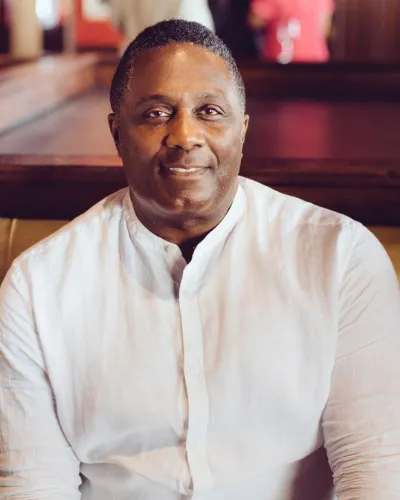
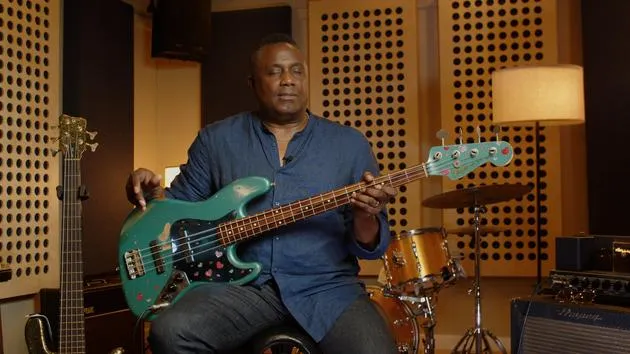
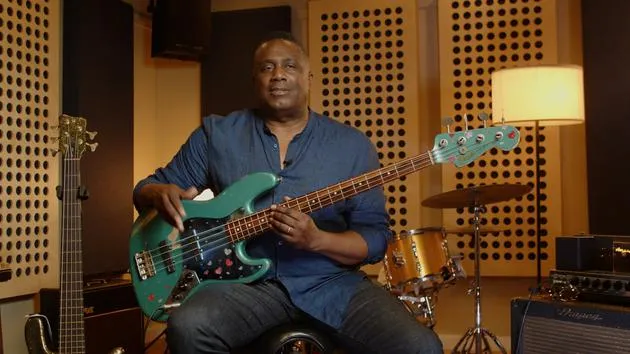
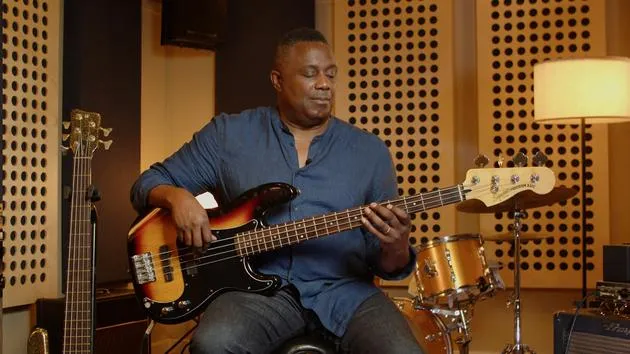
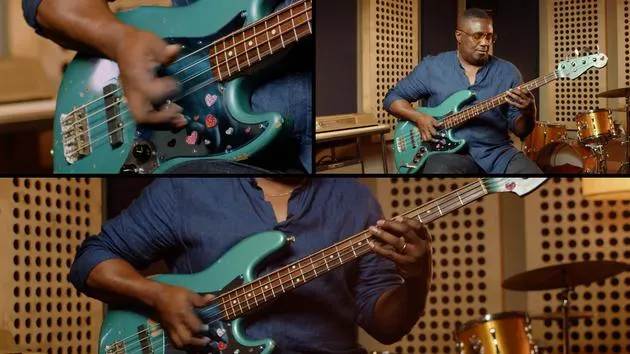
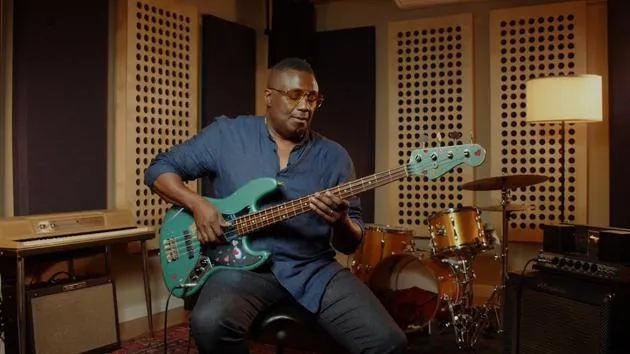
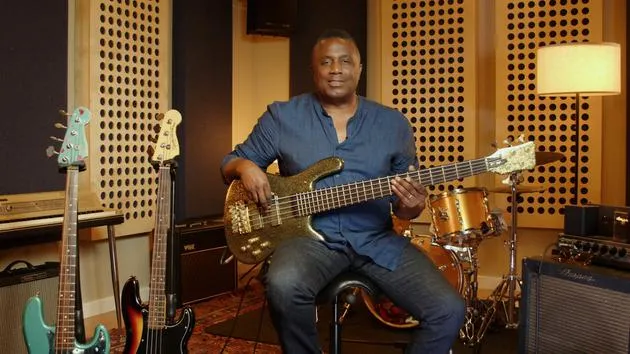
Andrew LevyAndrew Levy shares how he preps for a bass session, from getting the track in advance to living with it for a few hours so it becomes second nature before you play.
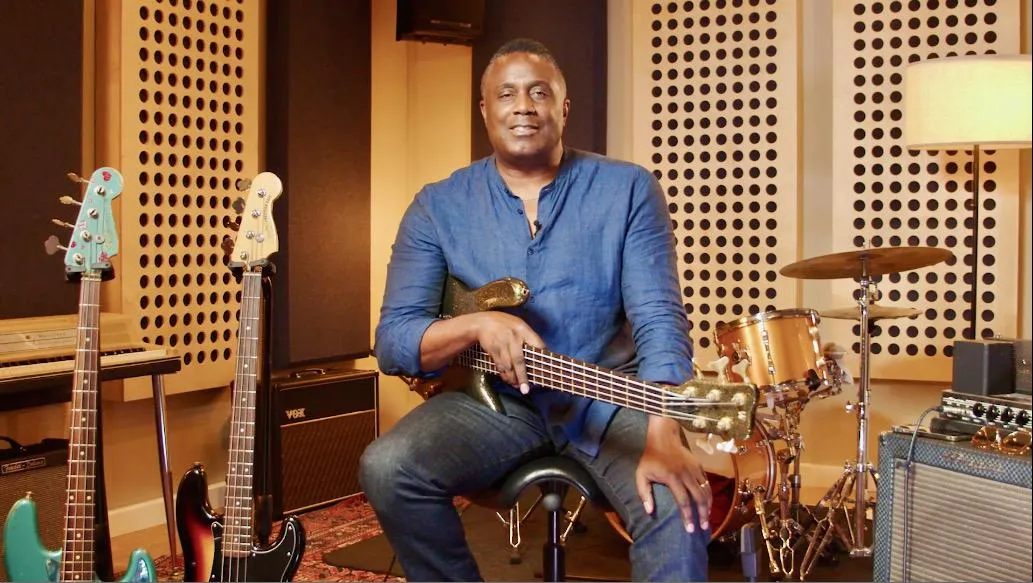
What's in the course
14 lessons (1h 7m) · 1 free
Lesson transcript
Preparing for a Music Session
So if you're lucky, you might get asked to do a session, whether it's online or you're physically going to the studio.
Preparation Tips
-
Listen to the Track
It's always good to prepare by listening to the track beforehand. You don't always get a chance to do that, which can be quite scary sometimes. -
Request an MP3
If you get sent an MP3 of a song, maybe ask for the song without the bass so you can fill in. If it's already got a bass on it, just EQ the bass out and listen to it.- Listen to it a good few times before you actually start playing over it, unless you have a quick idea.
- The best thing is to have it on in the kitchen or in your bedroom for a few hours until it becomes part of you.
-
Playing Ideas
After familiarizing yourself with the track, sit down and play what comes to you. Do a few ideas that you like and send them back.
Studio Session Dynamics
I haven't done a lot of sessions in that way, but usually my sessions consist of going to a studio, listening to the track, and then working out the bass line on the spot.
Key Points to Remember
-
Stay Prepared
Be prepared so there are no surprises. You should also listen to the producer or the writer; they may have a specific bass line they want you to copy. -
Bring Supplies
Bring your lunch so you don't have to jet out of the studio and waste studio time. Bring a drink, too, and just enjoy the experience. -
Equipment Essentials
When it comes to equipment, bring everything.- This way, you'll have what you need for any particular sound or effect.
- Bring all your pedals and cables so you don't have to ask them or the engineer to grab something for you.
- Being self-contained makes you easy to work with, which will likely lead to more sessions in the future.
Personal Experiences
A couple of my earlier sessions were for Jamiroquai and Soul to Soul.
Jamiroquai Experience
I remember sitting at home in probably 1988 when JK had just been signed. Jamiroquai had just been signed to Acid Jazz, but they didn't have a regular bass player. I got a call from Jamiroquai's manager saying, "Get to the studio; the bass player doesn't know what he's doing."
- I jumped in my car, drove down, and walked into the studio. It was obvious that the other bass player was trying to do too much.
- I kept it simple with an octave-pedaling thing.
This turned out to be a big song for him, and I was thankful they liked the very fast turnaround I managed.
Soul to Soul Experience
Another important session was likely in late '87 or maybe even '86. I was very inexperienced, playing in a studio with just one bass and one cable. I didn't even own an amp and had to borrow one.
- Listening is crucial.
- The first thing that came to mind was a bluesy bass line, influenced by my background in jazz.
- It was similar to a favorite bass line by Bootsy Collins from a big James Brown single.
I was called by Jazzy B from Soul to Soul. When I walked into the studio, there was Nelly Hooper programming an incredible beat. I was 18 and had minimal gear.
- I switched my idea around from a Bootsy Collins bass line and extended it a bit.
- The groove needed to be longer, which made a difference.
The Importance of Groove
It's amazing what you can do with three notes. I explored the neck and played around with the rhythm.
- They liked it because it stood out compared to what they usually heard from synthesized bass.
- A more organic bass line adds life to a drum machine groove.
Remember, feel the groove and feel the drum line, hopefully, the bass line will come to your head!
14 lessons
1h 7m of structured video lessons
Advanced video features
Slow down, loop a passage, follow along
Mobile, tablet & desktop
Practise wherever you are
100% satisfaction guarantee
30-day money-back guarantee
Meet your guru
Meet your guru
Andrew Levy is a founder member and bass player in the acid jazz group The Brand New Heavies. He also co-writes the band's original music with Simon Bartholomew.
A self-taught musician, Andrew grew up listening to reggae, British pop radio, classical music, jazz funk, 'Lovers' Rock', jazz fusion, house, American folk, hip hop and acid house - an eclectic mix from growing up in London with parents from Jamaica!
His biggest musical influences are James Brown, Vicki Anderson, Earth Wind and Fire, Level 42, Shalamar, Chic, Herbie Hancock, George Duke, George Benson, Marvin Gaye, Thin Lizzy, Miles Davis and Phyllis Hyman.
In his course, Andrew shares what really makes funk bass move: how to lock in with the drums, sit deep in the pocket, and hold down the groove as part of a tight rhythm section - the feel, the discipline and the choices behind the sound that made The Brand New Heavies famous.
Andrew lives in South West London with his wife Melissa and their two sons.
About The Brand New Heavies
The Brand New Heavies, founded by Andrew Levy and Simon Bartholomew, pioneered the acid jazz music scene of the 1990s.
The pair met at school in Ealing in 1985 before going on to release top 10 albums in the UK, US and Japan, and in 2020 they signed a seven-figure deal with international label Edel Records to produce five new albums, with the first out in spring 2022.
The band prides itself on playing real instruments - not computer-synthesised or programmed music. As a result, they have many renowned fans within the music industry, including super producer Mark Ronson, who cites their eponymous album as one of his top 10 records of all-time and credits the band with turning him onto funk from rock music back in the early 1990s. Ronson produced the band's 2019 cover of Kendrick Lamar's "These Walls", which gained a cult following on Radio 2.







