



Learn how to play You Are The Universe
With
Andrew LevyAndrew Levy breaks down the bass line to the Brand New Heavies' 'You Are The Universe' - how he wrote it and how the verse and chorus differ.
What's in the course
14 lessons (1h 7m) · 1 free
01. Learn how to play You Are The Universe
You are here9:59
Lesson transcript
Breakdown of "You Are the Universe"
Introduction
This is one of my favorite songs, You Are the Universe. Lots of people like it, and it goes down so well on stage. I'm going to break it down a little and talk about how it was written and what it sounds like today.
Writing the Song
I wrote the bass line over a drum loop back in probably '95 or '96. I then added the chords, very simple, as I'm not a pianist, but I knew what they should sound like in my head. Later, Neil Cowley played the piano on the album version, giving it more life and adding nuances that differentiated the verse from the chorus.
Verse and Chorus Dynamics
A classic thing the Brand New Heavies do is keep the verse very similar to the chorus, with slight changes. In this song, the verses get a little darker, but it's a lovely song. It was written like clockwork; I had all the music ready on a cassette tape and sent it to Syeda Garrett, my co-writer. She incidentally wrote "Man in the Mirror" for Michael Jackson, so she's an absolute professional songwriter.
We flew her over just to write songs for Shelter, which is where this song is from. She ended up being our singer, and it was a match made in heaven. She wrote another song called "Sometimes" and taught us a lot.
Learning from Syeda
She taught me the importance of slightly changing the bass line on the penultimate bar to give it a beginning and an ending. For example, on the fourth bar, I would use the same bass line but with a slight twist.
Creation Process
I sent the track on a cassette to her while she was staying in Manchester Square. Two days later, she biked the cassette back with written lyrics and the song sung onto the tape machine. I was completely blown away; it was perfect, the lyrics and harmonies were all there. I knew it would be one of our special songs.
Working Through the Song
I want to start working through the song, starting with the chorus since it's what I wrote first.
Chorus Insights
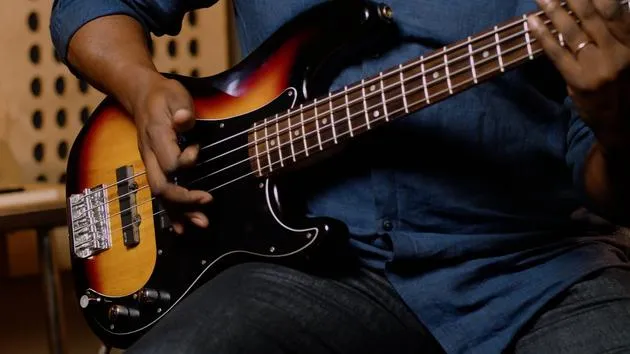
Take a listen to the chorus now. I'm going to point out a couple of grace notes and percussive elements in the bass line that give it that extra funky feel. When I return to the beginning of the bass line, I do a dead note, which acts like another percussion instrument. It helps me shorten the note as well.
Here's how it sounds:
- Clear downbeat
- Offbeat dead note: It's completely dead, with no tune, and gives a great feel.
Breaking Down the Verse
Now, I'm going to work on breaking down the verse, which is similar to the chorus but has half the chord changes. This allows the verse to breathe lyrically and gives the singer a bit of space. Remember, it's about the song and the singer, not just you.
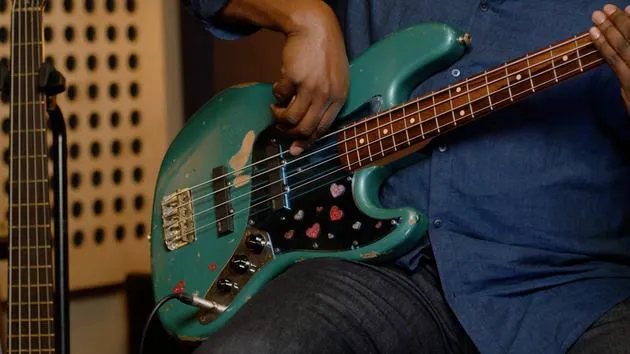
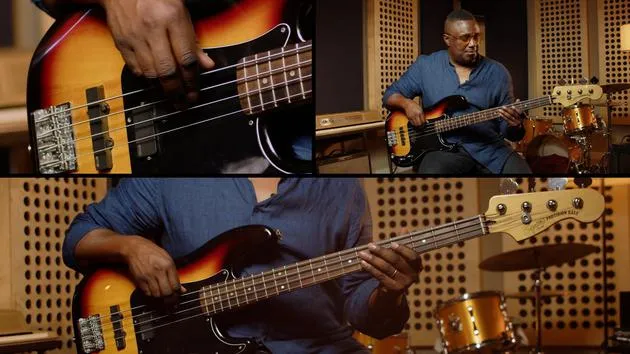
When slowing down on the verse, I employ a lot of in-between notes. This technique partially comes from my background in drumming. It helps with timekeeping and adds a nice sound, similar to playing a conga. I'll play the bass line now, while you listen for the moments when I'm not playing a note and instead hitting the string.
The Solo
This song features one of the only solos I play, which has evolved into more of a section in the song. In the studio, we always had a bass breakdown where everyone goes crazy on the dance floor. This was my moment! I came up with a melody, and everyone loved it.
Saida, who sings lead vocals, introduces me with a line, saying "play it, Andrew." I was initially embarrassed about this, but it has become a cherished part of the song. Even when I hear covers on YouTube, they sing that line with my name, which my kids love.
Playing the Solo
I'll play the solo slowly so you can hear all the nuances and dead notes throughout.
Bass Details
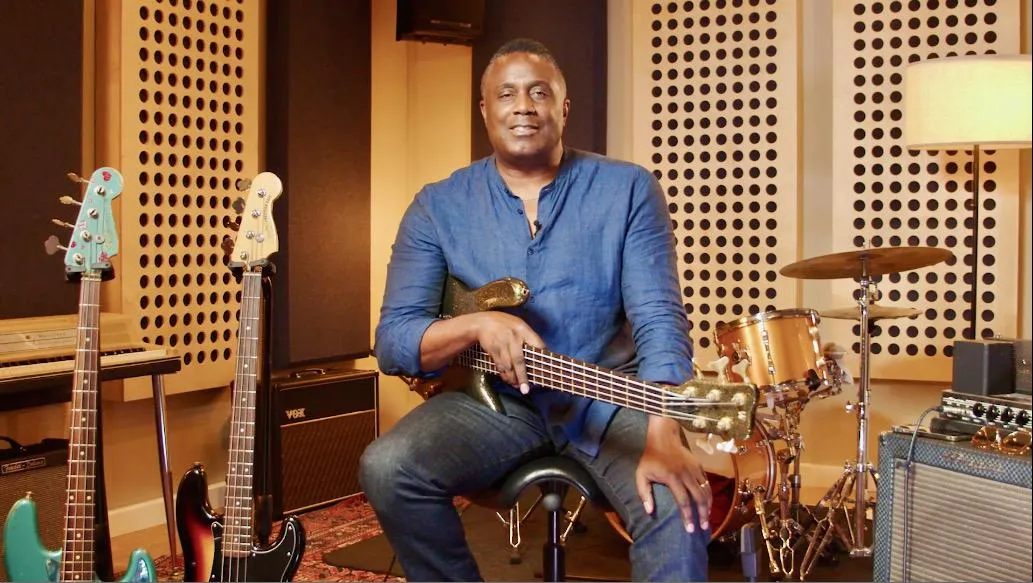
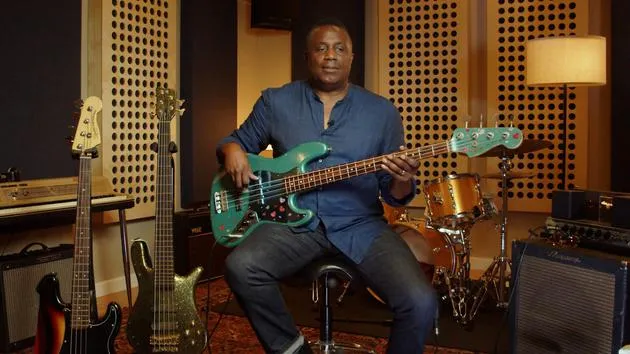
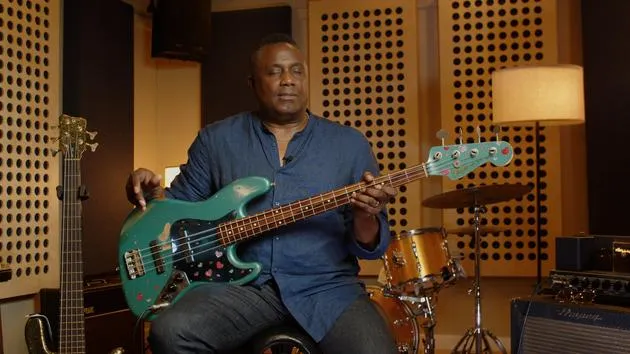
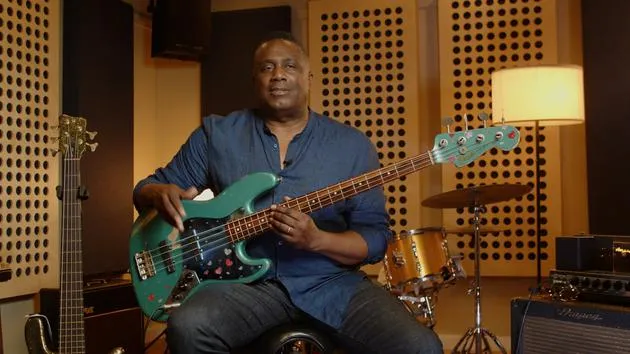
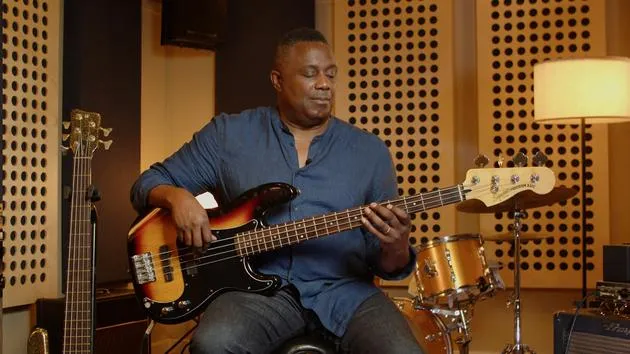
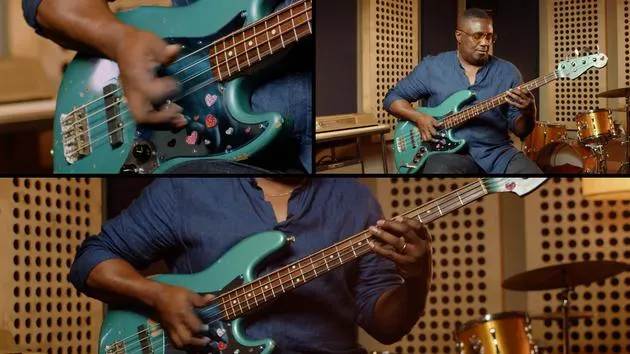
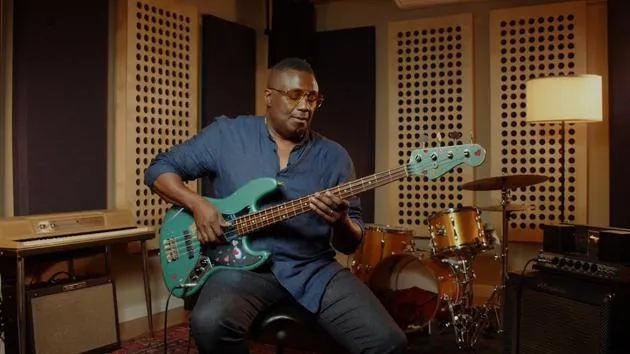
You Are the Universe is one of the few songs where I play a five-string bass, specifically a Warwick Streamer Stage One. It has a unique, cool disco paint job and was custom made for me in '96.
Although it's heavy to play, it's handed to me just before the song starts, usually as our last song of the set. People sometimes laugh, as I only play it once throughout the whole set, but it's a theatrical moment.
Playing Dynamics
I try not to play too low on stage, as it can make the whole place rumble and muddy the sound, especially with a full band. I tend to stay away from the low B string, but using it sparingly can be quite powerful.
14 lessons
1h 7m of structured video lessons
Advanced video features
Slow down, loop a passage, follow along
Mobile, tablet & desktop
Practise wherever you are
100% satisfaction guarantee
30-day money-back guarantee
Meet your guru
Meet your guru
Andrew Levy is a founder member and bass player in the acid jazz group The Brand New Heavies. He also co-writes the band's original music with Simon Bartholomew.
A self-taught musician, Andrew grew up listening to reggae, British pop radio, classical music, jazz funk, 'Lovers' Rock', jazz fusion, house, American folk, hip hop and acid house - an eclectic mix from growing up in London with parents from Jamaica!
His biggest musical influences are James Brown, Vicki Anderson, Earth Wind and Fire, Level 42, Shalamar, Chic, Herbie Hancock, George Duke, George Benson, Marvin Gaye, Thin Lizzy, Miles Davis and Phyllis Hyman.
In his course, Andrew shares what really makes funk bass move: how to lock in with the drums, sit deep in the pocket, and hold down the groove as part of a tight rhythm section - the feel, the discipline and the choices behind the sound that made The Brand New Heavies famous.
Andrew lives in South West London with his wife Melissa and their two sons.
About The Brand New Heavies
The Brand New Heavies, founded by Andrew Levy and Simon Bartholomew, pioneered the acid jazz music scene of the 1990s.
The pair met at school in Ealing in 1985 before going on to release top 10 albums in the UK, US and Japan, and in 2020 they signed a seven-figure deal with international label Edel Records to produce five new albums, with the first out in spring 2022.
The band prides itself on playing real instruments - not computer-synthesised or programmed music. As a result, they have many renowned fans within the music industry, including super producer Mark Ronson, who cites their eponymous album as one of his top 10 records of all-time and credits the band with turning him onto funk from rock music back in the early 1990s. Ronson produced the band's 2019 cover of Kendrick Lamar's "These Walls", which gained a cult following on Radio 2.







