



Scales - Grade 6
James guides you through the Grade 6 piano scales, arpeggios and chords - covering up to four octaves at exam tempo, played straight or swung.
What's in the course
28 lessons (2h 28m) · 1 free
01. Peel Me A Grape, Diana Krall (Performance)
Free lesson6:26
02. Defying Gravity, Wicked (Performance)
2:30
03. The Way It Is, Bruce Hornsby (Performance)
5:12
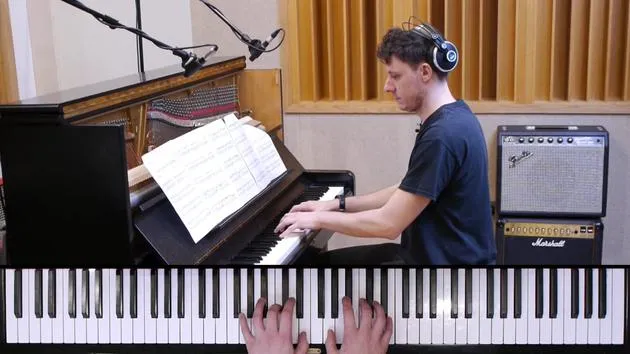
04. Favela, Noam Lederman (Performance)
2:45
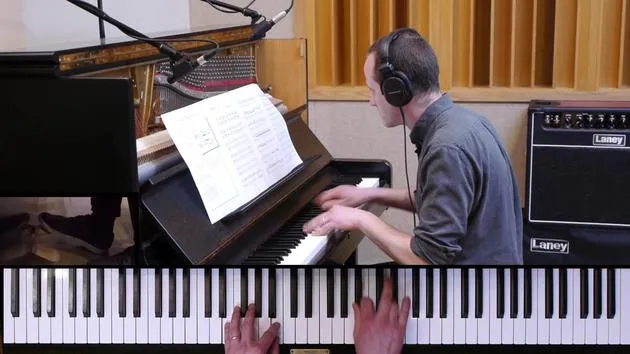
05. Mohair Mountain, Joe Bennett & Kung Fu Drummer (Performance)
3:03
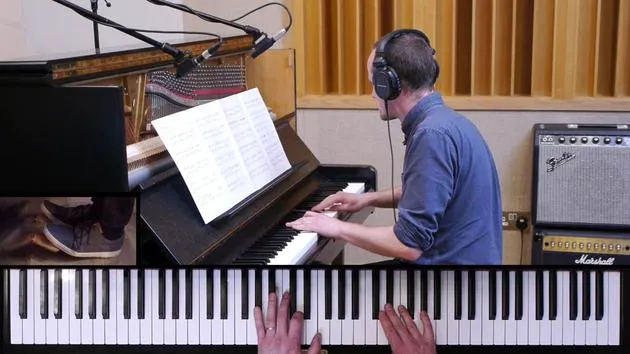
06. Blue Espresso, Deirdre Cartwright (Performance)
2:38
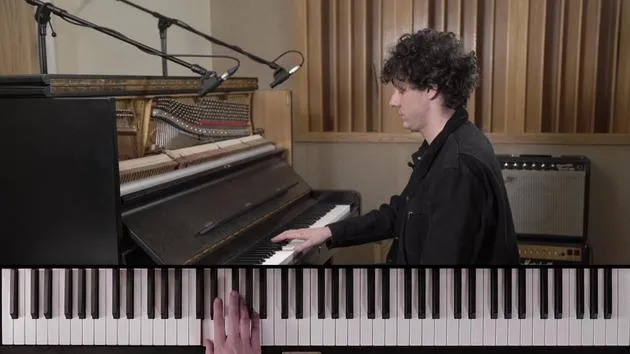
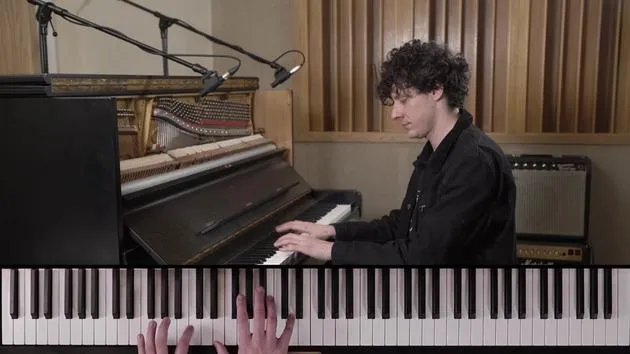
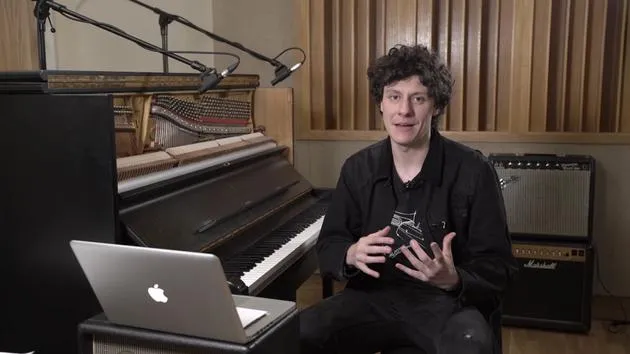
Lesson transcript
Grade Six Technique Exercises
Hey, guys! I'm James and today we're looking at grade six technique exercises. We're focusing on scales, arpeggios, and chords.
Scales
Let's take a look at the scales. We're getting a bit tricky here. The tempo of these is getting quite fast.
- Ideal Performance Tempo: 152 beats per minute as a crotchet.
- This is considered quite fast.
- When playing the quavers, you'll be aiming for double that speed.
Octave Range
We are looking at four octaves, which means we'll be covering a big range of the piano:
- Starting fairly low and working up to the higher ends.
- With these large groups of scales, ensure you are comfortable and have a good arm reach.
Practice Tips
- Take it nice and slow, hand separately, at slower tempos before working together.
- You can be asked to play these straight or swung.
Enharmonic Equivalents
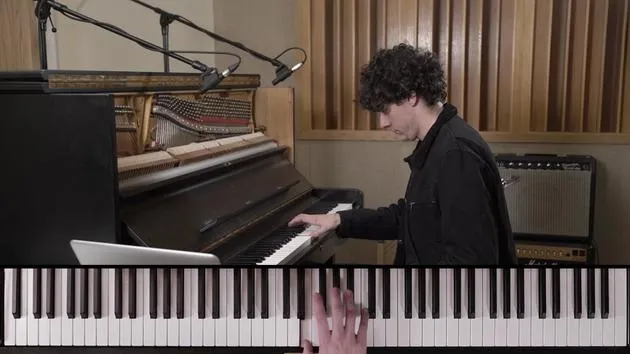
I'm going to play you F sharp major scale and G flat major scale, which are actually the same scale.
- The reason for this is that they are called enharmonic equivalents.
- F sharp is the same as G flat; it just depends on the context of the chord.
- Sometimes, you'll phrase it and write it as an F sharp; other times, as a G flat. No worries, at the end of the day, it's the same note.
Performance Examples
- F sharp major in a straight style.
- G flat major in a swung style.
The swung style uses triplets, think duckity, duckity. It's a little bit rigid and not exactly what true swing sounds like, but it's good enough for the exam. They'll know what you're doing.
Articulations
It's important to be able to play different articulations if you want to swing it your own way, kind of do it a bit more with feeling, you know, in a jazz-type fashion. That's totally fine, but for exam purposes, the basic version is sufficient.
Minor Scales
Now, let's talk about the minor scales.
- We have the E flat natural minor.
- It has six flats, but don't worry; it's actually a fairly straightforward scale.
- This scale is based on the A minor third above it, so E flat natural minor is, in essence, F sharp major.
Similarities in Scales
We also have similarities with:
- D sharp harmonic minor
- E flat harmonic minor
Again, these are enharmonic equivalents and represent the same thing. So when you're learning these scales, don't worry too much about which one is called, they all essentially refer to the same note.
Upcoming Exercises
There are two interesting scales coming up now for exercises 9 and 10, both of which are scales:
- C Lydian dominant
- C altered scale
Lydian Dominant Scale
The Lydian dominant is interesting!
- A dominant scale is a C7.
- Lydian includes the sharp 11 on top.
- In the dominant context, we're simply altering the major seven to a dominant seven.
This creates a very bright and attacking sound, making it a commonly used chord in jazz, especially in modern contemporary jazz. It's quite angular but retains a beautiful undertone.
Altered Scale
The altered scale (Exercise 10) is a very intriguing example.
- The altered scale means that everything except the root is flattened.
- In the C altered scale, we have:
- C (the root)
- A flat 2
- A flat 3
- A flat 4
- A flat 5
- A flat 6
- Flat 7
The altered scale is not too dissimilar from the Locrian scale, which is a D flat major starting on C, with the main difference being this flat four.
28 lessons
2h 28m of structured video lessons
Advanced video features
Slow down, loop a passage, follow along
Mobile, tablet & desktop
Practise wherever you are
100% satisfaction guarantee
30-day money-back guarantee







