



Advanced blues form
Take the blues further by working two-five-ones and turnarounds into the form, developing your chord tones and the blues scale at the same time.

What's in the course
28 lessons (2h 28m) · 1 free
01. Peel Me A Grape, Diana Krall (Performance)
Free lesson6:26
02. Defying Gravity, Wicked (Performance)
2:30
03. The Way It Is, Bruce Hornsby (Performance)
5:12
04. Favela, Noam Lederman (Performance)
2:45
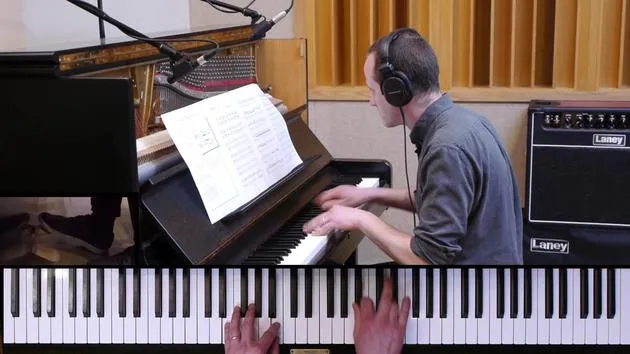
05. Mohair Mountain, Joe Bennett & Kung Fu Drummer (Performance)
3:03
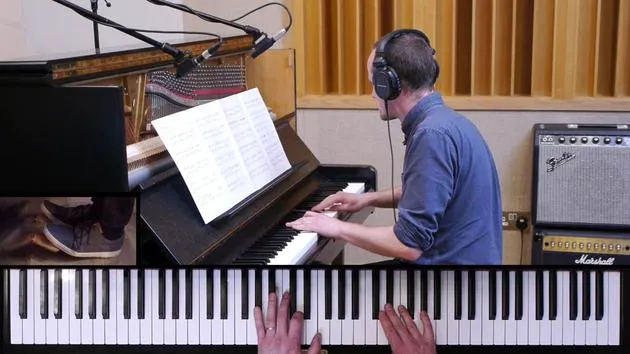
06. Blue Espresso, Deirdre Cartwright (Performance)
2:38



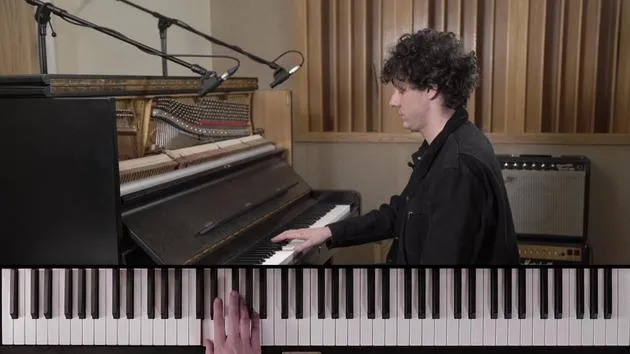
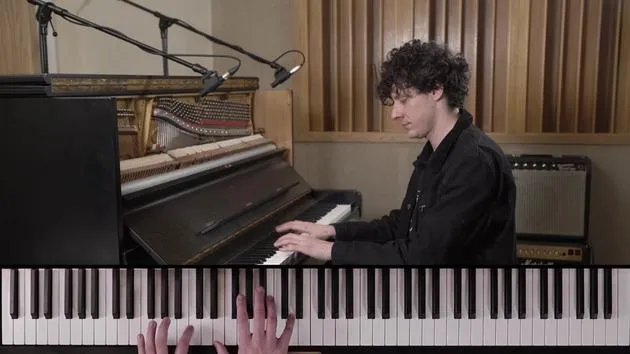
Lesson transcript
Advanced Blues Lesson
In the previous two videos, we've explored the blues:
- The basic form: The three chords of the blues.
- The advanced form: Introducing more complex elements like the 2 and 5 at the end of the sequence, while also developing chord tones and the blues scale simultaneously.
Today's Focus
Today, we will delve into an even more advanced blues form. We have the regular form which we've been playing:
- 1
- 4
- 1
- 4# (sharp 4)
- diminished
- 1
- 6
- 2
- 5
- 1
- 6
- 2
- 5
- 1
This new form is similar but will focus on developing what are called two, five, ones and turnarounds.
Turnarounds
At the end of the previous blues form, we have what's called a turnaround, which is the 1, 6, 2, and 5. We will be incorporating this kind of structure earlier in the blues as well.
Starting Sequence
Let's begin with this progression:
- Start on the 1
- Head to the 4
- Back to the 1
- Now, we're going to do a 2, 5, 1 to the B flat.
So, to recap:
- 1
- 4
- 1
- 2, 5, 1 to B flat
Continuing, we have:
- Diminished
- 1 again
- 3, 6: the same as a 2, 5 but heading to the minor second. In this case, the second of F is G, so we will use the II V pattern to get there.
Major vs. Minor Chords
When using major 2, 5, 1 to approach a major chord, we employ a minor chord followed by the dominant, then the 1. Conversely, when targeting a minor chord, we apply a half diminished chord:
- For a 2, 5, 1 to G: D, G.
- The A is half diminished, which closely resembles a diminished sound, complemented by the dominant 7.
- Then we go to 5 (D7) and finally to G.
This replaces where the five would appear in the last four bars of the blues.
Final Bars
Let's summarize the progressions:
- Starting from bar 5 of the blues section, we reach the end at the 5.
- Then we will do a turnaround again.
Adding Passing Chords
There's one more element we can incorporate to further enhance this section, known as passing chords. Instead of moving directly from the 5 to the G minor in the last four bars, we can use passing chords.
- For instance, we can transition from A to G, followed by a movement through A to D, and then incorporate A flat and D flat in between.
By doing so, instead of simply going from A to G to D, we create a descending pattern using:
- Minor 7
- Dominant 7
This approach significantly enriches the sound.
Contextual Observation
In a blues band context, you'll typically stick to simpler patterns. However, in a jazz context, adding these changes and harmonies makes the music sound much more intriguing.
It's the same form! The blues scale and chord tones, which you have previously learned, apply over these various sections.
Developing Your Voice
As you increase the complexity, you will also raise the interest level in your playing. By now, you should be developing your own voice as an improviser and feeling comfortable with typical forms like the blues and other standards.
Conclusion
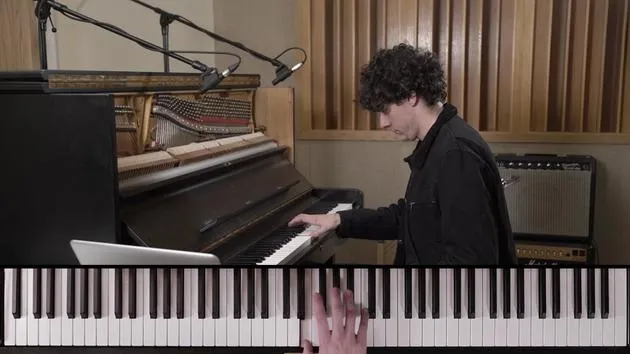
Let's elevate this to the next level. I'm going to play an improvisation using just chord tones. Remember, these are simply the root, third, fifth, and seventh on the blues form. However, I will be incorporating the extra forms as well.
28 lessons
2h 28m of structured video lessons
Advanced video features
Slow down, loop a passage, follow along
Mobile, tablet & desktop
Practise wherever you are
100% satisfaction guarantee
30-day money-back guarantee







