



Arpeggios / broken chords - Grade 4
A run-through of the Grade 4 arpeggios and broken chords, including trickier keys like F minor and C sharp minor and the C minor 7 arpeggio with its own fingering.

What's in the course
29 lessons (2h 21m) · 1 free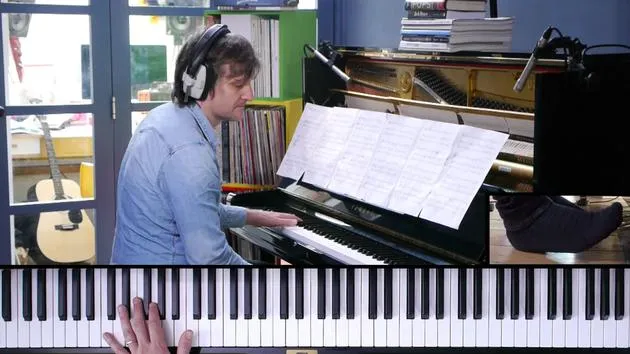
01. Hallelujah I Love Her So, Ray Charles (Performance)
Free lesson2:39
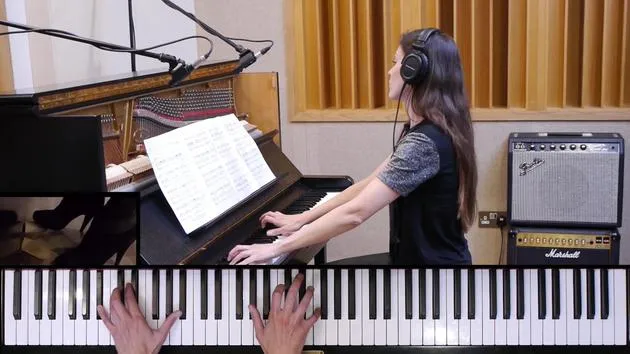
02. I See Fire, Ed Sheeran (Performance)
2:40
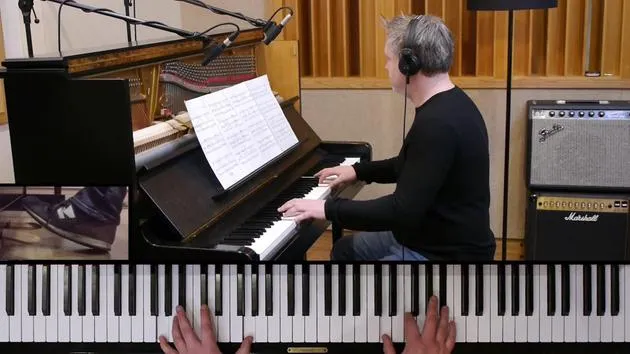
03. Your Song, Ellie Goulding (Performance)
3:35
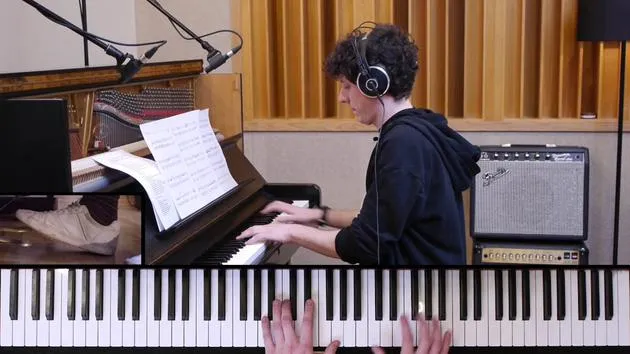
04. Funkometer, Kit Morgan (Performance)
2:21
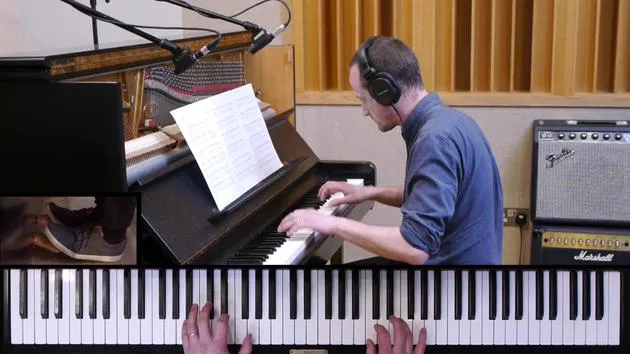
05. Crop Duster, Kit Morgan (Performance)
2:10
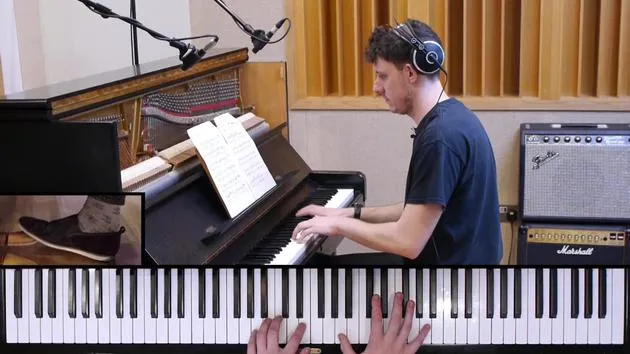
06. Circus Experience, Joe Bennett (Performance)
2:19
Lesson transcript
Arpeggios in Music Lessons
Now, most of the arpeggios which you'll see here are fairly standard. There are a few new ones being introduced, such as:
- F minor
- C sharp minor
These examples utilize more complicated keys for the piano, featuring additional accidentals and more sharps and flats.
C Minor 7 Arpeggio
However, one arpeggio that really stands out for me is the C minor 7 arpeggio.
- Definition: C minor 7 is also known as the Dorian scale.
The reason it's called a minor seven is that it consists of a minor chord with the seventh on top.
Technique: We will be playing this arpeggio going up two octaves and back down again.
The challenging aspect of these seventh arpeggios, which you will encounter in earlier and later grades if you plan on progressing, is that the fingering differs slightly from a standard arpeggio.
-
In standard C minor:
- You would follow conventional fingering.
-
In C minor 7:
- Make sure that the fourth finger becomes the minor third. Otherwise, you might struggle to maintain the shape.
Additional Arpeggios
Some extra arpeggios you will be playing separately with the right and left hands include:
- C minor 11
The C minor 11 is a beautiful chord, and again uses the Dorian scale.
-
If you're unfamiliar, the Dorian scale is essentially a B flat major scale starting on C.
-
The 11th is the F.
When we have a C minor chord, we include:
- The seventh
- The ninth
- The eleventh
This combination creates a really bright and beautiful sound. It's quite sonorous and melancholy, but at the same time, really bright and brilliant as well, resulting in a lovely tone.
Demonstration
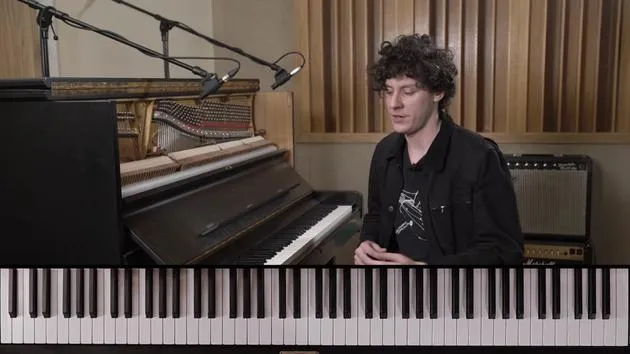
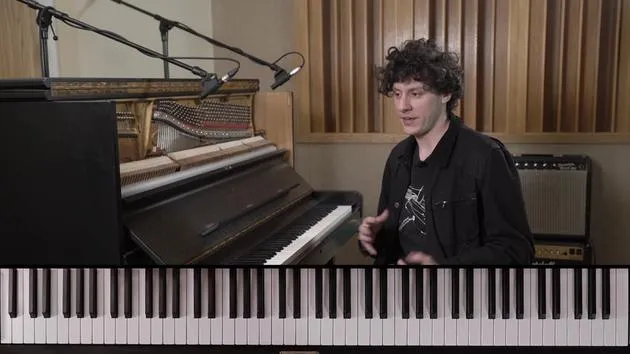
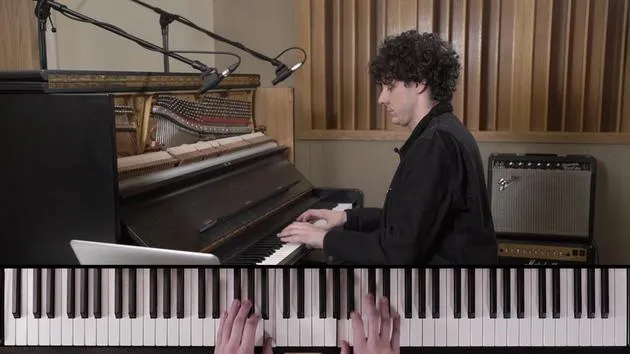
I'm going to play this exercise for you in both hands.
29 lessons
2h 21m of structured video lessons
Advanced video features
Slow down, loop a passage, follow along
Mobile, tablet & desktop
Practise wherever you are
100% satisfaction guarantee
30-day money-back guarantee







