



Get Off
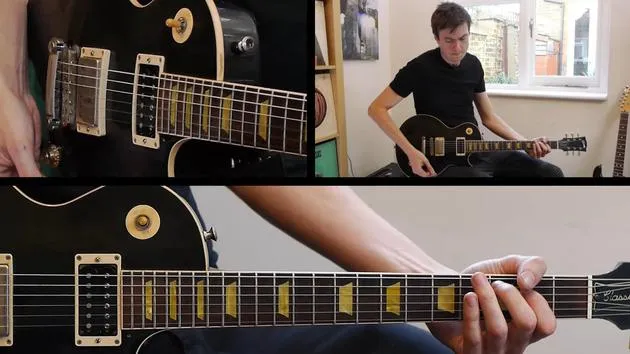
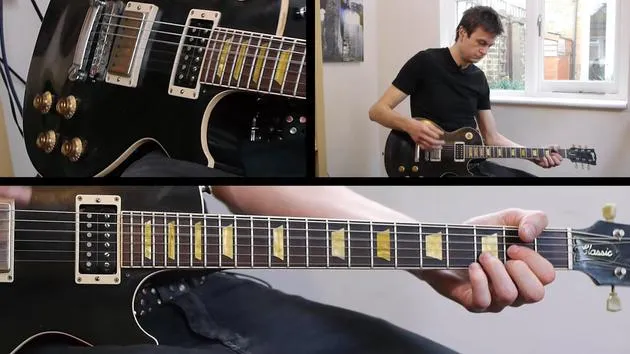
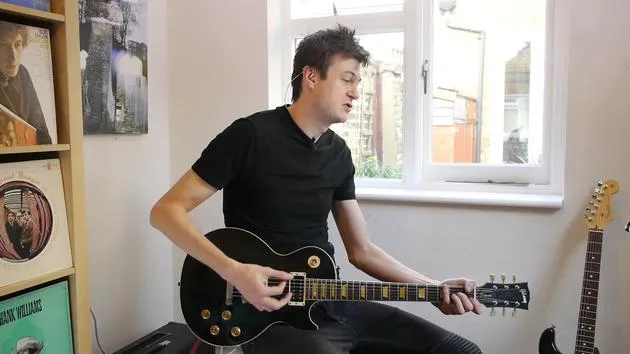
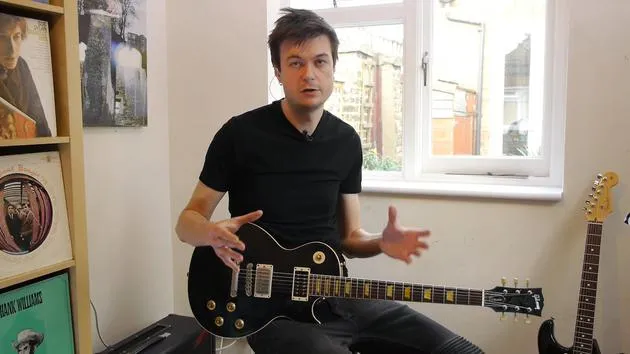
James Barratt breaks down the Grade 1 indie track 'Get Off', from getting an aggressive but responsive tone to the A minor, D minor and E minor chord moves.

What's in the course
38 lessons (2h 32m) · 1 free
01. Intro to Approaches to improvisation
1:00
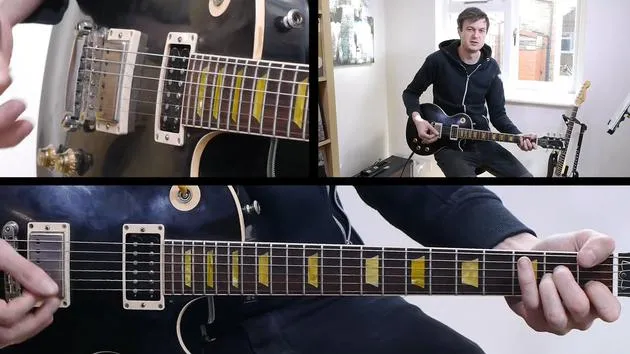
02. Getting started with improvisation
9:22
03. Improvising using chord tones
10:18
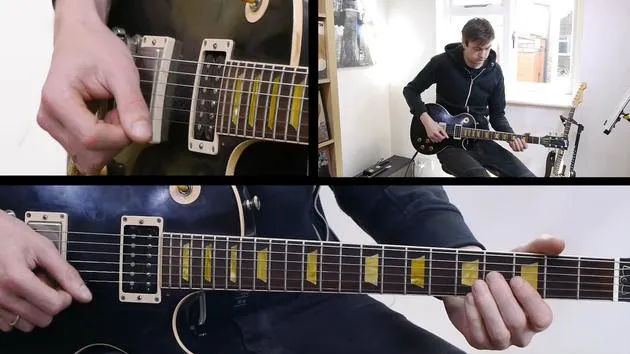
04. Assignment: Finding chord tones
4:05
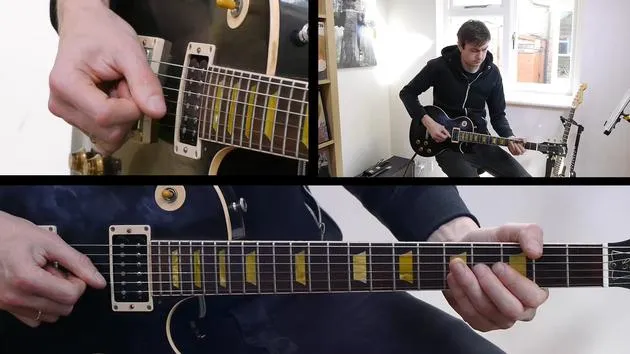
05. Adding rhythmic interest to your solos
4:11
06. Assignment: Improvising over a chord change
2:52
07. Challenge: Submit your improv
0:24
08. Rhythmic improv & comping
9:55


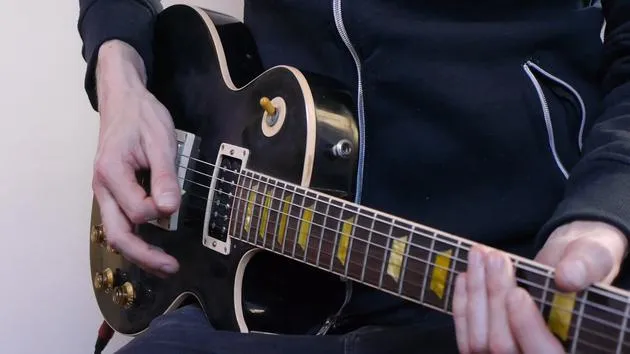
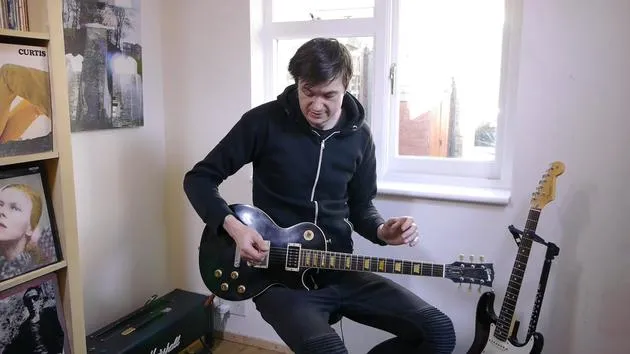
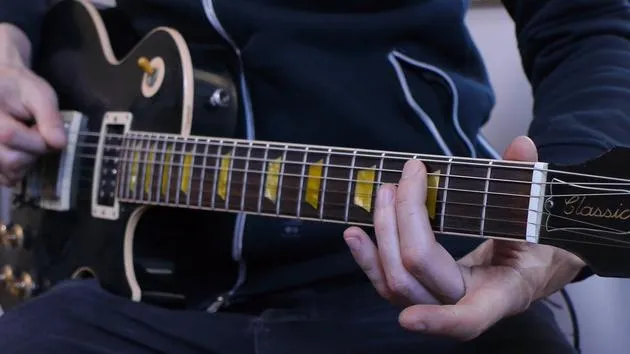
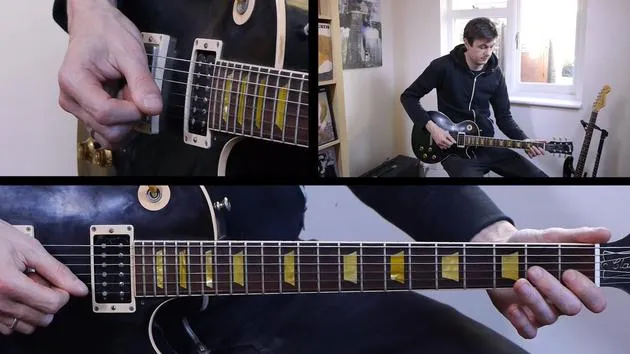
Lesson transcript
Grade One Guitar Lesson: Indie Track Breakdown
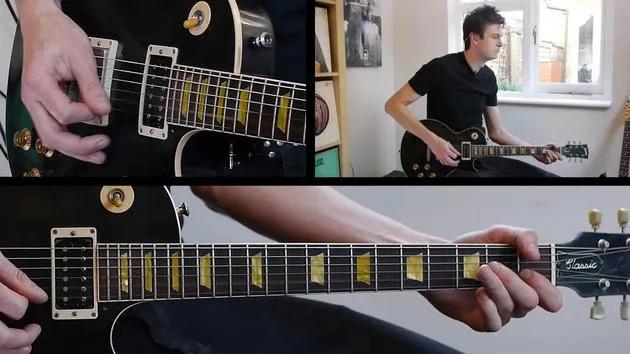
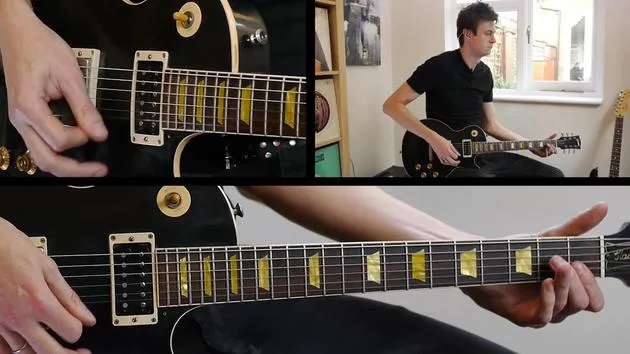
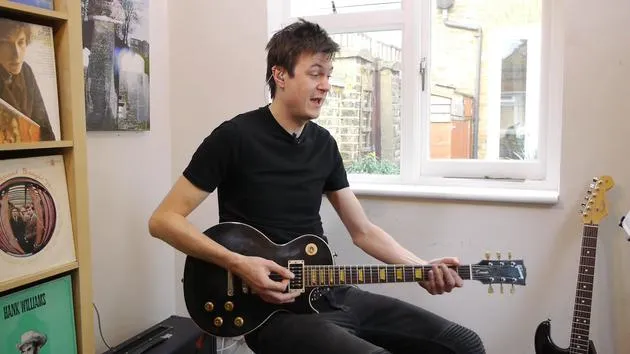
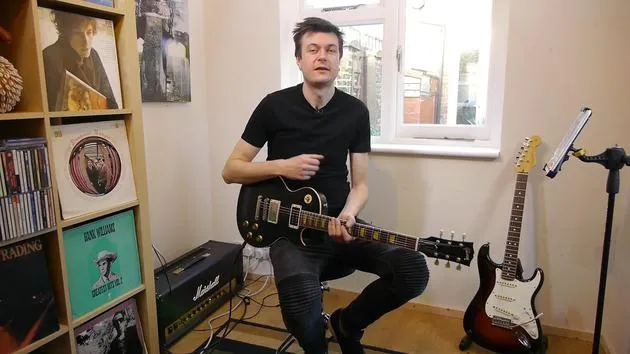
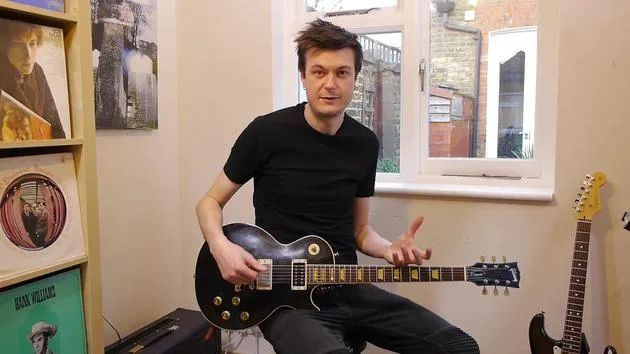
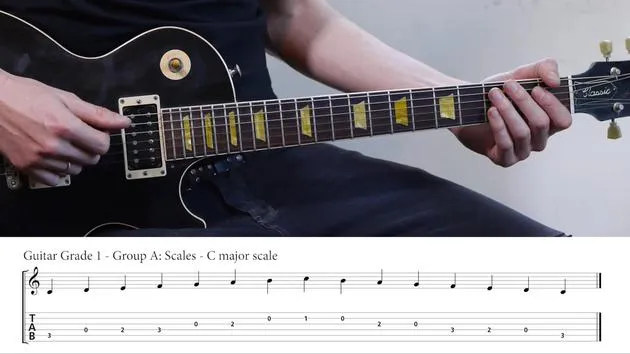
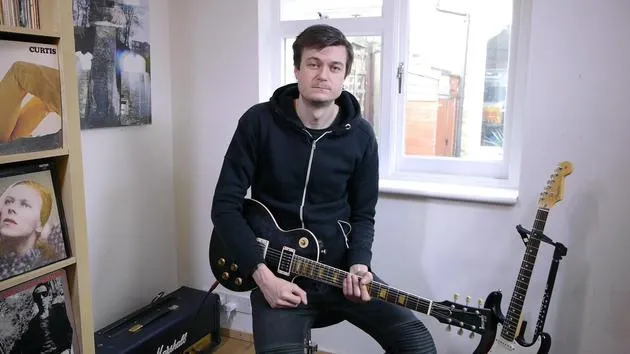
Hey, guys! Let's check out in a little bit more detail how to approach Grade One Guitar for this indie track.
Tonal Approach
- We're looking for a sound that is quite aggressive.
- Avoid cranking the gain all the way up; instead, aim for a nice and responsive tone.
- When you hit hard with the right hand, it should sound rocking.
- Softening your playing will lead to a reduction in both volume and gain.
Section Breakdown
Opening: Strong Chords
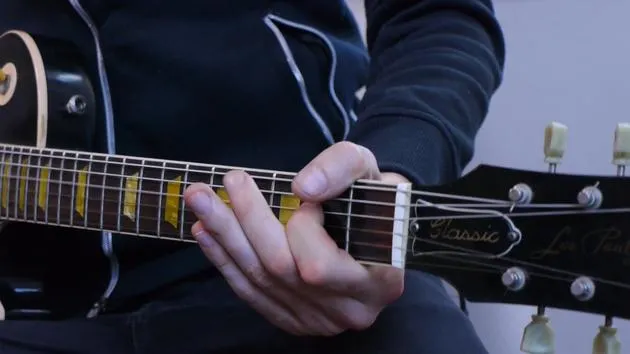
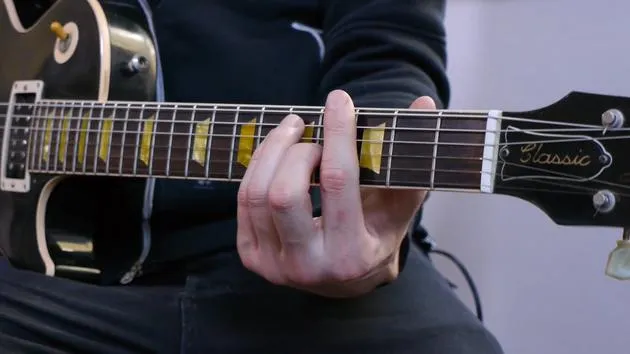
- Chords: A minor to D minor.
- You can either:
- Strike the A minor evenly.
- Build into it for a crescendo effect.
Important: Ensure to hit the D minor and E minor chords hard, especially where indicated by the accent symbol (greater than sign) in the score.
Section B: Single Note Riff
- Approach Options:
- Play it exactly as written with no muting.
- Pay attention to the staccato marking on the seventh note (open D string in bar five).
- This means play that note shorter than normal.
Example:
-
Norm: 2, 3, 4 (eighth notes)
-
Staccato: 2, 3, 4 (cut short)
-
Consider experimenting with staccato to avoid overemphasizing it, as it might sound stunted.
-
Employing a slight amount of palm muting can provide a stylistic touch.
- Just touch the strings lightly with your palm near the bridge for a muted sound.
Section C: Chorus
- Chords: Strong open chords, played confidently.
- Strumming:
- Option for even downstrokes (aggressive).
- Alternatively, apply a strum pattern: down, down, down, up, down, up.
Tip: Being able to switch between different strumming techniques is beneficial as you progress.
Section D: Melodic Section
- Utilize staccato effectively, especially in Bar 25 where the second note of each pair should be staccato.
- Lock this in tight with the backing track for a cohesive sound.
Conclusion: Ending Strong
- Return to the opening riff for the closing; accent those A minor chords.
- Consider using the volume control on your guitar to create silence at the end, especially with gainy settings.
- This can give a professional finish with any reverb or delay decaying naturally.
Pro Tip: After a power chord hit, sliding off while rolling off the volume creates a polished sound.
Final Thoughts
I hope you find this breakdown useful! Remember to:
- Break it down into sections.
- Keep it slow with a metronome, gradually building speed.
- Start gluing the parts together for a cohesive performance piece.
Best of luck, it's a great song! Enjoy!
38 lessons
2h 32m of structured video lessons
Advanced video features
Slow down, loop a passage, follow along
Mobile, tablet & desktop
Practise wherever you are
100% satisfaction guarantee
30-day money-back guarantee







