Mardi Gras Indians

With
Pat LevettSome Carnival revelers in New Orleans known as Mardi Gras Indians get together in tribes and parade through New Orleans, make chants and face off other tribes. Pat explains some history and gives you the keys to understanding the music and the rhythms of the Mardi Gras Indians.
What's in the course
12 lessons (0h 53m) · 2 free
01. The New Orleans groove & feel
Free lesson3:38
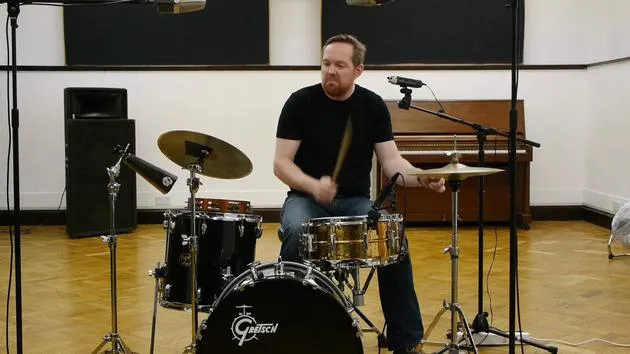
02. Pat Levett demonstrates some New Orleans Style Drums
Free lesson2:34
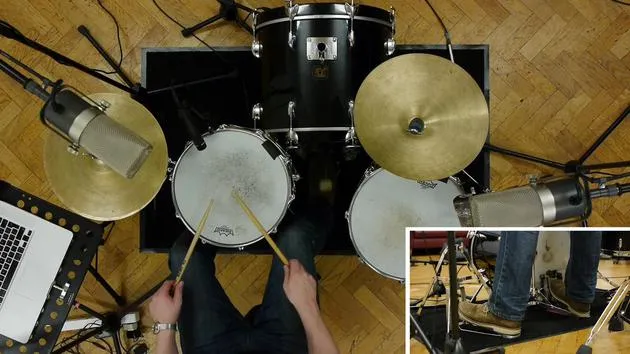
03. Adding a bass drum pattern
2:34
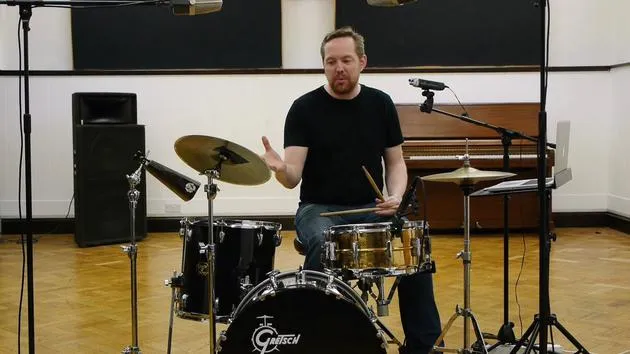
04. Second Line drumming
4:37
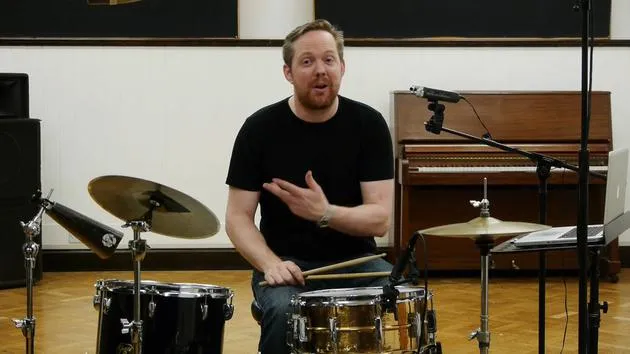
05. New Orleans Rock & Roll - Fats Domino
4:53
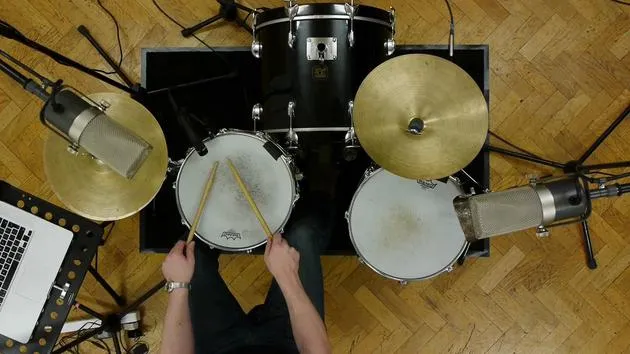
06. The Dirge - Funeral March
3:24
07. The Rebirth Groove
4:04
08. Mardi Gras Indians
You are here5:54
09. New Orleans Funk
7:48
10. Zydeco Music
3:55
11. Allen Toussaint
5:09
12. Fill-ins & creative ideas
5:00
Lesson transcript
New Orleans Drumming Course: Mardi Gras Indians
Hi, and welcome to another lesson within the New Orleans drumming course. Today, we're going to talk about Mardi Gras Indians, a massive part of New Orleans culture that was likely even more prominent in the past.
Mardi Gras Indian Groups
- Each neighborhood typically has its own group or "gang," led by the Big Chief.
- They spend all year creating elaborate costumes.
- On St. Joseph's night, every year at midnight, they come together.
- They perform chants, play tambourines, and sing.
The Tradition of Face-offs
When they meet another gang, the two Big Chiefs will face off. In the past, these encounters could be contentious, but nowadays, there is more respect. They come together for a big meeting where they pass on the rhythms and traditions.
The Role of Music
The music for Mardi Gras Indians is vital, representing the essence of participating in this cultural tradition. Key elements include:
- Chanting: Very tribal and significant.
- Rhythmic Structure: Utilizes the first half of the clave discussed in our previous lesson (the group of three).
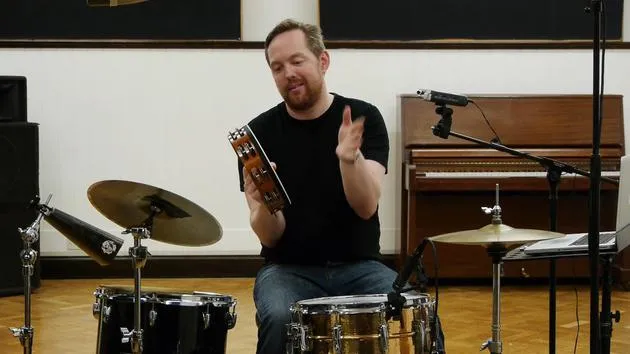
Tambourine in Mardi Gras Indian Music
As we've mentioned, there is a significant focus on tambourine within Mardi Gras Indian music. Here's how it comes together:
- Accent on Beat Four: Picture a large group playing together, all phrasing cohesively.
- Chants: The community might chant, "Hey, Paki way too," followed by the Big Chief responding with "Two way, pake" in a call-and-response format.
- This interaction continues for an extended period.
Playing Techniques
When playing the tambourine:
- Hand Movement: Rotate your right hand to the top and bottom of your left hand, removing it for an accent.
- Variations: There are countless ways to play, some may emphasize beat four on the second bar.
- Instruments: You can also incorporate the floor tom and cowbell, which are commonly used, creating a menacing, tribal sound.
Inverted Tambourine Technique
Another technique includes playing the tambourine inverted against the floor tom when the heads are touching.
Conclusion
This lesson serves as an introduction to the Mardi Gras Indian tradition. It's essential to focus on that clave (the group of three) played on the cowbell and floor tom, often accompanied by the tambourine.
Tip: Get a good tambourine, as mastering its sound can be tricky, but don't get discouraged! Keep practicing, and I look forward to seeing you in the next lesson.
12 lessons
0h 53m of structured video lessons
Advanced video features
Slow down, loop a passage, follow along
Mobile, tablet & desktop
Practise wherever you are
100% satisfaction guarantee
30-day money-back guarantee
Meet your guru
Meet your guru
After graduating on drums from the Guildhall School of Music in 1999, Pat has performed and recorded with Liane Carroll, the James Taylor Quartet, Tim Minchin, the Ronnie Scott's All Stars, Zigaboo Modeliste (The Meters), Earl Thomas, Paddy Milner, the Phil Stevenson Trio, the Downtown Dukes, 24 Pesos, the Puppini Sisters, Sandi Thom and Bernard Purdie, amongst others.
He has toured extensively across America, Russia, Asia and Europe, playing many well-respected venues, festivals, TV and radio slots. Pat also plays chromatic harmonica and is a featured soloist on two albums by Will Grove-White (Ukulele Orchestra of Great Britain).
His own projects include 'The Coalminers', dedicated to playing New Orleans funk and soul, and 'June Afternoon', an organ trio featuring Ross Stanley and Nat Martin.
In his New Orleans Style Drumming course, Pat unpacks the grooves, feel and second-line vocabulary that define the city's sound, so you can lock into authentic funk and soul behind the kit.