



Adding the 'horn lines' in

With
Tom Seals
What's in the course
23 lessons (1h 39m) · 1 free
01. Intro to Jumpin' At The Woodside
1:19
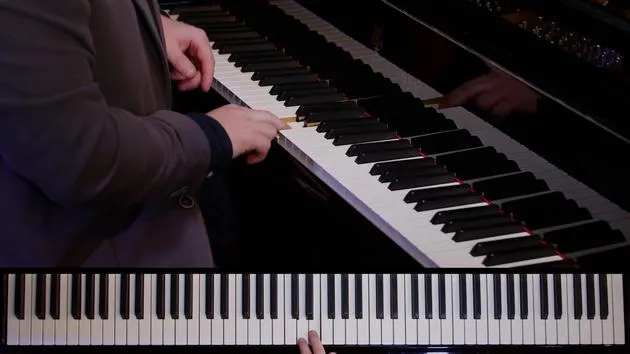
02. The right hand melody of the 'A' section
Free lesson1:19
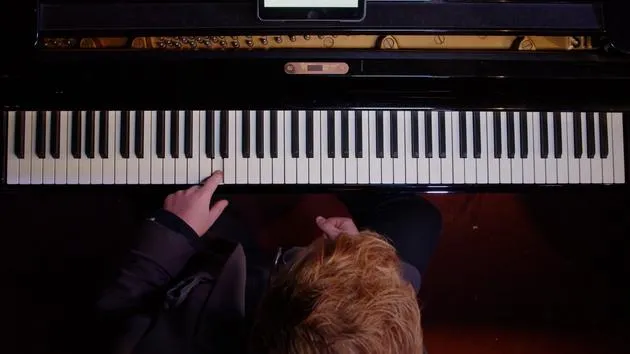
03. The left hand of the 'A' section
8:09
04. Practice the 'A' section with Tom
3:31
05. The 'B' section on the right hand
6:48
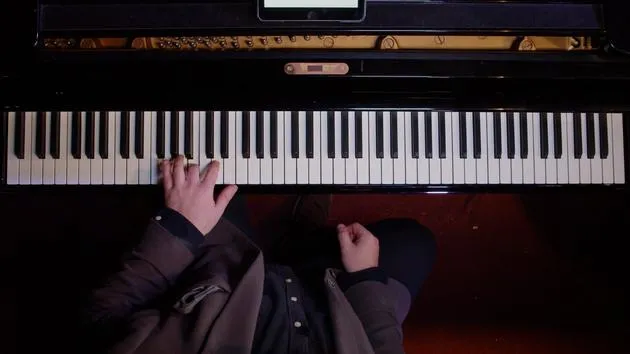
06. The 'B' section of Jumpin' At The Woodside on the left hand
1:23
07. Practice the 'B' section with Tom!
3:17
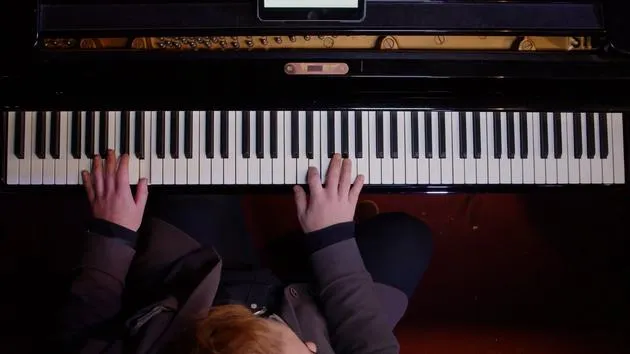
08. Practice Jumpin' At The Woodside with Tom
4:16
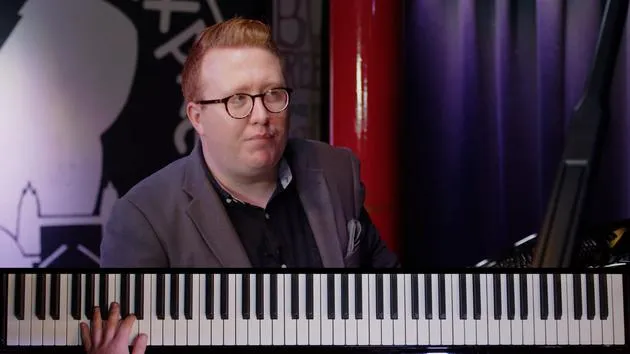
09. Comping with the right hand
6:17

10. Ideas for embellishment
7:05
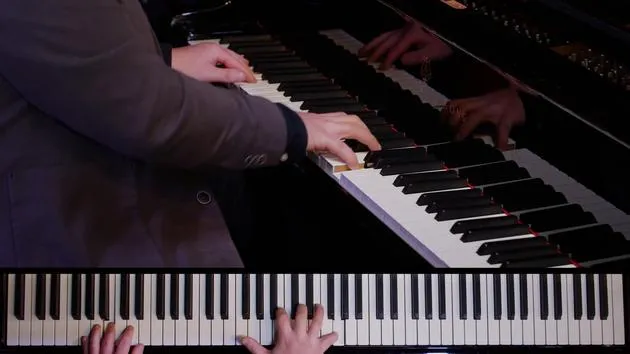
11. Jumpin' At The Woodside performance
2:08
01. The right hand melody of the 'A' section
5:13
02. The left hand of the 'A' section
5:31
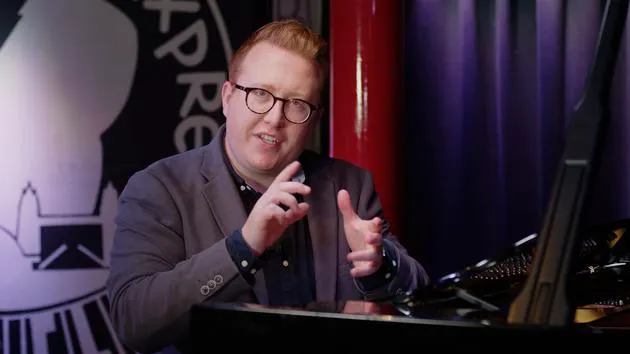
03. Adding the 'horn lines' in
You are here9:22

04. The 'B' section on the right hand
4:56
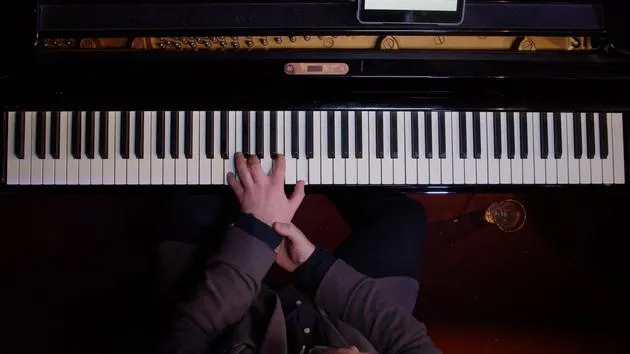
05. The 'B' section on the left hand
9:17

06. Practice Don't Get Around Much Anymore with Tom
6:18
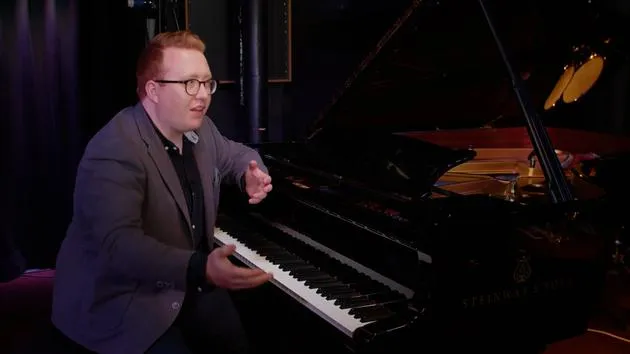
07. Tips for improvisation
1:38
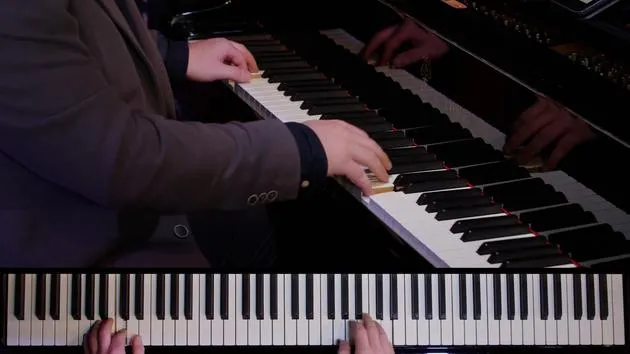
08. Solo ideas
5:47

09. Don't Get Around Much Anymore Performance
3:11



Lesson transcript
Music Lesson: A Section - Right and Left Hand Integration
So now you've got the right hand and the left hand of the A section. What I want to do now is add the horn lines in.
Vocal Melody:
The vocal melody which you're playing, the lead melody, is:
Ba ba da da da da.
Left Hand Rhythm:
Now your left hand is going:
Bada bada.
I want to add the right hand doing that as well. So what's going to happen is your right hand's going to play both hands at the same time.
Chromatic Exercise
To do this, we're just going to do a nice chromatic thing in the right hand.
-
Start with:
- Play A, B, and E with your right hand.
- I would use your second finger on B and your little finger on E.
-
Move Upward Chromatically:
- Move it up a semitone: B and E → C and F.
- Up another semitone: C sharp and F sharp.
- Up another semitone: D and G.
Now just try that to the same rhythm as before with the left hand. And again, keep going! Get that down.
In context, it may sound a little odd on its own, but when we add it with the bass and the left hand, it will come together beautifully.
Left Hand Notes
-
Your left hand starts on:
- C, C, D, E flat to E.
-
Your right hand starts on:
- B and E, which gives us actually a nice C major 7 chord.
- Rhythmic Practice:
1A, 2A. 1, 2, 3, 4.
Ba Ba Doo da da da.
Second Chromatic Descending Line
For the second chromatic descending line, we'll start in a slightly different position.
-
New Starting Notes:
- Instead of playing B and E, we're going to play B flat and E.
-
Move Down Chromatically:
- Your B flat becomes an A and your E becomes an E flat.
- Then A becomes A flat, and your E flat becomes a D.
- The A becomes a G and your D becomes a C sharp.
This sounds quite complicated, but all we're doing is starting here and just moving every note down:
- Effectively, you're moving your hand like this.
Putting it Together
For the second pattern:
- Don't forget, the left hand goes:
- C, B, B flat to A.
Put both of them together, and this happens:
- Play Slowly:
Sounds like this.
Don't forget about the rhythm. Let's just try and get those in your fingers, and this time with a B flat instead of a B natural.
Advanced Tip: Expanding Chords
Once you've got that and want to try something else:
-
Right Hand Position:
- You could actually add our thumb at G and our third finger at C.
- Move everything up from your base position.
-
Expanded Chord Example:
Instead of:- B and E (second finger and fifth finger), you can add:
- Thumb on G, second finger on B, third finger on C, little finger on E.
- B and E (second finger and fifth finger), you can add:
-
Moving Up:
- For the second chord:
- Thumb on A, second finger on C, third finger on D, little finger on F.
- Moving everything up a semitone.
- For the second chord:
Repeat this process for the following chord changes.
Summary of Finger Positions
-
Initial Position:
- Thumb on G, second finger on B, third finger on C, little finger on E.
-
Next Position:
- Thumb on A, second finger on C, third finger on D, little finger on F.
Continue the process with the following notes:
- E flat in the bass, and so on, down to A in the bass.
Wrapping Up
Now, it's quite tricky to get your fingers around all of that, but just remember:
It's all semitones, so we're just moving everything down.
- Get that in your fingers.
- For now, let's go back to the first exercise.
- Add that in and you get something like this:
1, 2, 1, 2, 3, 4. 1.
- Add that in and you get something like this:
This is the A section with the right hand and the left hand together.
Practice Steps
- If you want to practice, maybe you can play the right hand while I play the left hand.
- Don't forget to play the melody and the chromatic lines together.
Ready?
1, 2.
1, 2, 3, 4.
One.
And again. Great!
Now I'll play the right hand, and you play the left hand.
Ready?
1, 2, A.
1, 2, 3, 4.
One.
And again. Great.
23 lessons
1h 39m of structured video lessons
Advanced video features
Slow down, loop a passage, follow along
Mobile, tablet & desktop
Practise wherever you are
100% satisfaction guarantee
30-day money-back guarantee
Meet your guru
Meet your guru
The mantle of UK Piano Man has long been held by Elton John, Jools Holland and Jamie Cullum. Over the past five decades no one else has come remotely close - until now!
Fresh from his sell-out "Let The Good Times Roll" tour, Tom Seals - "quite possibly the future of jazz and blues" - has the world at his fingertips. His virtuoso soloing, excellent improvisation skills and distinctive voice have led top industry figures to hail him as the UK's finest boogie woogie and blues pianist and vocalist.
Still in his mid-twenties, Seals has already played sold-out shows across the globe, including London's legendary Ronnie Scott's, a stunning performance at Birdland Jazz Club on Broadway in New York, and work alongside Jools Holland.
Notable appearances include:
- Cheltenham Jazz Festival's 'Gregory Porter & Friends'
- Jools Holland's 'Boogie Woogie & Blues Spectacular'
- Birdland Jazz Club, New York City
- British Summer Time - Hyde Park
- Ronnie Scott's Jazz Club
- Gisburne Park Pop-Up
- Montreux Jazz Festival
- Cropredy Festival
- The Steinway Two Pianos Festival
- Glastonbury
- Newark Showground "Drive-In"
- Blenheim Palace
In his course, Tom throws open the secrets behind his playing - showing you how to swing standards at the piano, build authentic boogie woogie and blues lines, and find the freedom to improvise, so you can become the ultimate Piano Man yourself.
You can read Tom's full biography at www.tomseals.co.uk.







