



Scale and Key

With
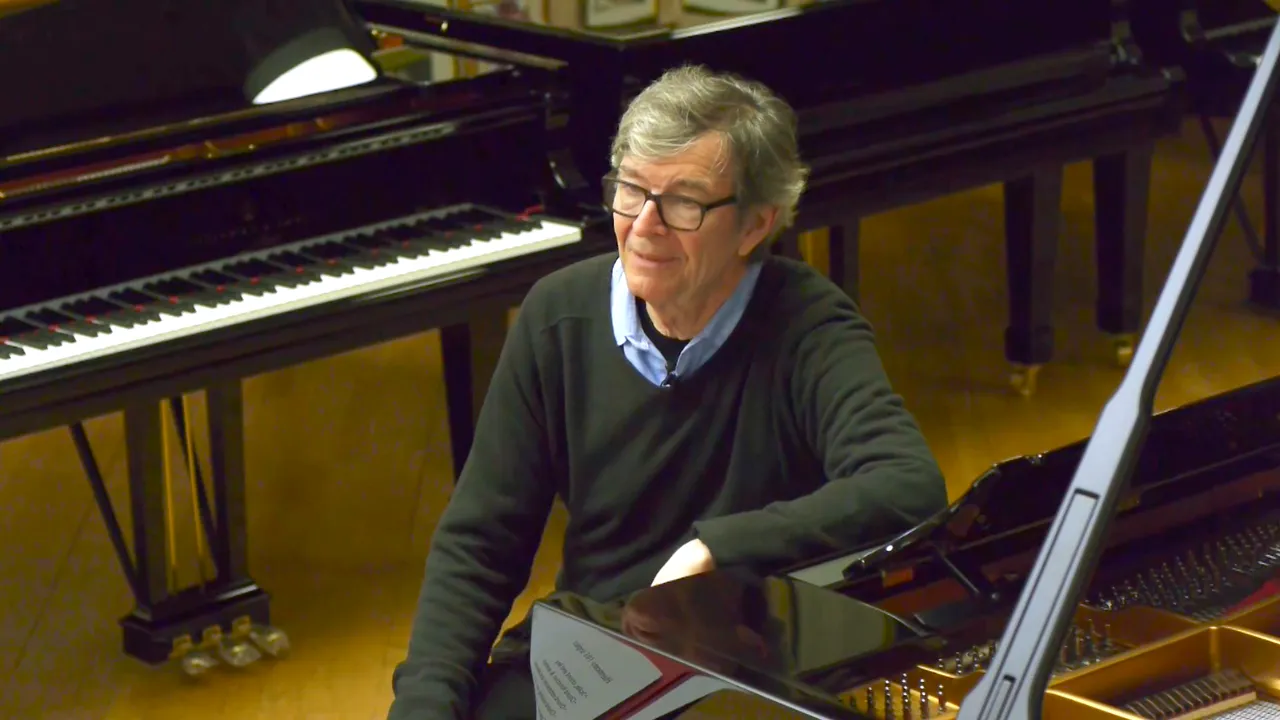
Darius BrubeckDarius Brubeck explains intervals and the major scale, and how the tonic gives a piece its key - with the key signature showing how many sharps or flats are involved.
What's in the course
11 lessons (1h 48m) · 1 free
Lesson transcript
Harmony 101: Lesson 1
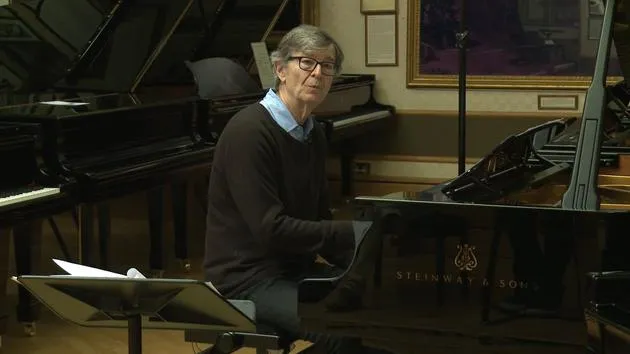
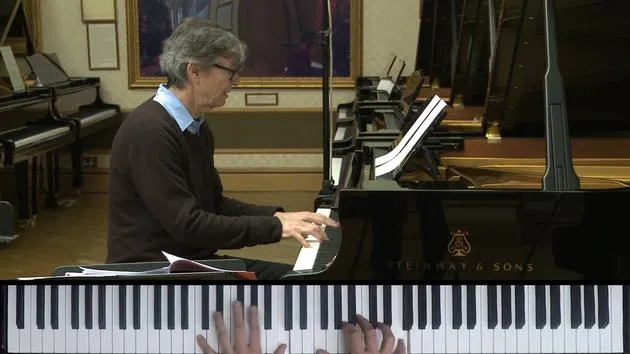
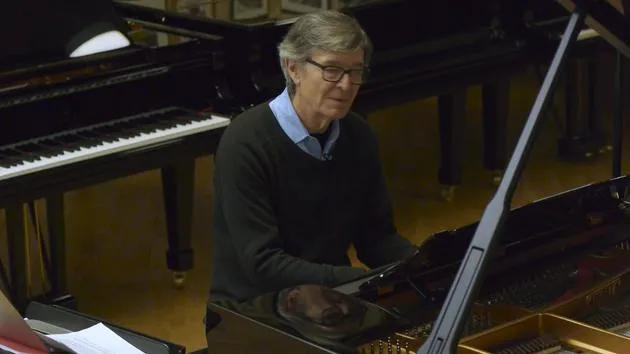
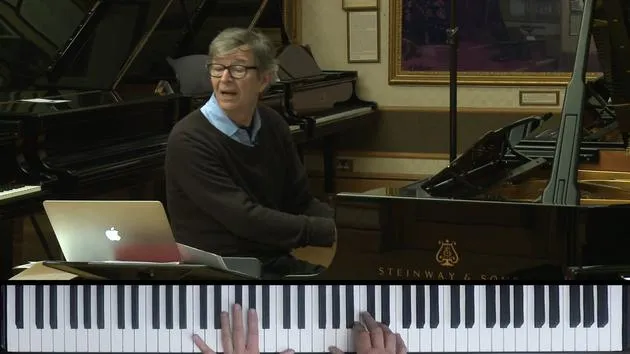
Welcome to the first lesson of Harmony 101 on Music Gurus. Here we are in Steinway Hall, surrounded by magnificent keyboards, and I'm going to use the piano to explain some basic concepts.
Overview of Key Concepts
Now, here are the most basic ideas you can get in studying music:
- Scale
- Chord
- Key
Just be patient because it will get complicated very soon. But to start with, I'll just talk about the scale.
Understanding Scales
We're surrounded by pianos, and we're going to use the piano as a reference to explain all of these concepts. However, it is not necessary to be a pianist at all. It would be useful, though, to have a keyboard for reference.
Suggested Instruments
It would be a good idea for you to get a cheap electric keyboard or a melodica, something where the notes are spelled out as they are at the piano keyboard. This way, you can see how these relationships work.
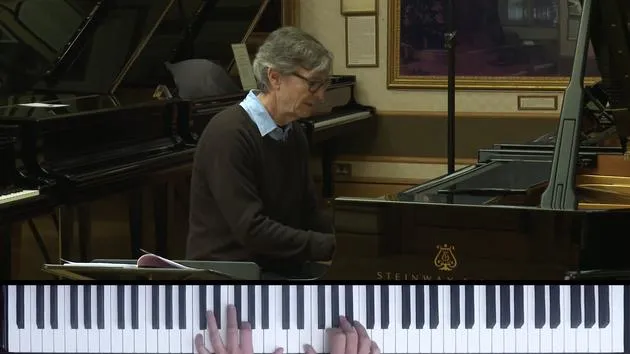
To start with a scale: from here to here, we have a scale.
The Major Scale
There are different possible scales, but right now we're talking about the major scale. This is a series of intervals you get just using the white keys between C and C.
The intervals of this scale are:
- Second
- Major Third (I'll explain why that term is used in a moment)
- Fourth (sometimes called a perfect fourth)
- Fifth (sometimes called a perfect fifth)
- Major Sixth
- Major Seventh
- Octave
When we refer to intervals of the scale (1, 2, 3, 4, 5, 6, 7), it's always just taking them in order from the root, or what's technically called the tonic note of the scale.
Altered Intervals
But these intervals can be altered. For instance:
- There's still a third, sixth, seventh.
- If you have a minor scale, you have a minor third.
This was called a major third because there's a little more distance between the root (the tonic note) and the third.
- Here is the minor sixth
- That's the major sixth
- That's the minor seventh
- That's the raised seventh
So you have a different scale, but the key is still C.
Consistency in Scales
The important thing is to understand that the scale may change, but the root of the scale can be the same. You could have:
- A minor pentatonic scale
- A major pentatonic scale
- A blues scale
The crucial point is to maintain the same relationship between the tonic and the other intervals in the scale.
Key Signatures
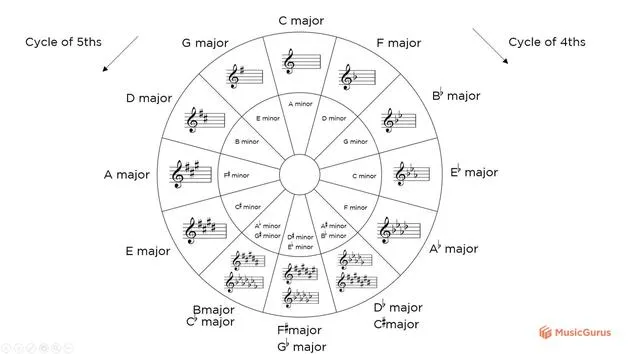
And that's why we have key signatures.
- For example, if I start on F, there's the B flat in the key signature right there.
- If it weren't there, it would be quite a distinctly different sound.
To maintain the major scale, we need one flat in the case of F.
Further Example
Let's do one more example: there's one sharp in the key of G. All of this is just to keep that relationship constant.
11 lessons
1h 48m of structured video lessons
Advanced video features
Slow down, loop a passage, follow along
Mobile, tablet & desktop
Practise wherever you are
100% satisfaction guarantee
30-day money-back guarantee
Meet your guru
Meet your guru
Darius Brubeck is a noted jazz pianist and educator. He has released numerous albums as a leader, toured internationally with his own groups, and collaborated with his brothers on Brubecks Play Brubeck.
Darius has served as a Fulbright visiting professor in Romania and Turkey. He initiated the first degree course in jazz offered by an African university, at the University of KwaZulu-Natal in South Africa, where he taught until 2005.
Darius often collaborates with Mike Rossi, saxophonist and Professor of Music at the University of Cape Town. Mike's achievements include numerous recordings and international stage appearances as leader, soloist, and sideman with Tony Bennett, Dave Liebman, Winston Mankunku Ngozi, George Russell, Clark Terry and Alessio Menconi, among others.
With Darius as your guide, you'll get straight to the "good stuff". In Harmony 101 he demystifies jazz harmony so you can start putting it to use fast, and in Mastering Odd Times he breaks down how to play and improvise confidently in unusual time signatures.







