



Chord inversions example - My Funny Valentine

With
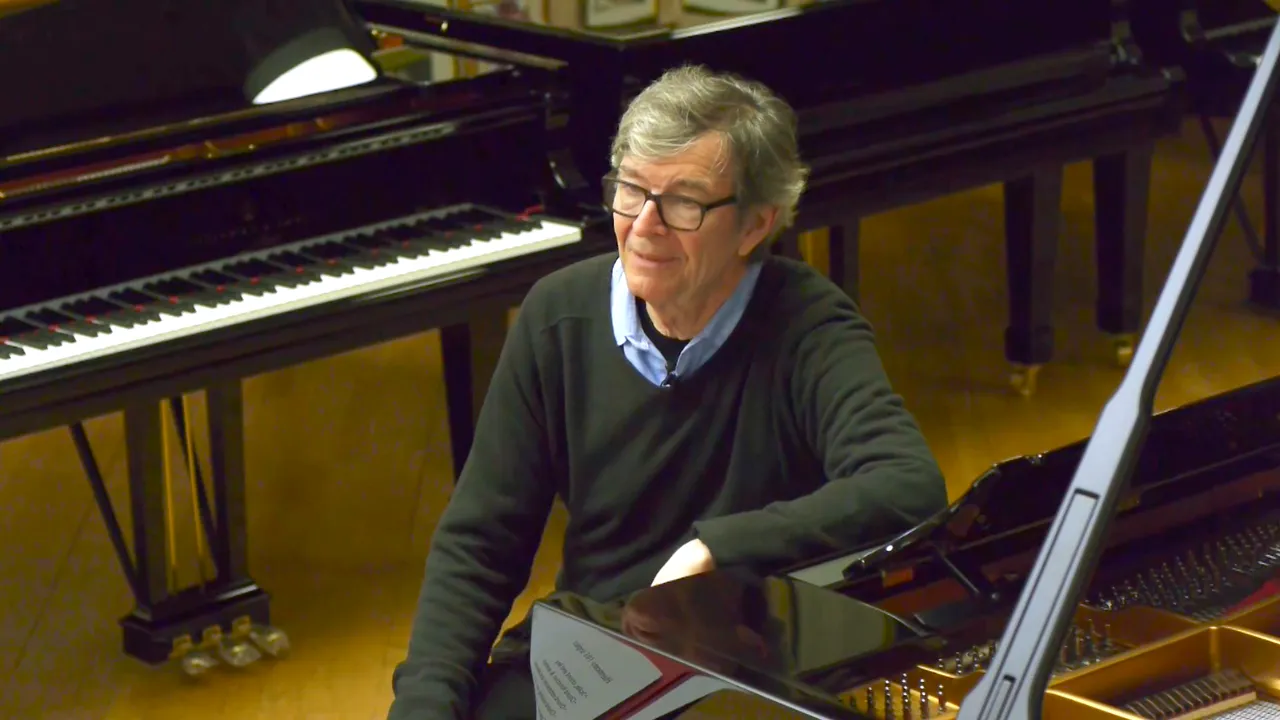
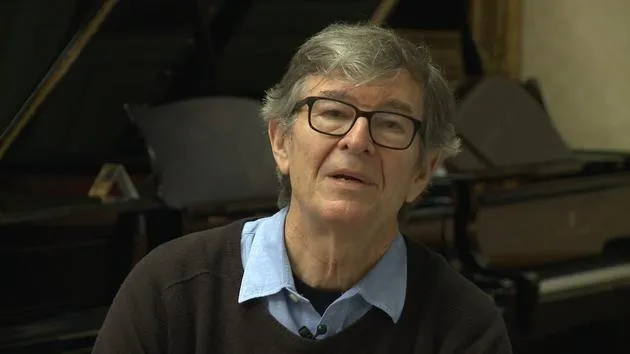
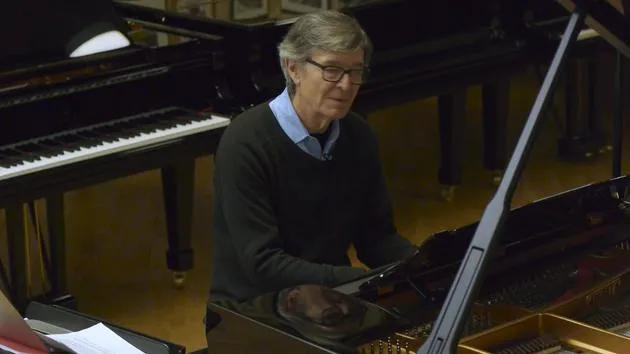
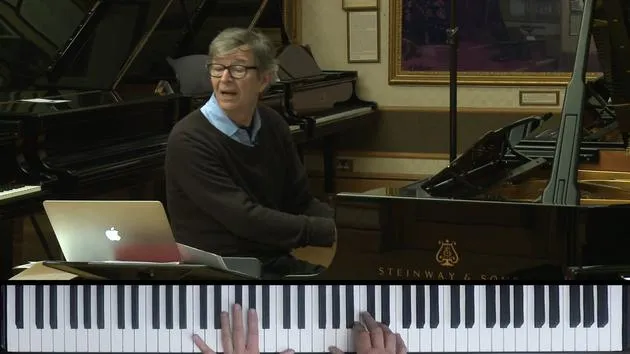
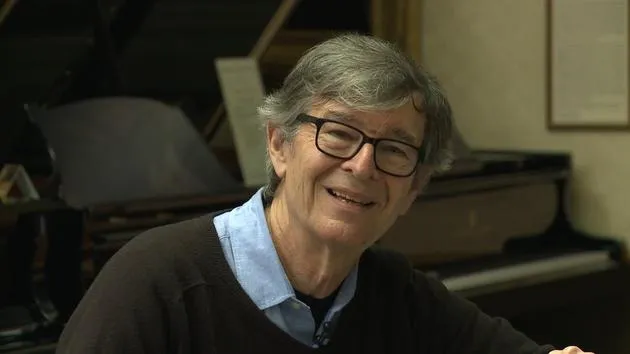
Darius BrubeckThe most important take away from the lesson on chord inversions is that the lowest note you hear is not necessarily the root of the chord. Darius illustrates this with the classic tune My Funny Valentine.
What's in the course
11 lessons (1h 48m) · 1 free
Lesson transcript
Understanding Inversions in Chord Progression
Perhaps the single most important piece of information you can take away from just this brief look at inversions is that the lowest note you play or hear may not, in fact, be the root of the chord.
Next Lesson Overview
That's why in the next lesson, we're going to talk about chord progression and understand a little more about how it works.
Illustrating Inversions
To illustrate this point further, besides the B section of Summer Song, which you can see written out, I've thought of a couple of other examples where the commonly applied descending line underneath implies inversions.
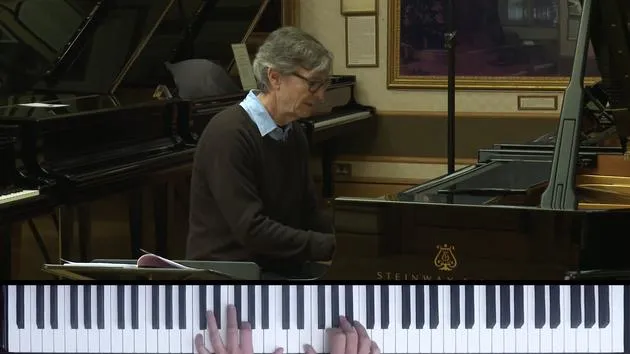
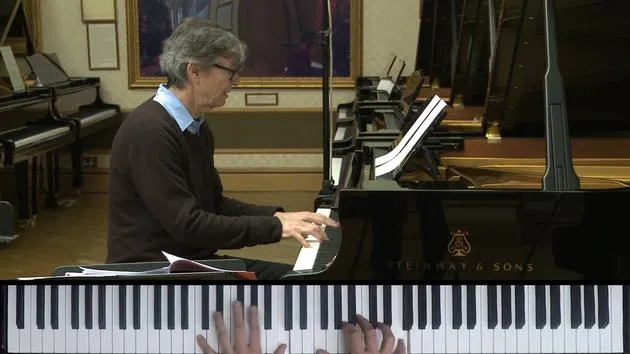
- My Funny Valentine
- This song has received scant attention to minor, something that we'll pick up in the next lesson.
- It's a familiar ballad.
- Usually, you hear it with a descending bass line.
- This means that even though it can be over a pedal C the whole time (since we're in C minor in passing), you can make some nice voicings that don't disturb the overall C minor quality.
- However, that's really an inversion of a G triad: E flat, A minor, half diminished.
- And then to the subdominant.
- Finally, you're at a root position chord, and so on.
Movement Within Chords
You can see how this works: you can have chord changes within chords that come just from using the lowest note to build another chord, which might be an inversion that adds more richness to the progression.
- An Example in Major
- An example in major would be going from C minor to E flat major, like the song Someone in Love.
- "So what?" you may ask, this could imply that the lowest note is not the root of the chord (3, 6).
Conclusion
So, even though the important aspect is the root progression, inversions give you a way to build up movement even within that. We'll talk about that a lot more in the context of chord progression, but I just thought I might stick that in before discussing voicings that omit the root altogether.
11 lessons
1h 48m of structured video lessons
Advanced video features
Slow down, loop a passage, follow along
Mobile, tablet & desktop
Practise wherever you are
100% satisfaction guarantee
30-day money-back guarantee
Meet your guru
Meet your guru
Darius Brubeck is a noted jazz pianist and educator. He has released numerous albums as a leader, toured internationally with his own groups, and collaborated with his brothers on Brubecks Play Brubeck.
Darius has served as a Fulbright visiting professor in Romania and Turkey. He initiated the first degree course in jazz offered by an African university, at the University of KwaZulu-Natal in South Africa, where he taught until 2005.
Darius often collaborates with Mike Rossi, saxophonist and Professor of Music at the University of Cape Town. Mike's achievements include numerous recordings and international stage appearances as leader, soloist, and sideman with Tony Bennett, Dave Liebman, Winston Mankunku Ngozi, George Russell, Clark Terry and Alessio Menconi, among others.
With Darius as your guide, you'll get straight to the "good stuff". In Harmony 101 he demystifies jazz harmony so you can start putting it to use fast, and in Mastering Odd Times he breaks down how to play and improvise confidently in unusual time signatures.







