



Getting Started: The 12 Bar Blues
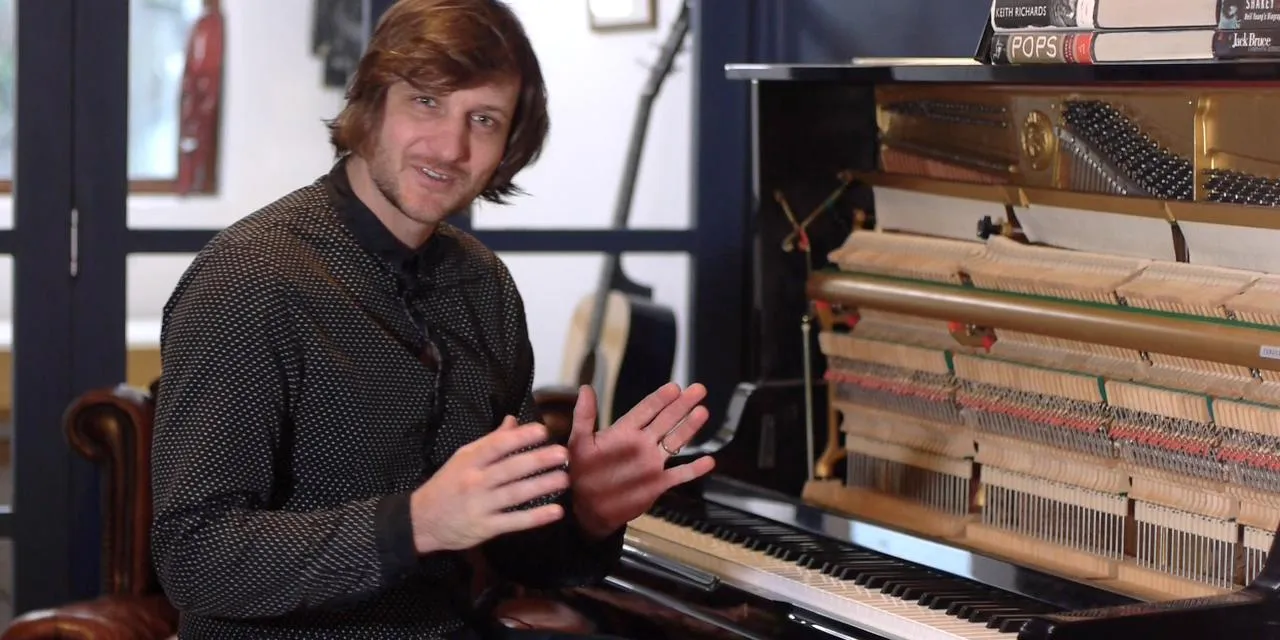
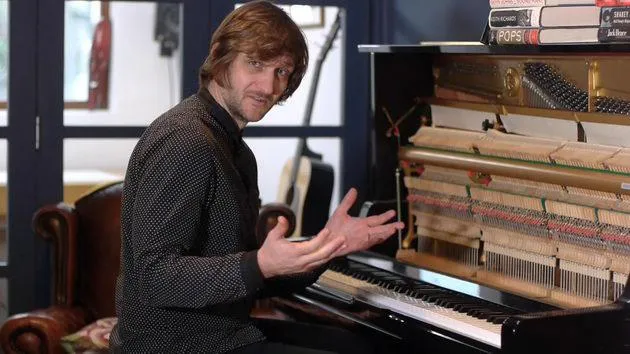
Paddy explains the basics of the blues. He deconstructs the 'cycle of chords' of the 12-bar, explaining in detail the number of bars and what chords to use.
What's in the course
10 lessons (1h 49m) · 1 free
01. Getting Started: The 12 Bar Blues
You are here12:20

02. The Engine Room: Left Hand Bass
9:31
03. Adding the right hand/comping
Free lesson11:47

04. Developing Harmony: 7th Chords & Inversions
15:27
05. Right-hand Riff #1 and variations
13:20

06. Right Hand Riff #1 Further Variations
14:39

07. The 'Blues Scale' & Uses
10:41
08. Ending #1 & Variations
9:26
09. Putting it all together
10:34

10. Dirty Dozen - The Twelve Bar Blues Challenge
1:59
Lesson transcript
Introduction to Blues Piano
How you doing? I'm Paddy Milner. Welcome to MusicGurus.com, and thanks for checking out this introduction to the Blues piano course.
The Blues Sound World
In this course, I really want to open the door to the sound world of blues piano and get you playing some authentic blues piano. Not just kind of bluesy piano, but some truly authentic-sounding blues piano.
The blues is a big, beautiful, and varied genre with all kinds of different elements within it. We need to find a common point to start from, and I think a great entry point is by looking at the 12 Bar Blues musical form. At the end of the day, this is one of the most common forms used within the blues.
What is the 12 Bar Blues?
As the name suggests, the 12 Bar Blues consists of a repeated form that consists of 12 bars of four beats.
Chords in a 12 Bar Blues
What chords are in a 12 Bar Blues? There are three different chords:
-
I Chord: In the key of C, this is a C.
- A chord is defined as a triad, which is a three-note chord consisting of the first, third, and fifth of the scale.
- For C, these notes are:
- 1: C
- 3: E
- 5: G
-
IV Chord: This is the second chord in the 12 Bar Blues, which is an F.
- The F major scale has:
- 1: F
- 3: A
- 5: C
- The F major scale has:
-
V Chord: This is a G.
- The G major scale has:
- 1: G
- 3: B
- 5: D
- The G major scale has:
Chord Sequence in 12 Bar Blues
The sequence of chords in a 12 Bar Blues is as follows:
- 4 bars on the C chord
- 2 bars on the F chord
- 2 bars on the C chord
- 1 bar on the G chord
- 1 bar on the F chord
- 1 bar on the C chord
- 1 bar on the G chord
While there are different variations, this is the form we'll focus on as a great starting point.
Practicing the 12 Bar Blues
To get used to this 12 Bar form, we'll play it simply at first, using four beats to the bar in both hands.
Note: This won't sound remarkably bluesy initially, but we're focusing on the basics before we vary it to create a classic blues piano sound.
Playing Instructions
- Count off: "One, two, three, four."
- Start the sequence:
- C: 4 beats
- F: 2 beats
- C: 2 beats
- G: 1 beat
- F: 1 beat
- C: 1 beat
- G: 1 beat
I've just demonstrated the 12 Bar Blues played as 4 beats per bar in both left and right hands. The left hand plays the root note of the chords:
- C for the C chord
- F for the F chord
- G for the G chord
Practice Tips
- Fluency: Aim to get these changes between chords as fluent as possible without any gaps.
- Metronome: Use a metronome to ensure a constant tempo.
- Hesitation: Think ahead to avoid any hesitation when changing chords. For example:
- Moving from C to F
- C to G
- G to F
To practice, try playing two beats on each chord to get comfortable with transitions.
Internalizing the 12 Bar Blues
One of the main aims of mastering the 12 Bar Blues is for it to become internalized. This allows you to add more complex elements naturally when improvising.
Demonstration
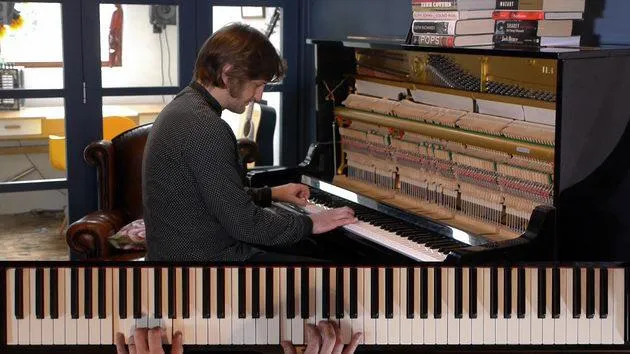
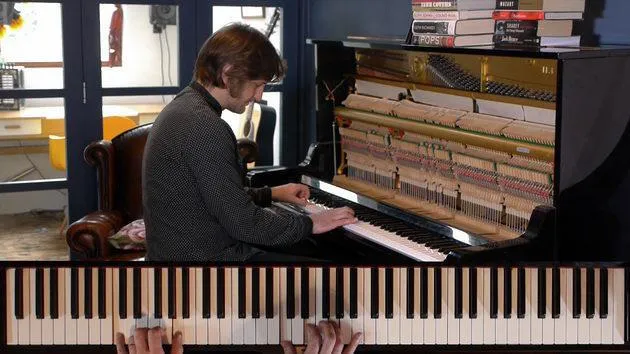
To demonstrate, I'll play a 12 Bar sequence with some more complex embellishments.
- Left Hand: Acts as the rhythm section.
- Right Hand: Focuses on melodic interest, embellishing the basic chords.
Conclusion
Don't forget, everything in this lesson is available on the downloadable PDF, which includes practice tips and extra resources.
See you in the next lesson!
10 lessons
1h 49m of structured video lessons
Advanced video features
Slow down, loop a passage, follow along
Mobile, tablet & desktop
Practise wherever you are
100% satisfaction guarantee
30-day money-back guarantee
Meet your guru

Meet your guru
Paddy Milner is recognised as one of the leading blues piano players in the world - he is currently keyboard player of choice for Sir Tom Jones, following several years with the late, great Jack Bruce - but he is also a superb original songwriter and a distinctive singer. Just read the praise from the likes of Dave Brubeck below! His playing was featured on the soundtrack for the hit 2019 film 'Rocketman'.
He has twice won the award for Best Keyboard Player in the British Blues Awards, and he holds a long-standing residency as a founder member of the Ronnie Scott's Blues Explosion at the world-renowned Ronnie Scott's club.
His current group LONDONOLA plays homegrown British music with a strong dose of New Orleans spirit, and his collaborative group JAWBONE goes from strength to strength following the release of their self-titled debut album.
- "I love it... there's a guy who can really play the piano" - Dave Brubeck
- "I highly recommend it. Somehow things start to feel much better!" - Jack Bruce
- "The best blues piano player in Europe..." - Blues Access, USA
- "Impressive & original" - The Times
- "Dazzling" - The Independent
Across his courses, Paddy breaks down authentic blues shuffle, slow blues, boogie-woogie, rock 'n' roll and New Orleans piano - right down to three classic boogie-woogie songs - so you can learn these styles from one of the very best in the business.







