


LFOs
With
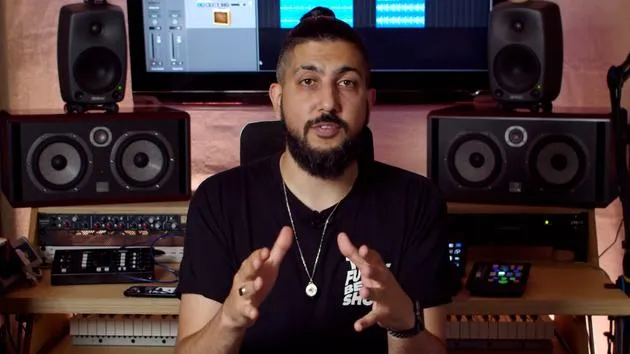
Aamir YaqubAamir Yaqub explains the LFO, or low frequency oscillator - a key tool for adding movement and shaping your synth sounds.

What's in the course
20 lessons (1h 47m) · 1 free
01. Welcome to synthesis
Free lesson0:53

02. Intro to synthesis, Subtractive synthesis
3:22
03. First stage - Tone generation
4:09
04. Second stage - Tone shaping & Filters
1:35

05. Volume shaping - ADSR
3:27
06. LFOs
You are here1:54

07. Alchemy
4:11
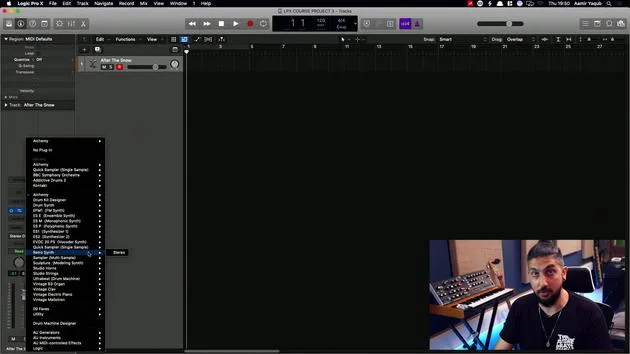
08. Retro synth
4:55

09. ES1 and ES2 synths
4:00
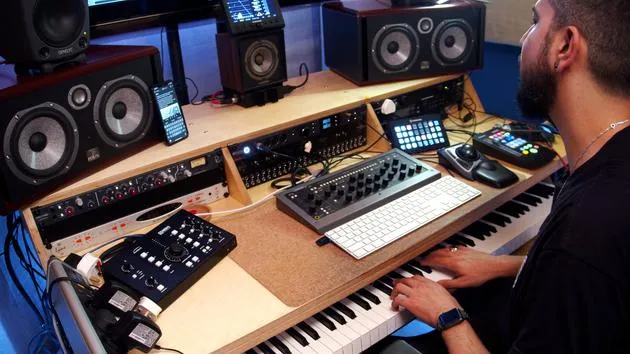
10. ESP synth
1:17
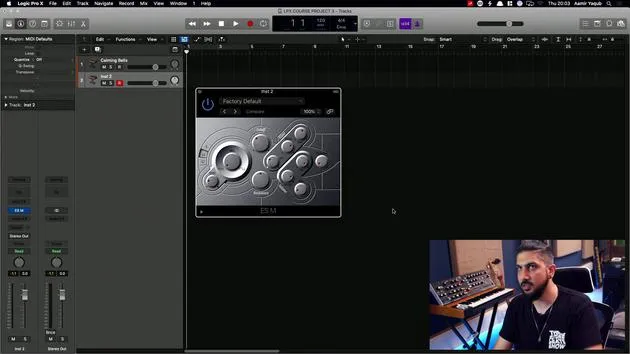
11. ESM, ESE, EFM1
8:54
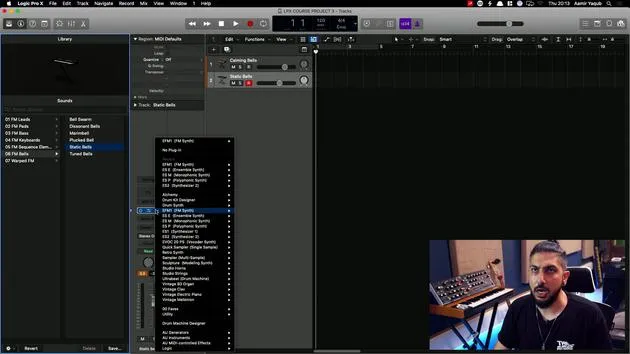
12. Sculpture, EVOC20 and vocoding
7:53
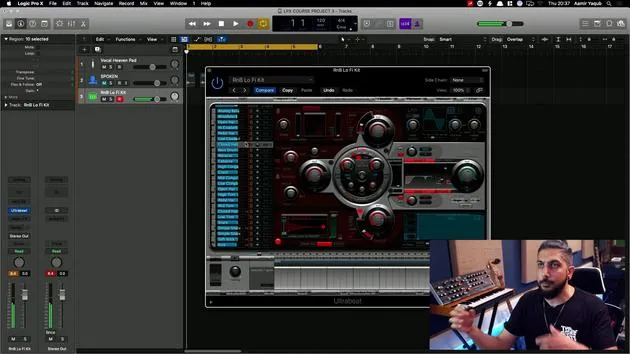
13. Drum synth and Ultrabeat
7:11

14. Drum Kit and Drum Machine Designer
7:23

15. Keyboard synths - Vintage Organ, EP, Clav, Mellotron
9:03
16. Studio Horns and Studio Strings
4:48
17. MIDI Effects - Arpeggiator
21:21
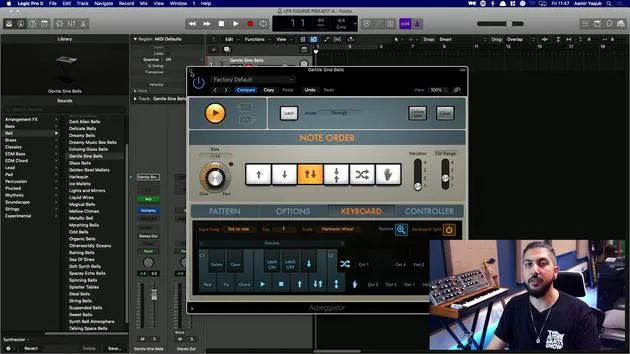
18. MIDI Effects - Chord Trigger
5:45

19. Other MIDI Effects
4:33
Lesson transcript
Understanding Synth Sounds and LFOs
Of course, we can make synth sounds very complicated. And, you know, some synthesizers do look very complex. Even these three phases are just too basic for some people.
Introducing LFOs
So, they start to introduce something called an LFO. Now, an LFO is a really common additional module that can be found inside of a synthesizer.
What Does LFO Mean?
- It doesn't mean low flying object.
- It means low frequency oscillator.
Essentially, what we're getting with an LFO is an oscillator that vibrates at a frequency below the range of our hearing.
Frequency Settings
- It can be set to oscillate a few times each second, or even once a minute if we want to.
Waveform Choices
The choices of the waveform in an LFO are often the same as in an oscillator. So, we can have:
- A square wave
- A triangle wave
Main Controls
The two main controls that we'll find in LFOs are:
- Depth: The amount of volume of the wave that we've chosen.
- Frequency: Determines how quickly the LFO runs.
Modulating Sound with LFOs
LFOs are used to modulate or change a parameter of a sound in a synth.
Example: Pitch Modulation
Let's take pitch as an example. Right? If we had a sound like so, and we were to modulate the pitch of this sound, the pitch will rise and fall regularly. This fluctuation is due to the work of our LFO.
- If we were to increase the frequency of this, this is what that would sound like.
- If we were to increase the depth of this, this is what it would produce.
So, those are the basic building blocks and foundations of synthesis.
Next Steps
We're now going to go in and explore synthesis further with Logic's own synthesizers.
20 lessons
1h 47m of structured video lessons
Advanced video features
Slow down, loop a passage, follow along
Mobile, tablet & desktop
Practise wherever you are
100% satisfaction guarantee
30-day money-back guarantee
Meet your guru
Meet your guru
Aamir Yaqub is a music producer and engineer based in London. He has worked with some of the biggest names in music, including Alicia Keys, David Guetta, Rihanna, Sia and will.i.am, as well as developing independent artists.
Across his courses he teaches his complete Logic Pro workflow - from the interface and recording through beat-making, synthesis and MIDI effects to mixing and finishing a track.