



Nit Pickin' (lesson)

With
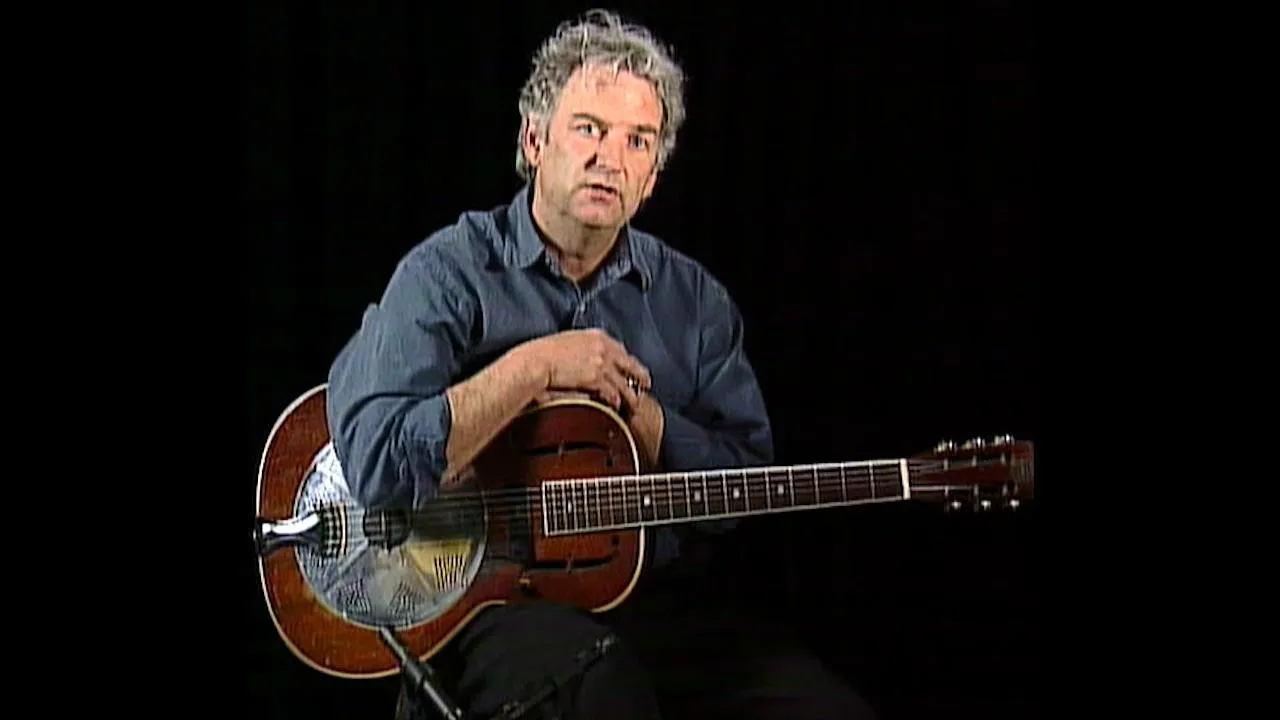
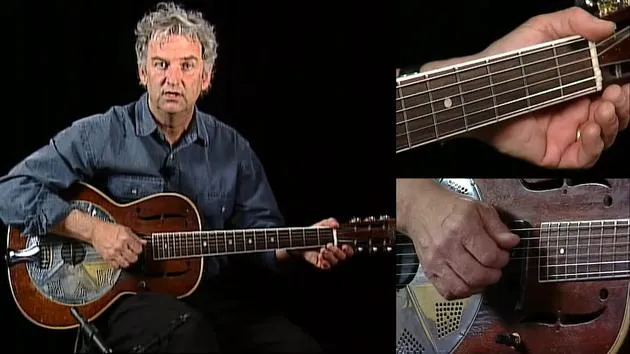
Mike DowlingMike Dowling teaches his fingerpicking tune 'Nit Pickin'' on acoustic guitar, working through the alternating-thumb roll and its tricky three-against-two syncopation.
What's in the course
14 lessons (1h 30m) · 1 free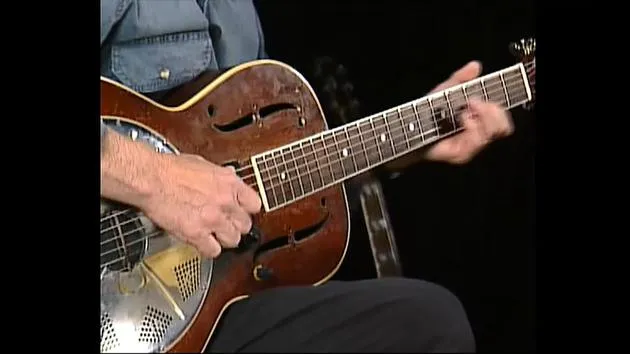
01. Rosalie (performance)
Free lesson4:58
02. Rosalie (lesson)
8:59
03. Nit Pickin' (performance)
3:22
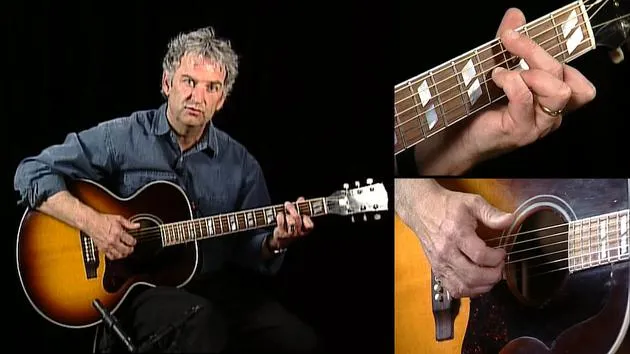
04. Nit Pickin' (lesson)
You are here11:02
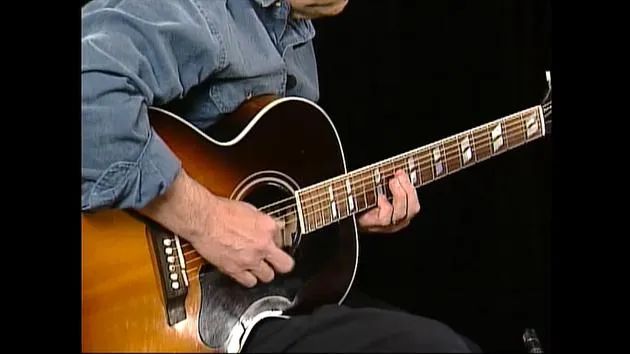
05. Minor Thing (performance)
4:21
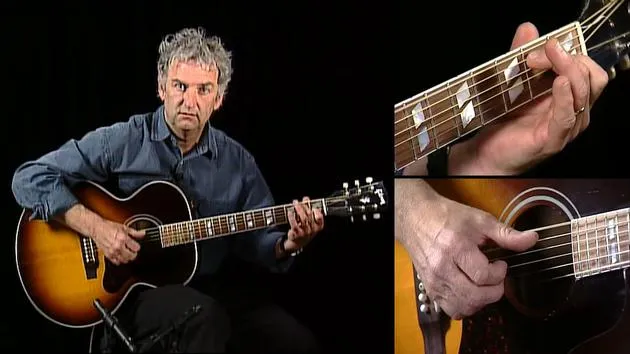
06. Minor Thing (lesson)
10:48
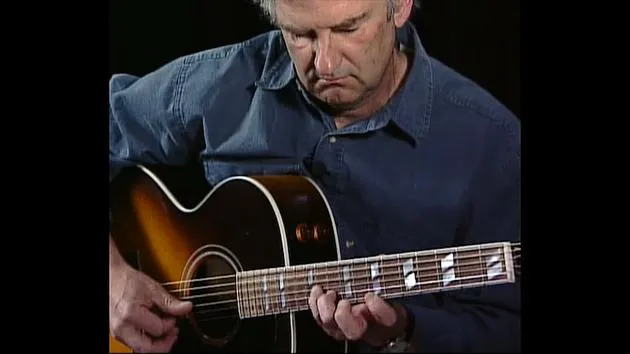
07. Johnson City Rag (performance)
3:33
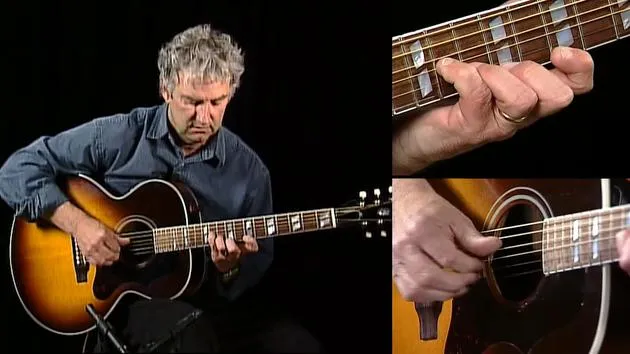
08. Johnson City Rag (lesson)
9:39
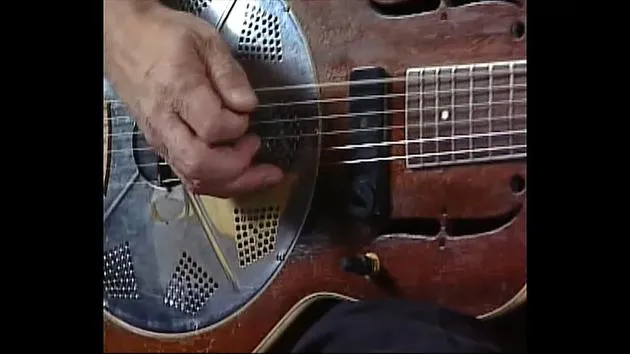
09. Fishin' In The Wind (performance)
2:35
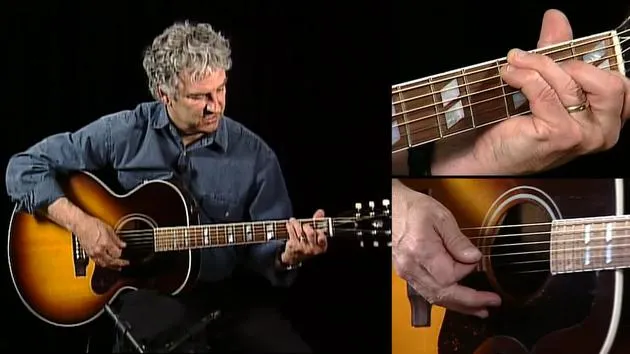
10. Fishin' In The Wind (lesson)
10:15
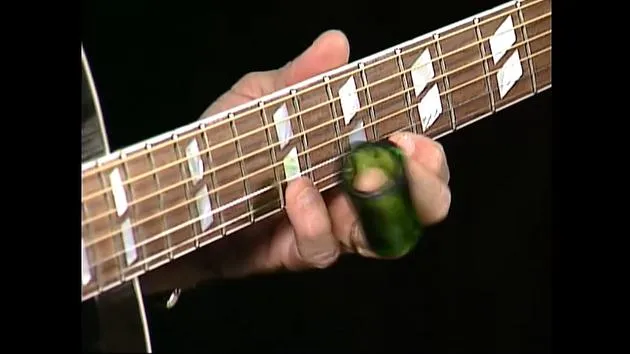
11. Bottleneck March (performance)
3:00
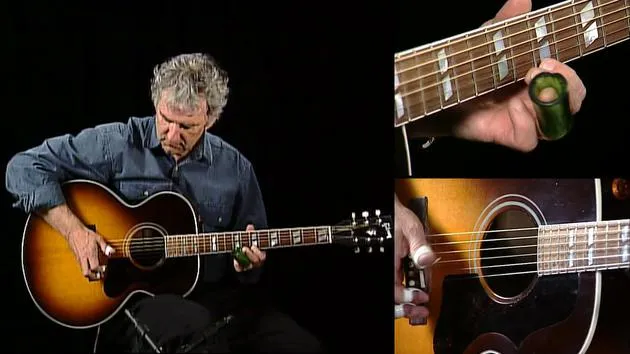
12. Bottleneck March (lesson)
10:31
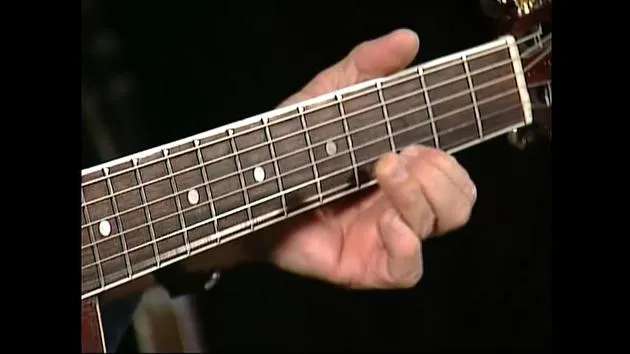
13. BONUS: Bottom Lands (performance)
3:44
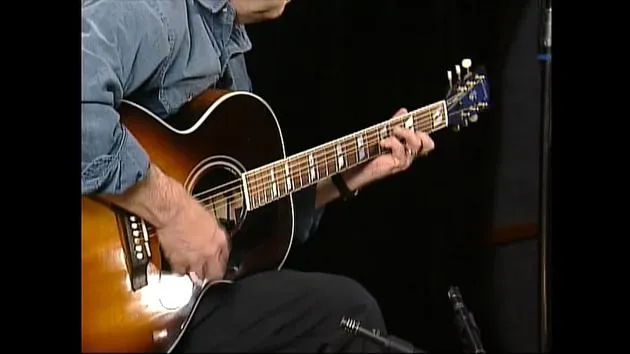
14. BONUS: String Crazy (performance)
3:34
Lesson transcript
Music Lesson: Tune Nitpicking Overview
Alright, now we're going to take a look at my tune "Nitpicking." To get a handle on this rhythm, there's a finger-picking technique that's critical. It's easy to relate to if you think of the tune in "In the Mood."
E Chord Practice
- Play an E chord: Just play a forward roll with your fingers.
- Right-Hand Focus: You can use your angle button to access my right or left hand as we get further along here.
Right-Hand Riff
Here's my riff:
-
Eighth notes:
- 1 and 2 and 3 and 4
- 1 and 2 and 3 and 4
-
With an alternating thumb.
Next, I've got quarter notes against that:
- "I remember learning this tune, this syncopation, almost sitting in my room, pulling my hair out trying to get this down."
- While these are eighth notes, they're grouped in threes. Some call this a three against two syncopation, but it's really eighth notes against quarter notes.
Chord Variation
Now, let's take a look at "Nitpicking."
- I'm going to ask you to give these chords some big names, though it's not critical.
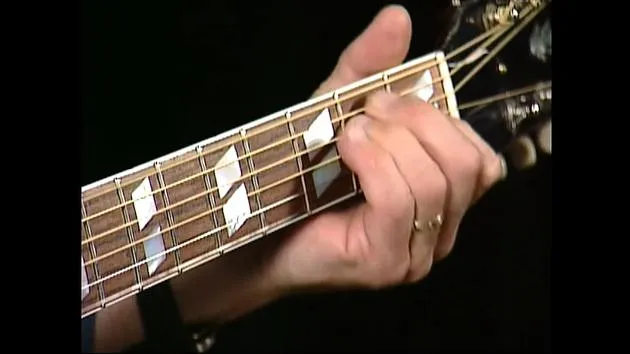
- I'm playing a G major 7 form; we can just call it an altered G.
Rhythm Cadence
With my right hand and the chord:
- It looks like this.
- Then I lift up my first finger, you can see it happening while I'm going.
Chord Changes
- IV Chord: I alter this chord for my C9 altered chord.
- Return to G: Then come back to G.
- Next Chord: Move to an E7 chord.
- Previewing Play: I come up here and will play the whole passage shortly.
Structure Recap
So here it goes from the top:
- Pattern: C9 back to G.
- You can break out of that pattern if you want; it won't harm anything.
Full Playing Context
Let me play it in context without interruption:
- Back to G, and E goes to A7.
- Just a bar chord, A9, and make it minor, same motif.
- C altered back to G major like before.
- Move to my A bar.
Key Modulation
Finishing up here on the second part in the key of C:
- G7 augmented.
- Now we've modulated to the key of C, moving out of the pattern we had before, into regular pattern picking to get the melody notes.
Palm Muting Technique
You can hear me muting with my palm down here:
- "I feel I'm really pushing it. If I don't have a thumb pick and I'm playing with my bare thumb, I'm muting it."
Playing Without Finger Picks
You might wonder, "Why don't you just use finger picks?"
- If I've got this three-finger pattern, I'm not adept at playing with a finger pick on my ring finger.
- I sometimes play this tune with my bare fingers and just a thumb pick if I want to get more definition.
Be aware: Playing with bare fingers can prevent low-end notes from getting washed out or too muffled.
Bridge Progression
Back to the Bridge
Let me go back to the bridge of this tune:
- Chords: C, E minor 7, a sixth.
- Setting up the last part of the tune.
- Back to our refrain: C.
Chords Recap:
- Just implying a C chord.
- Minor sixth, A7, D7, and to G.
Special Chord Mention
There's one chord I wanted to bring to your attention:
- Seven flat five.
- It gives me an E flat and rings against an open high E.
I appreciate finger picking tunes that create a bell-like quality with discordant notes ringing against one another.
- Positioning: I can stay in fourth position and make it a minor seven flat five as the passage continues.
Second Part of the Tune
Single Note Passages
Let's go to the second part of this tune where I'm playing some single note passages.
- The second part of the tune goes like this, and I'll get there in a minute.
Syncopation Practice
Here's my syncopation:
- "Hear that?" It's the same as the opening syncopation but I'm using it on an A 9th chord, A minor 7.
Turnaround Chords:
- Then I get into this.
- Tap your foot and use your thumb and the finger on the "ands" to stay on track rhythmically.
Technique Reference
The late great Oscar Alimon was superb at this technique:
- "It almost sounded like plectrum playing, but he was playing with picks."
Balance Suggestion
The key is achieving an even balance to those notes because sometimes the thumb has more weight and tends to overpower the finger notes.
Final Tips
For single line passages:
- Practice playing on one string.
- "See what I'm doing?" Thumb, finger, thumb, finger, thumb, finger.
If you're tapping the foot on quarter notes:
- Use the thumb on the downbeat, and as a general rule, use your finger on the "ands" or the offbeat.
Ending Passage
For the last passage in that tune:
-
If you take a D chord and move it over to the next set of strings, then up one more fret and just pluck those notes, it looks like a D chord.
-
This creates a great all-purpose turnaround with three voices moving down.
Conclusion
To capture the ending of this tune, we can put it up an octave and use harmonics at the 12th fret to take us out.
I hope that what we've talked about will get you started playing this tune, especially the critical syncopation. I encourage you to expand on it and use it in your own way as well.
Alright, let's go to the next tune!
14 lessons
1h 30m of structured video lessons
Advanced video features
Slow down, loop a passage, follow along
Mobile, tablet & desktop
Practise wherever you are
100% satisfaction guarantee
30-day money-back guarantee
Meet your guru
Meet your guru
When the late, great Vassar Clements heard Mike Dowling play guitar back in 1975 he did the sensible thing. He hired him. Mike was the guitarist in Vassar's first touring band and can be heard on his Grammy-nominated “Nashville Jam”. Clements called him simply, “One of the finest guitarists there is, anywhere.” Echoing that sentiment is an ever-growing chorus of music critics, guitar students, and acoustic music fans from throughout the world.
Mike digs deep into the musical bag of American roots guitar, favoring the melodic Piedmont style of acoustic blues masters like Mississippi John Hurt and slide great Tampa Red. But Mike can't be pigeonholed as a blues player, or even as a fingerstylist. He's far too versatile for that. From bottleneck blues to vintage jazz and much more in between, Mike's musicality, depth, and mastery of the instrument translates fluently to flattop, archtop, and resonator guitars alike.
Performer, composer, instructor, session artist, inventor - everything guitarist Mike Dowling does reflects his love for and mastery of the instrument that has been the focus of his life for over forty years.
In his lessons, Mike opens up the uptown blues bag for you: relaxed Piedmont fingerpicking, a steady alternating-thumb bass, swinging single-note runs and the slide and bottleneck moves that give American roots guitar its soul - taught with the same feeling he injects into every note.
“An excellent instrumentalist who's comfortable with a wide range of musical styles. He injects feeling into every word and note.”
--Hit List, Acoustic Guitar
“Dowling is a fluid and precise guitarist and his gritty vocals have a sense of playfulness and bounce that's very appealing.”
--Dirty Linen







