



Bottleneck March (lesson)
With
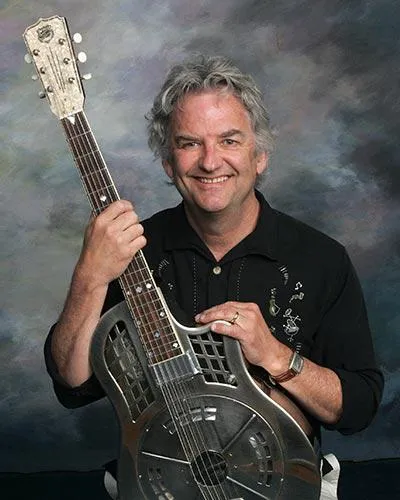
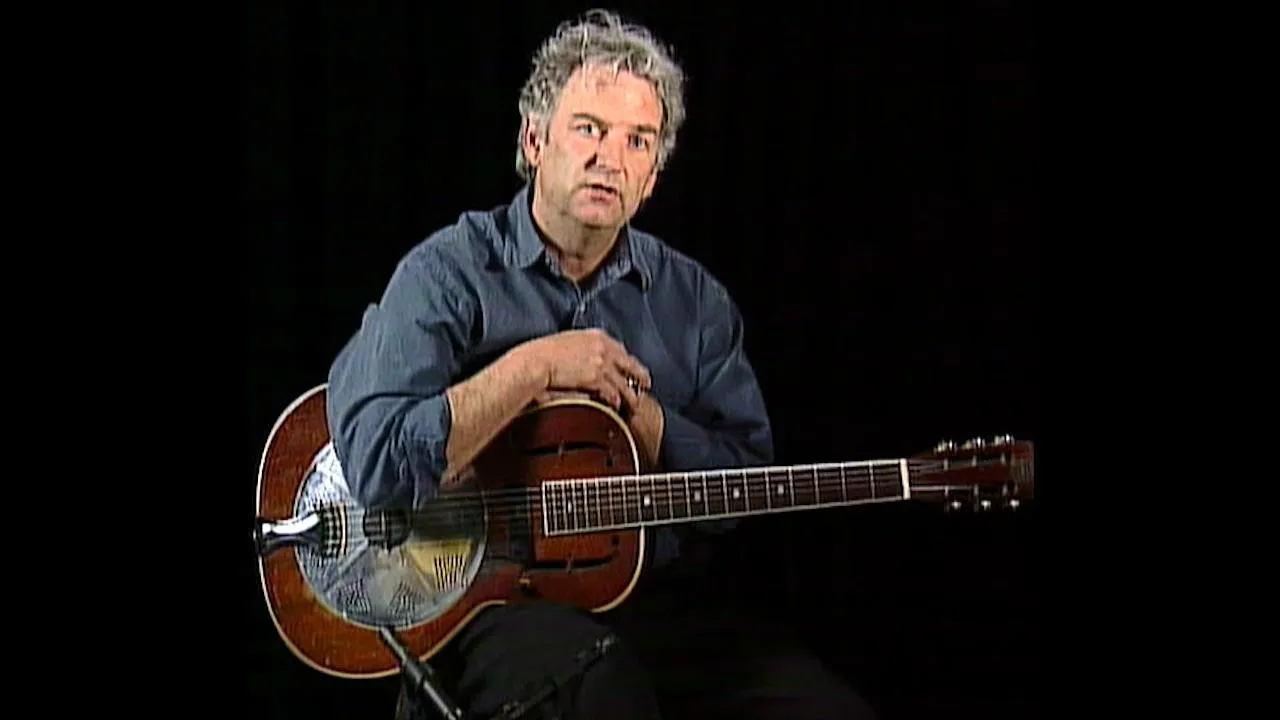
Mike DowlingMike Dowling teaches “Bottleneck March” on acoustic guitar in open D tuning, covering the slide work, pull-offs and fingerpicking syncopations that drive the tune.
What's in the course
14 lessons (1h 30m) · 1 free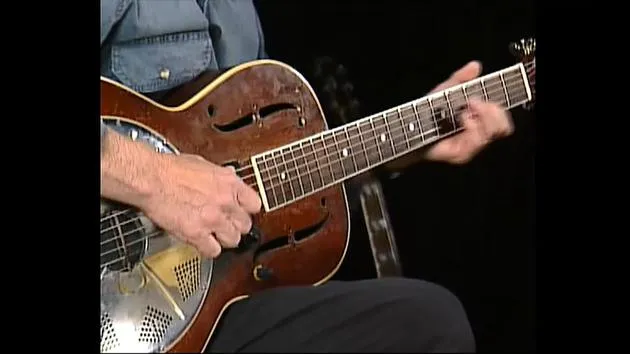
01. Rosalie (performance)
Free lesson4:58
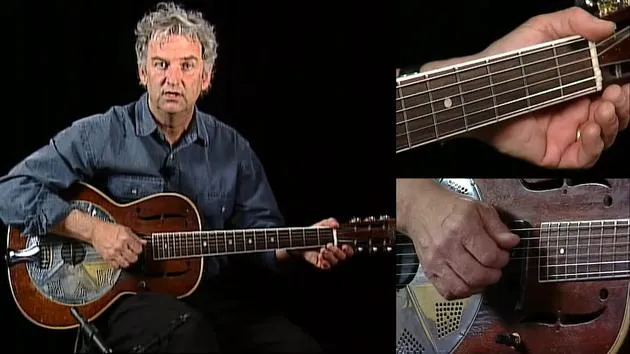
02. Rosalie (lesson)
8:59
03. Nit Pickin' (performance)
3:22
04. Nit Pickin' (lesson)
11:02
05. Minor Thing (performance)
4:21
06. Minor Thing (lesson)
10:48
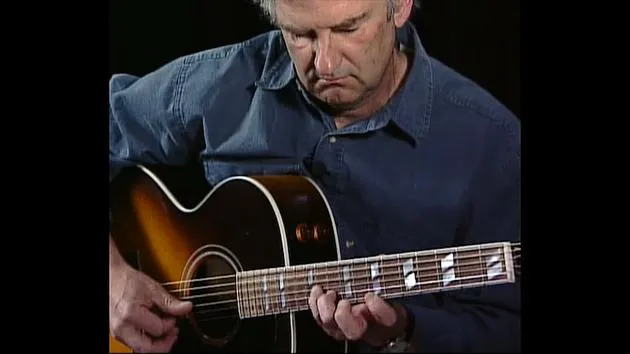
07. Johnson City Rag (performance)
3:33
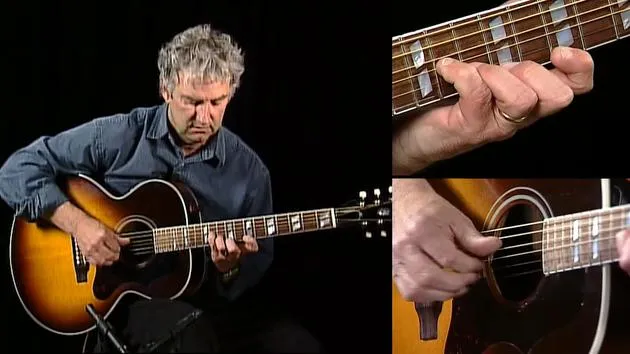
08. Johnson City Rag (lesson)
9:39
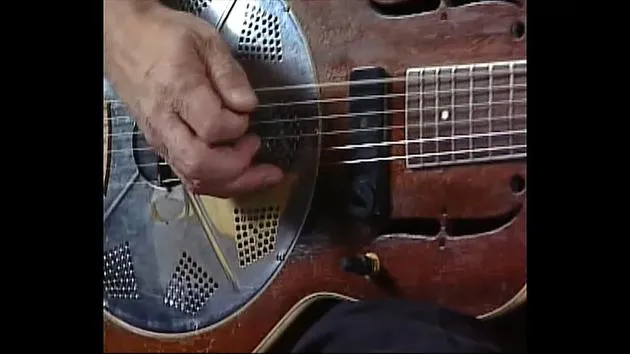
09. Fishin' In The Wind (performance)
2:35
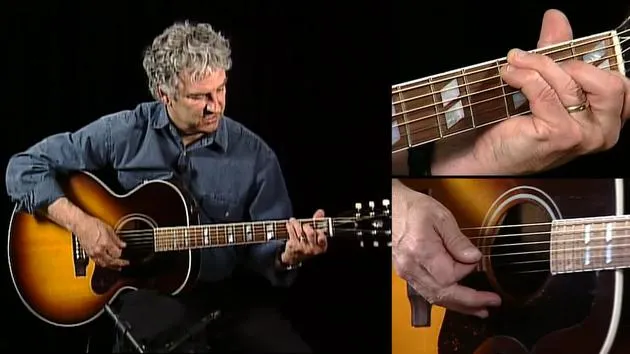
10. Fishin' In The Wind (lesson)
10:15
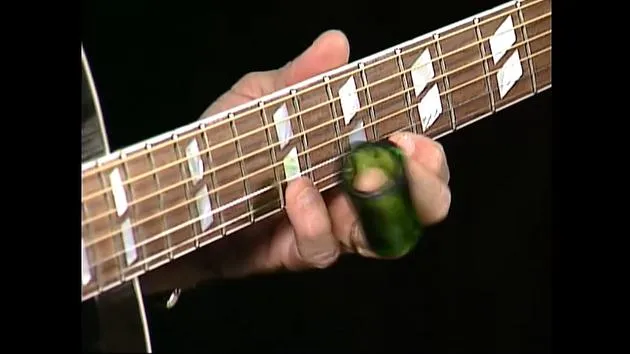
11. Bottleneck March (performance)
3:00
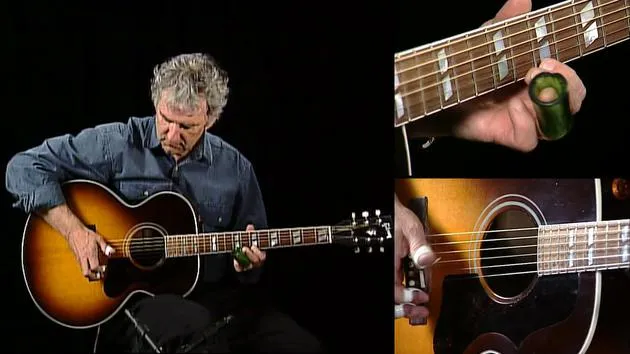
12. Bottleneck March (lesson)
You are here10:31
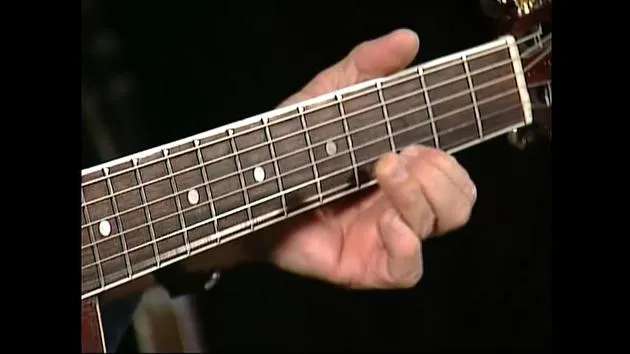
13. BONUS: Bottom Lands (performance)
3:44
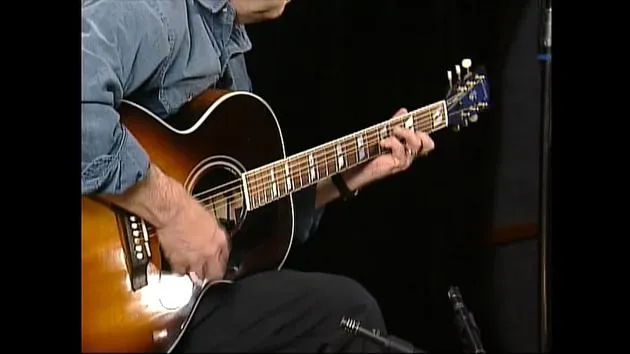
14. BONUS: String Crazy (performance)
3:34
Lesson transcript
Bottleneck March Music Lesson
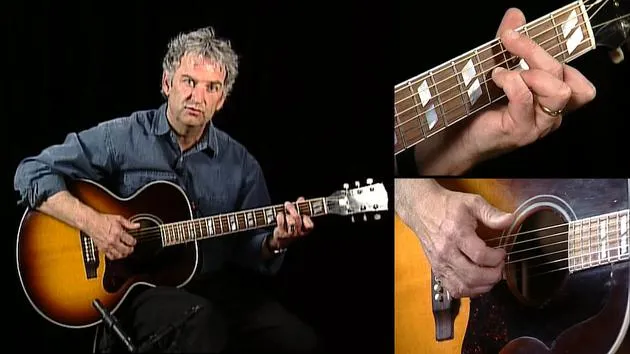
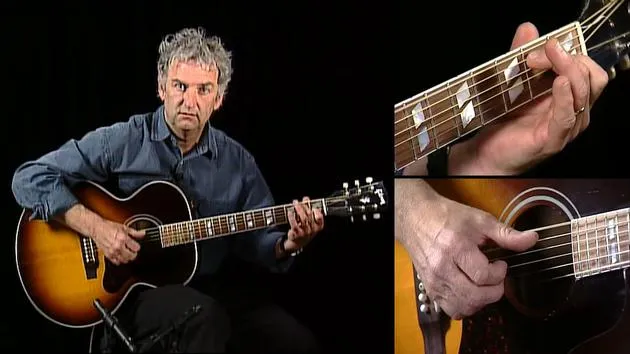
All right, here's my tune: Bottleneck March. It's not truly a march, but please don't hold that against me. This is the only tune I'm playing today with my finger picks on.
As in Johnson City Rag, there are a couple of little fingerpicking syncopations that are good to get under your control. This will help you achieve as smooth an execution of this tune as possible.
Techniques and Tips
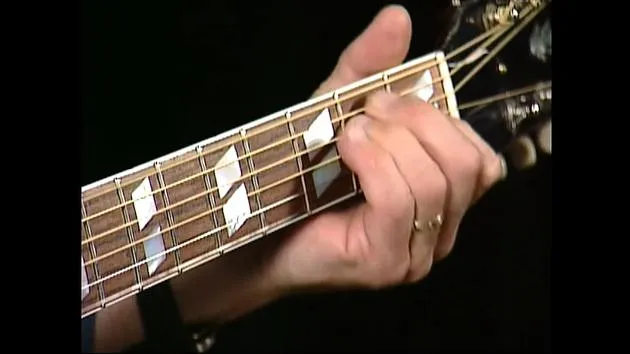
- If I'm up here implying E at the seventh fret, you can see the pull-off there.
- If I get the bottleneck out of the way for a moment, you can see what I'm doing.
- There's my pull-off, strike two, and then I pull off as I'm bringing my thumb up.
Pinching Notes
- Pinch, single note, pull-off to get that second bass note along with it. This is a pinch generated by a pull-off.
- I would describe that if I slid with my little finger from the 8th to the 9th fret on the B string.
- When I got to the ninth fret, I added my bass note: one and one.
Let me put them together. That's the opening phrase. And there's my A7 (or my A chord) up there.
Detuning Explanation
I'm in Detuning here. If you're not familiar with that, you've got:
- Low D
- A
- D
- F#
- A
- D again.
You might notice in my performance of this piece and as I'm teaching it that, for some reason, to get my fretted notes in tune up high at the ninth fret, especially on the B string, I've just put a little piece of plastic under the string there, creating a partial fret.
This allows me to play this song in tune, especially for my high fretted passages. When I come open, it's still in tune for me. Why it works, I don't know, but it's something that I'll continue to do.
Tuning Observations
- G tuning is fine.
- In standard tuning, it seems to be fine as well.
- There's just something about that detuning that helps.
Starting the Tune
Let's get back to this tune. To start, I'm going to have a series of forward rolls.
The cadence would be:
1 and 2 and 3 and 4 and 1 and 2 and 3 and 4 and 1 and 2 and 3 and 4.
I'm sorry.
Let's try again: 1 and 2 and 3 and 4 and 1 and 2 and 3 and 4, 1 and 2 and 3 and 4.
Okay, that's the intro. A lot of people ask why I play with the bottleneck on my third finger. Most people put it on their pinky.
If I had it on my pinky, I wouldn't be able to play this song. I probably wouldn't have written it the way I did. Having the bottleneck on my third finger allows me to make these reaches that span an extra fret that I wouldn't have available if using my pinky.
Balance and Technique
As far as playing these fretted tones, I like the bottleneck there because it feels balanced in my hand.
In the 7th position, I'm making a D chord, but putting it way down here. I have my ring finger free for the bottleneck while I'm moving it down. That's my turnaround.
This is a useful turnaround for the key of G and also works in standard tuning as well.
Second Part of Bottleneck March
Here's the second part of Bottleneck March:
- Surrounding tones for my D chord.
- A B flat chord with my same high D in the melody.
- Now, here I'm thinking I can be a little bit raucous this way: back to D, back to B flat, back to D.
That was my A passage, sort of. Then I play the theme again and use the introduction as a little interlude.
Pull-off Forward Roll
The bottleneck's probably in the way there, so let me get rid of that.
This sets up the next part of the tune: pull-off forward roll.
- A diminished D diminished, this little five-note thing is kind of interesting and fun to play.
- It starts with a thumb: thumb, thumb, index, middle, thumb.
Final Part
Now, onto the final part:
- A low octaves.
- A da da da da da da da da da da da da da.
- It's a common ragtime syncopation.
Diminish back to D, E, and back to D.
Now all that's left to finish out this tune is to play part one again.
I won't play the whole thing again; I'll just play the last part for you. You can see what I'm doing with my right hand there, just single noting those going out seventh harmonics.
See if you can capture those harmonics. Hit them at the 12th fret while they're ringing. Try to pick it up!
There it is on the first string, but you want to get more.
Alright, there's the Bottleneck March. Good luck with it!
14 lessons
1h 30m of structured video lessons
Advanced video features
Slow down, loop a passage, follow along
Mobile, tablet & desktop
Practise wherever you are
100% satisfaction guarantee
30-day money-back guarantee
Meet your guru
Meet your guru
When the late, great Vassar Clements heard Mike Dowling play guitar back in 1975 he did the sensible thing. He hired him. Mike was the guitarist in Vassar's first touring band and can be heard on his Grammy-nominated “Nashville Jam”. Clements called him simply, “One of the finest guitarists there is, anywhere.” Echoing that sentiment is an ever-growing chorus of music critics, guitar students, and acoustic music fans from throughout the world.
Mike digs deep into the musical bag of American roots guitar, favoring the melodic Piedmont style of acoustic blues masters like Mississippi John Hurt and slide great Tampa Red. But Mike can't be pigeonholed as a blues player, or even as a fingerstylist. He's far too versatile for that. From bottleneck blues to vintage jazz and much more in between, Mike's musicality, depth, and mastery of the instrument translates fluently to flattop, archtop, and resonator guitars alike.
Performer, composer, instructor, session artist, inventor - everything guitarist Mike Dowling does reflects his love for and mastery of the instrument that has been the focus of his life for over forty years.
In his lessons, Mike opens up the uptown blues bag for you: relaxed Piedmont fingerpicking, a steady alternating-thumb bass, swinging single-note runs and the slide and bottleneck moves that give American roots guitar its soul - taught with the same feeling he injects into every note.
“An excellent instrumentalist who's comfortable with a wide range of musical styles. He injects feeling into every word and note.”
--Hit List, Acoustic Guitar
“Dowling is a fluid and precise guitarist and his gritty vocals have a sense of playfulness and bounce that's very appealing.”
--Dirty Linen







