



Johnson City Rag (lesson)
With
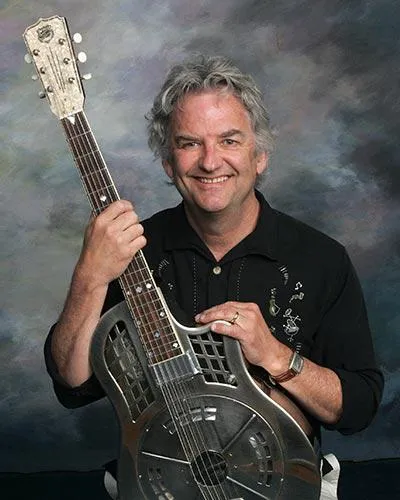
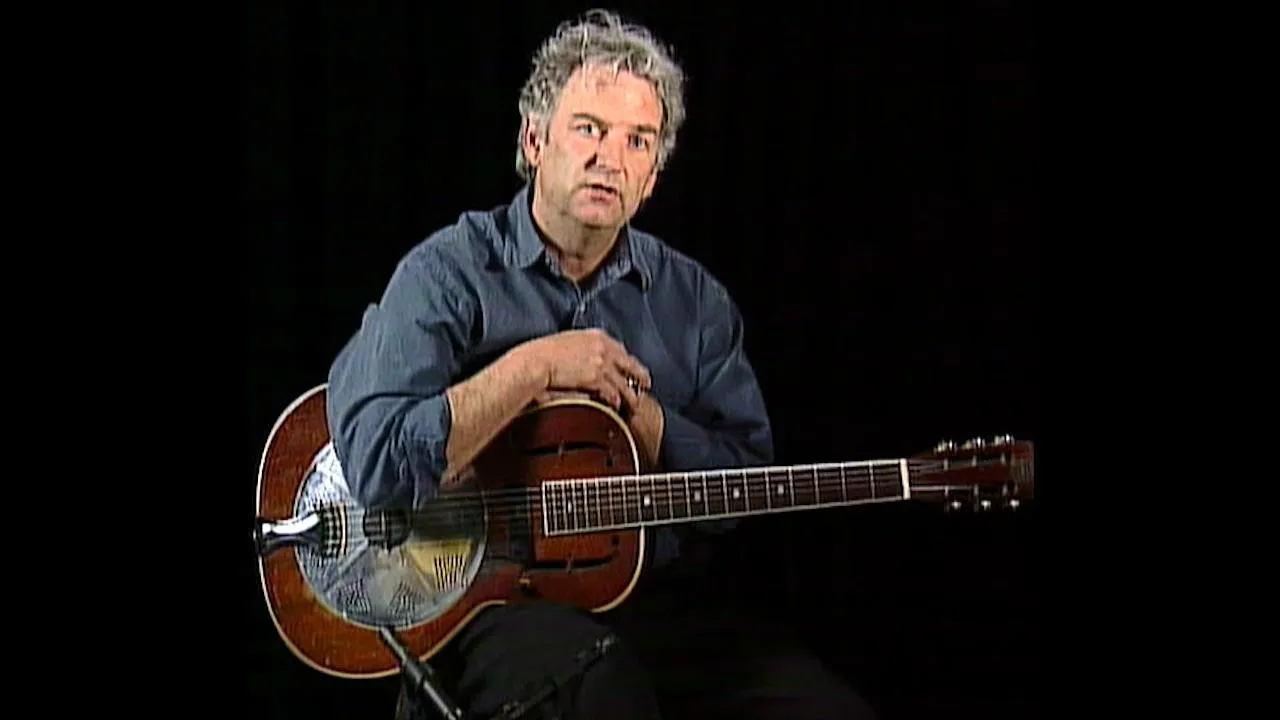
Mike DowlingMike Dowling teaches his fingerpicked 'Johnson City Rag' in the key of A, focusing on the slides, pull-offs and syncopation that give the tune its ragtime bounce.
What's in the course
14 lessons (1h 30m) · 1 free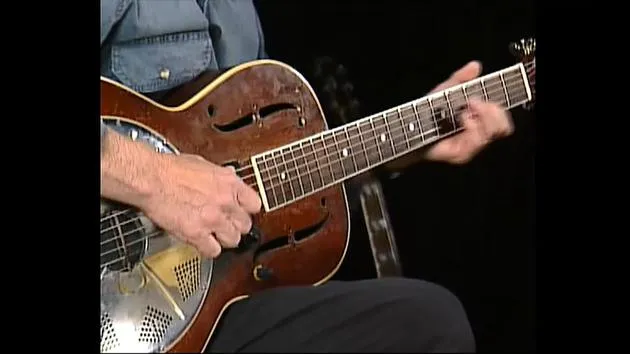
01. Rosalie (performance)
Free lesson4:58
02. Rosalie (lesson)
8:59
03. Nit Pickin' (performance)
3:22
04. Nit Pickin' (lesson)
11:02
05. Minor Thing (performance)
4:21
06. Minor Thing (lesson)
10:48
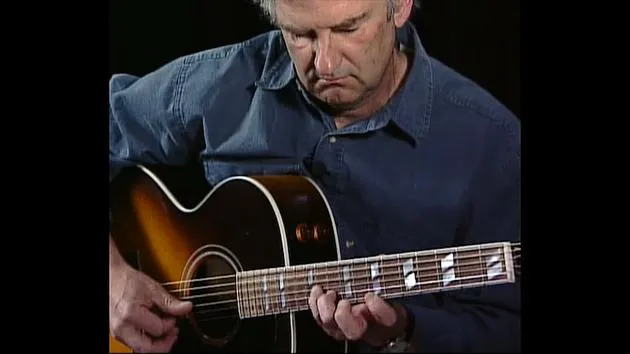
07. Johnson City Rag (performance)
3:33
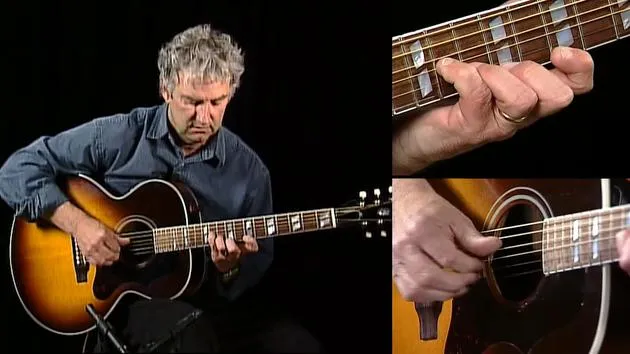
08. Johnson City Rag (lesson)
You are here9:39
09. Fishin' In The Wind (performance)
2:35
10. Fishin' In The Wind (lesson)
10:15
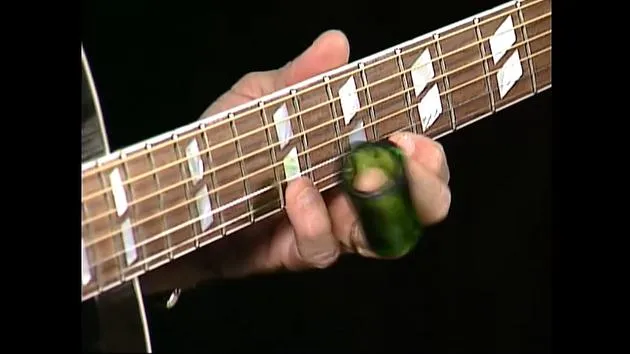
11. Bottleneck March (performance)
3:00
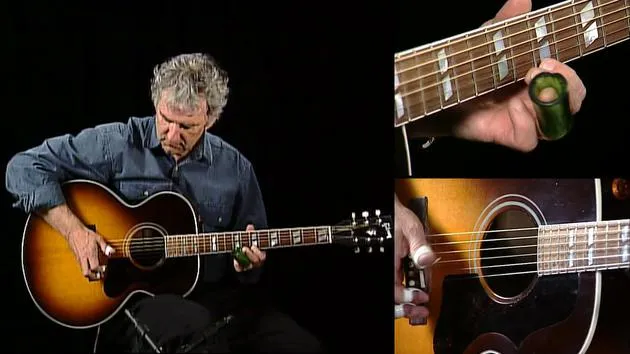
12. Bottleneck March (lesson)
10:31
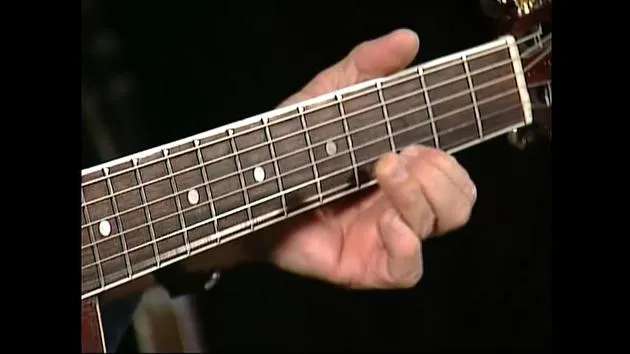
13. BONUS: Bottom Lands (performance)
3:44
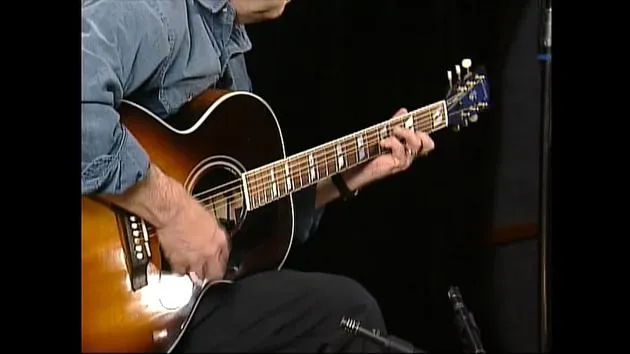
14. BONUS: String Crazy (performance)
3:34
Lesson transcript
Johnson City Rag Composition
Key: A
Tuning: Standard
Well, here's my composition, the Johnson City Rag. It's pretty much a straightforward raggy kind of tune. Getting it smooth depends on you getting what sound like pinches here, but they're kind of a slide into what would sound like a pinch, two notes together.
Technique Overview
-
A Chord Technique:
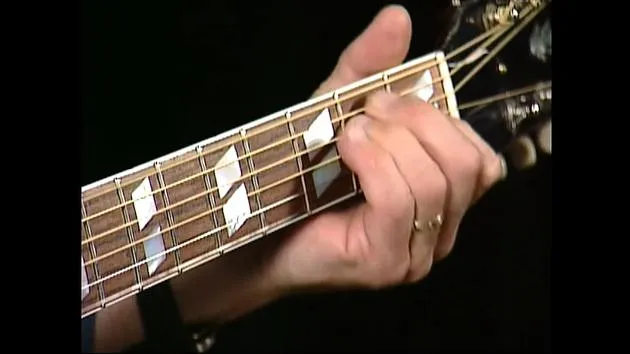
- Take your A chord and just slide on the B string.
- When you get where you're going, hit your bass notes:
- 2 and 3 and 4 and 1 and 2 and 3.
- After hitting those notes, sometimes with my technique, after I get a clear bass note, I'll bring my palm down on it rather than muting it right away.
- That's part of the fingerpicking technique to play Johnson City Rag.
-
Pull Off Technique:
- Getting that pinchy sound can also come from a pull-off.
- If I take what some people call the long A form here and pull off when I hit my bass note, it'll be time to come up here.
- Here's the slide pull-off. See how I angle in on my right hand?
Syncopation
- This syncopation works as follows:
- 1 and 2 and 3, anticipating your note.
- 1 and 2 and 3 and 4.
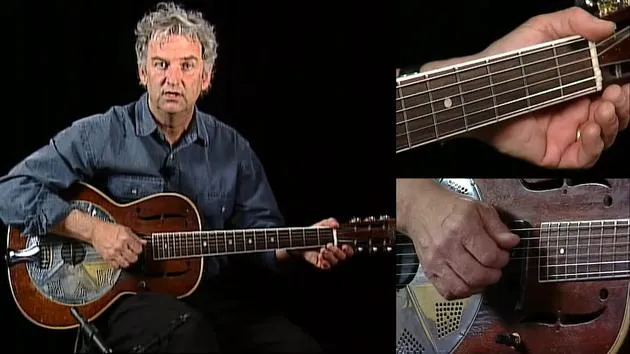
See what I'm doing there? I'm picking with my index finger.
Right Hand Breakdown
- Here's how to break that down:
- Take note of my index finger on the G string.
- I could alternate, but I won't for right now.
You'll hear those techniques; they may be a little disguised because sometimes, when I'm up and running, they almost take on a ghost note or grace note quality. But that's what that syncopation is.
Introduction to the Tune
Let me start the tune. Just got some neighboring or surrounding tones for my A chord:
- Go to sixth position diminished chord, then an E7.
- Now, I'm ready to do the tune.
Chord Progression
-
A passage, repeat it:
- Same thing on B:
- B, B diminished, F sharp, B7, E7.
- Then I throw in this altered chord:
- It's an E7, but it's got a flat 5 down below (first fret A string) and a sharp 5 or an augmented quality up above (C natural).
It's a very stark sounding chord to carry on here, little counterpoint. You can hear it moving.
- Same thing on B:
Playing the Passages
I'll play it again; these notes:
- Sorry I can't do it individually for you; I've got to make the bigger chord.
- On to my D passage, I'm just barring D.
Later on, you'll hear me play this passage and just peeling off my fingers off those notes, still thinking D.
Here's what keeps me straight:
- D, D minor a, F sharp, B9, E7.
I play that whole passage again just with some alterations:
- B7 to E.
Second Part of the Tune
Now I'm going to the second part of the tune where I'm covering E9. Here's what my thumb is doing:
- This can be rather muffled, and I've got this happening up above.
- You can hear some pull-offs in there:
- Pick two, pull off to that 11th fret B string, then 9th fret E string, 12th fret B string, and pull off again.
- So no thumb, and finish up on the E.
Come back to A6 and have those notes ring.
Syncopation Patterns
This is a quirky syncopation, but here's how it is. Notice the pull-off in there; a lot of these syncopations, even though they sound quirky, will still have an alternating bass up high:
- Same thing at A, A7, D minor.
We just play that main theme again before we go out, and here's your ending:
- Sixth position:
- A diminished, A to our sixth chord, F sharp 7, B9, E7, and A.
I end on an A69 up high.
And there you have the Johnson City Rag!
14 lessons
1h 30m of structured video lessons
Advanced video features
Slow down, loop a passage, follow along
Mobile, tablet & desktop
Practise wherever you are
100% satisfaction guarantee
30-day money-back guarantee
Meet your guru
Meet your guru
When the late, great Vassar Clements heard Mike Dowling play guitar back in 1975 he did the sensible thing. He hired him. Mike was the guitarist in Vassar's first touring band and can be heard on his Grammy-nominated “Nashville Jam”. Clements called him simply, “One of the finest guitarists there is, anywhere.” Echoing that sentiment is an ever-growing chorus of music critics, guitar students, and acoustic music fans from throughout the world.
Mike digs deep into the musical bag of American roots guitar, favoring the melodic Piedmont style of acoustic blues masters like Mississippi John Hurt and slide great Tampa Red. But Mike can't be pigeonholed as a blues player, or even as a fingerstylist. He's far too versatile for that. From bottleneck blues to vintage jazz and much more in between, Mike's musicality, depth, and mastery of the instrument translates fluently to flattop, archtop, and resonator guitars alike.
Performer, composer, instructor, session artist, inventor - everything guitarist Mike Dowling does reflects his love for and mastery of the instrument that has been the focus of his life for over forty years.
In his lessons, Mike opens up the uptown blues bag for you: relaxed Piedmont fingerpicking, a steady alternating-thumb bass, swinging single-note runs and the slide and bottleneck moves that give American roots guitar its soul - taught with the same feeling he injects into every note.
“An excellent instrumentalist who's comfortable with a wide range of musical styles. He injects feeling into every word and note.”
--Hit List, Acoustic Guitar
“Dowling is a fluid and precise guitarist and his gritty vocals have a sense of playfulness and bounce that's very appealing.”
--Dirty Linen







