



The Double Shuffle
With
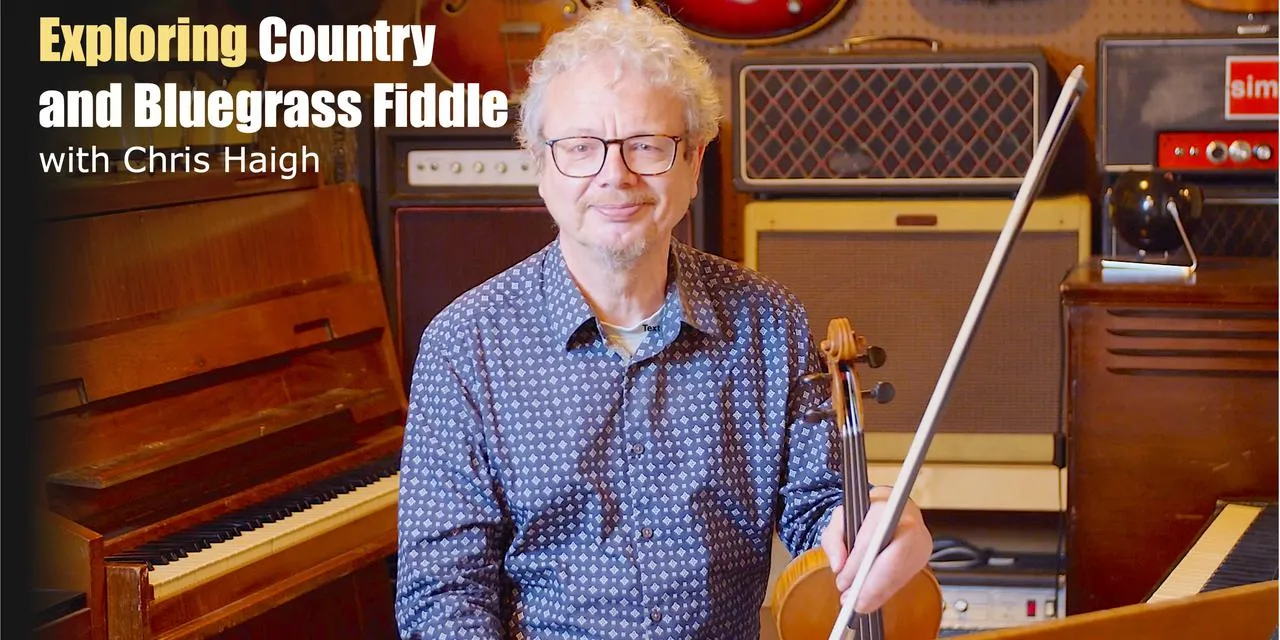
Chris HaighChris Haigh introduces the double shuffle (Holcomb bowing), the showy fiddle technique behind tunes like the Orange Blossom Special.
What's in the course
22 lessons (1h 51m) · 1 free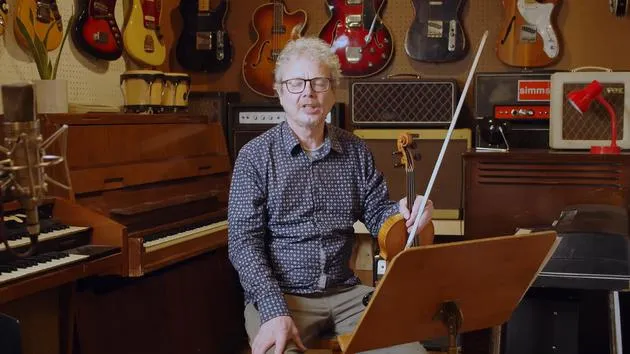
01. Old time vs Bluegrass
Free lesson11:17
02. Bluegrass: melody and fills
7:52
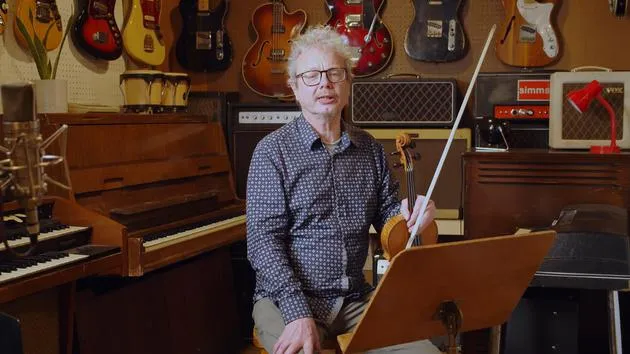
03. Bluegrass: Kickoffs and solos
7:28
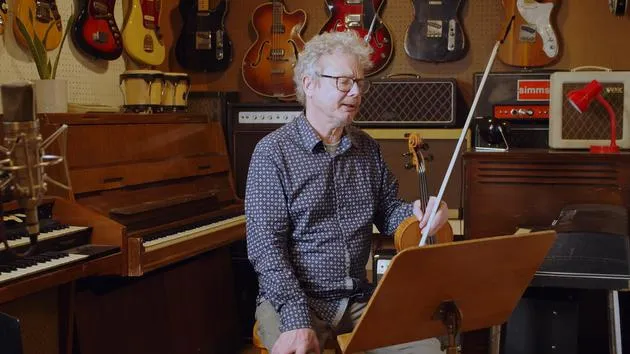
04. Bluegrass: Chubby Wise Licks
5:25
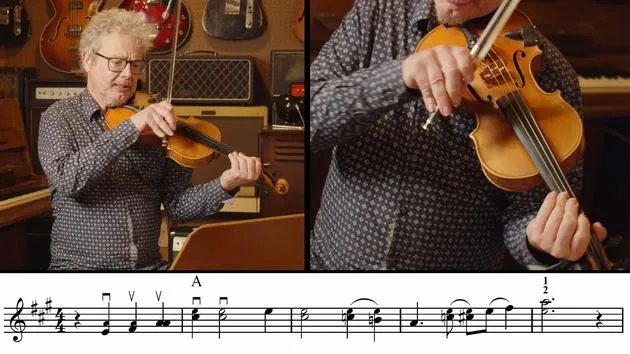
05. Bluegrass: Roll in my Sweet Baby's Arms (Chubby Wise solo)
2:02
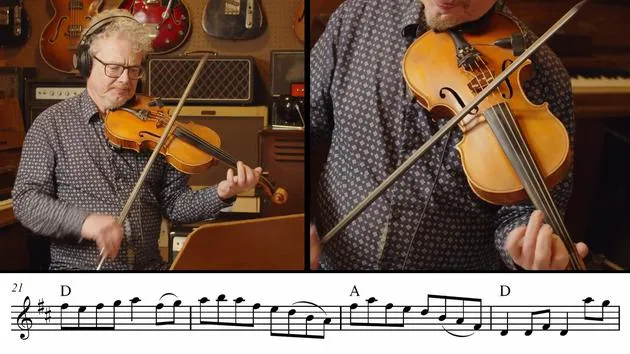
06. Bluegrass: Benny Martin, Kenny Baker licks
5:50
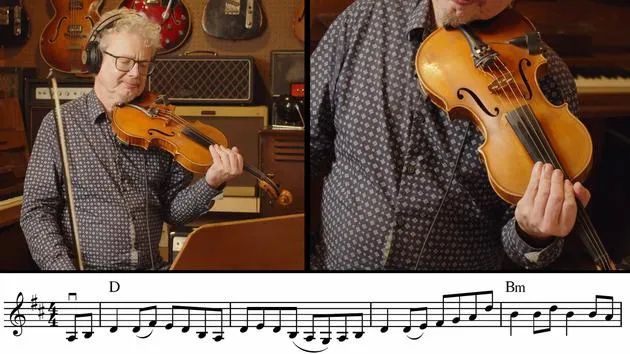
07. Bluegrass: Lost Indian (performance)
0:40
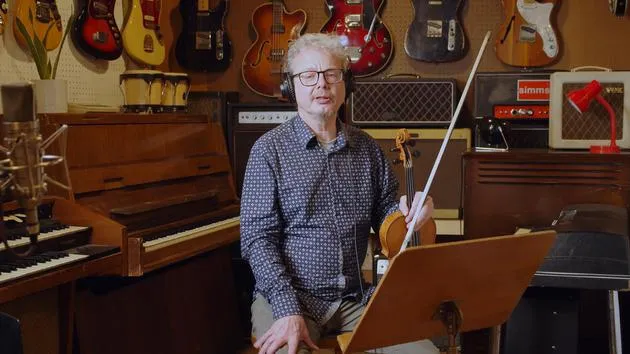
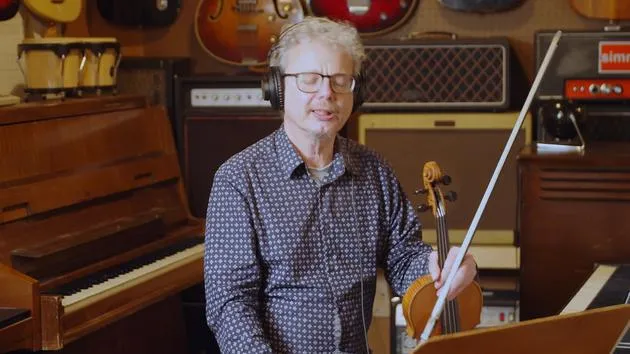
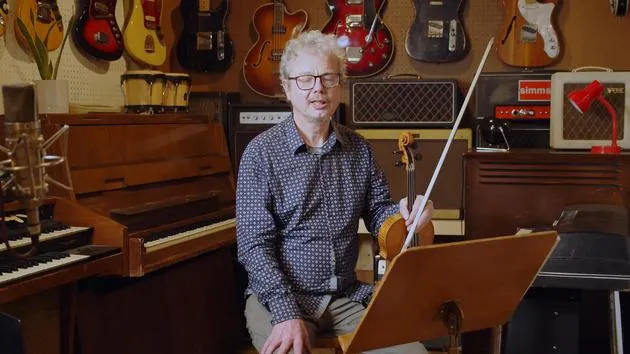
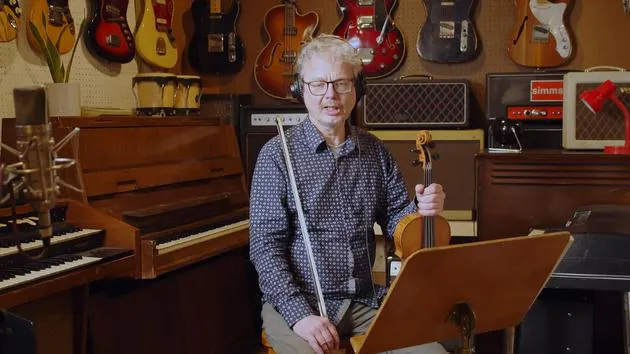
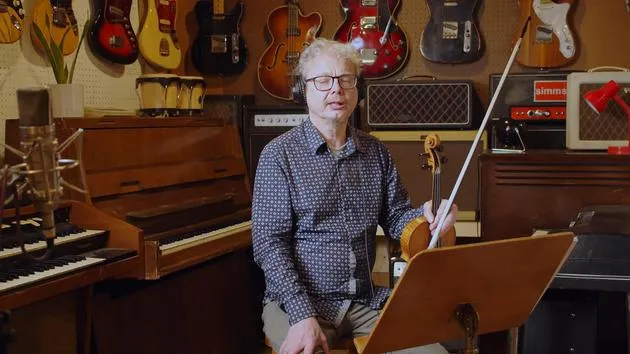
Lesson transcript
Double Shuffle Lesson
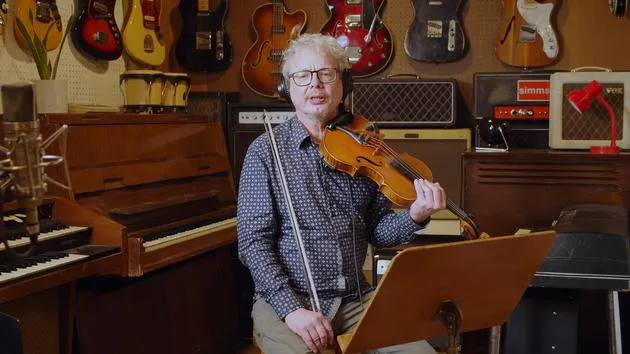
Hello. In this lesson, we're going to look at the double shuffle, also known as Holcomb bowing.
Introduction to the Double Shuffle
Now, you may remember we mentioned this back early on in the course with the Beaumont Rag, which incorporates this shuffle. You'll also find it in the Cotton Patch Rag and most famously in the Orange Blossom Special.
When I mentioned it before, I demonstrated it but didn't really explain how to do it. The double shuffle is a very useful technique to use in modern commercial fiddling, especially when you're soloing. If you can just bring out a double shuffle out of nowhere, then it's a guaranteed way of making the crowd go wild.
Understanding the Basics
It's not the easiest thing if it's the first time you're encountering it, but I'll try and explain it from the basic principles.
Basic Structure
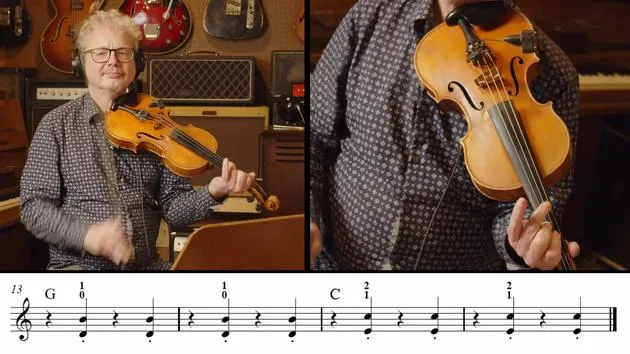
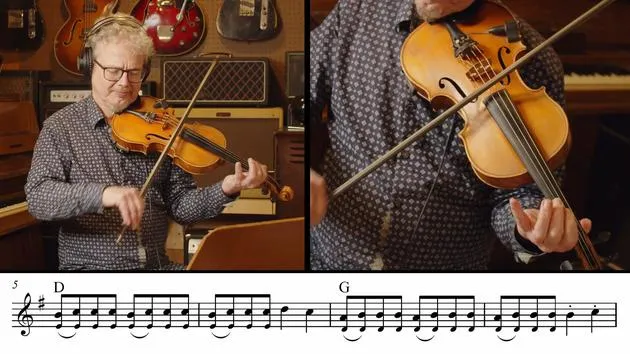
- Take a single bar with eight notes.
- We'll split it into two threes and a two:
- Crossing Strings: That's always a feature of the double shuffle.
- Pattern: 1, 2, 3, 1, 2, 3, one, two.
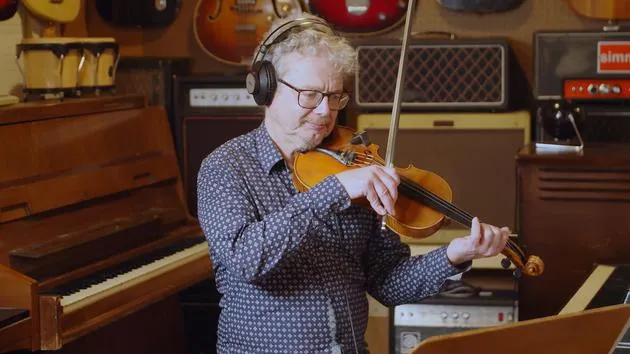
You'll find this is quite a lot easier if you do it in the middle or towards the tip of the bow rather than at the heel.
Keep the Tempo
-
It's very useful to tap your foot while doing this because it's very easy to lose where the four is.
- Count: 1, 2, 3, 4.
Now, if we reverse the pattern and do the two followed by two threes, we get:
- Pattern: Keep your foot tapping so that you know where the one is.
- Count: 1, 2, 3, 4.
This is a one-bar pattern with just eight notes.
Extending the Pattern
Now if we extend it over two bars while keeping those threes going, we have:
- Pattern: 1, 2, 1, 2, 3, 2, 2, 3, 3, 2, 3, 4, 2, 3, 1, 2.
This is where it gets challenging:
- Slow it Down: 1, 2, 3, 4.
-
That's one unit of two bars.
-
Repeat: 1, 2, 3, 4.
-
Having taught this to quite a few people, I know that it looks and sounds a lot easier than it is. It's very easy to get totally lost.
Encouragement
If you find that you really can't do it, just remember:
- In the end, you can do it, and you will do it, but you won't do it overnight.
- Keep on tapping.
You can practice this while sitting on the bus, on the Tube, or out walking. Just keep it going in your head, maybe tapping your fingers or humming it. You'll get there in the end.
Moving on the Top Line
The second stage of this, having got the two notes up and down, is to start moving on the top line.
- The movement is exactly the same, but you're moving on the top line.
I mentioned at the beginning that you can play with 3, 3, 2, and to me, that is the most natural way to do it. However, almost universally in American fiddling, people start off with the two followed by the threes.
Practice Exercise
A good exercise if you're finding it difficult to get this rhythm, and a lot of you will, is to alternate with a straightforward 4:4 rhythm:
- Example: That's two bars, and then you alternate that.
When you can do that at that speed, then you've pretty well mastered it. You need to be able to drop straight into it and drop straight out of it without getting lost and confused.
Applying to Chord Changes
Finally, let's try the double shuffle with the chord changes of the Orange Blossom Special.
- This song started out as a perfectly normal country song and developed into a fiddle show-off piece.
Chord Breakdown
We're going to do something based on those chords, which is quite tricky:
- A chord: Start off with A, E above a C sharp and alternate that with an A and an E together.
- D chord: Use a second over fourth.
- Next E chord: One over three.
- Surprise move: Bring that first finger up to a B sharp.
- Tricky part: Two over four, alternating with E and C sharp.
- Keep your second finger down and, in fact, keep your fourth finger down as well.
Here, your second finger is likely to get in the way. If you find that impossible, just omit it. But if you can, do so slowly through the whole thing.
Final Practice
Okay, let's try that with the backing.
Assignment
Your assignment is to practice that for as long as it takes until you can do it automatically and easily, and eventually learn to improvise the top line.
22 lessons
1h 51m of structured video lessons
Advanced video features
Slow down, loop a passage, follow along
Mobile, tablet & desktop
Practise wherever you are
100% satisfaction guarantee
30-day money-back guarantee
Meet your guru
Meet your guru
Chris Haigh has been a professional fiddle player for 25 years, with experience covering many different genres. He has played on over 75 albums, working with artists including Alison Moyet, Bob Geldof, All About Eve, Michael Ball, David Soul, Oumou Sangare, The Quireboys, Riverdance, Morcheeba, James Galway and Steps.
He has played swing jazz with The Kimbara Brothers, Diz Disley, Le Jazz, The Hot Club of London, and the Quecumbar Allstars, and leads a 7-piece Soviet swing band, The Kremlinaires.
Chris gives lessons and workshops on jazz violin technique and has taught jazz violin at Middlesex, Brunel and Newcastle universities and Truro College. His writing credits include nine fiddle books, among them The Fiddle Handbook.
He also runs Fiddling Around (fiddlingaround.co.uk), probably the most comprehensive and widely visited source of fiddle information on the web.







