



Bluegrass: der Chop
Mit
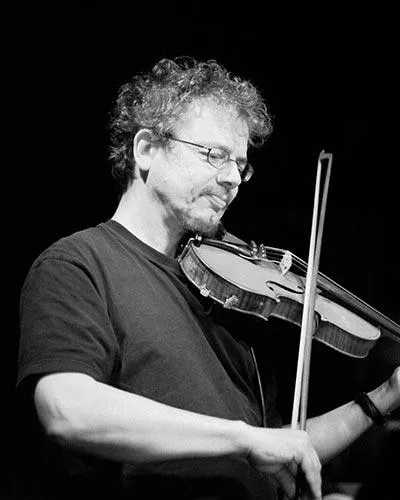
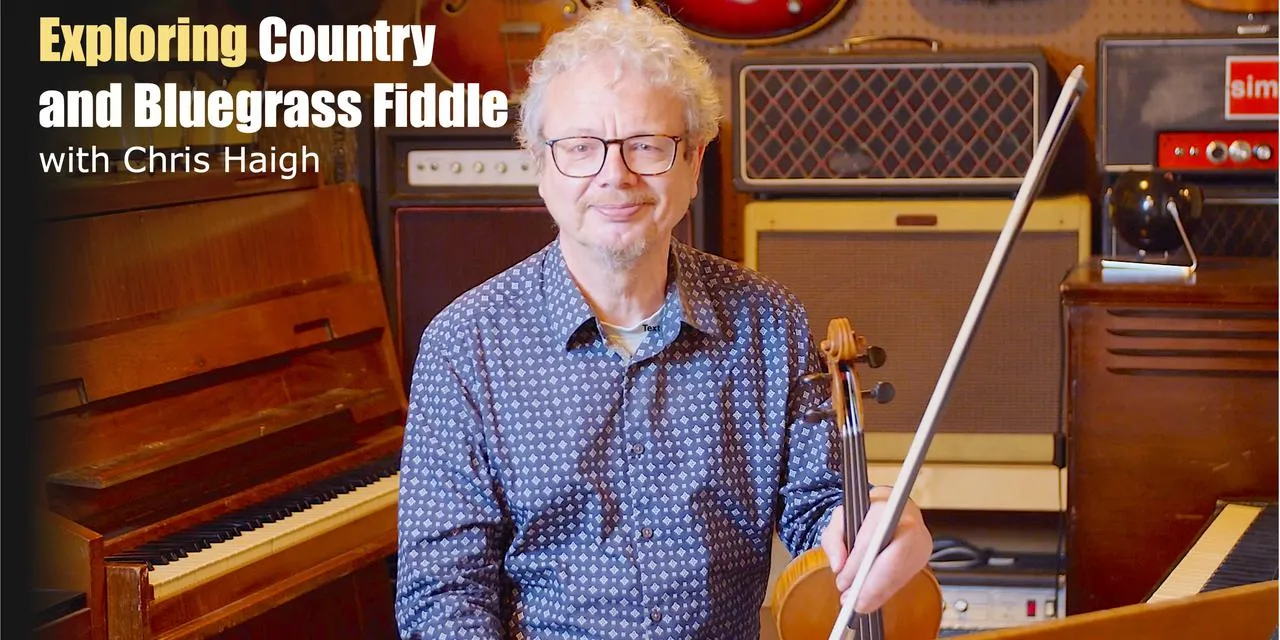
Chris HaighChris Haigh stellt den Bluegrass-'Chop' vor, die perkussive Off-Beat-Fiddle-Technik, mit der Akkorde, Soli und Gesang begleitet werden.
Das steckt im Kurs
22 Lektionen (1h 51m) · 1 gratis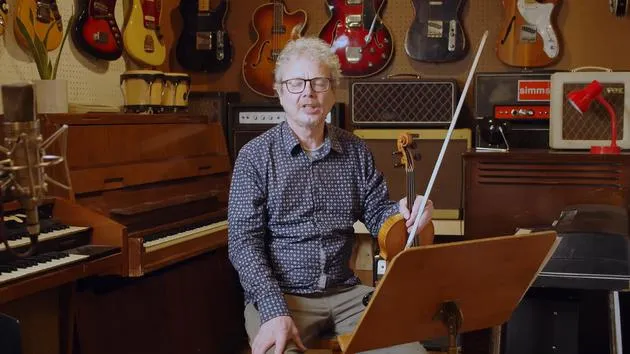
01. Old-Time vs. Bluegrass
Gratis-Lektion11:17
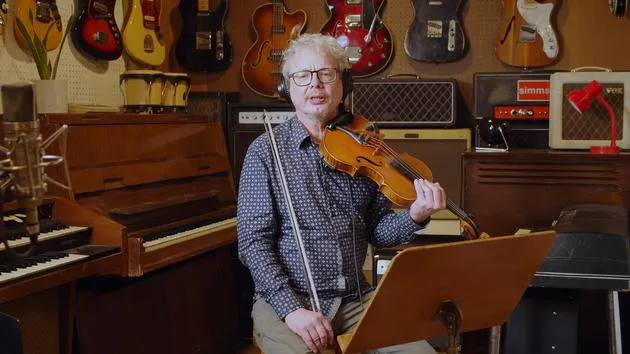
02. Bluegrass: Melodie und Fills
7:52
03. Bluegrass: Kickoffs und Soli
7:28
04. Bluegrass: Chubby-Wise-Licks
5:25
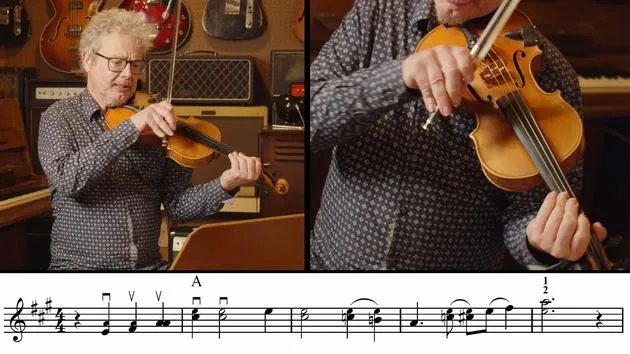
05. Bluegrass: Roll in my Sweet Baby's Arms (Chubby-Wise-Solo)
2:02
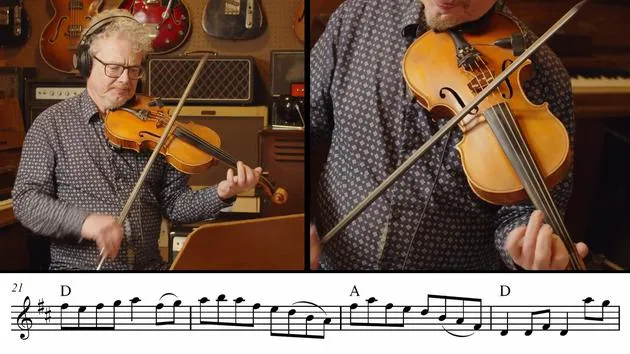
06. Bluegrass: Licks von Benny Martin und Kenny Baker
5:50
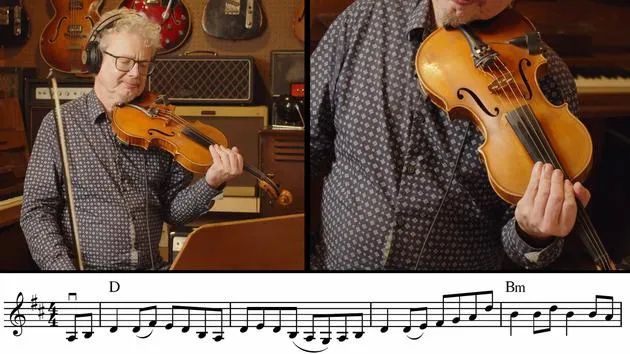
07. Bluegrass: Lost Indian (Performance)
0:40
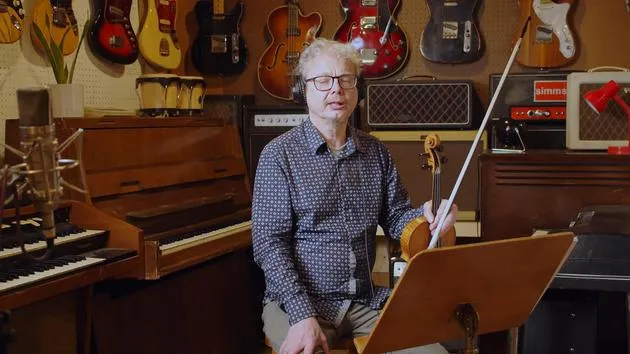
Transkript der Lektion
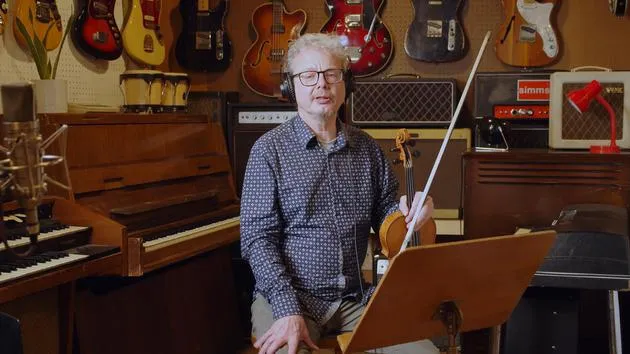
Music Lesson: Understanding the Chop
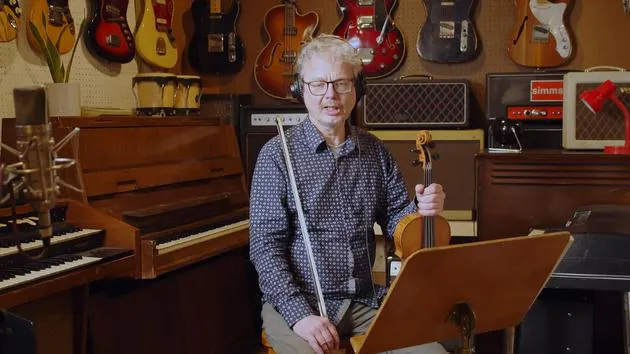
In this lesson, we're going to look at the chop. The chop has two meanings:
The Old Fashioned Chop
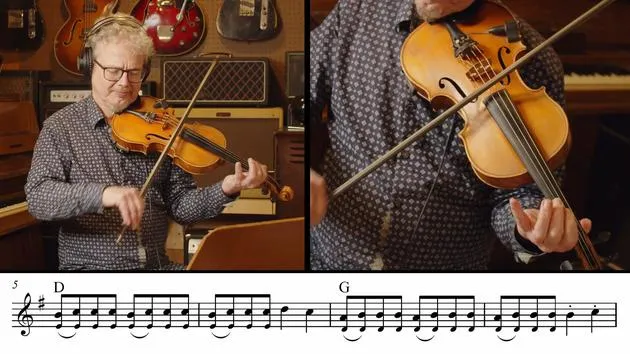
- This is an off-the-beat, percussive, two-finger technique.
- You can use it in bluegrass behind chords, someone else's solo, or singing, it's discreet and doesn't get in the way.
Richard Green's Technique
- Richard Green, the fiddle player who played with Bill Munro, developed his chops at the tip of the bow.
- He discovered that this method didn't provide much attack or control, so he shifted to chopping lower on the bow.
- With this technique, he replicated what the mandolin does as backing, creating a very percussive sound with minimal notes.
Exploring the Dual Sounds
- As you bring the bow off, you create two distinct sounds:
- On (dead sound)
- Off (musical notes)
This duality of sound is intriguing and adds depth to the chop technique.
The Influence of Darrell Unger
- Darrell Unger, a fiddle player in the mid-70s, played with the Turtle Island String Quartet, blending jazz, country, bluegrass, and rock.
- Without drums or guitar, the chop became essential to compensate for their absence.
- He developed the chop further by introducing a forward and backward bow movement, angling the bow slightly forward and playing at the heel.
Casey Dreeson's Evolution
- Darrell Unger taught this technique to Casey Dreeson, who took it to the next level.
- Casey began alternating chops with bowed notes, creating rock-type riffs and complex rhythms.
The Chop in Detail
I won't delve deep into this now, as it's a vast subject. Personally, I first learned the chop while writing Exploring Country in Bluegrass Fiddle. Inspired by Casey Dreeson, I became determined to master this technique.
Caveats of Chopping
- One downside of chopping is shown here on my fiddle, where I've worn off the varnish from frequent use.
- Another danger is social: if overly used at the wrong time or place, chopping can be annoying, leading to potential loss of friends and gigs!
Getting Started with Chopping
The Basics
-
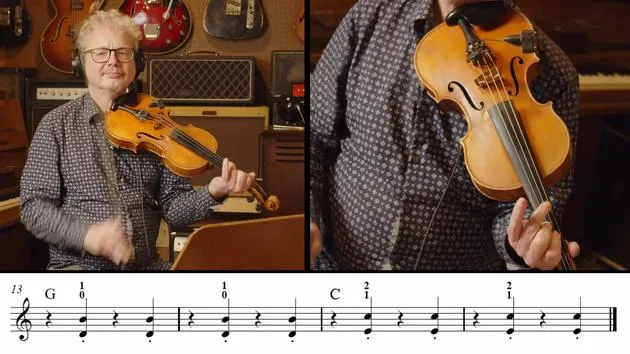
Learn two-note chords to pair with any chord.
- For C, for example:
- First finger over third finger
- First finger over open
- Two over one
- Two over three
- Open over two
- For C, for example:
-
Chop Pattern:
-
Use the two-note finger shapes on the off-beats:
- 1, 2, 3, 4, 1
-
Instead of regular playing, perform the chop:
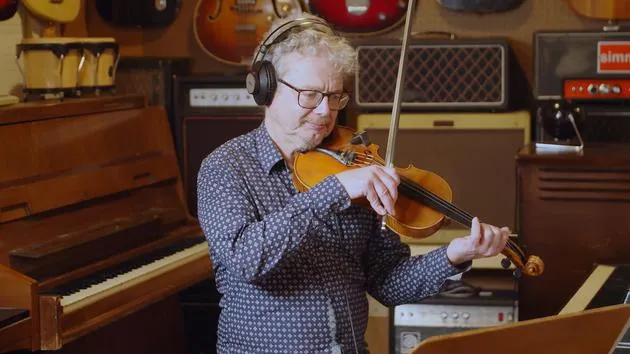
- Angle your bow forward, get down at the heel, push down hard for the 'on' sound, and lift for the 'off'.
-
This creates a pattern:
- Cha ka, check out.
- Example: "1, 2, 3, 4, 1, check out, check out, chat, check out, chat, check out, chat."
-
Practical Application
- You can integrate this with songs like Rolling My Sweet Baby's Arms for added rhythm.
- It's important to keep the chop in the background, unless you're Casey Dreeson, then the chop can take center stage.
Your Assignment
-
Watch Casey Dreeson's YouTube video, Working on a Building, where he chops while singing in a gondola up a mountain. This video inspired me to master chopping.
-
Practice obsessively for the next four years!
-
Avoid being fired from every band and losing all your friends!
Engage with this technique thoughtfully, and have fun!
22 Lektionen
1 Std. 51 Min. strukturierte Videolektionen
Erweiterte Videofunktionen
Verlangsamen, Passagen loopen, mitlesen
Handy, Tablet & Desktop
Üben, wo du willst
100 % Zufriedenheitsgarantie
30 Tage Geld-zurück-Garantie
Lern deinen Guru kennen
Lern deinen Guru kennen
Chris Haigh ist seit 25 Jahren professioneller Fiddle-Spieler mit Erfahrung in vielen verschiedenen Genres. Er hat auf über 75 Alben gespielt und dabei mit Künstlern wie Alison Moyet, Bob Geldof, All About Eve, Michael Ball, David Soul, Oumou Sangare, The Quireboys, Riverdance, Morcheeba, James Galway und Steps zusammengearbeitet.
Er hat Swing-Jazz mit The Kimbara Brothers, Diz Disley, Le Jazz, The Hot Club of London und den Quecumbar Allstars gespielt und leitet die siebenköpfige sowjetische Swing-Band The Kremlinaires.
Chris gibt Unterricht und Workshops zur Jazzgeigen-Technik und hat Jazzgeige an den Universitäten Middlesex, Brunel und Newcastle sowie am Truro College unterrichtet. Zu seinen Veröffentlichungen zählen neun Fiddle-Bücher, darunter The Fiddle Handbook.
Außerdem betreibt er Fiddling Around (fiddlingaround.co.uk), vermutlich die umfassendste und meistbesuchte Quelle für Fiddle-Wissen im Netz.







