



Honky Tonk: Walking Fiddle
With
Chris HaighThe Walking Fiddle style played by Tommy Jackson
What's in the course
22 lessons (1h 51m) · 1 free
01. Old time vs Bluegrass
Free lesson11:17
02. Bluegrass: melody and fills
7:52
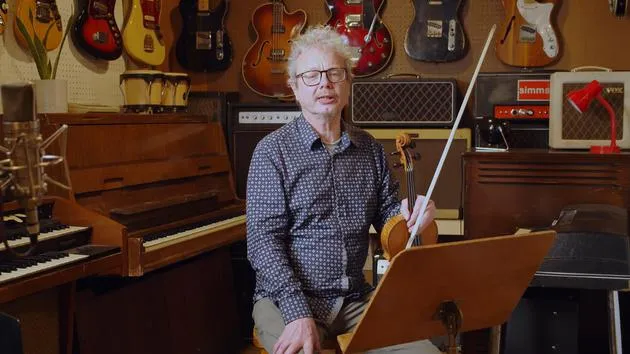
03. Bluegrass: Kickoffs and solos
7:28
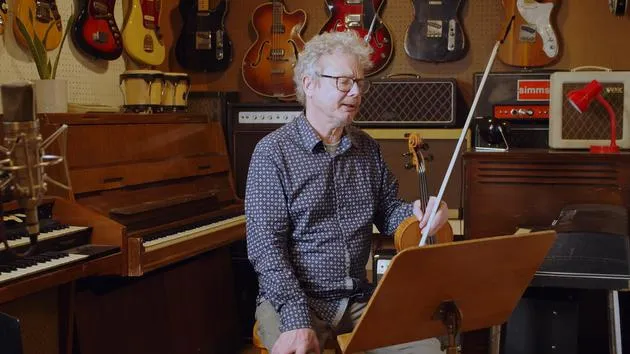
04. Bluegrass: Chubby Wise Licks
5:25
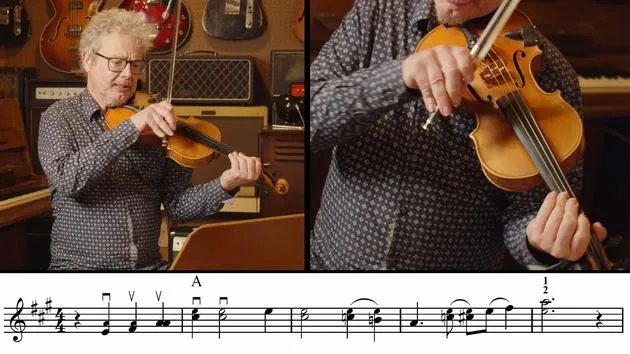
05. Bluegrass: Roll in my Sweet Baby's Arms (Chubby Wise solo)
2:02
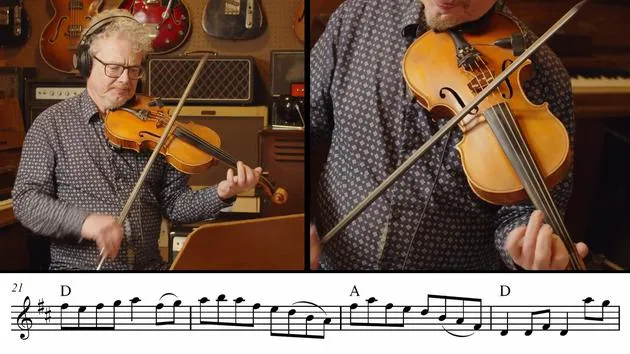
06. Bluegrass: Benny Martin, Kenny Baker licks
5:50
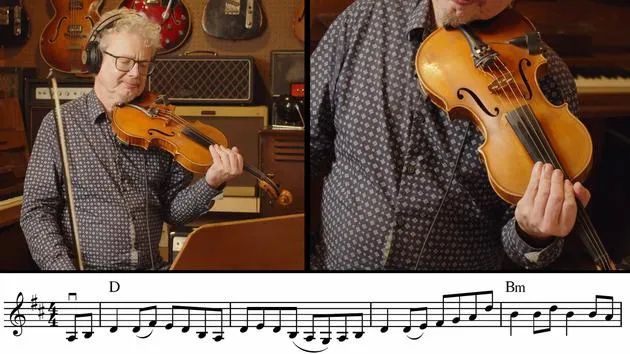
07. Bluegrass: Lost Indian (performance)
0:40
Lesson transcript
Honky Tonk Fiddling: The Walking Fiddle Style
Continuing with the Hank Williams honky tonk style of song, we're going to look at the particular style played by the fiddler, Tommy Jackson. He was probably the most influential of the session fiddlers in Nashville at the time.
The Walking Fiddle Technique
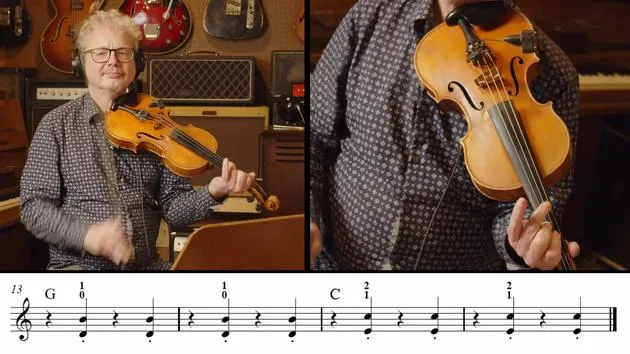
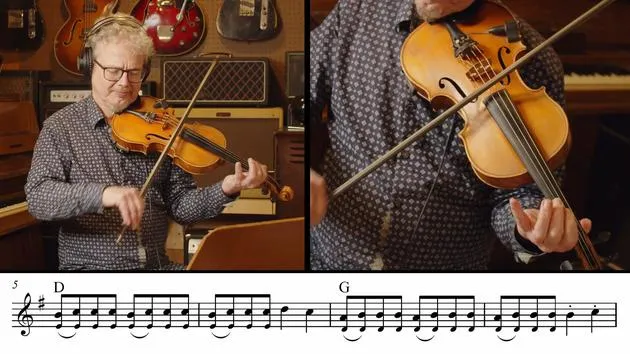
Tommy Jackson had a style which Bob Wills referred to as the walking fiddle. This is a very interesting and worthwhile style to learn. The nature of this technique is that you:
- Do double stops most of the time
- Walk from one chord to the next
Walking Between Chords
For example, from a G chord, you walk towards the next chord:
- From the G down to the D
- Then from the D down to the G
- And from the G down to the G7, then to the C
You are signposting each of the chord changes as they come, and it's really satisfying to do.
Sample Play
Let's hear that with the backing track. This creates a very smooth sound. It's ideal for playing behind the vocal; it doesn't get in the way, but it does add a lot in supporting the chords.
This technique does a very similar job to what the pedal steel does, filling out the sound.
Maintaining Movement
In the previous example, we were just walking from one chord to the next, pausing, then walking on. However, you can actually keep the walking going the whole time.
- After reaching the next chord, you can find somewhere else to go.
- Starting with the G chord, move to the second over fourth for the D chord.
So, we're walking the whole way through, it never really stops moving.
Understanding Chords and Double Stops
To be able to do this, you need to know what the chords are, at least subconsciously, even if not consciously. You must also know all of the double stops that would allow you to transition from one chord to another.
Let's hear that with the backing track.
Adding Melodic Fills
Finally, we can do something similar: walking from one chord to the next, but instead of keeping on walking, we can do a little melodic fill in the gap of the vocal.
In this case, we have a mixture of two approaches:
- The simple walking
- The little fill
You could do just the walking without the fill, or the fill without the walking. But it's really satisfying to do both.
Let's hear that with the backing track.
Your Assignment
For this, your assignment is to:
- Listen to and choose a couple of Hank Williams songs that you like.
- Work out the chords
- Try to work out a double stop walking line to follow those chords.
22 lessons
1h 51m of structured video lessons
Advanced video features
Slow down, loop a passage, follow along
Mobile, tablet & desktop
Practise wherever you are
100% satisfaction guarantee
30-day money-back guarantee
Meet your guru
Meet your guru
Chris Haigh has been a professional fiddle player for 25 years, with experience covering many different genres. He has played on over 75 albums, working with artists including Alison Moyet, Bob Geldof, All About Eve, Michael Ball, David Soul, Oumou Sangare, The Quireboys, Riverdance, Morcheeba, James Galway and Steps.
He has played swing jazz with The Kimbara Brothers, Diz Disley, Le Jazz, The Hot Club of London, and the Quecumbar Allstars, and leads a 7-piece Soviet swing band, The Kremlinaires.
Chris gives lessons and workshops on jazz violin technique and has taught jazz violin at Middlesex, Brunel and Newcastle universities and Truro College. His writing credits include nine fiddle books, among them The Fiddle Handbook.
He also runs Fiddling Around (fiddlingaround.co.uk), probably the most comprehensive and widely visited source of fiddle information on the web.







