



Vibrato
With
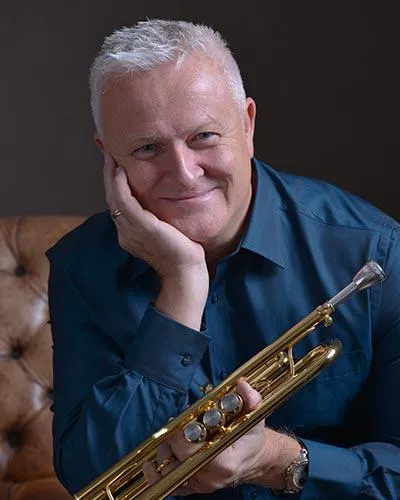
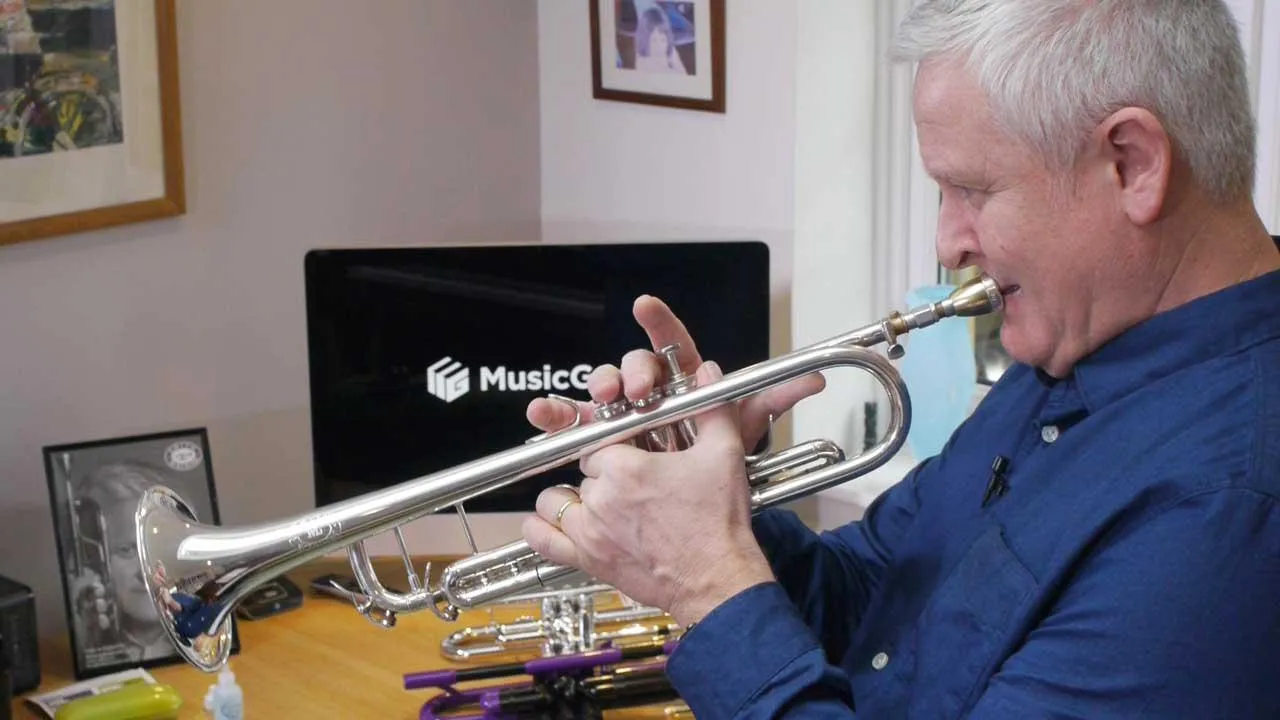
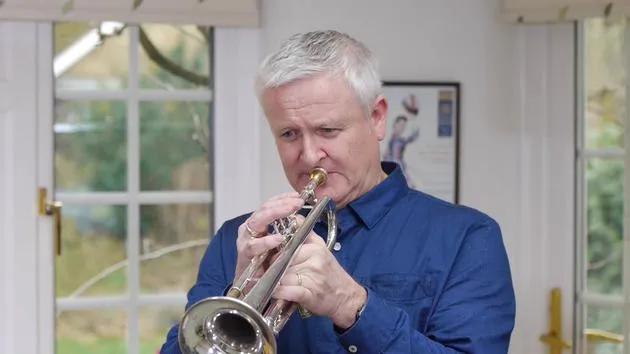
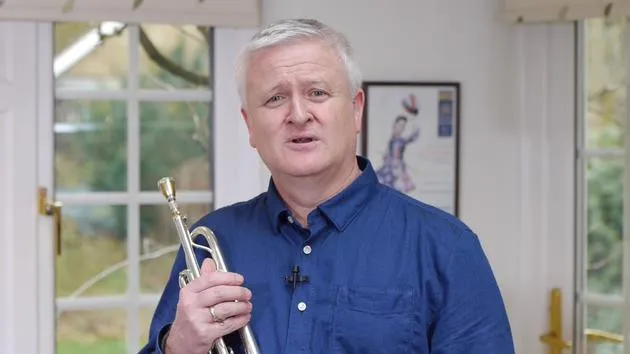
Mike LovattMike Lovatt demonstrates how to add vibrato on trumpet, with and without, to make a note sound alive and carry rather than hang there flat.
What's in the course
29 lessons (1h 2m) · 1 free
Lesson transcript
Understanding Vibrato in Music
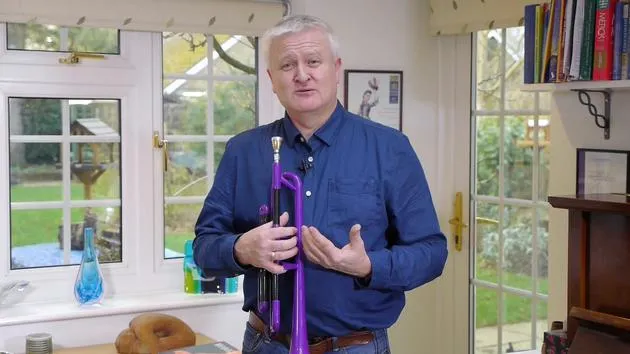
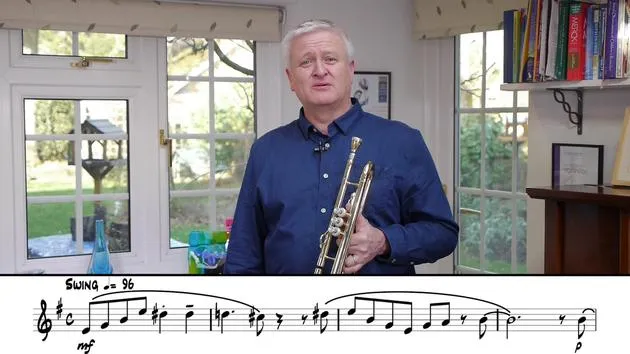
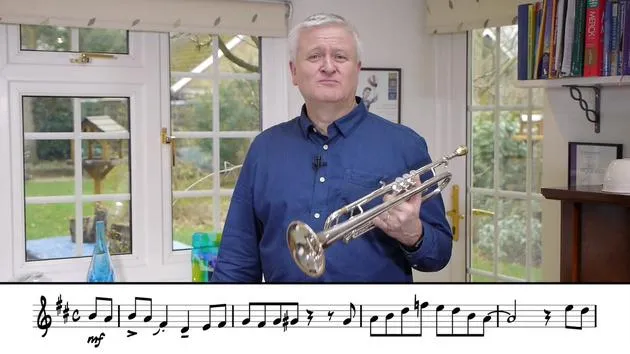
You've probably heard on that last note that I made it come alive. I used what we call vibrato.
What is Vibrato?
Vibrato is a way of making a note sound as though it's got some life in it, as though it's got some soul in it. Think of the soul of the note.
Let me demonstrate:
-
Without Vibrato:
"There's a note without vibrato. It kind of just hangs there. It sounds quite dull, I think, as well." -
With Vibrato:
"Now, I'm going to use the vibrato I just talked about. Vibrato is a way of making the note sound sonorous. It makes it carry; it makes it project."
It makes us sound as though we're reaching the people that are listening to us.
How to Create Vibrato
Let me play that note again, this time using vibrato.
How do we do vibrato?
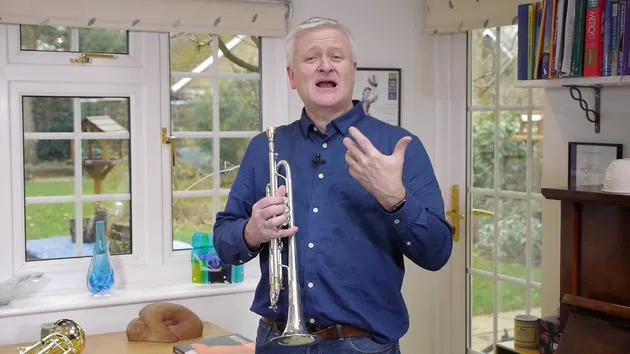
Well, vibrato is created in a number of ways. I tend to use the airstream, the airstream with the tongue. A few moments ago, we talked about how the airstream can help us with register. Now we're going to talk about how the airstream can help us with obtaining an effect, a vibrato.
- The same way that we used the tongue position, we can use that with the airstream for this vibrato.
- The tongue is moving to kind of interrupt the airstream to change the speed, so the note has a shimmer to it.
Practicing Vibrato Techniques
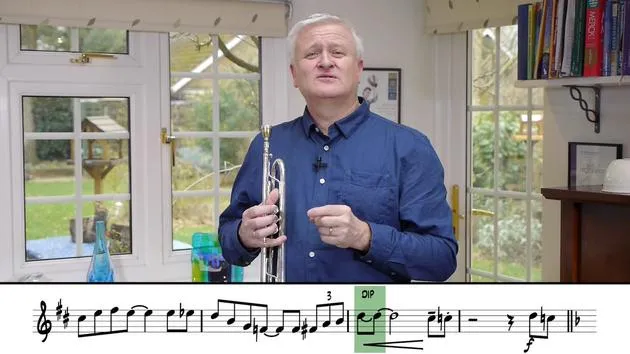
I'll start off with the note straight and gradually add the vibrato.
See if you can hear when the note changes.
We can vary the speed of the vibrato:
-
Fast Vibrato:
"In this one, I'm going for reasonably fast vibrato." -
Slow Vibrato:
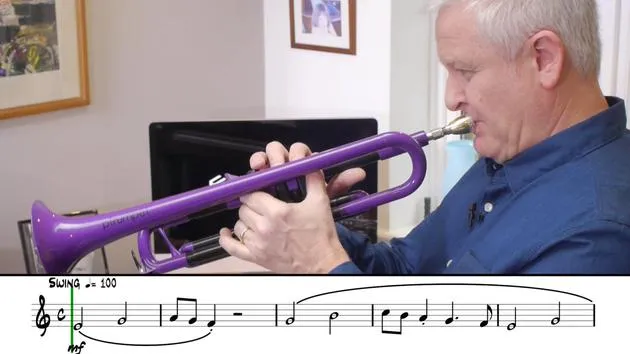
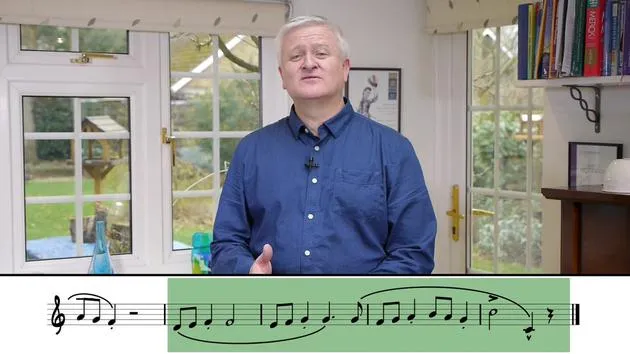
"We could play it slow and it would sound like this. That sounds a bit comical to me, but maybe you would like to try that on another piece you're playing."Or maybe earlier on in this piece, let's try using that slow vibrato in the second bar.
Now, let's play that second bar with the fast vibrato.
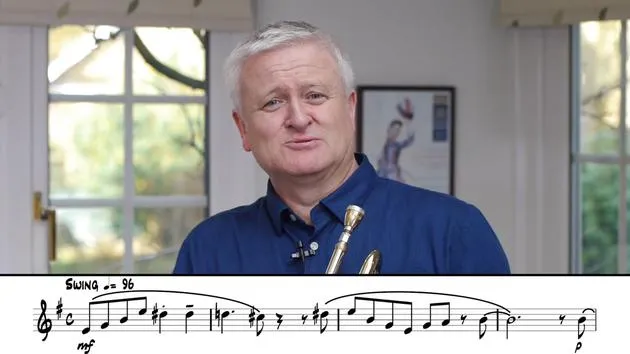
"There we are. It really brings that phrase to life again, that dotted crotchet in the second bar."
If we just play it straight, "it kind of just stops the music. It doesn't keep on travelling."
Making Music Travel
We've talked about travelling triplets. We now want to make the music travel with the feel and the sound that we're making as well.
And then, of course, the short note is a landing point again, just like we had the landing point on the third beat in the first bar after the arpeggio.
Another Method for Vibrato
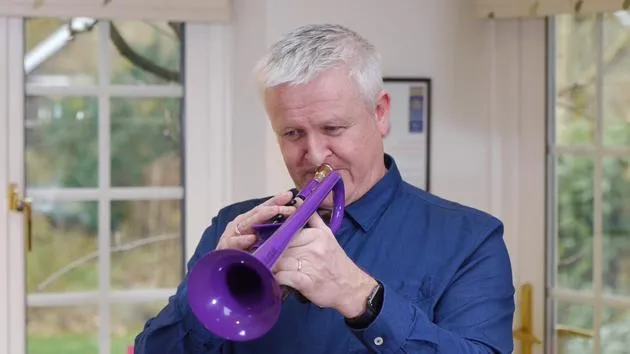
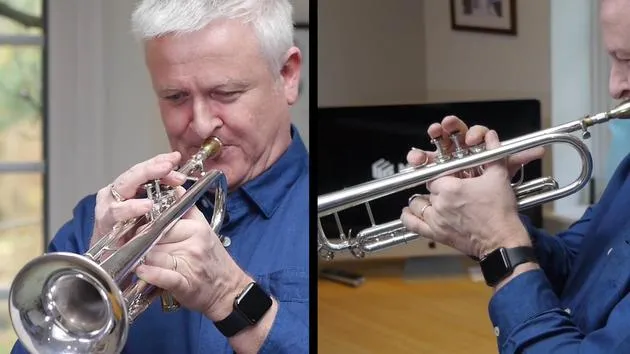
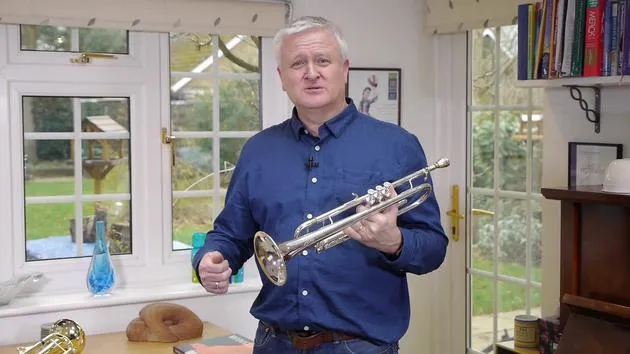
One other way to make vibrato is to use your finger on the valve. I'll just demonstrate that now.
I'll do that slowly.
"Basically, what that's doing is pushing the mouthpiece against my mouth and then releasing it. So it's making the lips move, changing the aperture, that's the hole which the air comes through between our lips."
So, that's another way of doing vibrato.
You may want to go and try that. Vibrato is a very personal thing, and maybe you want to go away and have a bit of fun trying it your way.
29 lessons
1h 2m of structured video lessons
Advanced video features
Slow down, loop a passage, follow along
Mobile, tablet & desktop
Practise wherever you are
100% satisfaction guarantee
30-day money-back guarantee
Meet your guru
Meet your guru
Mike Lovatt studied at Trinity College of Music, where he was awarded the Jon Kelly Jazz Scholarship. He has performed and recorded across a huge range of styles with artists including Quincy Jones, Robbie Williams, Eric Clapton, the Orchestra of the Royal Opera House Covent Garden, the Royal Philharmonic Orchestra, Michael Buble, Oasis, Michel Legrand, Tony Bennett, Shirley Bassey and Danny Elfman, among many others.
As Principal Trumpet in London's West End, Mike has performed in Jesus Christ Superstar, Evita, The Producers, Billy Elliot, Guys and Dolls, Saturday Night Fever, My Fair Lady and Spamalot, amongst others. He has played on movie soundtracks including the James Bond films, Harry Potter with the London Symphony Orchestra, the award-winning Chicago, Kevin Spacey's Beyond the Sea, Charlie and the Chocolate Factory, Madagascar and The Corpse Bride. He is featured on trumpet and cornet in George Fenton's Mrs Henderson Presents, and on trumpet in Looking for Eric.
Mike is principal trumpet with the Grammy-nominated John Wilson Orchestra and has been featured in their celebrated BBC Promenade concerts and recordings.
Mike is sought after as a teacher and clinician, and is a professor of trumpet at the Royal Academy of Music and the Royal College of Music. In April 2013 he was proud to be awarded the prestigious Derek Watkins' Chair of Trumpet at the Royal Academy of Music, London.
In his MusicGurus courses, Mike shares the secrets behind his versatility, showing you how to nail authentic swing, rock and Latin trumpet styles so you can play any of them with confidence and the right feel.







