



Lay Down The Bass (analysis)

With
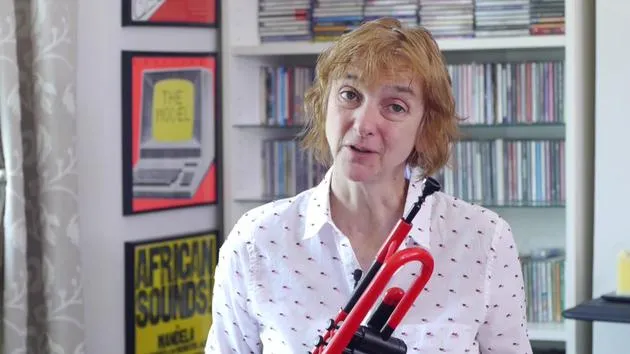
Kay CharltonKay Charlton breaks down Lay Down the Bass, a tune built from the four notes C, D, E and F climbing up the scale over a dancey groove.
What's in the course
16 lessons (0h 51m) · 1 free
01. Welcome to Are You Ready
1:17
02. I Can Play In Three (performance)
1:36
03. I Can Play In Three (analysis)
Free lesson3:16
04. How Many Bars in a Blues (performance)
1:40
05. How Many Bars in a Blues (analysis)
6:23
06. Lay Down The Bass (performance)
2:51
07. Lay Down The Bass (analysis)
You are here5:01
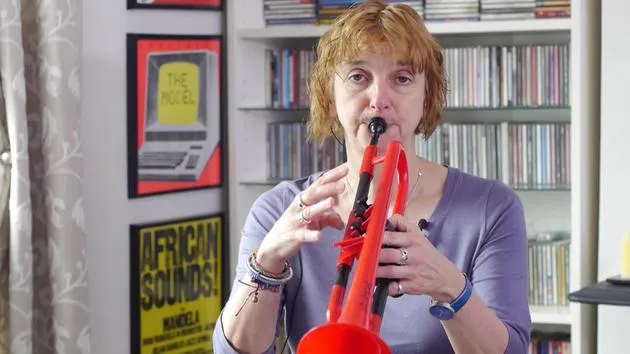
08. Eastern Promise (performance)
2:23
09. Eastern Promise (analysis)
4:40
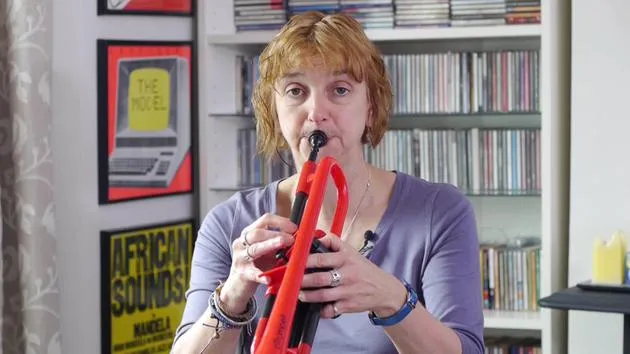
10. Are You Ready (performance)
2:32
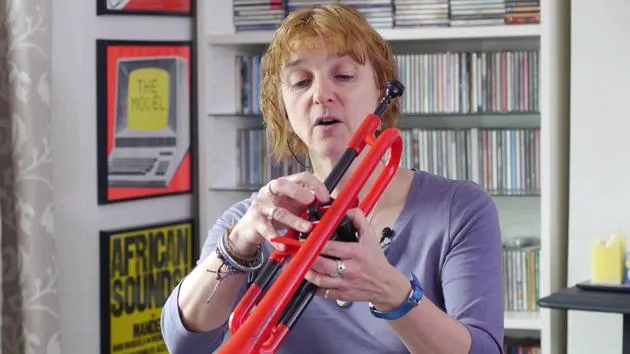
11. Are You Ready (analysis)
5:49
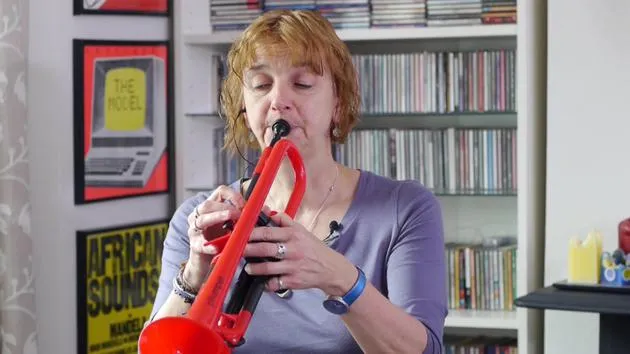
12. Scale It (performance)
2:48
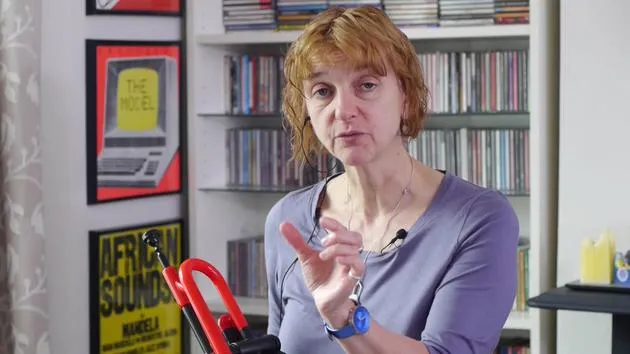
13. Scale It (analysis)
2:03
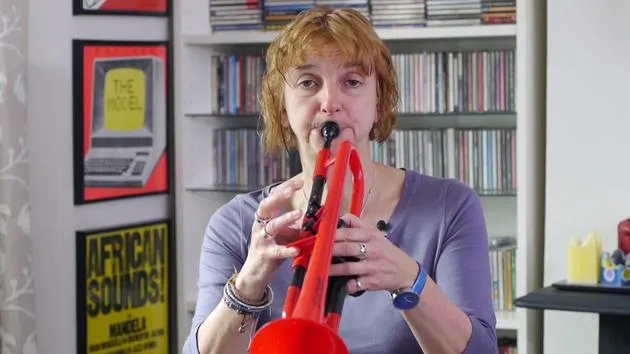
14. Question and Answer (performance)
2:52
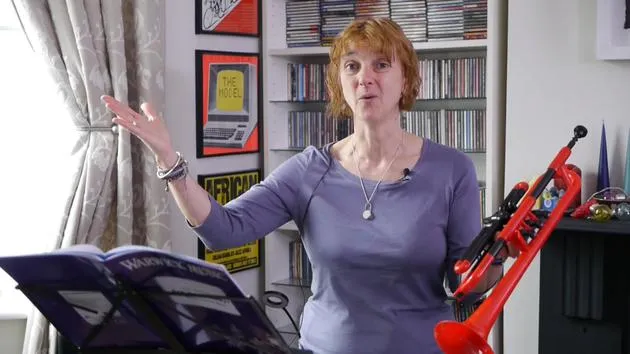
15. Question and Answer (analysis)
6:05
16. Congratulations on finishing the course!
0:40
Lesson transcript
Music Lesson: Bass Scale and Dynamics
Lay Down
The bass is just about playing a scale, really consolidating the notes. We've learned C, D, E, and F. We're leaving B aside for the moment.
Finger Movement
Don't forget: when you're changing between notes, move your fingers smartly from one note to the next.
- Avoid picking your fingers up in between, as that will slow you down.
Note Sequence Practice
Listen, I'll play the four notes in sequence, moving my fingers quite quickly.
- One, two, three.
- So that was quite smooth, wasn't it?
- Moving my fingers quickly when I tongue the notes.
Common Mistake
This is what happens if we don't really move our fingers as cleanly as that:
- Here we go.
- So it's a bit messy in between, isn't it?
- I'm doing that all in one breath.
If you can't do that yet, of course, you could:
- Take a breath at the end of each note
- Try putting two notes together and then taking a breath.
Key Focus
The main thing is to make it sound smooth.
Dynamics
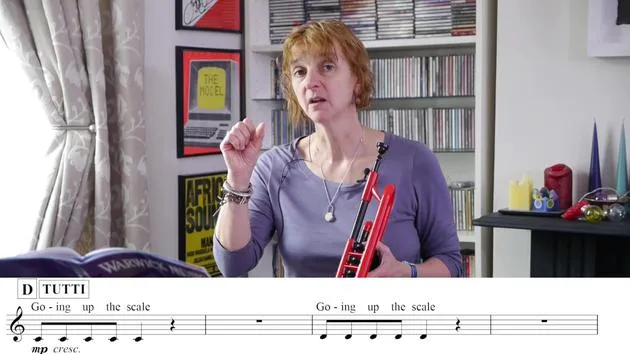
The other thing we're talking about in this tune is dynamics. This means playing softly or loudly and moving gradually from soft to loud.
As we play our four-note scale, we can crescendo.
- That means making the sound grow, making it go louder.
- Start as soft as you can, then blow harder as you go up the scale.
Helpful Reminders
- Low to Higher - This refers to the pitch.
- Soft to Louder - This helps you remember the dynamics.
Next Section: Lay Down the Bass
The next section of the piece features the words lay down the bass. If you find that too much to do, you could just do the first section of that little phrase:
- You could just go lay it down and then play the notes.
- If you're getting more confident, you could add in the other little bits as well, which is lay it down the bass. Play the notes in time.
You can miss off those quick notes if it's too much for you, and that bit goes around twice.
Playthrough Example
I'll just play this section for you. So I'll do it without the quick notes first of all:
- Starting on E: 1, 2, 3, 4.
Okay. Now I'll add in the quicker notes:
- If you're getting more confident at moving your fingers, you could try adding in these notes.
- That all goes round twice.
Quick Scale Practice
The third section for this piece is going quicker up the scale.
-
Play: 1, 2, 3, 4, 5. Just like we did on one of the other songs.
-
C, C, C, C, C.
-
Rest for four beats, then de de de de dee.
-
Rest for four beats and then going up the scale.
-
Rest for four beats, and then going up the scale.
See if you can get louder.
I'll play this last section now:
- 1, 2, 3.
- 1, 2, 3.
- One, two, three.
- One, two, three.
Improvisation
In this song, we haven't put in an improvisation or copyback section, but what you could do is:
- Use the whole track and just have some fun improvising with your four notes.
A nice, easy way to get into that could be taking those long notes of the scale and making up some rhythm patterns.
Key Words for Inspiration
Remember all those words we were thinking of:
- Questions
- Your name
- Rhythm
On this one, make something up by changing those long notes to some rhythms. And when you get better at that, you could try improvising over the whole track.
Example of Improvising
So I'll just show you the four notes:
- With some improvising rhythms on those notes instead of four plain long notes.
- 1, 2, 3, 4.
- So I'm still using the same four notes, but I'm adding in some rhythms.
Have fun improvising on this piece!
16 lessons
0h 51m of structured video lessons
Advanced video features
Slow down, loop a passage, follow along
Mobile, tablet & desktop
Practise wherever you are
100% satisfaction guarantee
30-day money-back guarantee
Meet your guru
Meet your guru
Kay is a trumpet player, composer and teacher of brass and curriculum music, specialising in primary classroom teaching - KS2, First Access/WCET (whole-class ensemble teaching, where a class learns an instrument together) and teacher CPD (continuing professional development). She completed a Masters in Music Education - 'Teaching Musician' at Trinity Laban Conservatoire in 2018.
Kay plays trumpet with the Bollywood Brass Band, a 9-piece band of brass and drums whose 2017 CD Carnatic Connection was nominated for a Songlines Magazine 'World Music Award' and given a 5-star review in the London Evening Standard. Kay composes and arranges for the band and leads on their education work, founding the Bollywood Brass Academy in 2017.
Kay has presented her research into whole-class teaching at the Music Education Expo and the First Access Forum. She has designed and led CPD for LSO Discovery, Trinity College London, Music Education Solutions and the Bollywood Brass Band, and is an education consultant for Warwick Music.
Kay's book of beginner repertoire, 'Are You Ready?', is published by Warwick Music; in 2017 Kay was commissioned by Warwick Music and Music Education Solutions to compose songs for a new KS1 scheme of work for the pBuzz, which was nominated as 'Education Resource of 2018' by the 'Education Awards'.
Other publications include pieces for Trinity's Initial (2015/2018) and Grade 1 (2018) piano syllabus, Bollywood Blast! (Spartan Press) - a series of brass and wind tutor books with backing tracks in a Bollywood style - and Whole Class Bollywood Blast with David Rose (Bedford Music Hub), which is aimed at teachers of whole-class instrumental lessons and includes an Arts Award Discover programme.
Her MusicGurus courses bring that classroom experience straight to you: from your very first trumpet lesson through two sets of tunes for beginners, Kay sets out exactly what to play and how to play it.







