



Are You Ready (analysis)
With
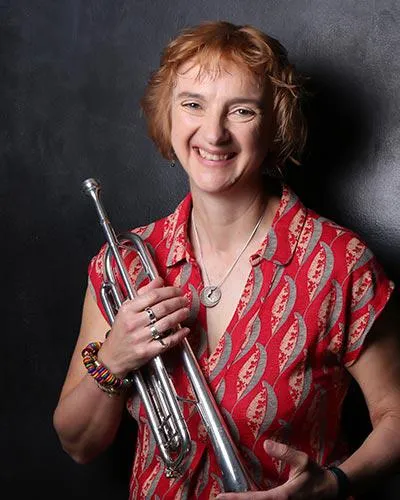
Kay CharltonKay Charlton introduces upper G to complete your five-note scale, set to the samba-style title track Are You Ready.
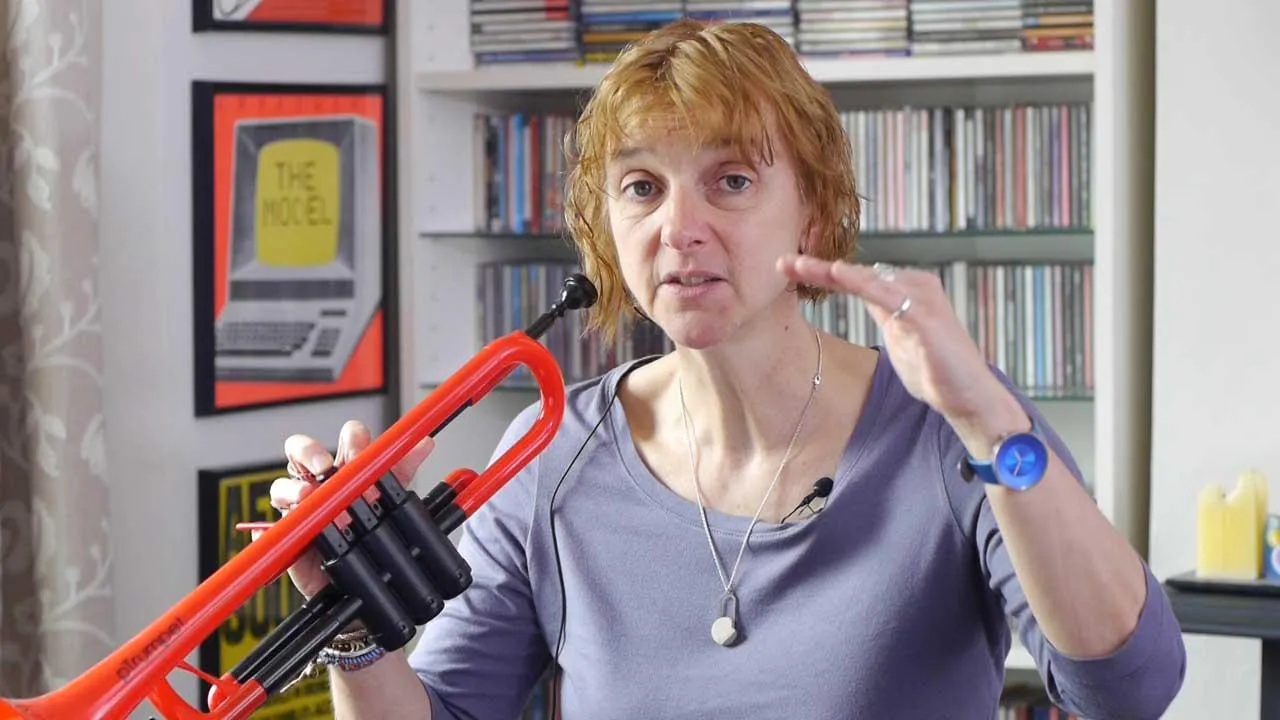
What's in the course
16 lessons (0h 51m) · 1 free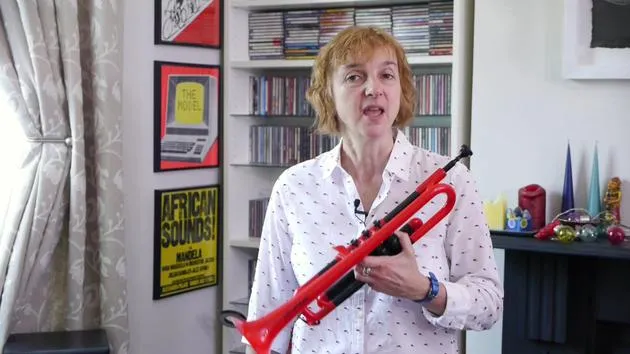
01. Welcome to Are You Ready
1:17
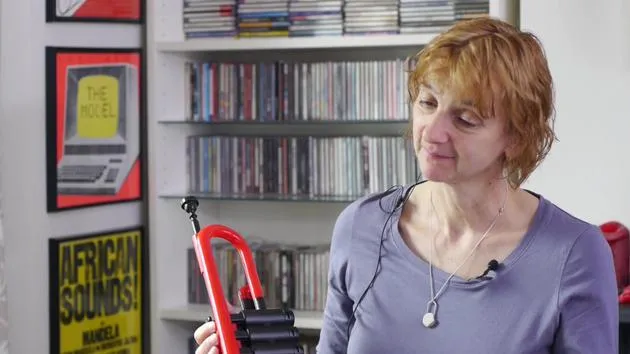
02. I Can Play In Three (performance)
1:36
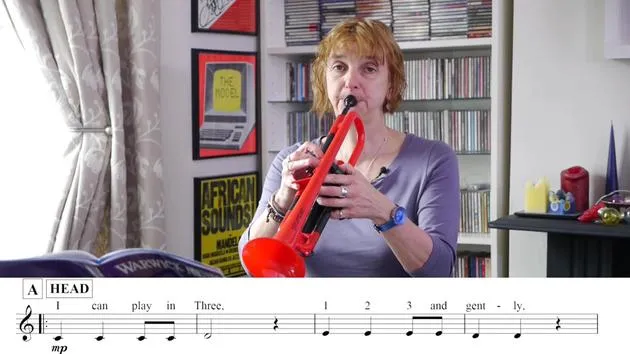
03. I Can Play In Three (analysis)
Free lesson3:16
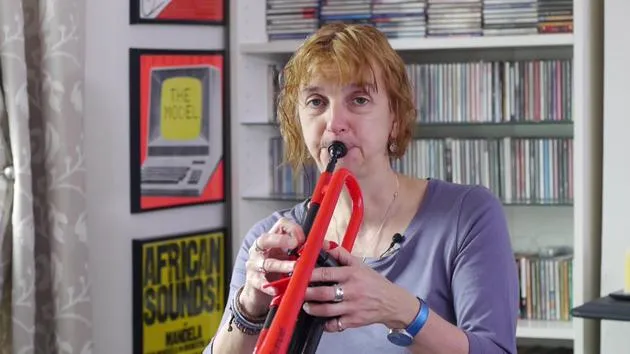
04. How Many Bars in a Blues (performance)
1:40
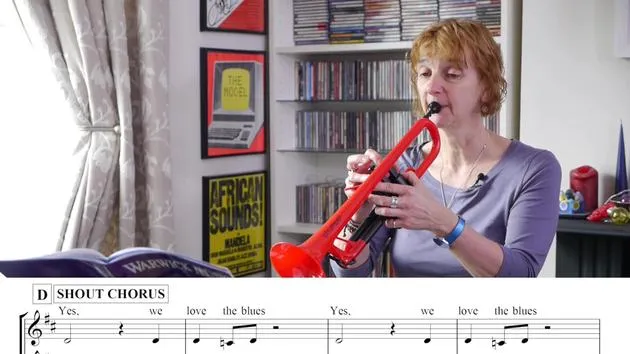
05. How Many Bars in a Blues (analysis)
6:23
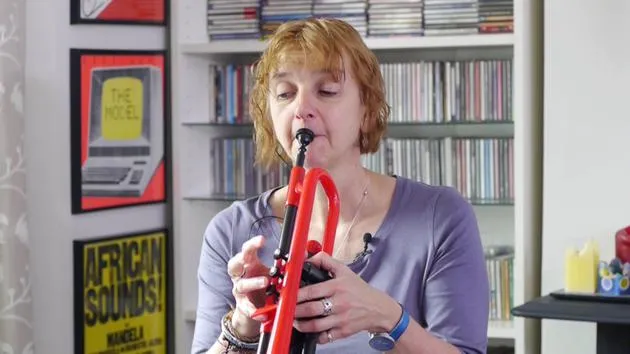
06. Lay Down The Bass (performance)
2:51
07. Lay Down The Bass (analysis)
5:01
08. Eastern Promise (performance)
2:23
09. Eastern Promise (analysis)
4:40
10. Are You Ready (performance)
2:32
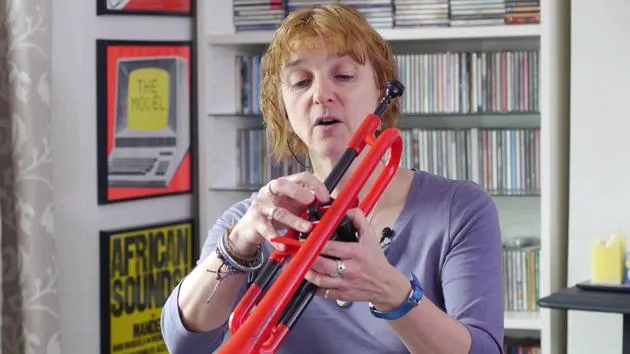
11. Are You Ready (analysis)
You are here5:49
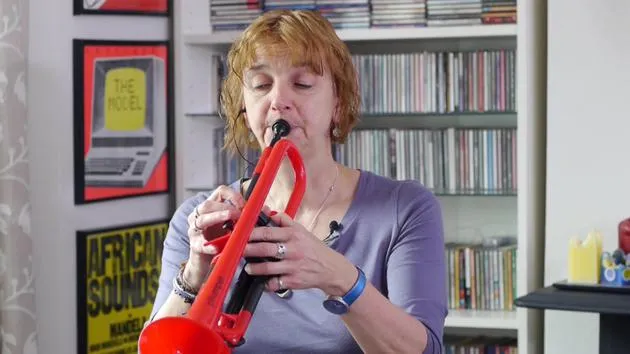
12. Scale It (performance)
2:48
13. Scale It (analysis)
2:03
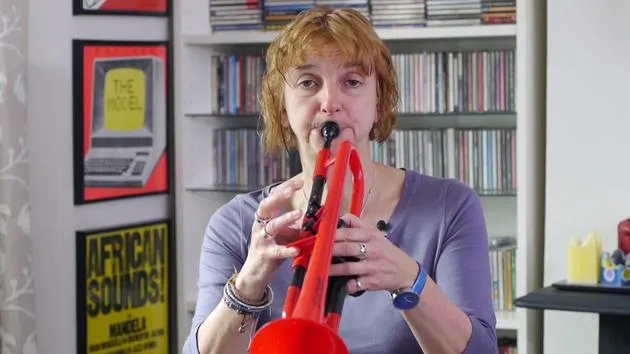
14. Question and Answer (performance)
2:52
15. Question and Answer (analysis)
6:05
16. Congratulations on finishing the course!
0:40
Lesson transcript
Music Lesson: Introducing the Note G
Overview
In this lesson, we will be learning how to play the note G, which completes our five-note scale. The notes in our scale are:
- C
- D
- E
- F
- G (highest note)
Techniques for Higher Notes
When playing higher notes, remember to:
- Tighten your lips
- Blow a little harder
You might find that you have played G's before when aiming for C's, resulting in a slightly higher pitch.
Demonstration of Notes
- C: Open, no fingers, quite relaxed.
- G: No fingers again, lips tight.
Playing the Five Note Scale
Let's put this into context by playing five notes in a row, going up in pitch each time:
- Remember to use a lot of air when reaching for the upper G.
- Always hold your trumpet with two hands for better control.
- When switching the valves, avoid picking your fingers up in between. Instead, do a quick clean switch to ensure smoother notes.
Tonguing
Don't forget to use your tongue every time you play a note, especially during this song.
Rhythm Practice
Counting Rhythm
We will integrate counting into our practice:
- 1, 2, 3, 4 and then
- "stamp on the floor" to help establish a solid rhythm.
Playing with Rhythm
Let's play:
- Count: 1, 2, 3, 4
- Play the section on E while counting. Here's how it goes:
- One, two, then stamp on the floor. One, two, three, four.
Options for Playing
You have two options in this section:
- Play on E's and F's with upper G.
- If upper notes are tricky, you can play a harmony starting on C:
- C, C, C, C, D, E, D, C.
Both lines will sound great, especially if played together with more than one person!
Main Melody
The main melody starts on E:
- Use quick tongueing with "T" when shifting to F.
- Practice until you can join them together.
Upcoming Notes
For the second time, you can either repeat the same notes starting on E or, if ready, start on G, our new note. Remember:
- Use tight lips for the higher notes.
Learning A
If you choose to play the G section, you will also need to learn A, another upper note, which I will explain in the next tune.
Improvisation
Practice Improvisation
For the improvisation part, you can use:
- Ta, ta, ta, ta tonguing patterns.
- Draw inspiration from the melody to enhance your improvisation.
Counting and Responses
- Count in a 2 feel: 1, 2, 1, 2.
- I will do some short phrases; you can copy back when confident.
Here I go:
- 1, 2, 1, 2. Your turn!
Final Encourage
Let's go up to the G this time; use your tongue to create interesting rhythms. Feel free to express yourself and create whatever you like!
16 lessons
0h 51m of structured video lessons
Advanced video features
Slow down, loop a passage, follow along
Mobile, tablet & desktop
Practise wherever you are
100% satisfaction guarantee
30-day money-back guarantee
Meet your guru
Meet your guru
Kay is a trumpet player, composer and teacher of brass and curriculum music, specialising in primary classroom teaching - KS2, First Access/WCET (whole-class ensemble teaching, where a class learns an instrument together) and teacher CPD (continuing professional development). She completed a Masters in Music Education - 'Teaching Musician' at Trinity Laban Conservatoire in 2018.
Kay plays trumpet with the Bollywood Brass Band, a 9-piece band of brass and drums whose 2017 CD Carnatic Connection was nominated for a Songlines Magazine 'World Music Award' and given a 5-star review in the London Evening Standard. Kay composes and arranges for the band and leads on their education work, founding the Bollywood Brass Academy in 2017.
Kay has presented her research into whole-class teaching at the Music Education Expo and the First Access Forum. She has designed and led CPD for LSO Discovery, Trinity College London, Music Education Solutions and the Bollywood Brass Band, and is an education consultant for Warwick Music.
Kay's book of beginner repertoire, 'Are You Ready?', is published by Warwick Music; in 2017 Kay was commissioned by Warwick Music and Music Education Solutions to compose songs for a new KS1 scheme of work for the pBuzz, which was nominated as 'Education Resource of 2018' by the 'Education Awards'.
Other publications include pieces for Trinity's Initial (2015/2018) and Grade 1 (2018) piano syllabus, Bollywood Blast! (Spartan Press) - a series of brass and wind tutor books with backing tracks in a Bollywood style - and Whole Class Bollywood Blast with David Rose (Bedford Music Hub), which is aimed at teachers of whole-class instrumental lessons and includes an Arts Award Discover programme.
Her MusicGurus courses bring that classroom experience straight to you: from your very first trumpet lesson through two sets of tunes for beginners, Kay sets out exactly what to play and how to play it.







