



12 Bar Blues

With
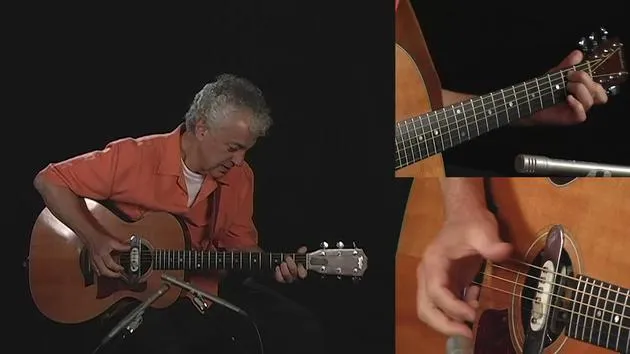
Doug MacLeodDoug MacLeod explains the 12-bar blues form, the I, IV and V chords and how to approach playing it.
What's in the course
16 lessons (1h 51m) · 1 free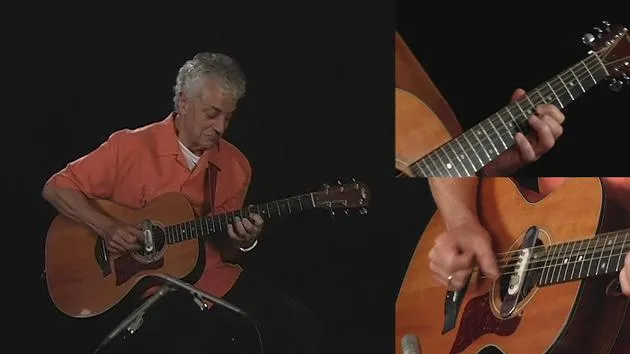
01. Intro to the course
Free lesson2:23
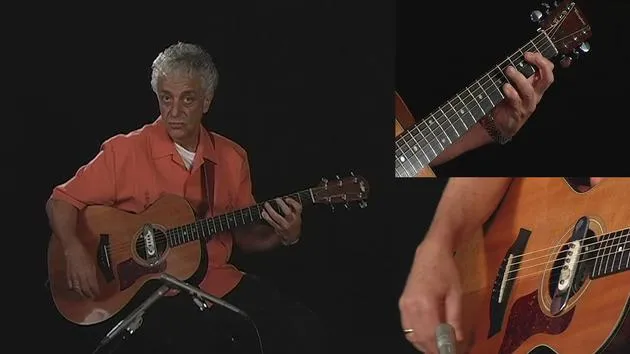
02. Tuning
1:30
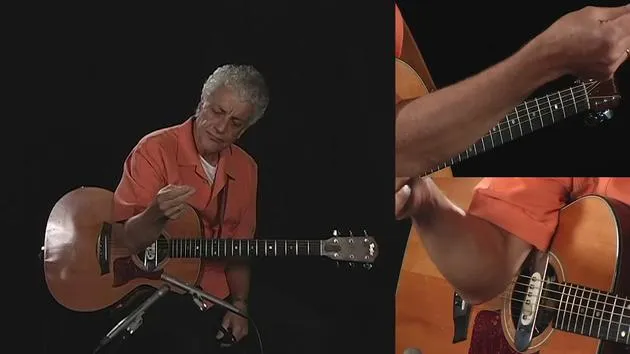
03. Essential techniques for left & right hands
10:19
04. One Chord Groove
8:30
05. Octaves & Dynamics
6:45
06. You Can't Take My Blues
3:53
07. 12 Bar Blues
You are here3:35
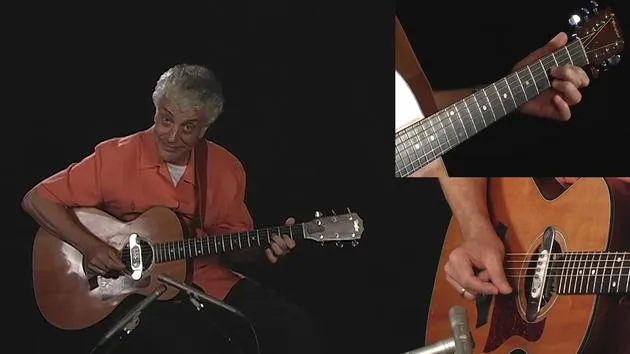
08. Turnarounds
3:34
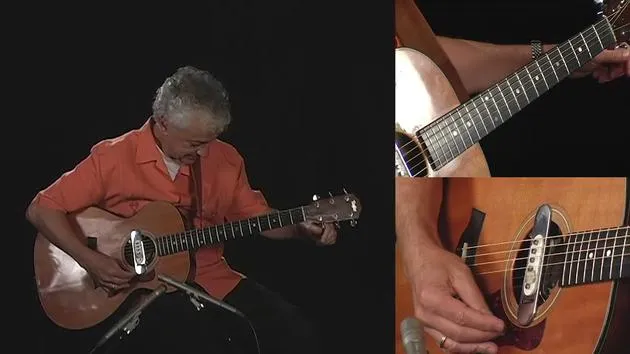
09. Exploring the neck for greater range
10:27
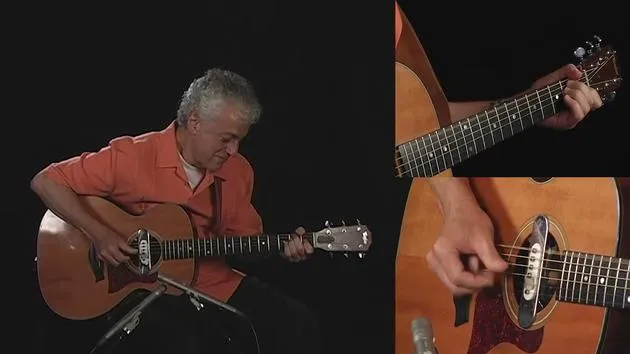
10. Home Cooking
4:08
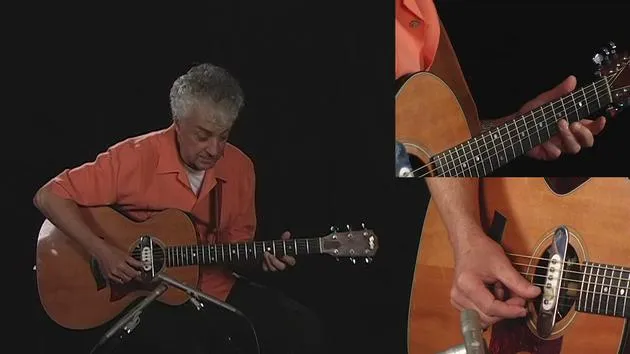
11. 8 Bar Blues
16:56
12. Ain't The Blues Evil
3:07
13. Doug's Special "G" Tuning
16:07
14. Big City Woman (She Talks So Much She Makes Me Tired)
4:30
15. Open G Tuning
11:34
16. A Sweet Ride
4:04
Lesson transcript
The 12 Bar Blues
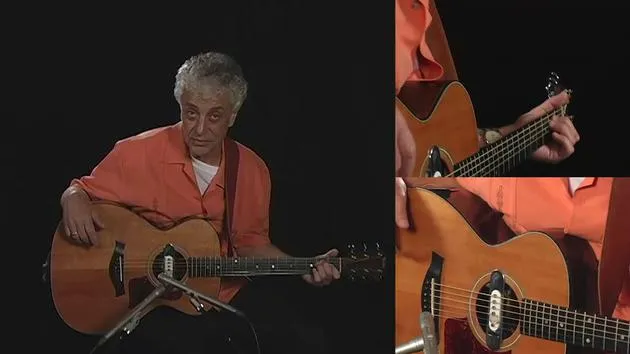
In this segment, we're going to talk about the 12 bar blues.
Review of the One Chord Groove
Last segment, we discussed the one chord groove. This is the 12 bar form, meaning there are three chords involved in this style of blues:
- E
- E7
We'll focus on these chords down here on the bottom part.
Understanding the Chords
Next, we go to our A chord, which is known as the IV chord.
- Why is it called the IV chord?
Because it's four steps up in the E scale:
E, F sharp, G sharp, A.
The five chord is the B. You just move up one more step, as this is the fifth note of the E scale.
So, when you hear someone say 1, 4, 5, that's what it means in any key.
You have your E, E7, and then we go to A.
- Down here, you have this flat A (which I call it), and you also have A7 that you can use.
- Furthermore, you have your B7.
The Tomato Theory
A lot of people say you shouldn't play certain notes because they clash. However, this idea ties into my tomato theory:
"If it sounds good, it is good."
The old blues guys didn't know theory; they just knew that if it sounded good, it was good. This is a crucial rule of thumb for you when making music.
- If it sounds good, it is good.
- If it sounds bad, you don't need me to tell you to change it.
Playing the 12 Bar Blues
Let's play a little bit of this 12 bar and see how it sounds.
- We're going to keep the groove slow.
- Remember: if you can play it slow, you'll get the hang of it.
- Speed will come later, so practice slowly first.
We're maintaining a nice, easy groove with a heartbeat feel, think of that classic Jimmy Reed feel.
Hammering On
Now, let's discuss what we can do on this four chord; it's pretty hip!
- We can hammer on.
- Hear that? All I did there was hammer on with my third finger at the second fret of the B string and then hit up on the E string.
With my pinky available, I can adjust my groove a bit.
The Five Chord
Here's your B7. You can use this little C sharp from the A7, and voila, you've got the groove going!
The Turnaround
Now, let's get to what we call a turnaround.
- Remember that double stop we had?
- And we're back.
Let's do it in time.
That was just to showcase those chords.
- You can check that out with your DVD controller.
- Review the left hand part there in time.
It'll sound like this...
16 lessons
1h 51m of structured video lessons
Advanced video features
Slow down, loop a passage, follow along
Mobile, tablet & desktop
Practise wherever you are
100% satisfaction guarantee
30-day money-back guarantee
Meet your guru
Meet your guru
Doug MacLeod is known for his superb songwriting, guitar wizardry, warm soulful vocals, wit and unforgettable live performances. At the heart of a Doug MacLeod performance is his knack for storytelling, bringing characters - from the faceless to the legendary - to strikingly real life. Doug is a multiple Blues Music Award winner, including the 2020 Blues Music Award for Acoustic Artist Of The Year and the 2018 Blues Music Award for Acoustic Album Of The Year for 'Break The Chain', and a nominee for the 2021 Blues Music Award for Acoustic Artist Of The Year.
His album with producer Jim Gaines was released in 2021.
In 101 Blues Guitar Essentials, Doug passes on the foundations of his craft - the grooves, techniques and feel that underpin authentic acoustic blues guitar - so you can build a real vocabulary on the instrument and start telling your own stories through it.
"Like all great blues men, MacLeod lives his music, and the songs are not just on the tips of his fingers and tongue, they are one with his being." - Blues Music Magazine
"One of the great blues artists... period!" - Jorma Kaukonen







