



Open G Tuning

With
Doug MacLeodDoug MacLeod's concentrated guide to open G tuning, the tuning used by players like John Lee Hooker and R.L. Burnside, and how to find your way around it.
What's in the course
16 lessons (1h 51m) · 1 free
01. Intro to the course
Free lesson2:23
02. Tuning
1:30
03. Essential techniques for left & right hands
10:19
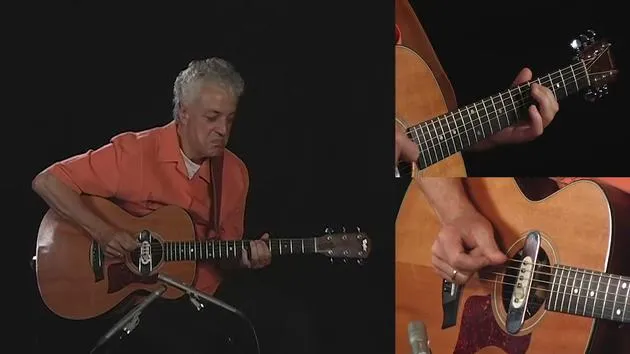
04. One Chord Groove
8:30
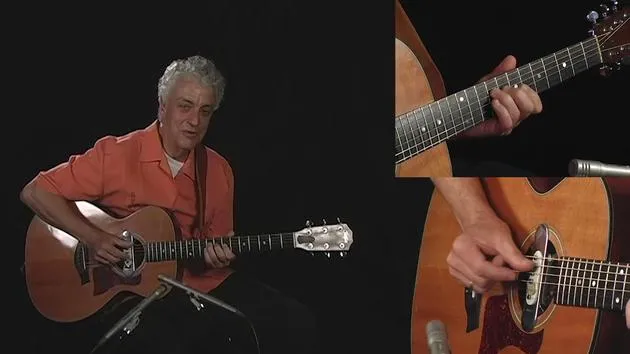
05. Octaves & Dynamics
6:45
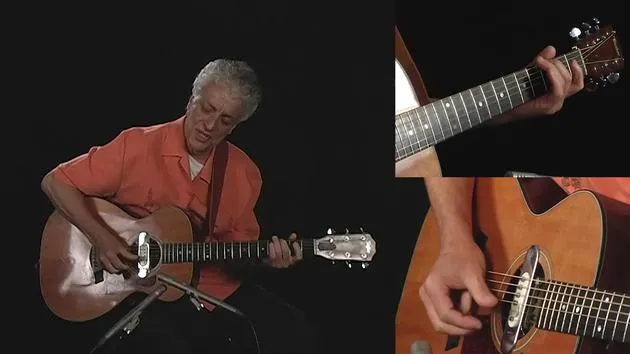
06. You Can't Take My Blues
3:53
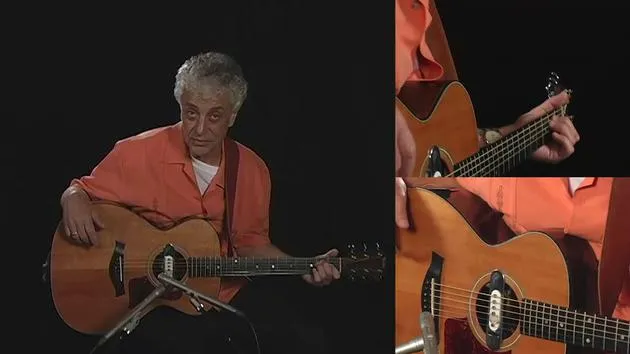
07. 12 Bar Blues
3:35
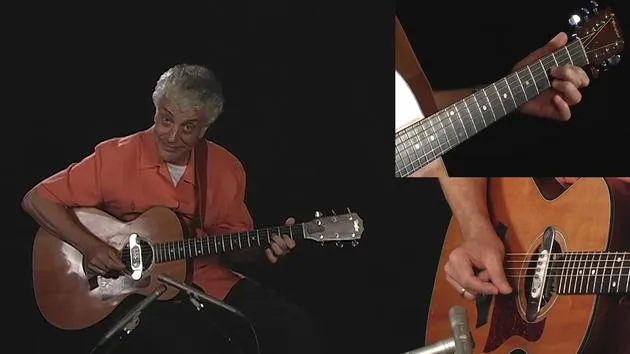
08. Turnarounds
3:34
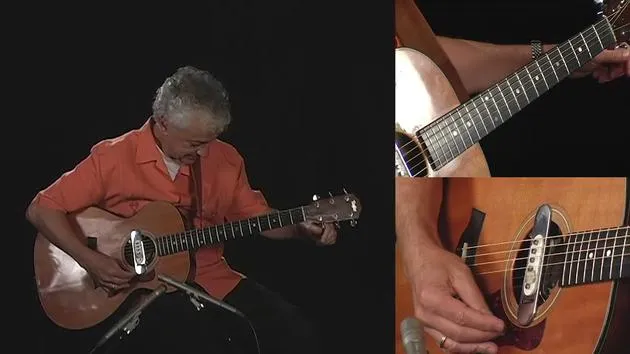
09. Exploring the neck for greater range
10:27
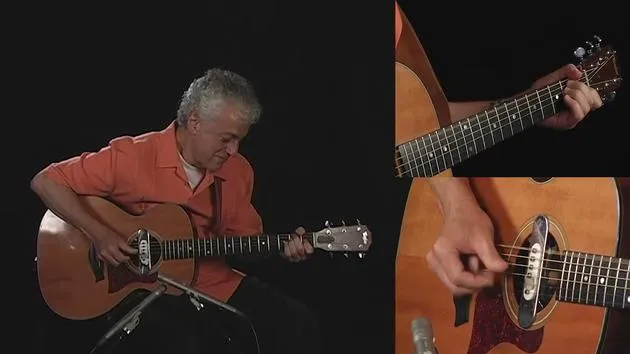
10. Home Cooking
4:08
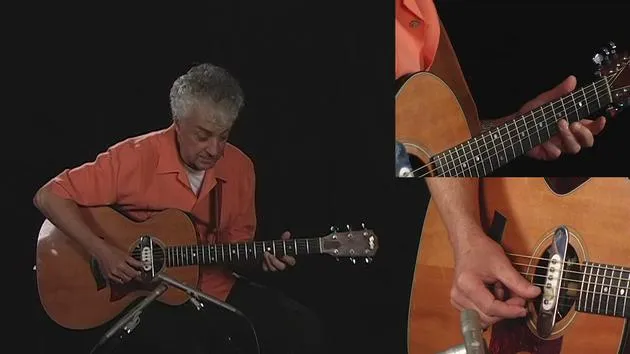
11. 8 Bar Blues
16:56
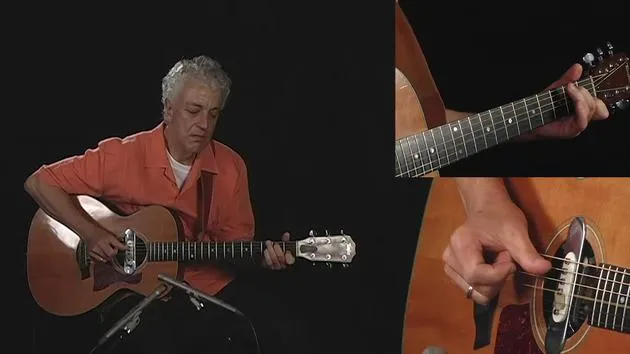
12. Ain't The Blues Evil
3:07
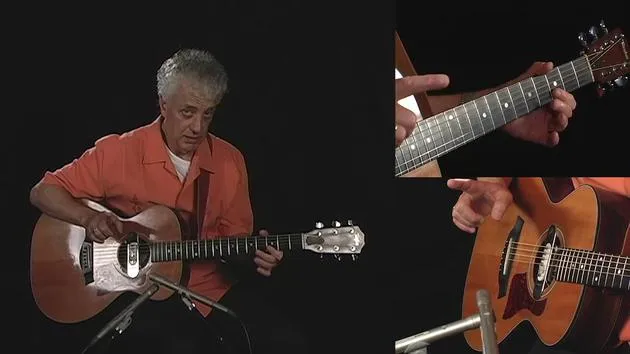
13. Doug's Special "G" Tuning
16:07
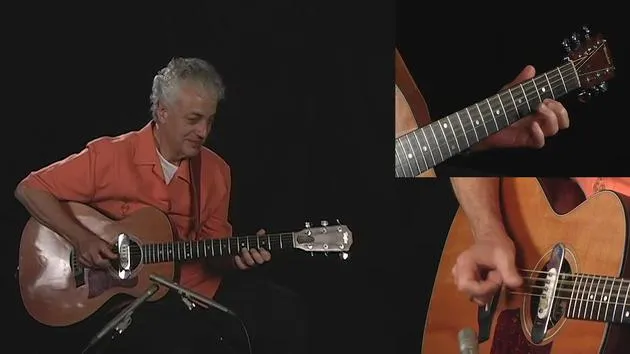
14. Big City Woman (She Talks So Much She Makes Me Tired)
4:30
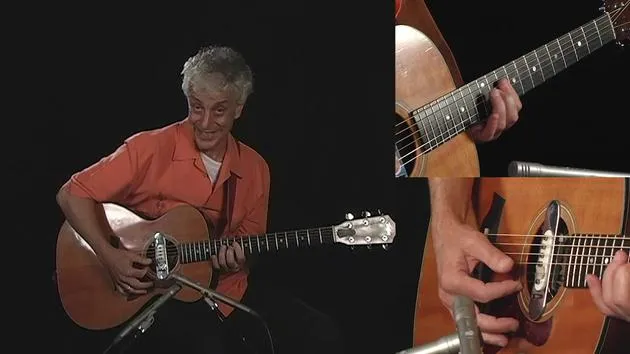
15. Open G Tuning
You are here11:34
16. A Sweet Ride
4:04
Lesson transcript
Open G Tuning and the Frozen Orange Juice Lesson
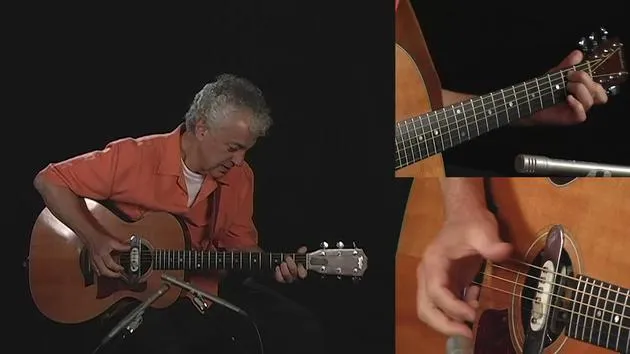
Alright, for this final segment on this DVD, we're going to talk about Open G tuning. I'm going to do a frozen orange juice lesson here. What I mean is like a frozen can of orange juice concentrate.
Because I'm going to try and give you as much as I can, and then let the things I told you about in the beginning of this DVD come into play. If this is available, what else is available? If I can find this on the guitar, where else can I find it? I'm going to give that to you now because I know you got enough to do it.
So, I'm going to give you the tools that you need to get around in this tuning called Open G. Now, we're not going to talk about slide; we're just going to focus on fingering in Open G.
Historical Context
This tuning was used by guys like John Lee Hooker and R.L. Burnside, a whole bunch of people that had that feel of blues.
I do remember this old man who told me something profound:
"Man, why should you tune it to anything else but an open chord? Why go through all the hassle? Why don't you just tune it to one chord? Because you got your one chord there, your four chord there, and your five chord there. And then you go up here on the 12th fret, you got your one chord again, and you're set."
Something to think about, you know. As George Harmonica Smith said, "When you stop to think about that, there's something to stop and think about."
Working with Open G Tuning
Alright, so now let's get in here and work on this Open G tuning again, using my theory. This theory consists of three parts:
- The bottom three strings (lower part of the guitar)
- The middle part of the guitar
- The high part of the guitar
Basic Chords
Here's your basic G7 chord like this:
- Your C7 is like the one we had in Bastard G.
- We can put this finger on the second fret of the E string, which becomes an E (it's actually D because in Open G, this string now is down to a D).
- Your five chord is like this, and again, your one chord is like that.
When you go up toward the middle part of the guitar:
- This is your I chord.
- Here's your IV chord.
- Here's your V chord.
- And here's your I chord again.
I stumbled on that because I thought of another chord I wanted to show you, this is a very cool chord.
You can go 1, 4. Check this out now, 5, 1.
So if this 5 is available, that 4 is available.
The Sweet G Chord
Now, when we go up here to this part of the neck, that's what I call a sweet G, which has a great little sound to it.
When you take this sweet G up towards the 12th fret, it sounds like this. When you put these two things together with the beat, you got a blues thing going.
Four and Five Chords
Check this out:
- This looks just like a C7 in regular tuning.
- Our five chord should be here.
- Hit the low D string.
- Let's go back to the 4.
Your other 5 can be here like that. So, there are a lot of possibilities here, right? How about on the inside strings? We can work those too.
Check this out down here on the bottom part of the guitar. I'm using an open G string and I'm also using a double stop, using the F and the D with my social finger and my third finger going down like this. That's nice.
Turnaround and Resolution
Now, since the D, the G, and the B are the same as regular tuning, that means this turnaround, if I can find it, has got to be there too. Then we hit this chord, which looks the same as the G7 in regular tuning.
"If this is the C and that works, and this is D and that works, well, that means it's got to work too."
It's really simple. Then when you add this, you get this sound.
This is what's available for you. And again, the most important thing is you don't have to copy me. In fact, I don't want you to. I don't want you to sound like me; I want you to sound like you. Bring the music that's in you out.
These are just tools, building blocks, that you use to make your music happen. It's not about licks; it's about making music.
Final Thoughts
Let's go up here one more time to the high part and we'll get this sound for another kind of come down. That sounds pretty good.
Can you catch that?
Catch that with the left-hand camera there. Pretty, isn't it? And I've got that G open because that's the key we're in. Then I can drop down here.
Now, see, that approaches the IV chord, doesn't it? You can hear that, and you see that's got to resolve somewhere.
So your resolution is here to your IV. Then we go back here. Let's go to our V, and we come down.
So we've come all the way down, from up here, all the way down.
Now we'll play a little bit and capture that Mississippi groove. You know, Robert Johnson had this kind of sound going from the I to the IV.
And catch that in the left hand now, doing that one groove.
Creating Your Own Sound
There's another thing you can do on this, this chord here on the I. How many times have you heard that?
Now, you can use the tomato theory on this too. This is an open D; this is a fingered D. So all you gotta do is slide up to that D.
Listen. Ooh.
Remember those double stops we played in Bastard G? Oh, I said I wouldn't say that again, but I made a mistake. I know you'll forgive me.
Got that groove going again. Big Joe Williams said, "Baby, please don't go." You know? Again, it's the groove.
Feel the groove.
Working with the Right Hand
So check out the right hand. See what the right hand is doing. Now we run on top and go up to the middle.
I'm going to stretch with my pinky over to the B flat.
I relax, taking my time. If ever you're playing and you're not sure whether or not you should play something, keep these words in mind:
"When in doubt, leave it out."
Taste and space, that'll take you a long way.
Now I'll show you another chord that you can use in the lead: select that C7. Stretch it up here.
Oh, I made a mistake.
Oh, man, it sounds so good. Let me show you again, that's the one. That's the one, and again, you're going to make mistakes.
That's part of it! Just get out of it, and I'm working that.
You see how I'm working that chord? I'm not playing it like that, it almost sounds a little feminine, doesn't it?
So you gotta hit it, man. You gotta hit it and go like, because you're playing the blues here.
Bringing It All Together
Let's go to the IV chord and see what it sounds like. Listen, what I'm doing now is just rocking.
Remember that thing we talked about when we started rocking? I'm rocking on this chord.
Left hand rocking, just walking down from the B flat down to the A to the G.
Now I'm gonna hit the... We're working, man! Let's go up to the middle.
And if you rock and hit that guitar hard, you know you're gonna knock a lot of tunes.
Now look at that, hit the IV. The groove is working. You can see my left hand's chord formation here, and also check out the right hand, how my thumbs sometimes come off to hit and whack, while the picking finger is coming up.
The groove always stays the same.
Closing Performance
Now we hit this other cool kind of V. We're working. Let's get up on top a little bit now. Doesn't that sound good? What a goodness!
Gotta get that one back. Oh, fellas, it's gone. Let's do it like that now. Keep it going.
If we got it, we got it. That just happened. Let's go up here. We're working it again.
Let's hit the V on this like this one. Now we go back down, and now I'm about to do a song for you.
As long as we got it going, I'll do it like this.
This is cool, a sweet ride!
Everybody's got to get a sweet ride one time.
16 lessons
1h 51m of structured video lessons
Advanced video features
Slow down, loop a passage, follow along
Mobile, tablet & desktop
Practise wherever you are
100% satisfaction guarantee
30-day money-back guarantee
Meet your guru
Meet your guru
Doug MacLeod is known for his superb songwriting, guitar wizardry, warm soulful vocals, wit and unforgettable live performances. At the heart of a Doug MacLeod performance is his knack for storytelling, bringing characters - from the faceless to the legendary - to strikingly real life. Doug is a multiple Blues Music Award winner, including the 2020 Blues Music Award for Acoustic Artist Of The Year and the 2018 Blues Music Award for Acoustic Album Of The Year for 'Break The Chain', and a nominee for the 2021 Blues Music Award for Acoustic Artist Of The Year.
His album with producer Jim Gaines was released in 2021.
In 101 Blues Guitar Essentials, Doug passes on the foundations of his craft - the grooves, techniques and feel that underpin authentic acoustic blues guitar - so you can build a real vocabulary on the instrument and start telling your own stories through it.
"Like all great blues men, MacLeod lives his music, and the songs are not just on the tips of his fingers and tongue, they are one with his being." - Blues Music Magazine
"One of the great blues artists... period!" - Jorma Kaukonen







