



Jouer l'exercice cinq avec un archet droit
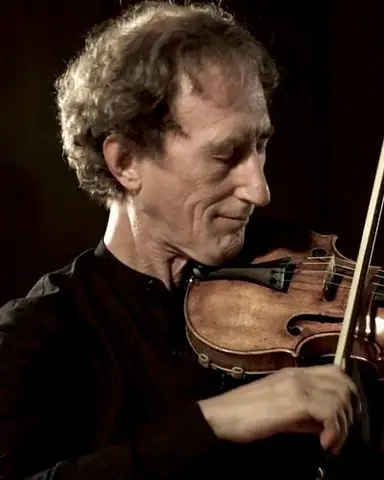
Lesson time: (3min 27sec)
Course preview
This lesson is part of the course The Secrets of Tone Production, Partie 4 : exercices fondamentaux finaux de sonorité
Watch a preview of the full course below.
Lesson transcript:
Music Lesson: Bow Angling Exercises
Exercises 1 to 4 are very straightforward and contain nothing that anyone ever finds confusing or difficult to get pretty quickly. However, in this exercise, angling the bow the right way is the single factor that anyone ever finds confusing.
Getting Started with a Straight Bow
To make things less complicated for the first few times, it's best to start with a basically straight bow parallel to the bridge. You can add angling the bow later.
We've practiced angling the bow and steering in and out of the bridge. But another way of doing this exercise is simply to play with a straight bow.
Practice Steps
-
Into the bridge and out again:
Much better. -
Into the bridge and out again:
You could go further out than that, you know, into the bridge. Go to the fingerboard. That's great. Here we go by the middle of the bow. -
Starting near the bridge:
- Do two in and outs.
- Heavy and away. Save your bow.
-
Heavy and away:
Now, heavy. Go for total purity. Come back. Very good. -
Slow in the bridge:
When you get there, slow. That's perfect. Well done. -
Slow and heavy:
Now, slow and heavy and away. Bravo. Excellent. Thank you. Very good.
Key Concepts
The proportions of the speed at which you go towards the bridge and the increase in weight while slowing down need to be exactly right.
- You're going slightly too fast into the bridge.
- Feel the purity of the sound. All the way.
- Did you hear that? And pure. All the way. Pure.
Advanced Practice
Can you do two in one bow?
- You have to start nearer the bridge.
- When you do more than one, that's it. Go heavy. Heavy, heavy, heavy.
Did you hear the pitch of the note? Go a little bit there. Too much weight. Bravo.
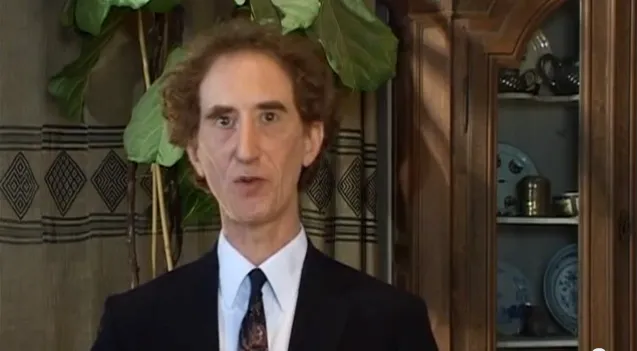
About the instructor
Simon Fischer mène une carrière remarquable et variée de concertiste, de pédagogue et d'artiste de studio. Il s'est produit dans le monde entier en récital et a enregistré trois Sonates de Brahms, un enregistrement salué par la revue Gramophone. Simon est reconnu comme l'un des professeurs d'élite au monde. Il est professeur à la Guildhall School of Music et a occupé des postes à la Yehudi Menuhin School, la Wells Cathedral School et la Purcell School, et a été pendant 15 ans professeur invité à la Royal Scottish Academy of Music. Après avoir étudié à Londres avec Yfrah Neaman et à New York avec Dorothy DeLay, l'approche de Fischer réunit les meilleurs éléments des traditions violonistiques française, russe et américaine. Les publications de Fischer exercent une grande influence sur l'enseignement du violon. Rédacteur pour la revue The Strad depuis 1991, ses articles mensuels ont conquis un lectorat dans le monde entier. Publiés par Edition Peters, ses ouvrages techniques Basics and Practice (traduit en coréen, italien et allemand), Scales et The Violin Lesson, ainsi que le DVD The Secrets of Tone Production (désormais disponible en streaming via MusicGurus), sont devenus des références sur de nombreux continents. Son livre et DVD Warming Up a été décrit par la revue The Strad comme « 23 pages d'or technique à l'état pur ». En 2014, Simon Fischer a reçu le prix de la European String Teachers Association « pour saluer une contribution à l'enseignement des cordes à l'échelle d'une vie ». Dans son cours en quatre parties Secrets of Tone Production, Simon te guide pour apprendre à connaître ton instrument, puis pour travailler pas à pas ses exercices fondamentaux de sonorité, afin de produire un son plus riche, plus maîtrisé et plus beau au violon. read more