



Dirt Wizard
Une exploration de la pièce Dirt Wizard du Grade 4 de Rockschool, un morceau de blues-rock qui marie un phrasé bluesy et plein d'âme à une énergie rock entraînante et un gros riff.
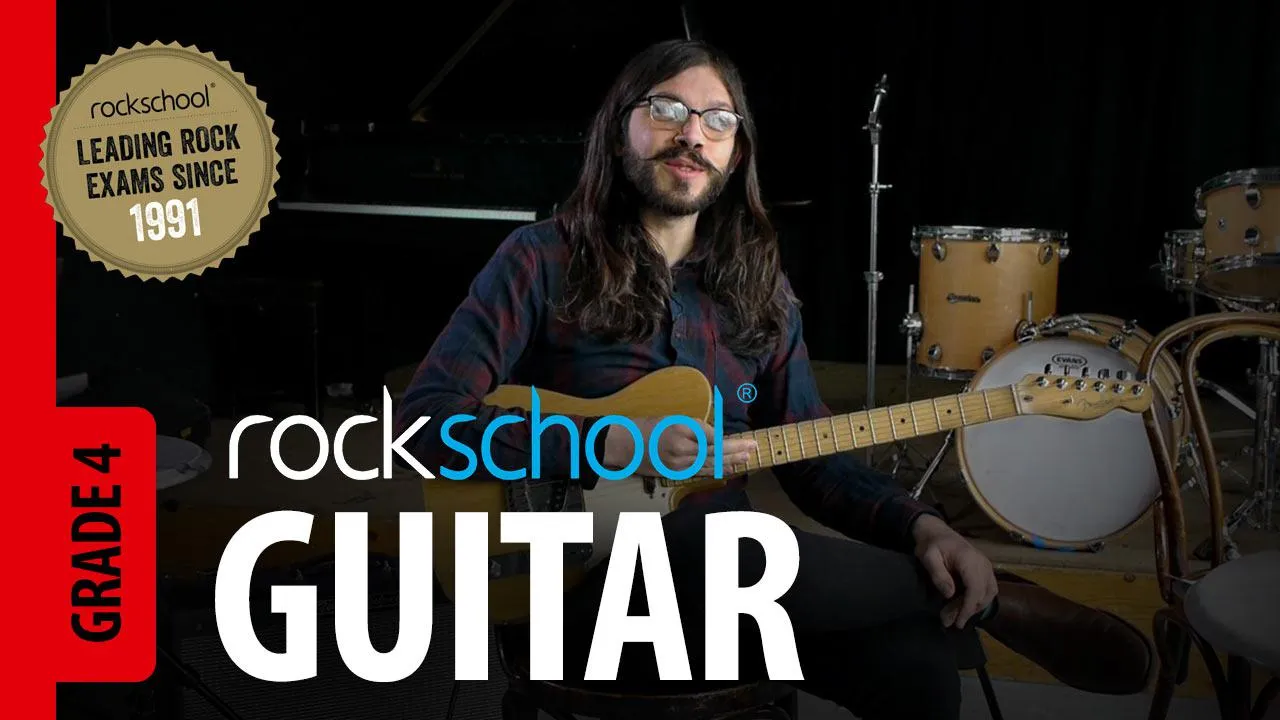
Le contenu du cours
42 leçons (3h 27min) · 1 gratuites
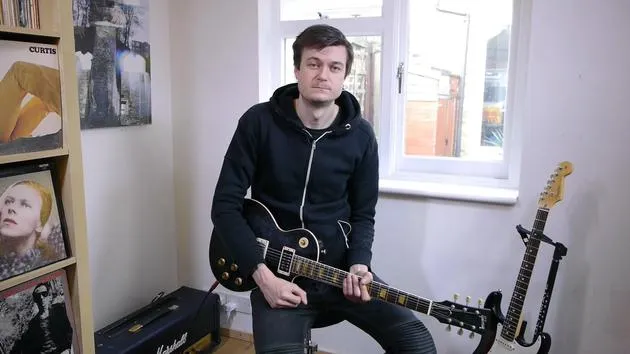
Transcription de la leçon
Music Lesson: "Dirt Wizard" - Grade Four Piece
Introduction to "Dirt Wizard"
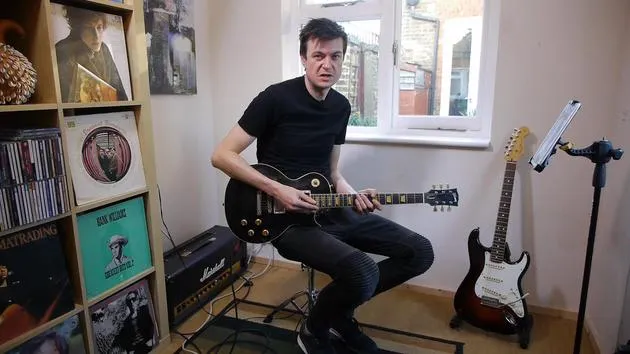
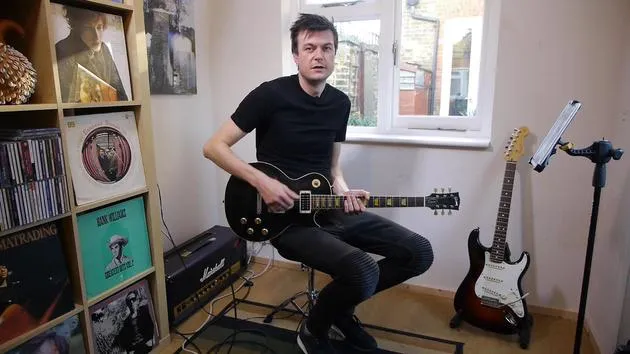
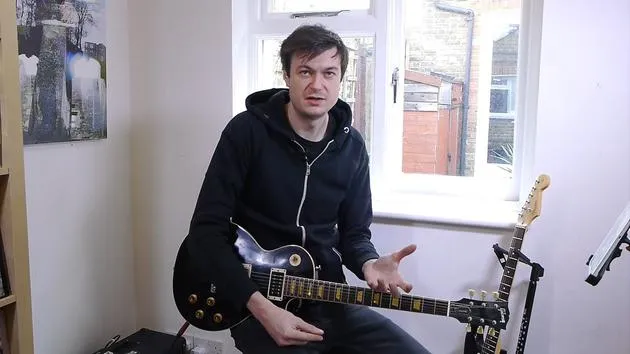
Okay, so that's Dirt Wizard, which is your Grade Four piece. The style marked at the top is blues rock. Not really a term that I like very much as a blues player and rock and roll player. I feel like it's a genre that was sort of invented that doesn't mean anything. But I know what they want you to do.
The intention behind this piece is bluesy and soulful, while the feel of it is very much a rock song. You're trying to marry the two together. That's just my opinion on blues rock; it's probably not worth anything to you, but it's important for you to know where I think the piece is coming from.
Understanding the Piece
Anyway, it's a great riff, a very cool tune, and it's got a hell of a lot in it for you to get your fingers around.
Before we start getting into any of it, I want to emphasize that although you are being examined on accuracy and undertaking of techniques, for a tune like this, the notation should be viewed as more of a guideline than a strict rule. This is rock music!
You need to inject some attitude into it, bring some looseness and swagger to your playing. Feel like you want to do that. This should be a tune where if you're not moving while you're playing it, you might not be doing it right because you're not feeling anything. Make sure that you feel all the licks and riffs that you're playing.
Tempo and Technique
The first thing we'll get to is that it's a very fast tune, 142 BPM is pretty quick. When I was starting out learning tunes, I would usually start by knocking the tempo down to get the accuracy right.
I can't stress enough how important this is. If you can play these songs at slow tempos, your fingers will know what they're doing. After you get comfortable at a slower tempo, just ramp it up by a couple of BPM.
You'll find that going from 80 BPM to 142 BPM will be far more productive than just trying to run it at 142 BPM endlessly. You might realize you're skating over certain things and missing bits that won't become apparent until someone asks you to play something slow, and you find you can't do it.
So, it might seem laborious, but I really recommend slowing it down to ensure you have the rhythm and feel right. Once your fingers know what they're doing, it just feels a little bit quicker, and it won't seem as difficult.
Techniques to Focus On
Technique-wise, there are a lot of things going on. What I like about it is that they've piled on quite a lot early on.
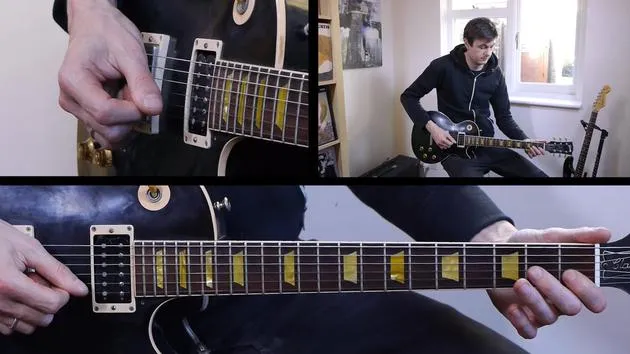
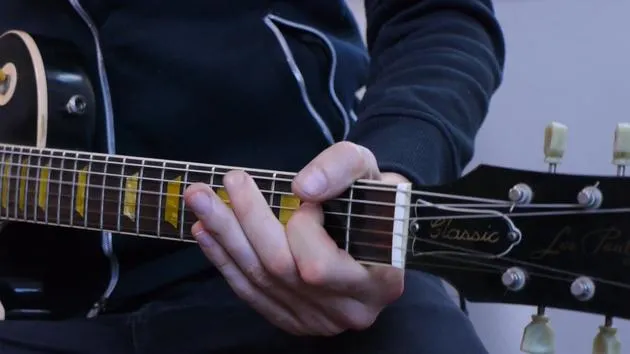
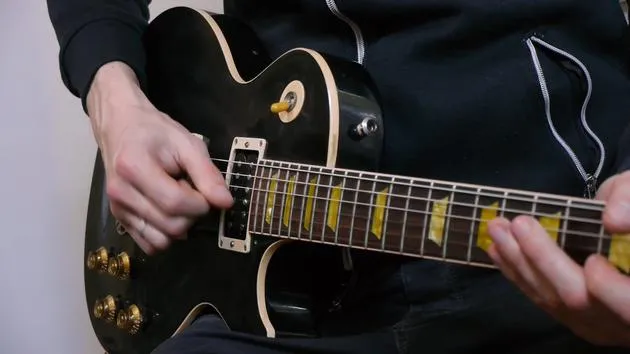
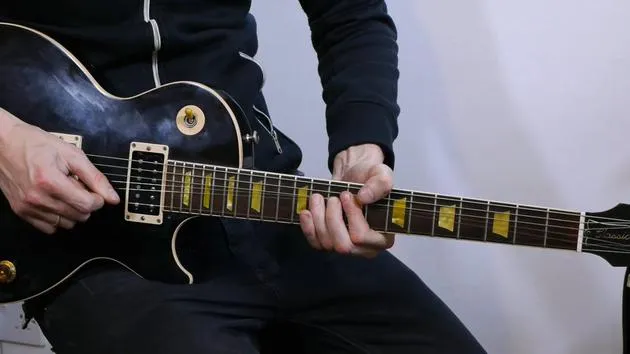
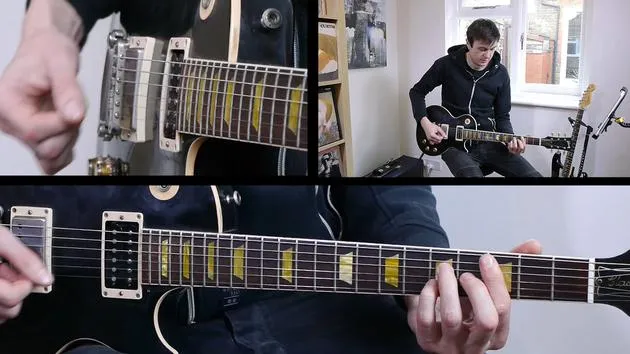
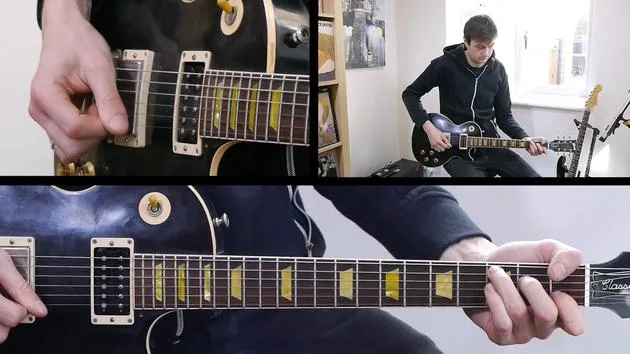
- In the first bar, there's a vibrato marking.
- In the second bar, there's a vibrato marking and a quarter bend marking.
These markings are trying to get the feel across to you, emulating some of those great rock and roll riffs.
Make sure to look out for these details; the entire piece is littered with them. They will enhance your vocabulary in playing. When you write your own rock tunes or play in bands, having these techniques available to you will make your riffs sound much cooler.
The Solo Section
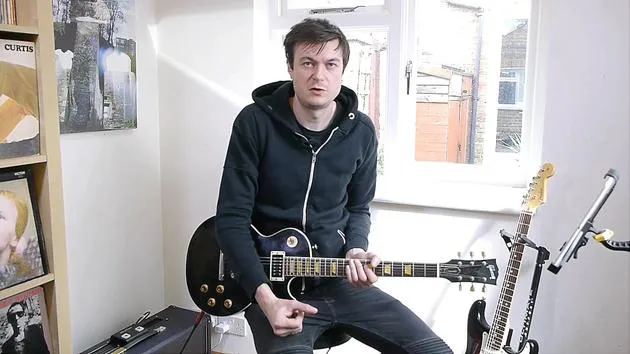
I want to talk about the solo section because I think it's very important. First, let's quickly cover what I've set up with my gear.
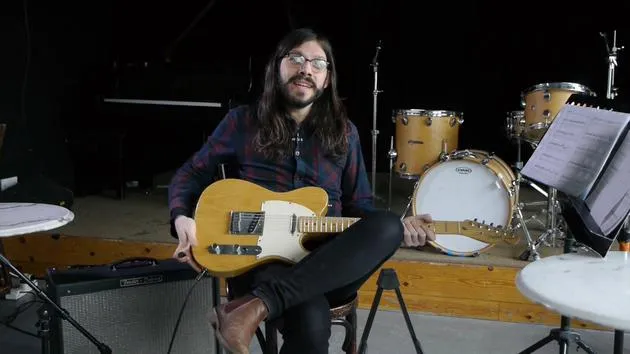
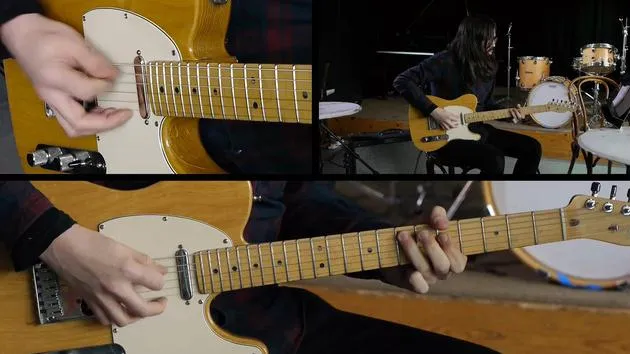
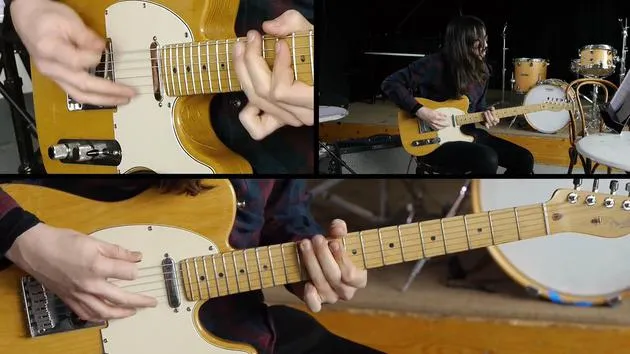
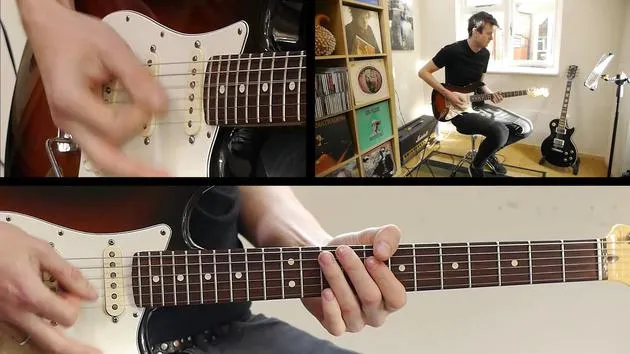
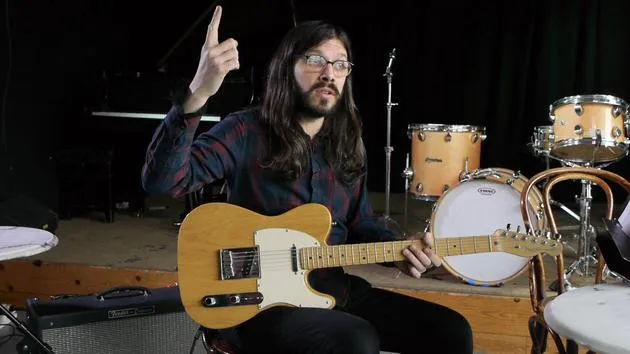
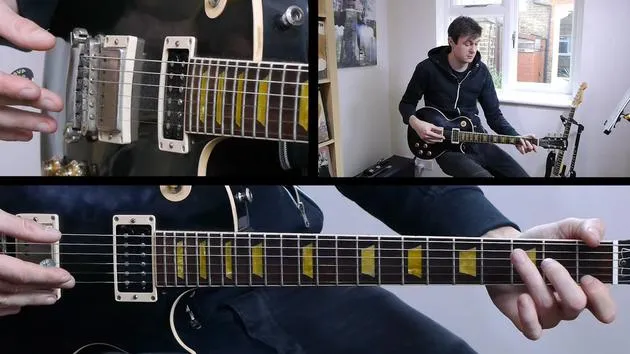
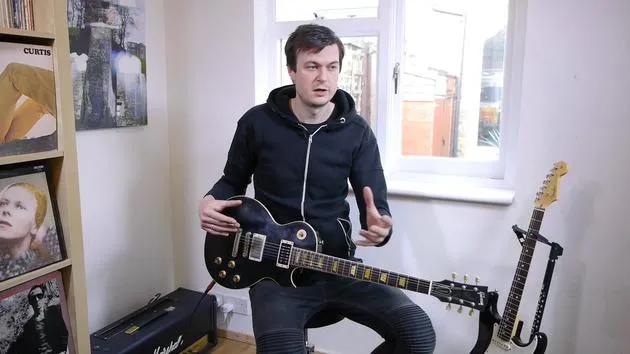
I'm using a Fender Telecaster. You might have a different guitar, but that's okay. Many guitarists favor humbucker guitars for rock music; I sometimes do, using a Gibson SG for a heavier sound.
When it comes to gear, you should be able to play every style and do everything with any guitar you own. Don't think that you need to buy a new guitar to play a certain style.
I've got my Telecaster on the bridge pickup and have taken the tone down to about half to avoid harshness. I want to fatten it up a bit. It's not a massive difference, but I feel it helps with the tone.
Finally, I've got the amp driving pretty hard; I switched to the overdrive channel on this Fender Deluxe. If you have a smaller amp, turn it up until you get that overdrive sound.
Expressing Yourself in Solos
Now, let's dive into the nuts and bolts of the solo section, which is where you can really express yourself. It's a short 12-bar solo, but that doesn't mean you can't do a lot with it.
We talk about building solos, and a 12-bar section can say a lot. Look at someone like Albert King, who can build a solo in 12 bars that feels complete. In contrast, Hendrix often extended solos and built them over longer periods.
There's no right or wrong way, choose how you want to express yourself. Here, you have 12 bars to create something.
Developing Your Solo
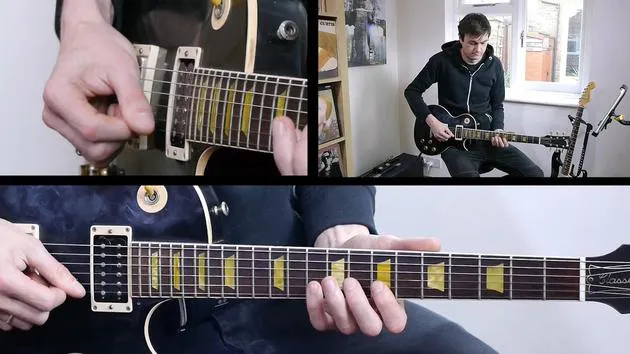
When I approached this solo, I tried to meld the lick we were already playing into my solo so it felt continuous rather than a jarring stop.
The solo comes in and builds up; I wanted it to feel like it came from the song. By the end, I wanted to get a bit more frenetic to create a dramatic effect before dropping back to the riff.
There's this light and shade that is crucial. I can't recall exactly what I played, but I employed techniques such as bends and picked licks to make that transition.
Takeaways
I'm not going to break down my solo piece by piece because the solo is your chance to show the examiner, and later, audiences, what you have to say.
There's a lot of technique in this piece, but don't get bogged down in it. Concentrate on techniques, but also maintain the energy and swagger essential to playing rock and roll.
As for listening to other artists, if you've picked this tune, you're likely into rock and blues music, these genres complement each other.
Listening to Jimi Hendrix is always advisable for any guitarist. His elements could enrich your solo section, adding fire and excitement.
Conclusion
So, that's Dirt Wizard, another great tune from the Rock School guys. Have fun with it, enjoy it, and good luck!
42 leçons
3h 27m de leçons vidéo structurées
Fonctions vidéo avancées
Ralentissez, bouclez un passage, suivez la partition
Mobile, tablette et ordinateur
Pratiquez où vous voulez
Satisfaction garantie à 100 %
Garantie remboursement 30 jours







