



Yeah – Usher (Analyse)
Une analyse de 'Yeah' d'Usher pour Rockschool Drums Grade 1 : lire la partition en 4/4 et verrouiller la précision rythmique qu'exige ce groove urban-pop.
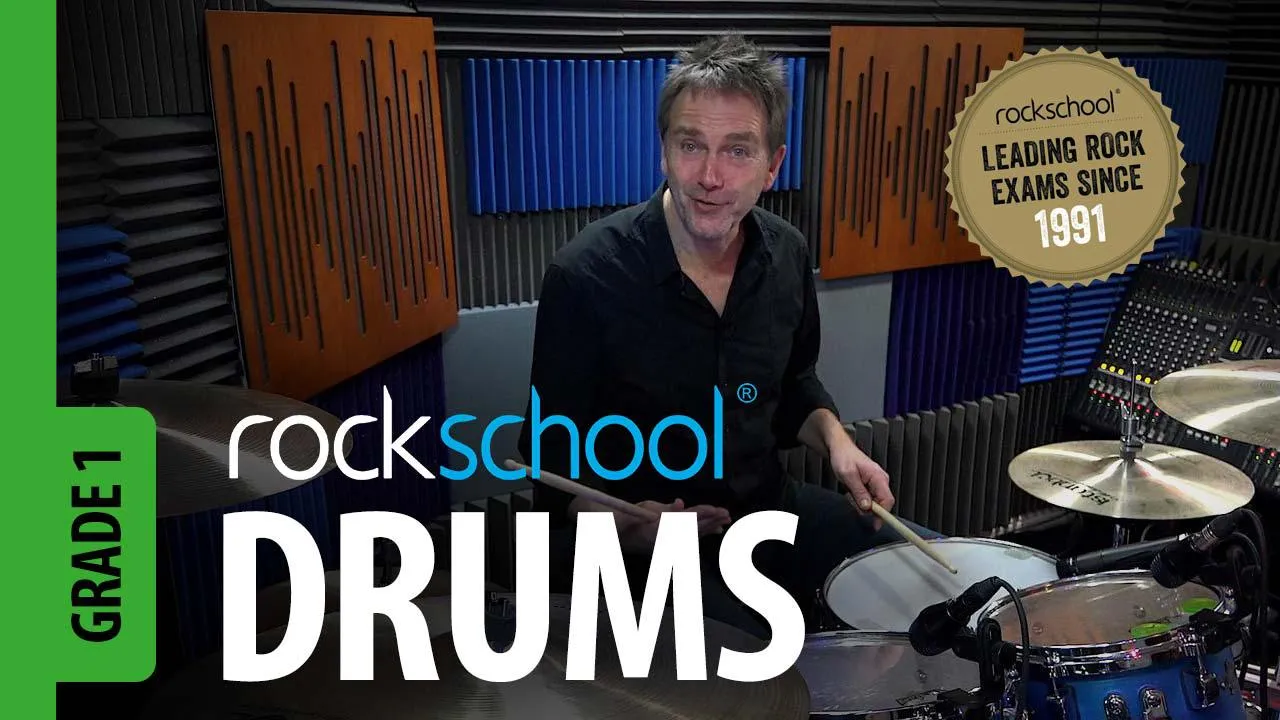
Le contenu du cours
28 leçons (1h 51min) · 2 gratuites
01. Soul Man – Sam And Dave
1:27
02. I Want To Break Free – Queen
1:04
03. Liberation – Wretch 32
1:11
04. In The Midnight Hour – Wilson Pickett
1:11
05. Yeah – Usher
1:07
06. Billie Jean – Michael Jackson
1:25
07. Kaiser Roll
1:10
08. Bend & Snap
1:09
09. Jangle Road
1:21
10. West Coast Rollin'
1:24
11. Deep Trouble
1:12
12. Munky Fusic
Leçon gratuite1:14
01. Soul Man – Sam And Dave (Analyse)
4:55
02. Billie Jean – Michael Jackson (Analyse)
13:28
03. In The Midnight Hour – Wilson Pickett (Analyse)
8:40
04. Yeah – Usher (Analyse)
Tu es ici10:26
05. I Want To Break Free – Queen (Analyse)
3:18
06. Liberation – Wretch 32 (Analyse)
7:45
07. Kaiser Roll (Analyse)
8:56
08. Bend & Snap (Analyse)
7:25
09. Jangle Road (analyse)
5:12
10. West Coast Rollin' (Analyse)
Leçon gratuite3:53
11. Deep Trouble (Analyse)
7:38
12. Munky Fusic (analyse)
2:45

Transcription de la leçon
Drum Lesson: "Yeah" by Usher
Hi, welcome to Music Gurus. This is a drum lesson on "Yeah," which is a Rock School Grade 1 piece from the new syllabus.
Reading the Chart
When I look at a chart for any piece of music, here are some important things to consider:
-
Time Signature:
- This piece is in 4/4 time.
- That means there are four beats per bar.
- 4/4 is the most common time signature in pop music.
-
Track Description:
- The description for this track is urban pop.
- Usher, a huge R&B star, released this track.
Important Context for Drummers
In 2005, this track won an award for the best dance video at MTV. As a drummer playing for dancers, it's crucial to maintain rhythmic precision.
- Key Points:
- Focus on the intention of the rhythm.
- Prioritize flavor and delivery of the rhythm with precision.
At Grade 1, we highlight the importance of rhythmic accuracy because, unlike drummers from the 50s and 60s who played by feel, modern drummers often play along with backing tracks and click tracks.
Practice Tips
- Practice with a Metronome:
- It's essential to practice with a metronome as well as without one.
- Record your practice sessions and check for fluctuations in tempo.
Tip: You are most likely to fluctuate when moving between section A and section B.
Analyzing the Groove
- Bars 1-8:
- The same pattern is repeated.
- The first groove includes:
- Bass Drum: Plays on beats 1 and 3.
- Snare Drum: Plays on beats 2 and 4 (known as the backbeat).
Instead of the usual pattern, the bass drum anticipates the second eighth note of the second beat:
- Pattern:
1, 2 and 3 and 4, and 1 and 2 and 3 and 4.
This anticipation gives the music its swing.
Section A Overview
- Hi-Hat: Plays quarter notes.
- Backbeat: Beats 2 and 4.
Try recording yourself for 10 minutes without a metronome, then listen to the recording to see if you maintain the same tempo.
Transition to Section B
When transitioning to Section B (bar 9), we introduce a crash cymbal.
- Choose any crash cymbal you prefer.
- Practice Tip: Move back to the hi-hat at the same dynamic as before.
Hi-Hat Technique
In Section B, the hi-hat opens:
- If you struggle with this, don't worry!
- Opening the Hi-Hat:
- Undo the clutch.
- Place your foot down, lift it up, leaving an inch of space between the hi-hats.
Key Coordination:
- On the last eighth note in the bar, open the hi-hat and ensure both feet land together on the first beat of the next bar.
Bar Coordination
- In Bar 9, the coordination is key:
- The pattern will flow slower but aims for a smooth connection.
Understanding the Sections
- B Section:
- This is a two-bar loop.
- Look for the symbols in your Rock School book indicating a repeat.
Final Three Bars
- Don't dismiss the rests!
- Steve Gad's Wisdom: "It's the silence in between the notes that really makes a difference."
In the penultimate bar:
- Hi-hat and bass drum on beat 1.
- Two quarter note rests.
- Snare drum on beat 4, followed by a combined snare and bass drum for the final note.
Conclusion
Give those rests the same attention as the notes, ensuring you don't come in early on the fourth beat.
So, those are my wise words about "Yeah" by Usher. Good luck, have fun, and enjoy the track!
28 leçons
1h 51m de leçons vidéo structurées
Fonctions vidéo avancées
Ralentissez, bouclez un passage, suivez la partition
Mobile, tablette et ordinateur
Pratiquez où vous voulez
Satisfaction garantie à 100 %
Garantie remboursement 30 jours







