



Bend & Snap (Analyse)
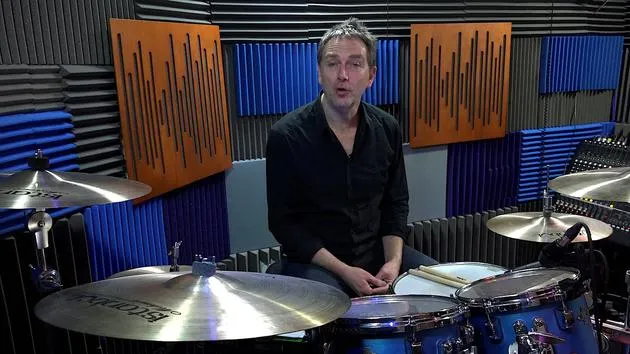
Paul Elliott partage son regard de pro sur le morceau de Grade 1 'Bend & Snap', un groove pop classique dans la veine de Lady Gaga et Michael Jackson.

Le contenu du cours
28 leçons (1h 51min) · 2 gratuites
01. Soul Man – Sam And Dave
1:27
02. I Want To Break Free – Queen
1:04
03. Liberation – Wretch 32
1:11
04. In The Midnight Hour – Wilson Pickett
1:11
05. Yeah – Usher
1:07
06. Billie Jean – Michael Jackson
1:25
07. Kaiser Roll
1:10
08. Bend & Snap
1:09
09. Jangle Road
1:21
10. West Coast Rollin'
1:24
11. Deep Trouble
1:12
12. Munky Fusic
Leçon gratuite1:14
01. Soul Man – Sam And Dave (Analyse)
4:55
02. Billie Jean – Michael Jackson (Analyse)
13:28
03. In The Midnight Hour – Wilson Pickett (Analyse)
8:40
04. Yeah – Usher (Analyse)
10:26
05. I Want To Break Free – Queen (Analyse)
3:18
06. Liberation – Wretch 32 (Analyse)
7:45
07. Kaiser Roll (Analyse)
8:56
08. Bend & Snap (Analyse)
Tu es ici7:25
09. Jangle Road (analyse)
5:12
10. West Coast Rollin' (Analyse)
Leçon gratuite3:53
11. Deep Trouble (Analyse)
7:38
12. Munky Fusic (analyse)
2:45
Transcription de la leçon
Bend and Snap Music Lesson
Okay, here we are with Bend and Snap. Apart from sounding very painful, it's basically a classic pop feel. This arrangement has been influenced by:
- Lady Gaga
- Rihanna
- Michael Jackson
- Madonna
If you want to check out some really great session musicians from the Madonna and Michael Jackson era, check out the late great Jeff Pocoro, John Robinson, and Jonathan Moffat. All are fantastic pop groove players. Josh Friese is also a great drummer who plays on loads of sessions. Guys like that can really give you a feel for their consistency of sound and how they approach tight pop drumming.
Getting Started: Time Feel
The first thing, of course, is to get a good time feel. It's essential to internalize that feel before you start playing. Here's a good tempo:
1, 2, 1, 2, 3, 4.
You can sing 8th notes or 16th notes over that internally:
- 8th Notes: 1, 2, 1 and 2 and 3 and 4 and
- 16th Notes: 1, 2, 1e and a, 2e and a, 3e and a, 4e and a, takatika, Takatika, Takatika, Takatika. Bang.
That gives you a good start before you get into the tune.
Counting in the Space
We have kind of three or four reasonably empty bars there: hi-hat, bass drum, a little bit of snare, but there's a lot of space. It's in the space where you can lose the count, drag, speed up, or just lose where you are.
It's always great to:
- Count in the space.
- Feel the click.
- Feel the subdivisions.
Fill that space with a nice, even internalization of the count. We sometimes refer to this as being the internal clock, which is important.
Being a good timekeeper is a must for all drummers. You develop that good timekeeping by:
- Working with the click
- Working without the click
- Internalizing the subdivisions and the space around the pulses
The Parts of the Piece
Now, let's get into the parts. I played this piece with quite a tight pop feel. I used a big rim shot and a tight feel on top of the hi-hat. Here's a demonstration of a sample groove that captures how I played it.
There's a slight inflection on the hi-hat, so you'll hear that in the recording. It's not too heavy but has a tighter feel.
Remember:
- A rim shot connects with the rim and the head at the same time, giving a thick, hard, but warm sound.
- This sound is different from just playing in the center of the head.
Here we go with a typical groove from somewhere in the chart. I even threw in an open hi-hat just for good measure. But that's that kind of feel that I played.
Techniques and Consistency
It's not necessary for you to play this technique on the hi-hat. If you want to just play the center snare, that's fine. This is all part of your practice and development, it's your call.
What we need to do is:
- Stay in good, steady time.
- Have a repetitive balance of sounds.
Repetition is key in groove playing. You don't want each beat or each bar sounding different. The listener needs to hear that it's going to be repetitive.
Balance of Sound
Always think about the balance of sound and keep in mind the words repetition and consistency.
On the ride cymbal, you can play more of a monotone feel, which sounds great in many contexts. I chose to play with a lively accent on the ride, creating a definite emphasis on the downbeats. This leads us into the quarter note section of the particular part of the chart.
As we move into the C section, remember:
- It's essential to count.
- Keep internalizing that count and feel.
Transitioning from eighth notes to quarter notes can feel different, so keep the count going.
Hi-Hat Techniques
If you play on the side of the hi-hat, it's a little more challenging to control. I recommend playing more on top of the hi-hat for an open hi-hat sound. Use a strong connection with the shoulder of the stick, quite firm and definite.
Here's an idea of what that might sound like, using a solitary, quite lonely looking open and closed hi-hat in this tune.
Remember to:
- Find what works for you.
- Make a strong connection.
- Be positive and definite.
Playing Along
As always, play along with the track. Try playing with and without the click with the track. Do some practice just with the click.
Communicate with your teacher to prepare in the right way.
Helpful Tips:
- Always check out the overview and walkthrough in your gradebook for additional information on which musicians to check out, different bands, and how to approach certain sections.
And I think that's it! It's a quirky tune, and I believe you will enjoy it.
28 leçons
1h 51m de leçons vidéo structurées
Fonctions vidéo avancées
Ralentissez, bouclez un passage, suivez la partition
Mobile, tablette et ordinateur
Pratiquez où vous voulez
Satisfaction garantie à 100 %
Garantie remboursement 30 jours







