



Qu'est-ce qu'une gamme et démonstration

Avec
Talia Girton
Le contenu du cours
19 leçons (0h 33min) · 1 gratuites
01. Qu'est-ce qu'une gamme et démonstration
Tu es ici2:27
02. Appel et réponse
0:58
03. Exemple 1 d'appel et réponse
1:09
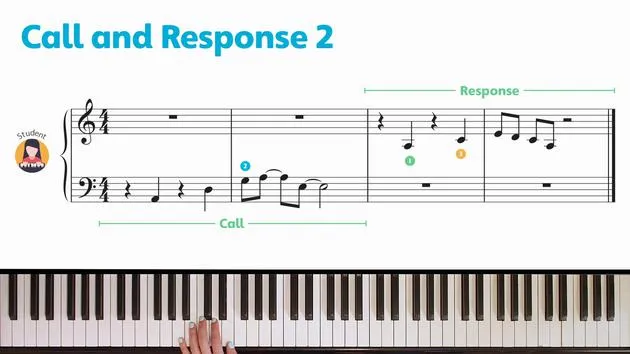
04. Exemple 2 d'appel et réponse
1:25
05. Improviser sur la pentatonique majeure
1:49
06. Jam en pentatonique majeure (interprétation)
1:05
07. Jam sur la pentatonique mineure
1:48
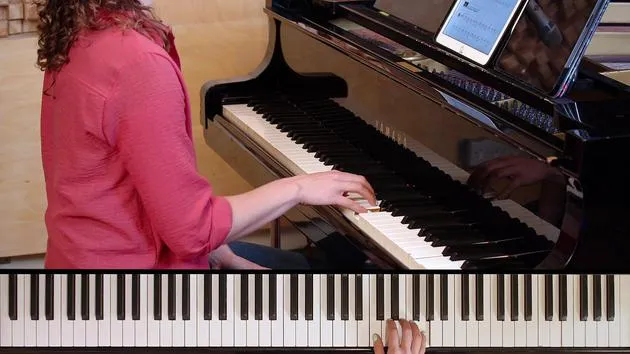
08. Minor Pentatonic Jamming (interprétation)
0:49
Transcription de la leçon
Understanding Pentatonic Scales
Scales are patterns of notes that work in a sequence. Today, we're going to take a closer look at pentatonic scales.
C Major Pentatonic
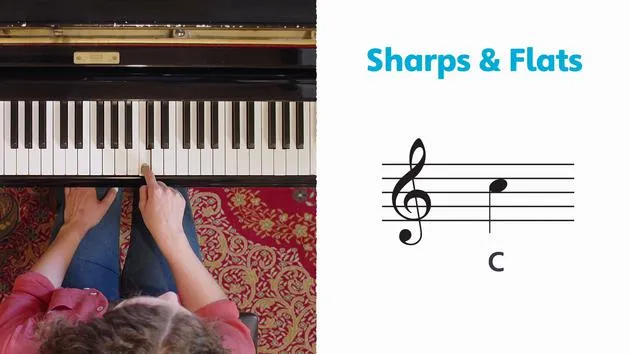
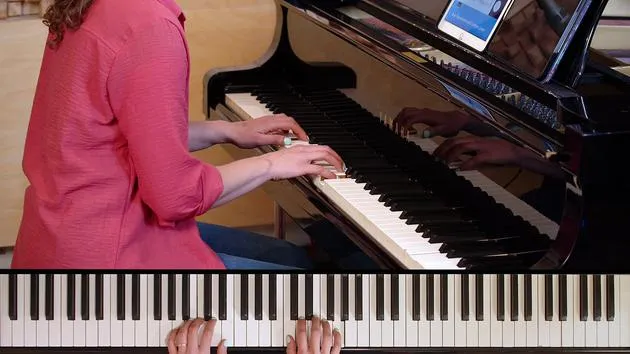
The first one we'll explore is the C major pentatonic. It looks like this:
- You can also play it up to the next octave.
- If you'd like to do it that way, I recommend starting with your two finger on C.
Common Uses
Pentatonic scales are quite common in popular music. You might recognize them in songs like:
- Amazing Grace
- Shape of You by Ed Sheeran
A Minor Pentatonic
Next, let's have a look at the A minor pentatonic.
- It's got the same notes as C major pentatonic, but we will start on A.
- If you want to play that in the full octave, once again, I recommend starting with your two finger on A.
Helpful Tips
A helpful tip for memorizing the notes for these two scales is to remember that they don't have B or F. You can just skip over these notes.
Major vs. Minor
You may have noticed that:
- Major pieces tend to have an uplifting or happy quality. They follow a specific sequence of semitones and whole tones.
- Minor pieces, on the other hand, sound a bit more melancholy or even scary. They will also follow a specific set of semitones and tones.
We'll learn more about this later on.
Black Keys and Improvisation
Interestingly, the black keys on the piano also form a pentatonic scale.
- You can do some great improvisation just by playing the black keys.
- Explore the black notes to find some fantastic little improvisational tunes!
19 leçons
0h 33m de leçons vidéo structurées
Fonctions vidéo avancées
Ralentissez, bouclez un passage, suivez la partition
Mobile, tablette et ordinateur
Pratiquez où vous voulez
Satisfaction garantie à 100 %
Garantie remboursement 30 jours
Rencontrez votre guru
Rencontrez votre guru
Talia Girton est musicienne et musicothérapeute agréée par le HCPC, et fondatrice de The Cycling Music Teachers. Son travail réunit la musicothérapie, l'accompagnement et l'éducation, et elle enseigne à l'international dans le cadre de la formation en musicothérapie de l'UDELAS au Panama, tout en contribuant au développement professionnel avec l'European Piano Teachers Association (EPTA). Sur MusicGurus, elle enseigne les cours Piano Method et Piano Foundations, guidant les débutants complets depuis les premiers pas à travers le rythme, les deux mains, la théorie et l'interprétation.







