



Rudiment #1 - Single Stroke Roll
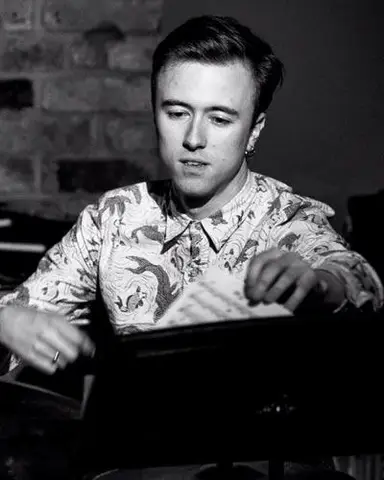
Lesson time: (9min 39sec)
Course preview
This lesson is part of the course Ma première leçon de batterie
Watch a preview of the full course below.
Lesson transcript:
Music Lesson: Introduction to Rudiments
Hey, welcome back!
Last Lesson Recap
Last lesson, we learned some permutations of our basic rock beat. This time, we're going to take a step back from learning new beats and start understanding the building blocks of drumming called rudiments.
What Are Rudiments?
Rudiments have been around for hundreds of years, originating from snare drum techniques used in marching and pipe bands. You'll often hear them in military music as well.
Essentially, rudiments are the building blocks of all drumming.
The First Rudiment: Single Stroke Roll
The first rudiment we're going to learn is called the single stroke roll. It's very simple: it consists of a stroke with your right hand and a stroke with your left hand, over and over again.
Technique Refresher
- Grip: Fingers around the sticks, not gripping too tightly.
- Rebound: Always remember this technique.
Pattern: Right, left, right, left, repeat.
Now, let's remove this tom so you can see my snare drum better.
Playing the Single Stroke Roll
- We'll start by playing it in crotchets (quarter notes).
- Once you've got that together, play the hi-hat on all four beats simultaneously.
It will sound like this:
"Dead simple."
Next up, we'll play it in quavers (eighth notes), which means twice as fast while keeping the hi-hat playing crotchets.
Count: 1, 2, 3, 4
Coordination Tips
Watch out for overlapping strokes between your hands and feet. You want a definite point of contact.
Now we've learned both crotchets and quavers with the single stroke roll.
Introduction to Semiquavers
Next, we'll learn a new subdivision by halving the quaver to create semiquavers (sixteenth notes).
- If a crotchet lasts one whole beat:
- "1, 2, 3, 4"
- A quaver lasts half a beat:
- "1 and 2 and 3 and 4"
- A semiquaver lasts half as long again:
- Four semiquavers per crotchet:
- "One E and a, Two E and a, Three E and a, Four E and a"
- Four semiquavers per crotchet:
Counting Semiquavers
Counting as:
"1e and 2e and 3e and 4e"
is easier than trying to say:
"1, 2, 3, 4, 2, 2, 3, 4."
Feel free to count however feels natural to you!
Keeping the Hi-Hat
We'll maintain the hi-hat on crotchets (1, 2, 3, and 4) while playing the single stroke roll in semiquavers on the snare drum.
Sound like this:
"Okay."
Remember to ensure that your hi-hat and snare drum land in the same place.
Applying Rudiments: Understanding Fills
Once we've mastered that (and I say "mastered" lightly), we will apply it to the drum kit during a beat.
What is a Fill?
A fill is something a drummer plays within music, often at the end of a musical phrase, to signify a change or add excitement.
Here's an example. Got a bit carried away there!
Fills differentiate from the consistent beat we're playing.
First Fill Using Single Stroke Roll
For our first fill, we'll use the single stroke roll in semiquavers.
- Play quaver beat two three times.
- On the fourth bar, play one whole bar of semiquavers:
- "1e and a 2e and a 3e and a 4e."
It will sound like this.
Important Tip
When transitioning from the beat to the fill:
- Keep that crotchet pulse in your head.
- The right hand keeps playing quavers while the left fills in the gaps.
Let me play the whole thing one more time.
Count: 3, 4...
Summary
- New Subdivision Learned: Semiquavers
- "1 E&A. 2 E&A. 3 E&A. 4 E&A."
- First Rudiment Learned: Single Stroke Roll
- "Right, left, right, left."
Closing
Now we've learned to use the single stroke roll as a fill with our quaver beat two.
Thanks very much for watching, and I will see you next time!
About the instructor
Harry Pope est un batteur londonien diplômé du programme de jazz du Trinity College of Music. Il a joué avec la lauréate du Brit Award Eddi Reader, le guitariste Jim Mullen, Graeme Duffin de Wet Wet Wet et le Royal Scottish National Orchestra Big Band. Son cours pour débutants part de la batterie elle-même — posture, prise en main, tenue du tempo et tes premiers grooves — à un rythme qui convient à quiconque saisit les baguettes pour la première fois. read more