



BONUS : Fills avec le double stroke roll
Lesson time: (-4min -46sec)
Course preview
This lesson is part of the course Ma première leçon de batterie
Watch a preview of the full course below.
Lesson transcript:
Music Lesson: Using the Double Stroke Roll as a Fill
Hello, welcome back!
In the last video, we learned the double stroke roll. Today, I'll show you a couple of ways to use it as a fill, which can sound a bit more interesting than just the plain old technique.
Utilizing the Toms
We've got these toms here, so we may as well use them! Here's what we're going to do:
- Beat One: This will remain exactly the same.
- Beat Two:
- Move your right hand to the floor tom and play 2e.
- Then move your left hand to the rack tom and play and A.
This will sound like:
One E and A. Two E and R.
Beats One and Two
- Beat One: Exactly the same.
- Beat Two: Move the right hand to the floor tom.
- Then move the left hand to the rack tom for.
So, beats one and two will sound like:
(Beat One) ... (Beat Two) ...
Beats Three and Four
- Beats three and four will be exactly the same as beats one and two:
Three E and A. Four E and A.
Putting It Together
So now we have:
- Beats One and Two
- Repeated for Beats Three and Four.
That's your fill!
Practicing the Fill
Let's try it with our quaver. Beat number one will go like this:
- If you feel like putting a crash cymbal after the fill to get back into the beat, feel free, it sounds great!
Important Tips
- I cannot emphasize how important it is to stay relaxed while doing this.
- Practice it slowly, almost painfully so.
- There's absolutely nothing wrong with playing something slowly and actually getting it right.
- Once you've played it slowly, you can start to speed it up.
And then, you know, you might hit a point where you can't play any faster. That's good! This means you've got something to practice.
Final Demonstration
Let's use that as a fill one more time. Crash it after the fill, and we'll come back with a beat to do the whole thing again.
I'll demonstrate it for you once, and then you can practice it yourself.
Thank you very much for watching, and I will see you in the next video, hopefully soon!
About the instructor
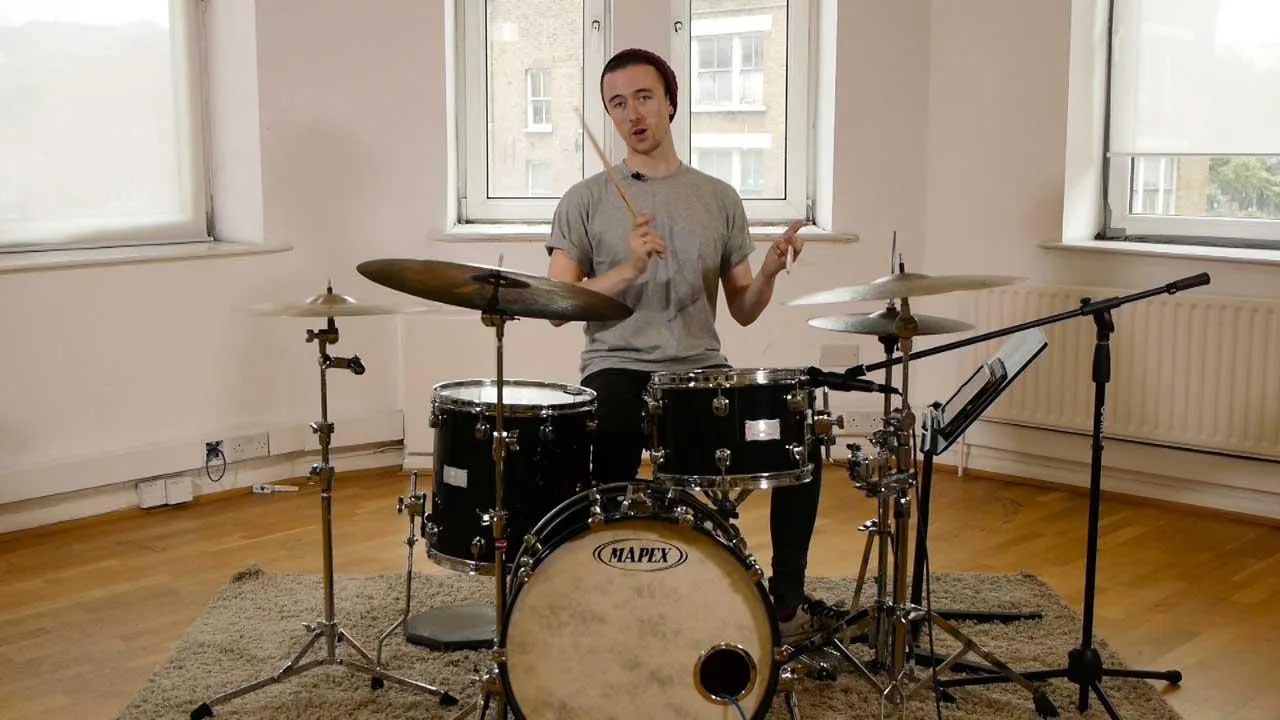
Harry Pope est un batteur londonien diplômé du programme de jazz du Trinity College of Music. Il a joué avec la lauréate du Brit Award Eddi Reader, le guitariste Jim Mullen, Graeme Duffin de Wet Wet Wet et le Royal Scottish National Orchestra Big Band. Son cours pour débutants part de la batterie elle-même — posture, prise en main, tenue du tempo et tes premiers grooves — à un rythme qui convient à quiconque saisit les baguettes pour la première fois. read more