



Développer une interprétation : jouer comme tu chanterais

Lesson time: (2min 58sec)
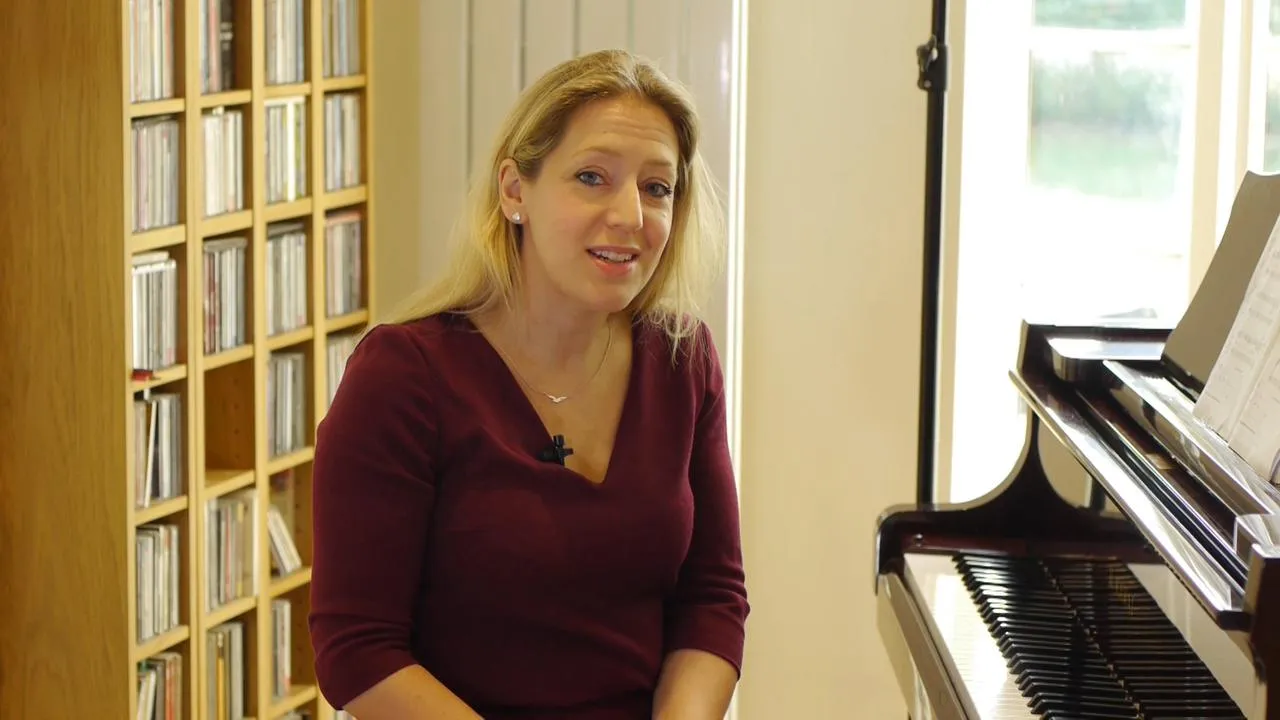
Annabel Thwaite montre comment apporter ta propre interprétation à un chant de Noël connu, en utilisant les paroles que nous connaissons tous pour façonner la ligne mélodique : une idée que tu peux transposer à d'autres pièces classiques.
Course preview
This lesson is part of the course Apprends les classiques de Noël au piano
Watch a preview of the full course below.
Lesson transcript:
Melodic Line and Musical Direction
So this little piece is actually great for introducing melodic line and musical direction because we have the words written here. This gives us a sense of where the harmonies, which we'll be looking at more intricately in other works, kind of cadence.
Cadences
We sort of finish or begin again here. In particular, we have:
- "Little Town of Bethlehem"
- "Breath, how still we see thee lie"
There's a little cadence, and I think that's very important. It's a philosophy that we want to develop.
Dissonances and Resolutions
When we look at other Bach inventions, consider:
- Where the dissonances occur
- The clashes of the harmony
- Where they resolve
This is quite advanced thinking, but you'll have an idea of practicing the left hand and the right hand together or separately, focusing on where they go, where they rise, and where they fall. This can develop your understanding of phrase length and melodic contours.
The Importance of Breathing
I would really recommend thinking that every time you play a piece, it always has this melodic line and musical phrase. Consider it a sentence that you are almost singing. If you're singing, you need breath, and it's essential to breathe at various points.
Cadential Points
We have cadential points, harmonies that twist and turn, and those are the moments we can breathe.
Practice Tip: Sing along and see where your breath runs out. Then think, "Where is a suitable place to put a breath?" For example:
- Breathe, breathe.
This approach gives much more depth and space within the phrase and the whole piece. Additionally, it helps convey the melodic contour, offering the audience an idea of where the journey is moving and where it's going.
Harmony Insights
Looking at the harmony a bit more closely, in bar four it's interesting that:
- That A is a first inversion of F major
- It resolves on the third beat
This observation could be a little point to take away. We also have a couple of cool F sharps popping up within a kind of F major key, which adds further interest.
Notable Words
If you look at where they appear, such as in the words "sleep" and "the years", those might mean something. They appear at a point when the phrase turns, so just watch out for those.
Final Thought: Don't emphasize them; just subtly notice them and think, "Well, this is because it's turning the phrase that way or this way."
About the instructor
Reconnue comme l'une des pianistes les plus polyvalentes et charismatiques de Grande-Bretagne, Annabel Thwaite mène une carrière variée de soliste, de chambriste, d'artiste de studio, de pédagogue et d'examinatrice, et a remporté tous les grands prix d'accompagnement, dont les prestigieux Kathleen Ferrier, Gold Medal et Richard Tauber Piano Prizes. Elle a collaboré avec des artistes de renom tels que Roberto Alagna, Bryn Terfel, David Kempster et "Only Men Aloud!" Annabel a enregistré pour Universal records avec le "Scottish Tenor", dont l'album a été nommé aux Classical Brit Award et passe régulièrement sur Classic FM. Deux fois accompagnatrice du Festival of Welsh Male choirs, ses concerts au Royal Albert Hall ont été enregistrés par Sain et diffusés sur S4C. Elle est aussi pianiste de séance pour le cinéma, ayant enregistré à Abbey Road la musique du film "Awake", de la série de la BBC sur Jane Austen "Emma", de "The Secret Diaries of Miss Anne Lister" et, plus récemment, elle est apparue à la fois dans Blue Peter et dans "The Rob Brydon Show". "...aidée sans doute par les accompagnements de piano manifestement brillants d'Annabel Thwaite... un vrai plaisir." Dans ses cours MusicGurus — Learn Christmas Classics on Piano, Learn Classical Favourites on Piano et Growing Chamber Groups and Small Ensembles — Annabel partage la musicalité qui sous-tend cette carrière polyvalente. Tu apprendras à faire vivre au piano des pièces de Noël et classiques bien-aimées, à développer ton toucher et ton phrasé et, forte de son expérience primée d'accompagnatrice, à découvrir comment écouter, mener et jouer ensemble en faisant de la musique avec d'autres musiciens au sein de groupes de chambre et de petits ensembles. read more