



Accords et harmonie - Section A

Avec
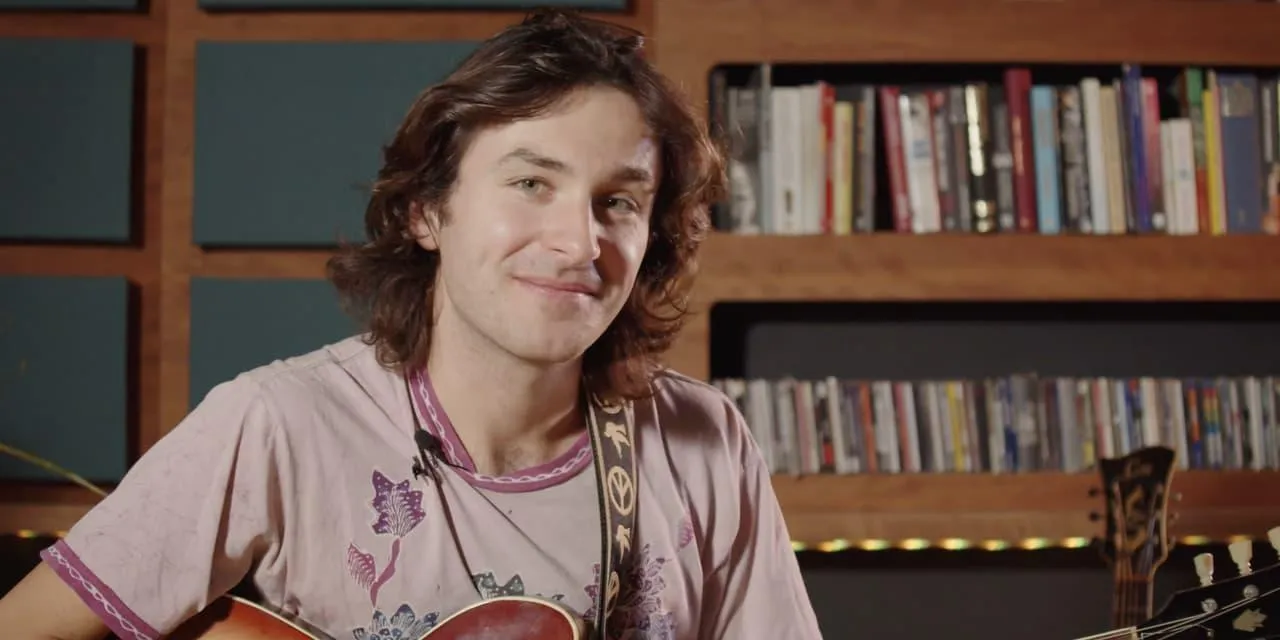
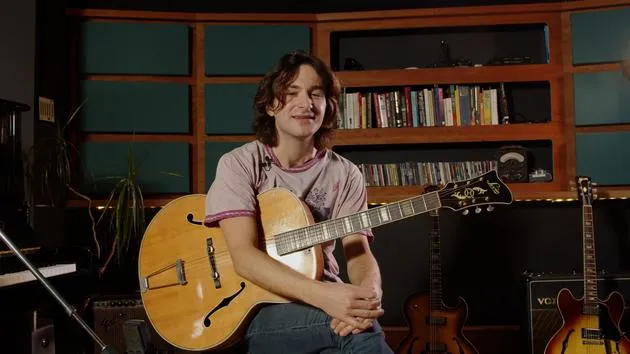
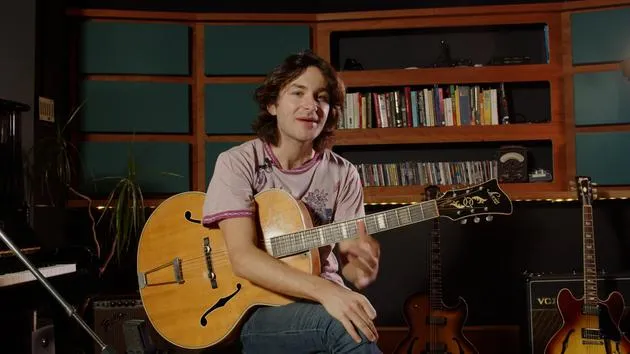
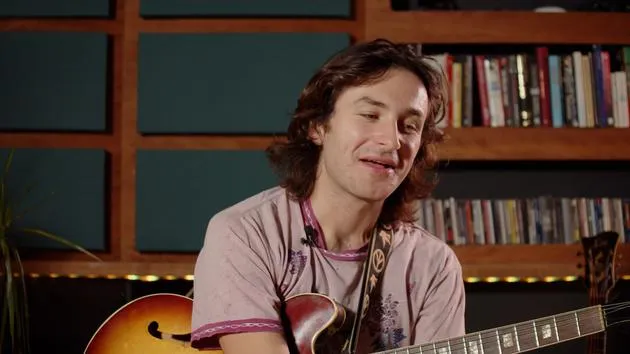
Rob LuftRob Luft décompose les accords de guitare rythmique de la section A de "Clouds" (basée sur "Nuage" de Django), en utilisant les voicings de sixte et de neuvième d'époque plutôt que des septièmes majeures.
Le contenu du cours
28 leçons (2h 7min) · 1 gratuites
01. Pourquoi étudier Django Reinhardt ?
3:45
02. Accords et harmonie - Section A
Tu es ici11:06
03. Accords et harmonie - Section B
2:21
04. Techniques de main droite - Européenne vs Américaine
5:04
05. Comment créer le feel swing
1:51
06. Décryptage de la mélodie
9:10
07. Improviser - Arpèges et enclosures
Leçon gratuite10:40
08. Improvisation - La gamme bebop mineure harmonique
8:27
09. Improviser en solo - Utilisation des pentatoniques
9:45
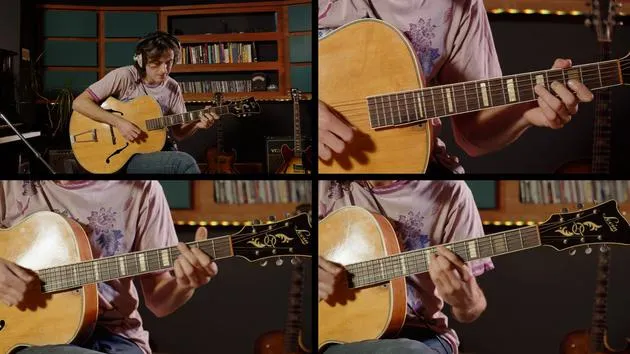
10. Clouds - Performance (écran partagé avec accompagnement)
3:48
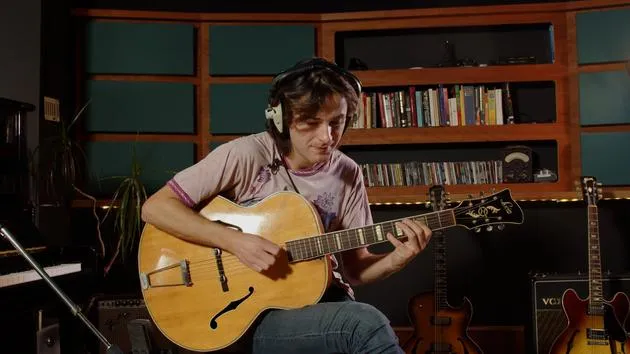
11. Clouds - Interprétation
3:49
12. Clouds - Interprétation (version simplifiée)
2:40
01. Pourquoi étudier Joe Pass ?
2:23
02. Introduction au jeu en solo et à l'harmonie parallèle
4:00
03. Lignes diminuées et « tierces siciliennes »
5:19
04. Jouer en mesure avec des voicings pianistiques
5:22
05. Comment jouer la seconde moitié
5:06
06. Hybrid picking vs fingerstyle
5:57
07. November in Norway - Performance
2:29
08. November in Norway - Interprétation (simplifiée)
1:27
Transcription de la leçon
Harmony and Rhythm Guitar Lesson: "Clouds"
Here we are looking at the harmony and rhythm guitar for this track, which is based on Django Reinhardt's Nuage. We're calling it Clouds for obvious reasons.
Overview
- This is a track from the early 1940s composed by Django himself.
- He recorded it several times over his career, very famously in the key of F.
- We're going to look at a chord sequence very similar to Nuage in the key of F.
The chords would have been played by his brother Joseph, as Django himself only had these two fingers and was unable to play a lot of these four and five-note chords. So, we're inspired by Django's brother and the other rhythm guitarists of the era.
Chord Sequences
When studying chord sequences like this, the first thing to consider is that the major chords would never have had a seventh at this time.
- You would never hear the sound of F major 7, which has become so common in pop music and jazz music later on.
- Instead, you'd hear only the sound of a sixth or ninth, which comes from the pentatonic scale.
Examples of Chords
-
You'd hear chords like F major 6, or like this:
- (insert chord diagram)
-
If you wanted to add the 9th, you could use chords with the 6:9:
- F major 6:9 would look like this:
- (insert chord diagram)
You get lots of little chromatic movements where the guitarist of the era would literally just move the same chord around, fret by fret, chromatically, getting these sounds like:
(insert demonstration audio or visual)
This is reminiscent of the swing era of the 1930s and 40s.
The Chord Sequence
So moving to this chord sequence, the first chord is a kind of D flat seventh.
- D flat 7
- C seventh
- F major
Voicings
What voicings would these guys have used?
- Often they're playing sort of inversions.
- When I say inversion, I mean that the guitarist might not have a D flat in the bass but might have one of the other chord tones as the bass note.
For example, rather than a D flat, he might use an A flat as his bass note. In this case, an A flat was most likely:
- You get a chord like that: D flat 7 with the A flat in the bass.
- It then moves chromatically down to a C7 with a G in the bass, followed by the F6.
The guitarists at this time, Django included, often had very fast vibrato in the left hand, which created a gorgeous sort of shimmering chordal sound, almost like a tremolo arm in rock and roll music or in later styles.
You hear there, it creates this very full sound with this vibrato.
Tonic and Dominant Chords
Another interesting point is that rather than sitting for two bars on the tonic chord (the F major), the guitarists of the time would often alternate with the dominant chord, which would be a C7.
A typical color of the swing era is that rather than having a pure dominant seventh chord, you'd have a sharp five (the A flat), which resolves very nicely to the F major.
Cadences
You get these little passing tones, these dominant chords, especially when sitting for two bars on the tonic chord. You might have a quick passing dominant chord to resolve back to our tonic, creating:
- Tension resolution
- Tension resolution feeling, which is common in all music.
Symmetrical Voicings
The beautiful thing about this sharp five voicing is that it's symmetrical.
- It repeats every four frets, creating almost endless possibilities for accompaniment.
You can simply go:
- F major, C7, F major
- or C7 there.
In the last symmetrical voicing up there, you can move:
(insert audiovisual example)
Often, they'll even play within two beats. You get these lovely cascading dominant chords that are really reminiscent of that era.
The First Eight Bars
That's the first eight bars of the accompaniment part, which simply sound like this:
(insert demonstration audio)
Ninth Bar Transition
Now we're onto the ninth bar.
In the ninth bar, this chord sequence modulates to the relative minor. By this, I mean F major shares a lot of characteristics with D minor, which is the minor chord most closely related to F major.
So we call them related:
- F major is the relative major of D minor.
- D minor is the relative minor of F major.
Chord Progression
The only note that changes is the C of F major.
- The fifth of F major (C) becomes the root of D minor (D), and then you have the D minor chords.
This chord sequence takes advantage of that relation and modulates from F major to D minor.
II V I Progression
How does it do that? Like in most jazz, it does it with a II V I progression.
- Chord II (E half diminished)
- Chord V (A7)
- Chord I (D minor)
We get this II V I progression into D minor here.
- In the second half of the bar, I'll put in the dominant chord the same way that I did here with F major.
- I'll simply play an A7 in the second half of the first bar, creating resolution, tension, and resolution.
Voicings for A7
Another beautiful voicing is this A7.
- It's like an A7 sharp nine with a C sharp in the bass (the C sharp being the third).
This voicing is symmetrical again but repeats every three frets, giving you endless possibilities for alternating these two chords.
In the 1940s, guitarists used this to cycle between the dominant and the minor chord, yielding a sound like this:
(insert demonstration audio)
Next Four Bars
So these next four bars sound as follows:
(insert demonstration audio)
Secondary Dominants
We then move to the secondary dominant.
- Secondary dominant means chord II in relation.
- We're back to thinking about F major now, specifically a G seventh chord.
Something pretty standard of the era is that these guys were not so much using bar chords.
Typically, they'd think more in terms of four-note voicings, avoiding repeated notes:
- For example: G, D, B, F.
Chromatic Movement
In the second half of the bar, we'll just move down a semitone to create some of the chromatic movement that I mentioned earlier.
So you get this:
(insert chord diagram or audio)
In the second half of the second bar of that G7, we might invert it and put the B in the bass.
Then we move up to a C7.
We'll apply the same technique of moving up a semitone and then back down.
(insert sound demonstration)
Those bars, from 13 to 16, will sound like this:
(insert demonstration audio)
28 leçons
2h 7m de leçons vidéo structurées
Fonctions vidéo avancées
Ralentissez, bouclez un passage, suivez la partition
Mobile, tablette et ordinateur
Pratiquez où vous voulez
Satisfaction garantie à 100 %
Garantie remboursement 30 jours
Rencontrez votre guru
Rencontrez votre guru
Rob Luft est un musicien primé originaire de Londres, largement décrit comme l'un des guitaristes de jazz contemporain jeunes les plus en vue et les plus talentueux du Royaume-Uni. Salué par The Times comme destiné 'à accomplir de grandes choses à l'avenir', Rob a remporté le Kenny Wheeler Jazz Prize 2016 en association avec Edition Records, et a obtenu le 2e prix au Montreux Jazz Guitar Competition 2016. Son premier album, 'Riser', est sorti en juillet 2017 et a été largement salué par la critique dans les médias jazz européens. John Fordham a écrit dans The Guardian qu'il s'agit d'un 'premier album très abouti, mais compte tenu des accomplissements de vieille âme de Luft depuis le début de son adolescence, on aurait dû s'y attendre'.
'Si jeune et si talentueux !' - Jamie Cullum, BBC Radio 2 (UK)
'...un talent extraordinaire !' - Julian Joseph, BBC Radio 3 (UK)
'La virtuosité des trois [guitaristes Al di Meola, John McLaughlin et Paco de Lucia] rappelle celle du Londonien de 23 ans Rob Luft, célébré comme un nouveau "Wunderkind"' - Spiegel Online (D)
Dans Play Authentic Jazz Guitar, Rob dévoile le langage harmonique, le phrasé et les instincts d'improvisation qui se cachent derrière ce son de 'vieille âme', te montrant comment il pense réellement le manche afin que tu puisses commencer à trouver ta propre voix dans le jazz.







