



Sois curieux, comprends les styles et les machines
Lesson time: (5min 56sec)
Course preview
This lesson is part of the course Trouve ton propre chemin dans la house et la techno avec DJ Deep
Watch a preview of the full course below.
Lesson transcript:
Tips for Younger DJs and Producers
The tips I would give to younger DJs or producers are to really be curious about the different styles. Personally, I learned from challenging myself to understand the differences between various artists and styles.
Understanding Influences
For instance, in the late 80s, if you listen to Derek May and his DJing style, it was really wild.
"The guy was like a tiger jumping from one record to the other, always creating energy and always going from one style to the other."
When I read about the history or had the chance to meet Derek and speak to other DJs, they often shared insights. For example, Derek mentioned the influence Ron Hardy had on him:
"I would drive to Chicago and hear him play. He was playing the records real fast and mixing them in a way that gave electricity to the room."
So, what I'm trying to tell you is that I learned from Derek, who learned from Ron Hardy. We're all learning from one another.
The Importance of Studying
However, it's not only about learning; it's about studying. There is:
- What the artist gives you
- What you go and get
It may sound obvious, but it's a good tip. For instance, if you look through records in New York, consider how the Barel On New Groove produced music. Ask yourself:
- How did it sound?
- Why was it jazz-infused?
They also created tracks that have a very Chicago or electronic influence. It's interesting to always be curious.
"There is this big flavor this artist is doing, but he's also doing this. Why?"
That's the best tip I could give to someone wanting to discover music: go to the end of it and understand why it sounds the way it does.
Explore Online Resources
To listen to older mixes or those from DJs who have passed away, you can explore amazing resources like Mixes DB, which is a huge catalog of DJ mixes.
There are many websites where you can navigate these mixes. But you really have to dig deep to understand the differences.
Studying Production Techniques
When it comes to producing, I've been studying records from artists like Totteri and Masters at Work from New York, as well as Chicago artists like Armando and Tyree Cooper.
"The more you study, the more you understand how the artists work."
For example, with Masters at Work and Totteri, they used drum machine samplers such as the MPC 3000 or SP1200. Those machines had a specific sound and groove that shaped their music.
- Armando or Mike Dunn were using 909 or 808 drum machines with TB303, which created the sounds they loved.
The more you understand the techniques, the more it helps you focus on the music and its classification.
Vintage Equipment Insights
To illustrate, I realized that Derek May or even Carl Craig initially used older samplers, like:
- Ensoniq Mirage sampler
This sampler had a very specific grain and texture that gave their music its charm.
Mentorship through Observation
What I'm saying is similar to having mentors or virtual mentors as teachers. You might say:
"Okay, I'm in love with the way Little Wee Vega mixes. I'm going to learn as much as I can from watching him, listening to him, and understanding the equipment he uses and why."
The same applies to producing. All producers know that:
"The more you know about the instruments that people use, the better you can analyze their music and understand why it moves you in a particular way."
Conclusion
This was a quick summary of how you can learn by researching artists and DJs to gain insights into their influences and equipment.
Of course, online, there are countless resources that outline what sounds or machines help shape music styles in various cities. Every producer or music fan can tell you how significant certain machines were.
For instance, Totteri is a prime example. The early Totteri productions heavily featured the MPC SP1200, a legendary drum machine also prevalent in hip-hop.
This machine had such grain and character that it made his music truly stand out.
In my opinion, the genius works both ways:
"The machine is amazing, the producer is amazing. Combined together, it's magic."
About the instructor
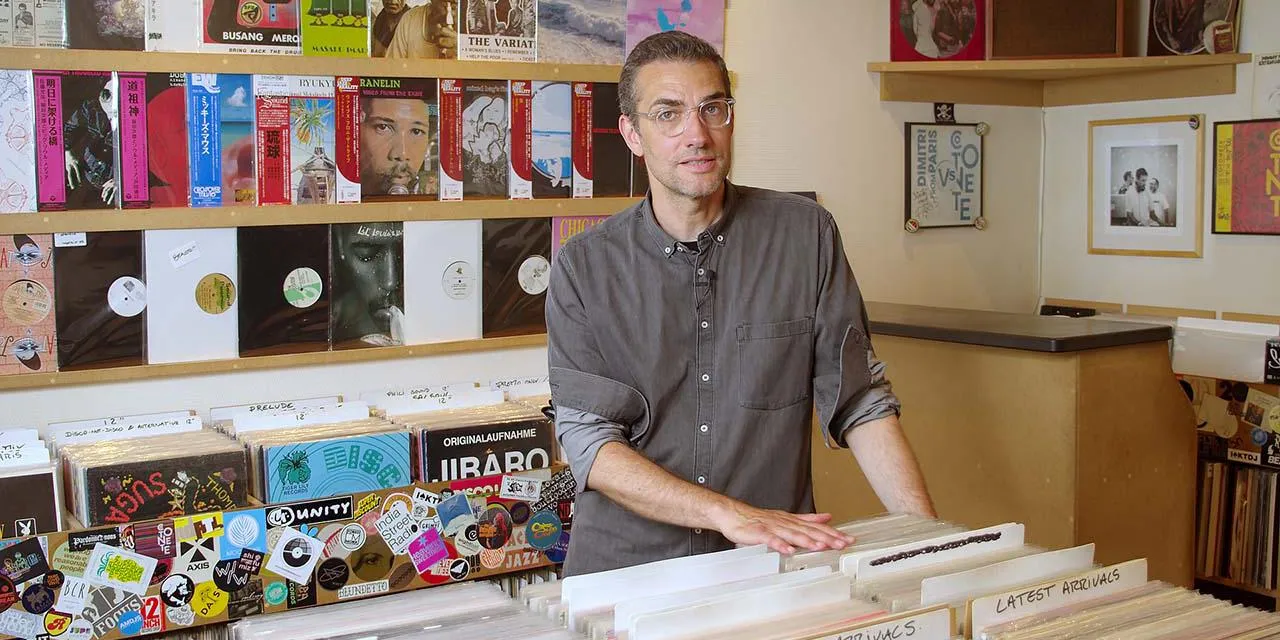
DJ Deep est un producteur et DJ français de house et de techno, et l'homme derrière le label Deeply Rooted (autrefois Deeply Rooted House). En plus de 20 ans, il a été l'un des grands curateurs de la musique de danse, et cette oreille pour ce qui fait qu'un disque fonctionne vraiment est précisément ce qui fait de lui un guide dont il vaut la peine d'apprendre. 'Je vois mon métier comme celui d'un grand filtre', dit-il, minimisant plutôt le rôle que ce Français a joué dans le développement de la musique house. 'En junkie du vinyle, je suis dans les disquaires à chasser les pépites presque chaque jour. Partager ce que je considère comme les plus grands disques du moment ou les classiques personnels les plus intemporels est quelque chose qui m'a motivé au fil des ans.' Cyril Etienne a émergé de la scène parisienne pour marquer véritablement la scène mondiale. Il a débuté en jouant pour Laurent Garnier lors de soirées telles qu'Oz et Zoo au club Palace, puis est devenu un habitué du Rex Club et a affirmé son goût singulier avec ses émissions 'A Deep Groove' sur la radio pirate Radio FG puis sur Radio Nova. Il est rapidement passé à jouer dans le monde entier, emportant toujours avec lui un sens de l'histoire nourri par son amour de Chicago, New York et Detroit. Brouillant les frontières entre house et techno, il relie aussi les points entre morceaux classiques et contemporains avec son propre sens du récit — non seulement comme DJ et producteur, mais aussi comme patron de label et curateur de soirées. Depuis 2003, il dirige son propre label tourné vers l'avenir, Deeply Rooted, synonyme d'une house et d'une techno raffinées et fidèles à leurs racines, signées par des artistes nouveaux et confirmés comme Kerri Chandler, Ben Klock, Francois X, Ben Sims et Roman Poncet, ainsi que la star française montante et habituée de Concrete Paris Marina Trench. Sa propre série Raw Cuts fait le pont entre l'émotion sincère de la house et l'impact direct de la techno. Au-delà de son propre label, il a publié sur Rekids, Kaoz Theory et Tresor, et comme remixeur a retravaillé des artistes tels que Carl Craig, St Germain, DJ Honesty, Scan 7, Borderland (Juan Atkins) et Point G, apportant toujours ses atmosphères singulièrement chaleureuses à tout ce qu'il produit. Il fait aussi de la musique sous divers autres alias : Rebeval, avec un matériel au son plus brut sur L.I.E.S. ; Sergie Rezza, un projet collaboratif et label du même nom aux côtés de Roman Poncet qui explore une house et une techno plus expérimentales, teintées d'ambient, en format EP comme LP ; Fang, pour une house contemporaine ; et Adventice, pour une techno percutante aux racines classiques, avec des sorties sur Tresor et des concerts dans des lieux comme Berlin Atonal. Sa facette plus éclectique ressort dans ses émissions de radio Open Library sur Worldwide FM — des fenêtres de deux heures de jazz, soul, dub, funk et ambient qui composent des bandes-son très spéciales et immersives. Quoi qu'il joue ou produise, DJ Deep a toujours quelque chose qui vaut la peine d'être écouté. Dans Find Your Own Path in House & Techno, il partage comment il sélectionne, agence et façonne les morceaux afin que, au lieu de courir après les tendances, tu puisses bâtir un son et un goût qui soient indéniablement les tiens. read more