



Comment commencer à écouter et à apprécier

Lesson time: (6min 17sec)
DJ Deep explique par où commencer quand on se met à la house et à la techno : comment écouter, où trouver des disques et comment commencer à définir tes propres goûts.
Course preview
This lesson is part of the course Trouve ton propre chemin dans la house et la techno avec DJ Deep
Watch a preview of the full course below.
Lesson transcript:
Discovering Music: A Journey Through House and Techno
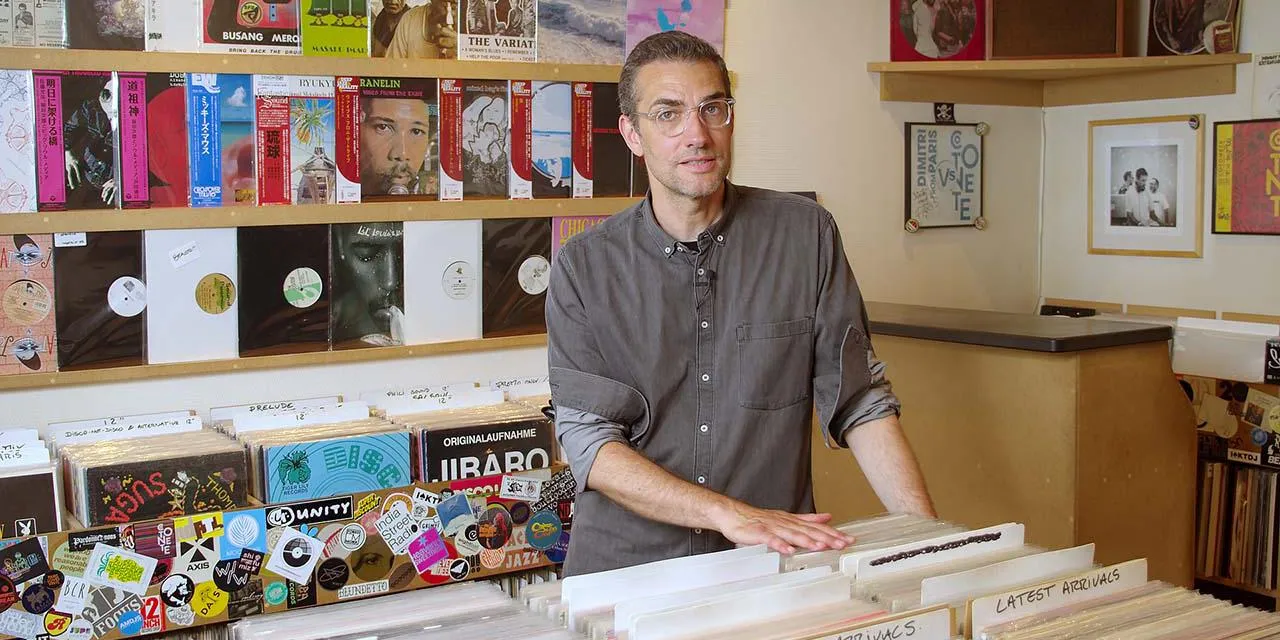
I mentioned in the previous chapters of the course that the first time I discovered house and techno, it was difficult to actually find the records. There was one record store called Bonusbeat where they had all the imports. As a young kid, I was really impressed to step in and say,
"I don't know anything about it, but I love this music. Where should I start?"
It's funny because I don't know what you think about it, Medic, but I feel that this sort of fear, maybe a big word, still exists for the younger ones.
Where to Start?
Where do you start, especially now that house and techno have been around for 30 years? I'm not even mentioning classic jazz, soul, and funk records. I'm also thinking about house, 30 years later, where do you start?
It's a tough one. A lot of young kids (I call them kids; I'm old now) come in, shy and wanting to act like they know, but they obviously don't. They're not ready to ask for advice or engage in conversation, which is cool. That's the point of a record shop.
- Don't act like you know everything.
- It's okay to not know.
- We all started somewhere.
Even more than that, I can tell you that even 30 years later, I still learn things all the time. I discover new records that I had no idea existed every single day.
"That's the whole point of it, it keeps us excited."
The Pleasures of Collecting
There's another conversation I had with a friend who also owns a record shop. He has a theory about collecting and diving deeply into something, as we do with music and records.
If you collect, but then at some point you feel like you've done everything and covered everything, first, that's not going to be true. But if you arrive at that point, suddenly your entire collection feels worthless because you think you've finished the thing.
- The pleasure of collecting is continuous.
- Understanding music and digging deeper is a long-term journey.
You're never going to see the end of it, so accept it. That's the game, and that's the fun!
New Trends and Perspectives
In addition, I see a lot of younger music fans who are getting into styles that I personally am not into. For instance, today there is a trend in what kids call electro, specifically, Detroit electro, but of today. They like a very specific version of this sound, such as some of the British mid-90s electro bleep sounds.
We never thought of those specifications when we came across those records in the past. We just said, "Okay, cool. This record has more of a breakbeat, and this record has more electro flavor."
"But those kids have very precise specifications."
They're not only enjoying new music in this style; they are also reissuing all the records that have become their classics. For us, at least for me, it can sometimes be a little confusing because we wanted to be part of this music back in the day.
Crafting Their Own Sound
I understand that the younger generation needs to create its own style from what already exists. For example, someone might say,
"I like Deep House, but I like it more reduced."
They'll invent their own version of it, like the Microsoft or the Romanian sound, or whatever it's called. I get it, and it's cool! It's their thing.
However, I find it interesting that some people dig back into the past, select a few records that correspond to today's criteria, and build their own classics.
For us old-schoolers, we might think,
"If you don't know all the Armando records, you don't know anything about Chicago."
Looking back, I realize that a record which has been in my collection for 30 years might be perceived as an "okay, bleepy" record to me, but to the younger generation, it's their big classic.
A Different Perspective
This makes me go back and listen again to those records, as we discussed, trying to understand them from a different angle.
"In a good way, it's like rewriting history."
It's not a bad thing in music; it's, as we said, a different perspective, influenced by their background and their take on music. To judge a record, you can only compare it based on what you know, your own experiences.
And naturally, this will differ drastically from one person to another. This is how we rewrite history. Suddenly, a record that was just whatever at the time can become huge because it resonates with the kids in a way it never did for us back in the day.
"And that's the beauty of music."
About the instructor
DJ Deep est un producteur et DJ français de house et de techno, et l'homme derrière le label Deeply Rooted (autrefois Deeply Rooted House). En plus de 20 ans, il a été l'un des grands curateurs de la musique de danse, et cette oreille pour ce qui fait qu'un disque fonctionne vraiment est précisément ce qui fait de lui un guide dont il vaut la peine d'apprendre. 'Je vois mon métier comme celui d'un grand filtre', dit-il, minimisant plutôt le rôle que ce Français a joué dans le développement de la musique house. 'En junkie du vinyle, je suis dans les disquaires à chasser les pépites presque chaque jour. Partager ce que je considère comme les plus grands disques du moment ou les classiques personnels les plus intemporels est quelque chose qui m'a motivé au fil des ans.' Cyril Etienne a émergé de la scène parisienne pour marquer véritablement la scène mondiale. Il a débuté en jouant pour Laurent Garnier lors de soirées telles qu'Oz et Zoo au club Palace, puis est devenu un habitué du Rex Club et a affirmé son goût singulier avec ses émissions 'A Deep Groove' sur la radio pirate Radio FG puis sur Radio Nova. Il est rapidement passé à jouer dans le monde entier, emportant toujours avec lui un sens de l'histoire nourri par son amour de Chicago, New York et Detroit. Brouillant les frontières entre house et techno, il relie aussi les points entre morceaux classiques et contemporains avec son propre sens du récit — non seulement comme DJ et producteur, mais aussi comme patron de label et curateur de soirées. Depuis 2003, il dirige son propre label tourné vers l'avenir, Deeply Rooted, synonyme d'une house et d'une techno raffinées et fidèles à leurs racines, signées par des artistes nouveaux et confirmés comme Kerri Chandler, Ben Klock, Francois X, Ben Sims et Roman Poncet, ainsi que la star française montante et habituée de Concrete Paris Marina Trench. Sa propre série Raw Cuts fait le pont entre l'émotion sincère de la house et l'impact direct de la techno. Au-delà de son propre label, il a publié sur Rekids, Kaoz Theory et Tresor, et comme remixeur a retravaillé des artistes tels que Carl Craig, St Germain, DJ Honesty, Scan 7, Borderland (Juan Atkins) et Point G, apportant toujours ses atmosphères singulièrement chaleureuses à tout ce qu'il produit. Il fait aussi de la musique sous divers autres alias : Rebeval, avec un matériel au son plus brut sur L.I.E.S. ; Sergie Rezza, un projet collaboratif et label du même nom aux côtés de Roman Poncet qui explore une house et une techno plus expérimentales, teintées d'ambient, en format EP comme LP ; Fang, pour une house contemporaine ; et Adventice, pour une techno percutante aux racines classiques, avec des sorties sur Tresor et des concerts dans des lieux comme Berlin Atonal. Sa facette plus éclectique ressort dans ses émissions de radio Open Library sur Worldwide FM — des fenêtres de deux heures de jazz, soul, dub, funk et ambient qui composent des bandes-son très spéciales et immersives. Quoi qu'il joue ou produise, DJ Deep a toujours quelque chose qui vaut la peine d'être écouté. Dans Find Your Own Path in House & Techno, il partage comment il sélectionne, agence et façonne les morceaux afin que, au lieu de courir après les tendances, tu puisses bâtir un son et un goût qui soient indéniablement les tiens. read more