



Meant To Be (leçon)
Avec
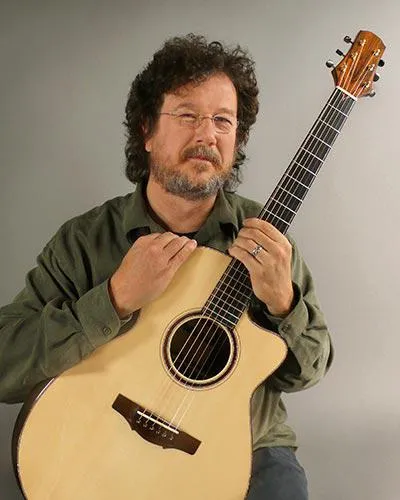
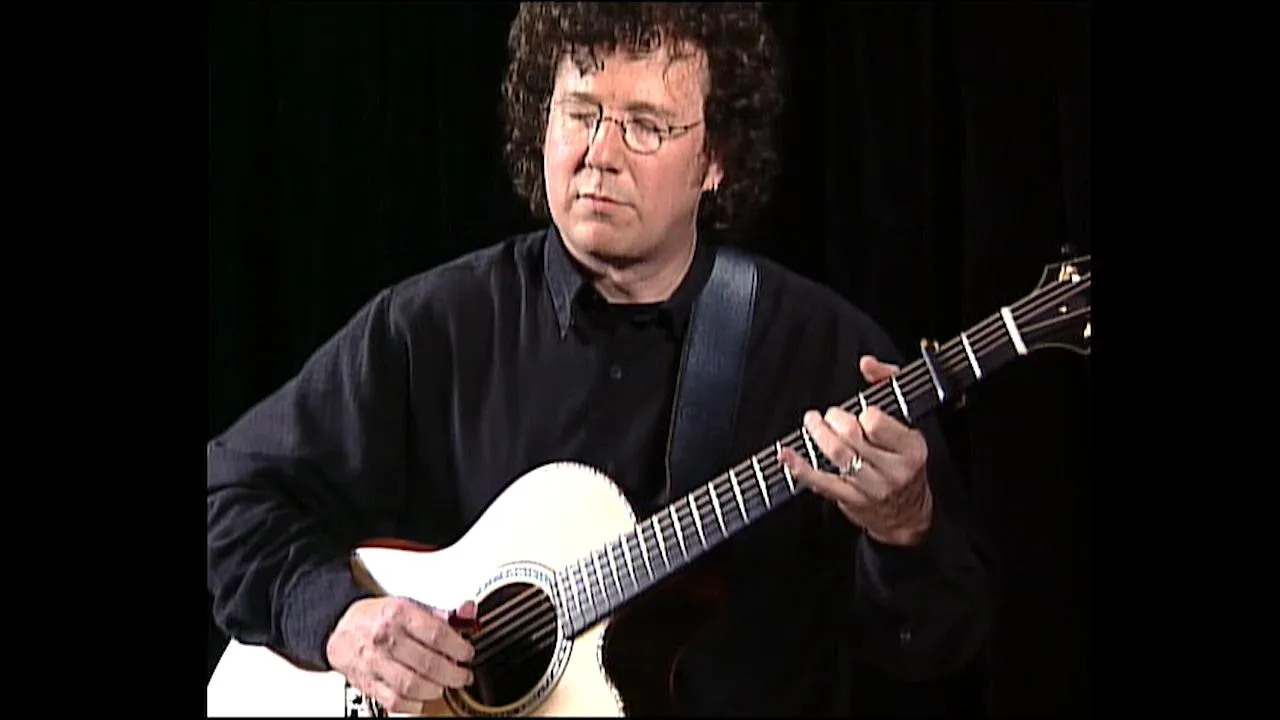
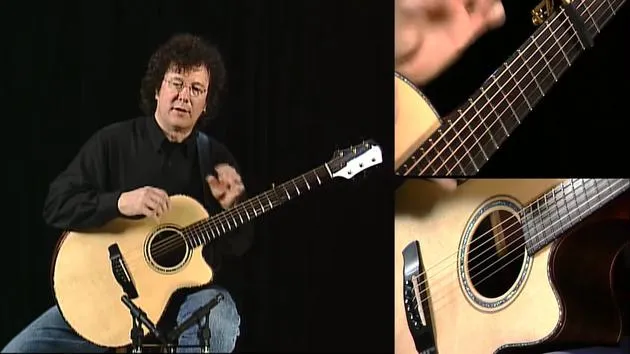
Al PettewayAl Petteway enseigne son morceau 'Meant To Be' en DADGAD, en construisant un groove régulier façon batterie sur les temps 2 et 4 tout en portant à la fois la basse, le rythme et la mélodie.
Le contenu du cours
14 leçons (1h 25min) · 1 gratuites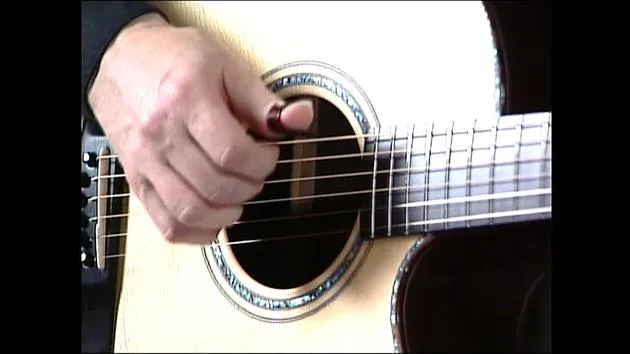
01. Spindrift (interprétation)
Leçon gratuite3:36
02. Spindrift (leçon)
9:05
03. Eureka Hotel (interprétation)
3:12
04. Eureka Hotel (leçon)
9:47
05. She Moved Through The Fair (interprétation)
2:34
06. She Moved Through The Fair (leçon)
9:05
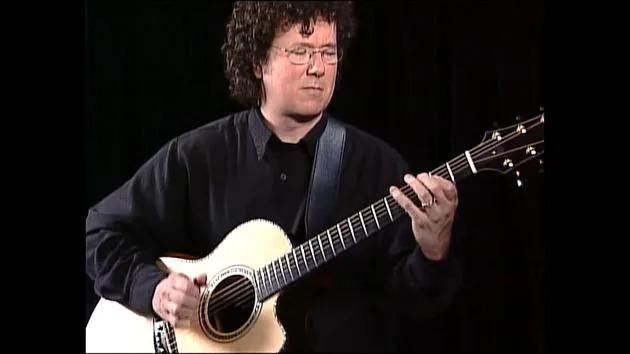
07. Meant To Be (interprétation)
3:59
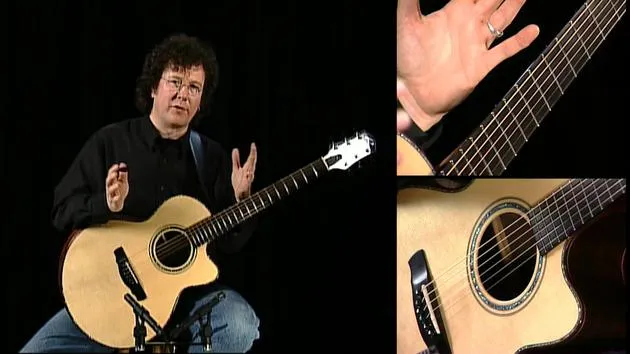
08. Meant To Be (leçon)
Tu es ici10:25
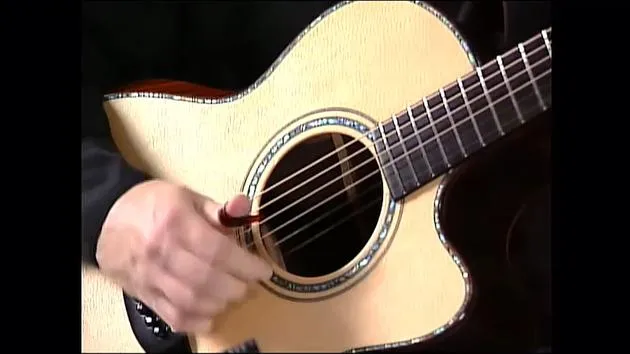
09. Smokey Mountain Morning (interprétation)
4:53
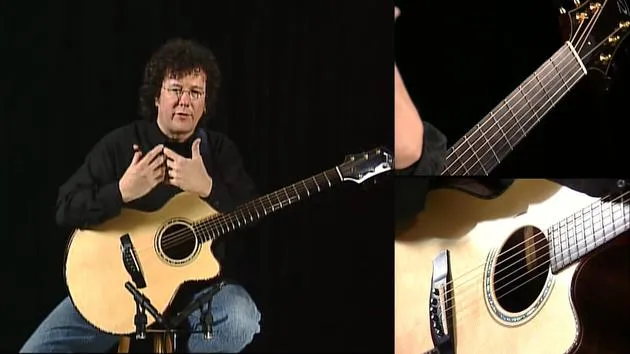
10. Smokey Mountain Morning (leçon)
9:21
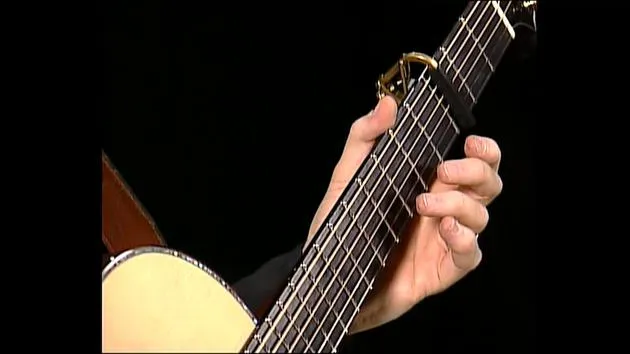
11. The West Wind (interprétation)
3:34
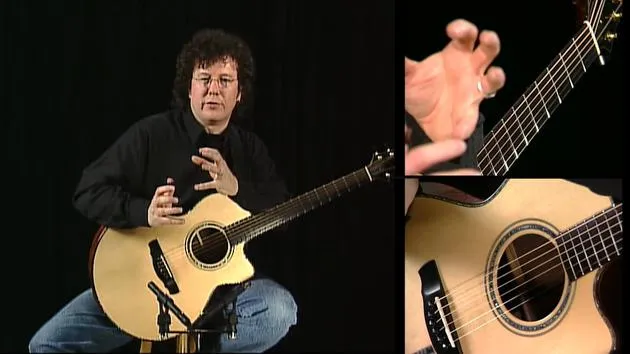
12. The West Wind (leçon)
9:48
13. BONUS : After Dark
3:34
14. BONUS : Requiem (interprétation)
2:37
Transcription de la leçon
Exploring DADGAD Tuning and Rhythm Techniques
A lot of people believe that DADGAD tuning is pretty much limited to playing in Celtic styles. For a while, I was doing a lot of what you'd call "sideman work" because I was hired for one concert at a time by various musicians. I found that, especially with Celtic music, sometimes it was more comfortable to play in standard tuning and sometimes in DADGAD.
So, I would try to learn all the tunes in both tunings, depending on where we ended up doing the most tunes. But then I discovered that I can actually do anything in DADGAD that I can do in standard tuning, and pretty much vice versa, if I just pick the right key.
The Shades of Blue Album
When I did the Shades of Blue album for Solidaire Records, I decided to keep the guitar mostly in DADGAD for the album. What happens is really cool: if you're getting a little blues flavor on top of this tuning, it gives you more flexibility in the strings because you're tuned down. You can actually get a stretch, almost like you would on an electric guitar. You can really stretch the string, and that's harder to do in standard tuning. I mean, you can do it in standard, but it hurts after a while.
A lot of the tunes I enjoyed playing, I found I enjoyed even more in the DADGAD tuning.
Introducing "Meant To Be"
One tune I wrote called "Meant To Be" has a lot to do with groove. I love hearing a guitar player that can accompany themselves. When you hear that, it's fascinating because you catch the bass, drums, rhythm, and melody all happening at once.
I made a challenge for myself on this tune to create a drum beat that would happen all the way through the tune, specifically on 2 and 4. So it would be:
1, 2, 3, 4.
That was fine as long as I was doing something simple like pulling up with the string and then coming down to hit it. However, all the melodies I wanted to play were falling on the guitar in such a way that made it impossible to maintain that.
I had to play notes when coming down. I thought, "How am I going to do that?" So, what I decided is that if I hit with the back of my nails as I come down, it gives you that little click just like you get when slapping the strings.
The Technique
I'll show you how I start "Meant To Be".
- I hit the strings and then strike with the back of my nail.
- You hear the nail hit the strings, creating that signature sound.
The goal is to play straight through the tune while keeping that pattern. The way I practice this, and teach my students, is to take a tune you're really familiar with, something like "Twinkle, Twinkle, Little Star," or anything that makes sense to you.
Practicing the Rhythm
Here's a simplified approach:
-
Focus on Consistency:
- Ensure every note is played, while keeping a consistent click on 2 and 4.
-
Use Your Fingers:
- Thumb down, back of the nail for slaps; no note for clarity.
-
Experiment with Patterns:
- Explore varying patterns, like hitting all four beats.
Demonstration of "Meant To Be"
Let me play a little of "Meant To Be" to illustrate this concept.
- This involves a pull-off,
- A back of the nail combination.
When you get it right, it feels incredibly cool.
Rhythmic Variations
You can try this technique with any tune. Accompany a song you already know or one you sing. Just play the chords, see how it feels, and then implement that rhythmic slap structure:
- Start with simple strumming.
- Add slaps on the downbeat.
- Mix in notes to see how they fit.
Stretching Techniques
The other thing I incorporate in this tune is stretching one string while holding the other string right next to it. When I go, there's a bit of vibrato. I start with the string already stretched, creating a very cool sound.
- Most people stretch up and down, but if you can stretch up first and then come down, it creates a sort of crying sound that I love.
Conclusion
The middle section of the tune is simple, with patterns in chords.
- Notice how I stick with first, third, and fourth positions all the way down.
- The rhythm should remain solid, always aiming for that click on 2 and 4.
Remember, achieving that sweet sound often comes from starting with the note you want rather than the conventional stretching approach.
Keep practicing the rhythm, if you take time out of your practice to master rhythm, it will enhance everything you do in this kind of music!
14 leçons
1h 25m de leçons vidéo structurées
Fonctions vidéo avancées
Ralentissez, bouclez un passage, suivez la partition
Mobile, tablette et ordinateur
Pratiquez où vous voulez
Satisfaction garantie à 100 %
Garantie remboursement 30 jours
Rencontrez votre guru
Rencontrez votre guru
Artiste de studio et interprète lauréat d'un Grammy Award, Al Petteway a joué presque tous les types de musique populaire, folk et classique. Bien que son instrument principal ait toujours été la guitare, il a aussi étudié le luth, la contrebasse, la percussion et la composition musicale. Ses compositions pour guitare acoustique fingerstyle sont fortement influencées par son amour de la musique celtique et par ses propres racines dans le folk, le rock et le blues — précisément le terrain qu'il explore dans son cours MusicGurus, Celtic, Blues and Beyond.
Dans Celtic, Blues and Beyond, Al partage les accordages ouverts, les techniques de fingerstyle et l'approche mélodique qui sous-tendent son son, te montrant comment fusionner le phrasé celtique avec le feeling du folk, du rock et du blues afin que tu trouves ta propre voix à la guitare acoustique.
Al a reçu quarante-cinq "Wammies" de la Washington Area Music Association, dont les plus hautes distinctions d'"Artist of the Year" et de "Musician of the Year". Il a été récompensé par deux Maryland State Arts Council Individual Artist Awards de composition musicale et s'est produit à la résidence du Vice-président et à The White House. Son jeu figure sur plus de soixante enregistrements de certains des musiciens folk et celtiques les plus connus au monde. En 2005, il a été élu l'un des Top Fifty Acoustic Guitarists of all Time par les lecteurs d'Acoustic Guitar Magazine, et en 2008 il a remporté les médailles d'argent et de bronze aux Player's Choice Awards du magazine. Son CD "Caledon Wood" a été élu l'un des "Essential Albums of the Past Twenty Years" dans le numéro du 20e anniversaire d'Acoustic Guitar Magazine, et son album de 2012 "It's Only the Blues" a figuré sur deux des listes "Top Ten Essential Albums of 2012" des rédacteurs d'Acoustic Guitar Magazine. En 2014 et 2015, il a publié deux autres albums solo, "Mountain Guitar" et "Dream Guitars, Vol. II."
"Instrumentiste novateur connu pour ses accordages ouverts, Petteway offre un son riche et suave qui allie l'ancien et le nouveau."
--The Boston Globe







