



Eureka Hotel (leçon)

Avec
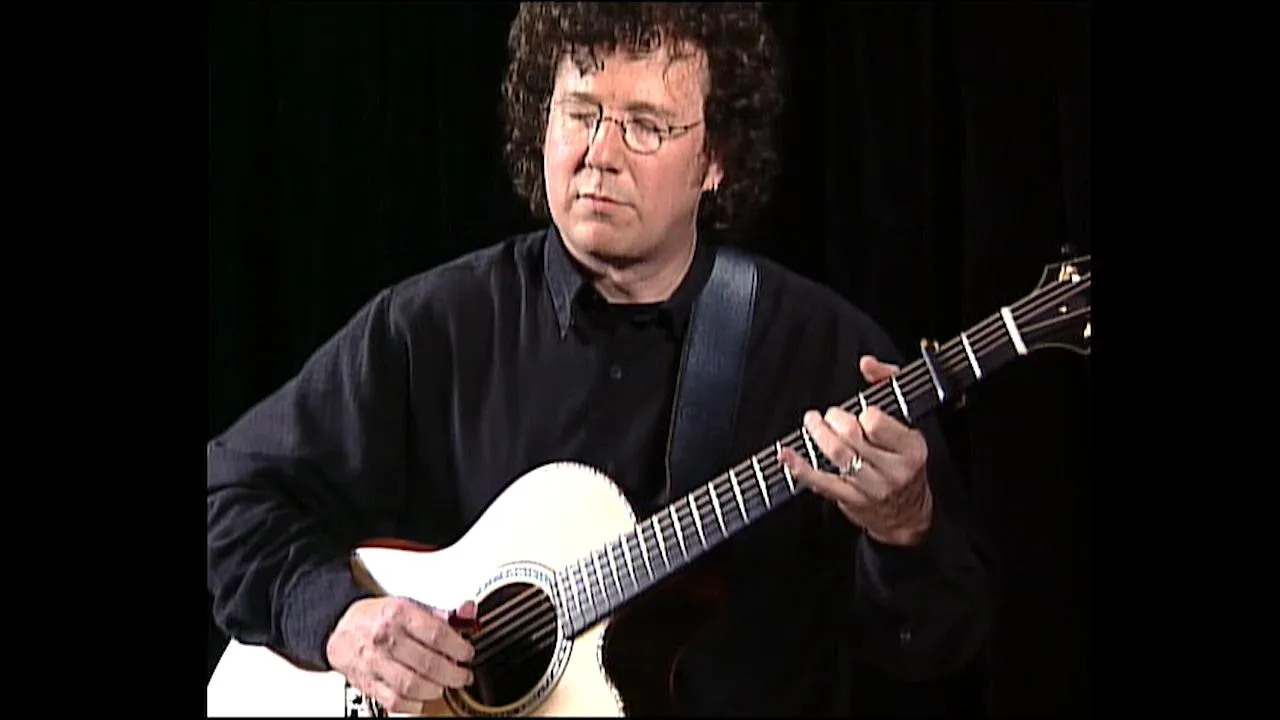
Al PettewayAl Petteway enseigne 'Eureka Hotel' en accordage DADGAD, jouant la mélodie en octaves pour un son de type guitare 12 cordes sur une basse régulière.
Le contenu du cours
14 leçons (1h 25min) · 1 gratuites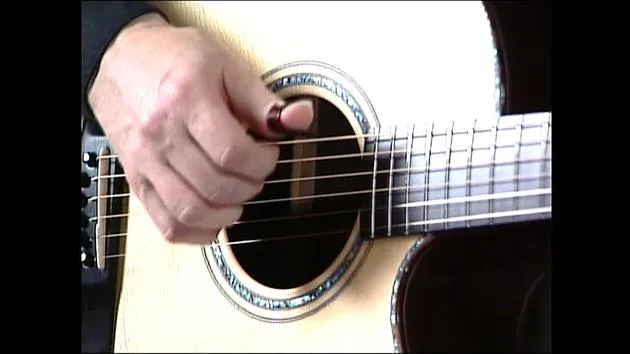
01. Spindrift (interprétation)
Leçon gratuite3:36
02. Spindrift (leçon)
9:05
03. Eureka Hotel (interprétation)
3:12
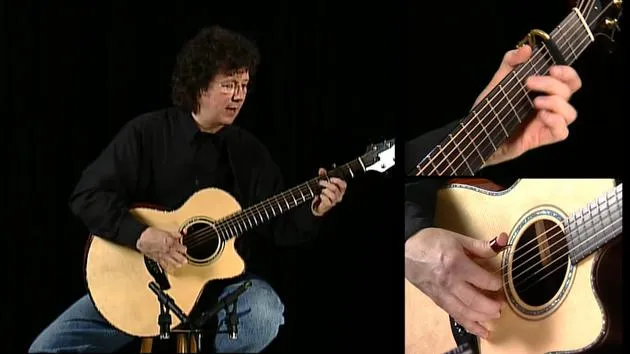
04. Eureka Hotel (leçon)
Tu es ici9:47
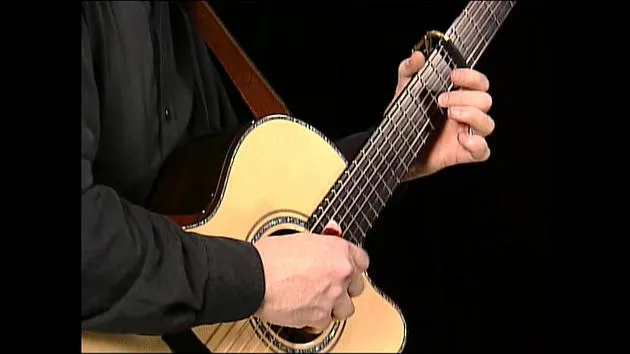
05. She Moved Through The Fair (interprétation)
2:34
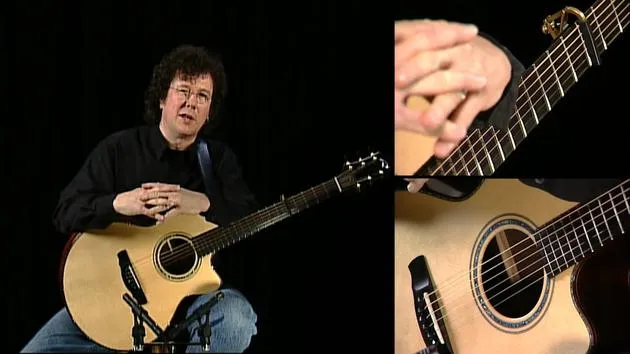
06. She Moved Through The Fair (leçon)
9:05
07. Meant To Be (interprétation)
3:59
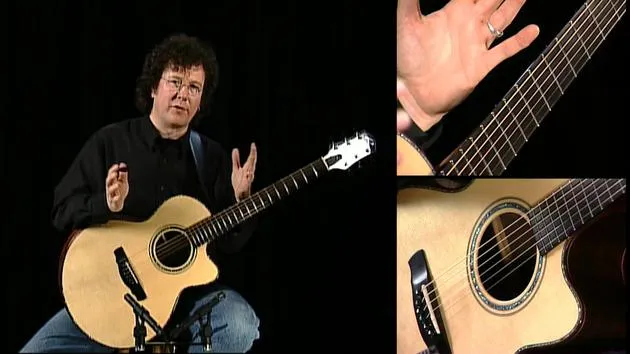
08. Meant To Be (leçon)
10:25
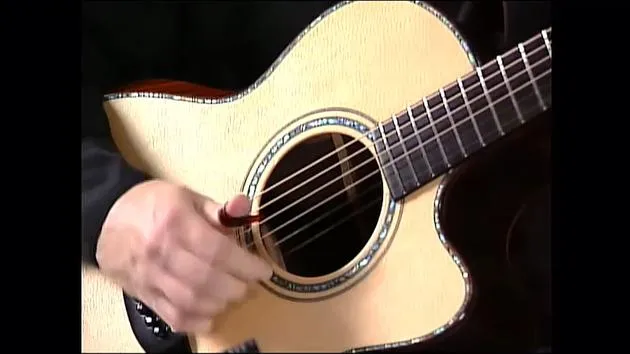
09. Smokey Mountain Morning (interprétation)
4:53
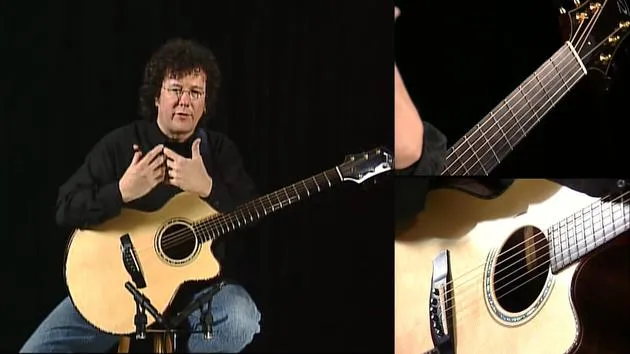
10. Smokey Mountain Morning (leçon)
9:21
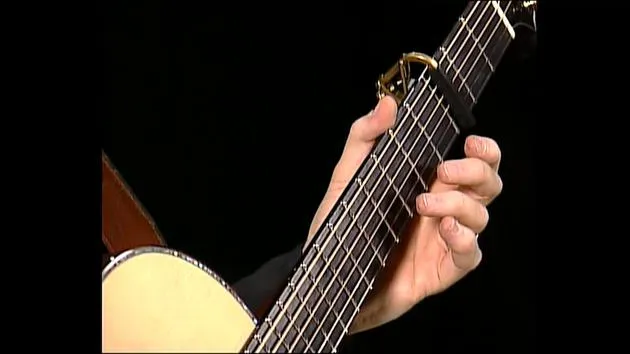
11. The West Wind (interprétation)
3:34
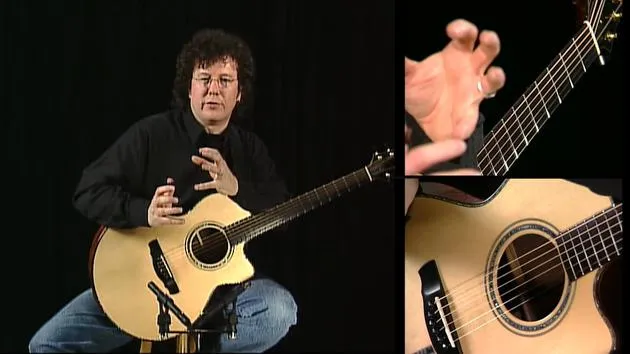
12. The West Wind (leçon)
9:48
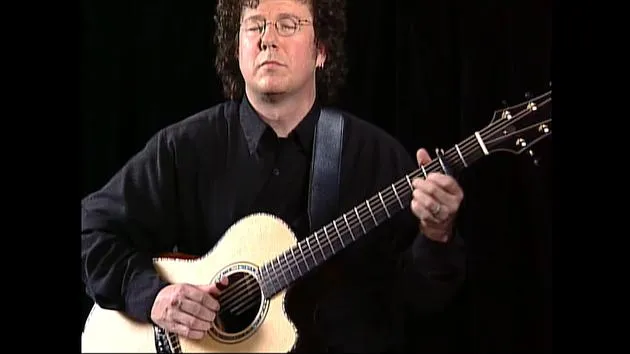
13. BONUS : After Dark
3:34
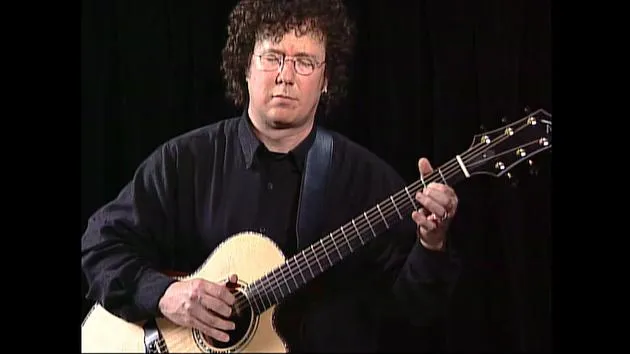
14. BONUS : Requiem (interprétation)
2:37
Transcription de la leçon
Discovering Dad Gad Tuning
One of the most fun things that I've discovered lately while playing in Dad Gad tuning is that you can actually play some of the older style tunes. You can almost imitate a 12-string guitar because you have all these parallel strings.
The Parallel Strings Effect
- Three strings in octaves: You can play an entire melody on a double pair of strings and get almost a 12-string effect.
- Melodies and Bass Lines: By combining melodies with a standard, repeating bass line, you create a unique sound.
Starting Out
Originally, I was just sort of playing with the idea of playing a melody in octaves and then the bass. This melody is simple, and what I have to do is really concentrate on finding those octaves comfortably.
Key Points
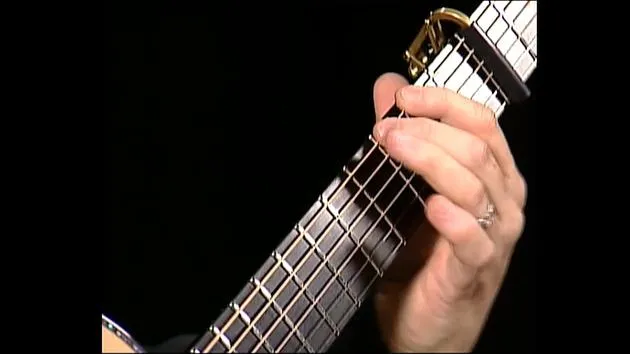
- When playing the fifth and the second string, there are two strings between.
- When playing the fourth and the first string, there are also two strings between.
- However, when you get down to the fourth and the sixth, there's only one string in between.
So, you have to make that subtle adjustment with your right hand, allowing you to play just about any melody, even in those tunes.
Practical Application
Just like I showed you in the "West Wind," you can suddenly pull in an octave and it gives a nice flavor.
Example Chords
The other thing to keep in mind is that I'm using chords that are pretty much standard tuning chords. But by switching the fingering slightly, I can get:
- Seventh Chord: Here's a seventh.
- Straight Major: All I have to do is add the flatted seventh.
- Minor Seventh: To create this, I just flatten that major third to A minor.
The feeling of playing these chords is not much different from playing the four-note jazz chords; you just have to rethink the structure a little bit.
A Practical Example
For example, if you play a C chord in Dad Gad, you get a C9.
- If you were to play a blues progression:
- Play a seventh for your I chord
- Transition to the IV chord with a standard C chord
The Flavor of Eureka Hotel
"Eureka Hotel" has that same old, turn-of-the-century flavor. The key takeaway is to maintain a steady rhythm throughout.
- Octave Melody: Incorporate an octave melody, and sometimes I'll use the back of my nail for more effect.
- Transitioning Back: You go back to this seventh chord with the melody in octaves.
Blues Running Down
This blues run is so easy in Dad Gad! I love how it allows for a more laid-back playing style, where you only need to focus on one or two fingers at a time.
Putting It All Together
This tune repeats pretty much the same elements. The bridge transitions to the IV chord major, then goes to A minor, and back to the I. I dampen the strings here to give it an old-time flavor.
Unique Techniques
- Stretching Up: While playing, stretch your fingers up but don't let them come down.
- Funky Sound: By getting under the strings and pulling them away from the fret, you can get a funky sound. I'm not using my nails at all; just grabbing with the flesh of my fingers.
Ending Notes
After I do a certain sequence, I perform a hammer-on and pull-off combination and slide up to the matching note.
Flexibility in Music
Every time I play a tune, it changes slightly. Although we provide you with music and tab, remember that tunes are flexible.
- Adapt them to fit what you do particularly well.
- You don't have to play exactly like someone else; make it as easy on yourself as possible.
Final Thoughts
As John Hartford once said, finding your personal style is key. It doesn't have to be fast or fancy; it simply needs to resonate with your heart and soul when you play.
- Once you figure out what works for you, that can be your career in music.
- Stay true to your heart, and everything will fall into place.
14 leçons
1h 25m de leçons vidéo structurées
Fonctions vidéo avancées
Ralentissez, bouclez un passage, suivez la partition
Mobile, tablette et ordinateur
Pratiquez où vous voulez
Satisfaction garantie à 100 %
Garantie remboursement 30 jours
Rencontrez votre guru
Rencontrez votre guru
Artiste de studio et interprète lauréat d'un Grammy Award, Al Petteway a joué presque tous les types de musique populaire, folk et classique. Bien que son instrument principal ait toujours été la guitare, il a aussi étudié le luth, la contrebasse, la percussion et la composition musicale. Ses compositions pour guitare acoustique fingerstyle sont fortement influencées par son amour de la musique celtique et par ses propres racines dans le folk, le rock et le blues — précisément le terrain qu'il explore dans son cours MusicGurus, Celtic, Blues and Beyond.
Dans Celtic, Blues and Beyond, Al partage les accordages ouverts, les techniques de fingerstyle et l'approche mélodique qui sous-tendent son son, te montrant comment fusionner le phrasé celtique avec le feeling du folk, du rock et du blues afin que tu trouves ta propre voix à la guitare acoustique.
Al a reçu quarante-cinq "Wammies" de la Washington Area Music Association, dont les plus hautes distinctions d'"Artist of the Year" et de "Musician of the Year". Il a été récompensé par deux Maryland State Arts Council Individual Artist Awards de composition musicale et s'est produit à la résidence du Vice-président et à The White House. Son jeu figure sur plus de soixante enregistrements de certains des musiciens folk et celtiques les plus connus au monde. En 2005, il a été élu l'un des Top Fifty Acoustic Guitarists of all Time par les lecteurs d'Acoustic Guitar Magazine, et en 2008 il a remporté les médailles d'argent et de bronze aux Player's Choice Awards du magazine. Son CD "Caledon Wood" a été élu l'un des "Essential Albums of the Past Twenty Years" dans le numéro du 20e anniversaire d'Acoustic Guitar Magazine, et son album de 2012 "It's Only the Blues" a figuré sur deux des listes "Top Ten Essential Albums of 2012" des rédacteurs d'Acoustic Guitar Magazine. En 2014 et 2015, il a publié deux autres albums solo, "Mountain Guitar" et "Dream Guitars, Vol. II."
"Instrumentiste novateur connu pour ses accordages ouverts, Petteway offre un son riche et suave qui allie l'ancien et le nouveau."
--The Boston Globe







