



Le son complet (le membre invisible du groupe)
Avec
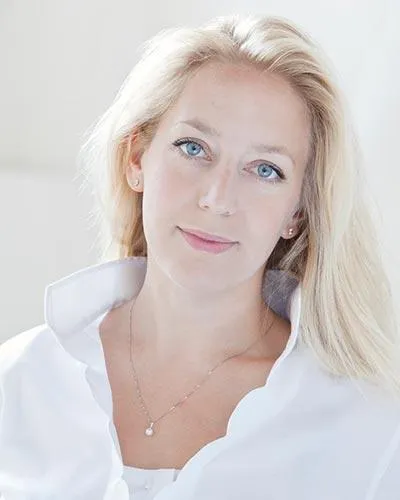
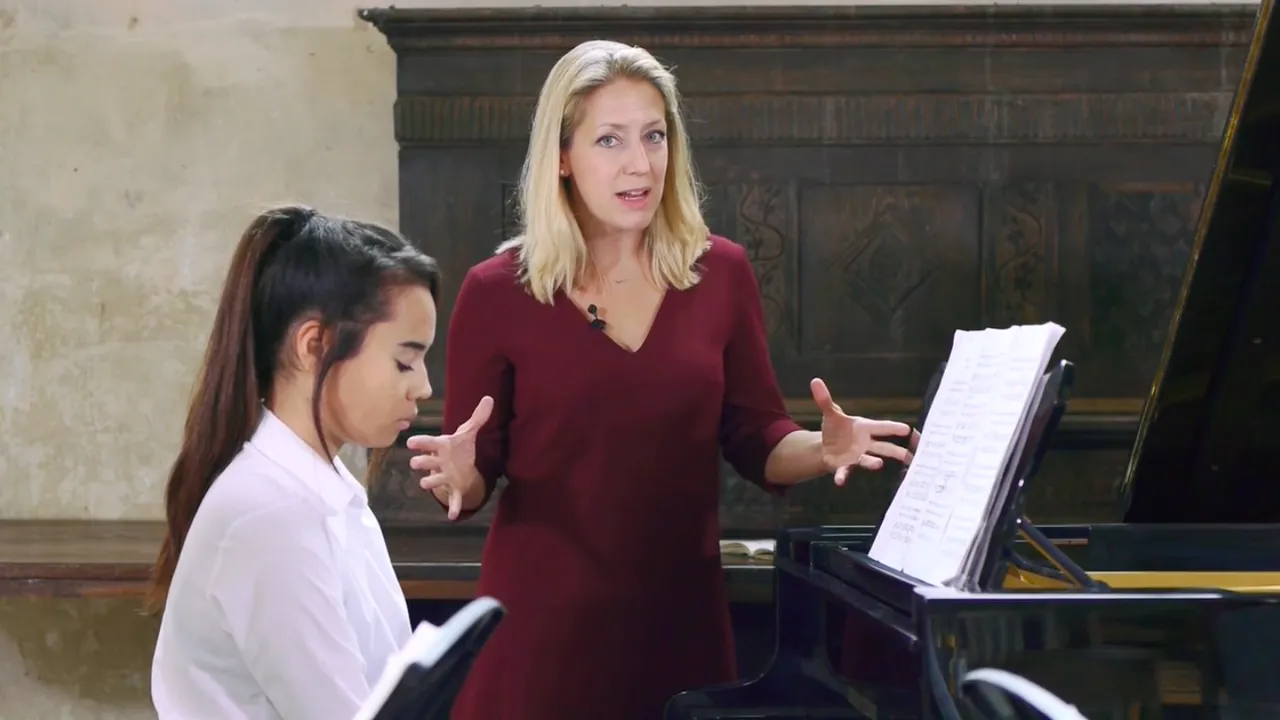
Annabel ThwaiteAnnabel explique comment faire en sorte que l'ensemble sonne comme un tout, un son complet.
Le contenu du cours
8 leçons (0h 25min) · 1 gratuites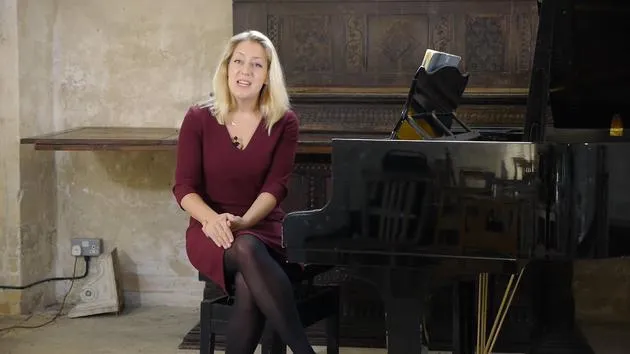
01. Présentation d'Annabel et développement d'un groupe de chambre déjà formé
Leçon gratuite1:45
02. Le son complet (le membre invisible du groupe)
Tu es ici3:28
03. Le langage corporel
3:44
04. L'importance de la respiration
3:28
05. Suis le meneur ! Un jeu amusant
4:00
06. Étudier la partition
4:05
07. Une conversation musicale et la loi de Pareto
2:44
08. Au-delà de la salle de répétition
2:14
Transcription de la leçon
Understanding the Piano Trio
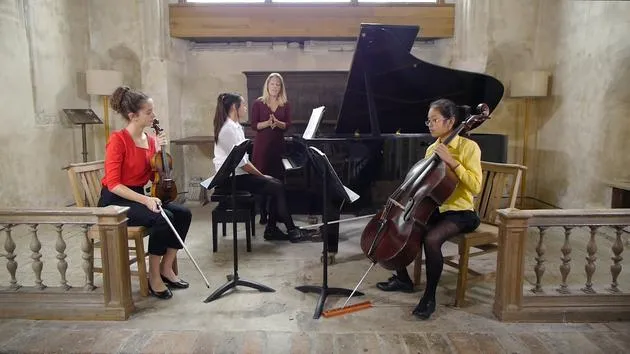
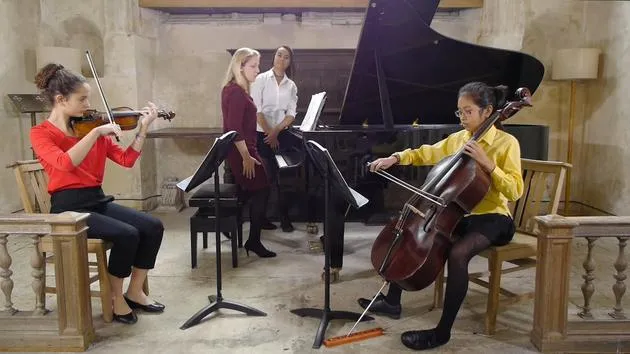
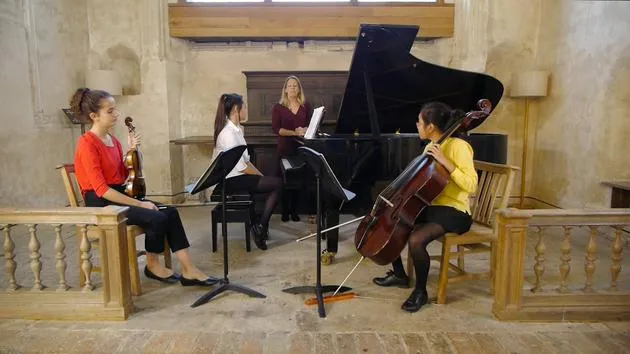
So here we have a piano trio, and these three musicians have come together. It might be their very first meeting, or in the case of other examples, they might have been playing together for 10 weeks or 12 weeks. It doesn't matter; it will be a different experience each time.
The Invisible Member
As a teacher, I think it's very important to explain about an invisible member, because each person will have been practicing their own part. In this case, it's Beethoven's Piano Trio, Opus 1, Number 3 in C minor, and they will have been taking their own responsibility for their music.
-
The cellist and violinist might have been playing in an orchestra recently and are used to working with a conductor, who takes the responsibility of the music and inspires the players.
-
However, as chamber musicians, they are coming together to collaborate ideas, mixing in a palette of colors.
Mixing Musical Ideas
It's like you're mixing in a palette of colors, putting in:
- Reds
- Greens
- Yellows
This creates a magical kaleidoscope of colors. They will be mixing emotions and will have different ideas about pulse.
In fact, the sum of all the parts together will be greater, creating almost a phenomenon with an extra member and the blend of sound.
A Quick Rehearsal
So we're going to go from the beginning; we're just going to hear a little bit to see how it feels when we come together.
"So lovely, thank you."
Historical Insight
It's interesting to note that very early on, when the Piano Trio was first written, it was actually seen by a lot of composers as a piano quartet. Beethoven is a very good example, because we've actually got two hands: the right hand and the left hand, which is almost like having two members there.
Even though these musicians may have met before, when they come together, they need to be aware of the left hand playing with the cello and sometimes with the violin, and crossing over.
"So very well done."
8 leçons
0h 25m de leçons vidéo structurées
Fonctions vidéo avancées
Ralentissez, bouclez un passage, suivez la partition
Mobile, tablette et ordinateur
Pratiquez où vous voulez
Satisfaction garantie à 100 %
Garantie remboursement 30 jours
Rencontrez votre guru
Rencontrez votre guru
Reconnue comme l'une des pianistes les plus polyvalentes et charismatiques de Grande-Bretagne, Annabel Thwaite mène une carrière variée de soliste, de chambriste, d'artiste de studio, de pédagogue et d'examinatrice, et a remporté tous les grands prix d'accompagnement, dont les prestigieux Kathleen Ferrier, Gold Medal et Richard Tauber Piano Prizes. Elle a collaboré avec des artistes de renom tels que Roberto Alagna, Bryn Terfel, David Kempster et "Only Men Aloud!"
Annabel a enregistré pour Universal records avec le "Scottish Tenor", dont l'album a été nommé aux Classical Brit Award et passe régulièrement sur Classic FM. Deux fois accompagnatrice du Festival of Welsh Male choirs, ses concerts au Royal Albert Hall ont été enregistrés par Sain et diffusés sur S4C. Elle est aussi pianiste de séance pour le cinéma, ayant enregistré à Abbey Road la musique du film "Awake", de la série de la BBC sur Jane Austen "Emma", de "The Secret Diaries of Miss Anne Lister" et, plus récemment, elle est apparue à la fois dans Blue Peter et dans "The Rob Brydon Show".
"...aidée sans doute par les accompagnements de piano manifestement brillants d'Annabel Thwaite... un vrai plaisir."
Dans ses cours MusicGurus — Learn Christmas Classics on Piano, Learn Classical Favourites on Piano et Growing Chamber Groups and Small Ensembles — Annabel partage la musicalité qui sous-tend cette carrière polyvalente. Tu apprendras à faire vivre au piano des pièces de Noël et classiques bien-aimées, à développer ton toucher et ton phrasé et, forte de son expérience primée d'accompagnatrice, à découvrir comment écouter, mener et jouer ensemble en faisant de la musique avec d'autres musiciens au sein de groupes de chambre et de petits ensembles.







