



Comment enregistrer la batterie avec la méthode de Glyn Johns (5 microphones)
Lesson time: (8min 42sec)
Dans cette leçon en ligne d'enregistrement de batterie, Nik Bjerre de Tileyard Studios à Londres explique la méthode Glyn Johns et comment obtenir un excellent son avec 5 microphones.
Course preview
This lesson is part of the course Enregistre une batterie live comme un pro
Watch a preview of the full course below.
Lesson transcript:
Music Lesson: Setting Up the Glyn John's Technique
All right, so we recorded with one mic, and that sounded pretty good. It was useful for putting ideas down. We also have the free mic set up, which sounded pretty close to a good production. We actually have what we needed.
Introducing the Glyn John's Technique
Now, we're going to try the Glyn John's method, where we're going to add a stereo pair of overheads. I'm going to use the Coles ribbon mics, classic old BBC microphones. They sound great as overheads!
Benefits of Coles Ribbon Mics
- Soft Top End: The microphones provide a delicate high-frequency sound.
- Lots of Low End: They round out the sound nicely.
- Smooth Cymbals: The overall drum kit sound is almost ready-produced.
- Old School Grit: This is a good choice for a gritty, old-school sound.
Mic Placement
The way we're going to set these mics up is slightly different than a normal pair of overheads. Usually, you would have one mic left or right, either close spaced or wide spaced.
Glyn John's Setup:
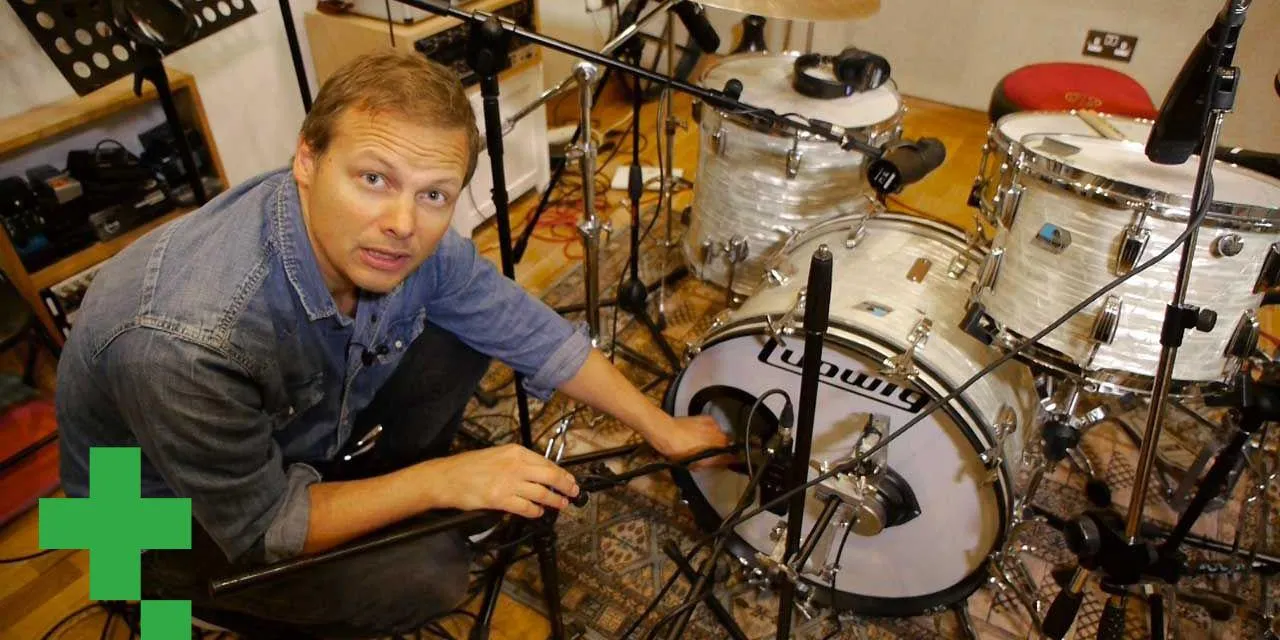
- One Microphone: Place one microphone on top of the kit, pointing down towards the center.
- Second Microphone: Position another mic on the right, pointing towards the hi-hat.
The key to this technique is ensuring that the distance from the two mics to the center of the snare is the same.
"I know it sounds a little bit complicated, but it's basically to achieve perfect phase with the two mics."
This ensures the snare doesn't sound muddy or out of phase, which would hinder its presence.
Setting Up the Mics
- It's important to measure the distance from the snare drum (where you hit the snare).
- Let's try and set it up and see how it works.
I'll measure about 40-42 inches, that's pretty good! So, I've done it a few times now, and I naturally just set it up.
Final Steps
-
Plug In the Mics:
- Connect to API channel 3.
- Connect the second mic to API channel 4.
-
Set Channels on the Computer:
- We'll try recorded takes and analyze how it sounds.
Achieving Stereo Sound
It's interesting to see how we can achieve a stereo sound. The stereo perspective from this technique isn't the typical left and right.
Panning the Mics
- Panning Guidelines:
- Mic on the left is panned about 30%-20%.
- Mic on the right is panned around 70%-80%.
"If you imagine the panning is like that, from my perspective, it's important to remember when you do this technique. Otherwise, it will just sound very odd."
Balancing Volume
After panning, you need to balance the volume between the two channels. The mic closer to the snare will naturally be a little bit louder due to more cymbal sound picked up.
- Adjustment Tip: Try balancing it down a few decibels from the mic closer to the snare.
Recap
- We have moved the overhead from the free mic setup, now using it as a room mic to capture the ambiance of the room.
- The two ribbon mics are in the Glyn John's position, with the kick and snare set in the same position.
Final Thoughts
We should be good to go! Let's try and record another take and see how it sounds.
There we go!
About the instructor
Nikolaj Bjerre est un batteur et producteur danois établi aux Tileyard Studios de Londres, qui a travaillé avec des artistes et des groupes tels que Lamb, le Ian Siegal Band, Ella Eyre et Heather Nova. Son travail couvre la batterie en direct, la production, la programmation et l'écriture, passant avec aisance d'un jeu organique et racé à des styles électroniques de pointe, et il est endorsé par Sabian, Hardcase et Protection Racket. Dans ce cours, il te montre comment enregistrer une batterie en direct avec une qualité professionnelle. read more