



Comment repiquer une batterie de près, en enregistrant avec une configuration de 13 microphones
Lesson time: (14min 49sec)
Dans cette leçon en ligne d'enregistrement de batterie, Nik Bjerre de Tileyard Studios à Londres explique comment repiquer une batterie de près avec 13 microphones, y compris quels microphones utiliser à chaque position.
Course preview
This lesson is part of the course Enregistre une batterie live comme un pro
Watch a preview of the full course below.
Lesson transcript:
Drum Recording Session: Part Two
Hi, welcome back! Today we're going to do part two of the drum recording session. This time, we will use the full setup:
- Everything will be close miked.
- We'll have overheads.
- There will be a stereo room recording as well.
- A few extra mics will be added for added color to the drum kit.
Microphone Overview
Let's run through the mics we'll use today, their placement, and the reasoning behind it.
Kick Drum: D112
- Microphone: D112
- Description: A very handy mic that can take high sound pressure, capturing the kick drum without distortion or breakdown. It does the trick for me!
Snare Drum: SM57
- Microphone: SM57
- Description: The usual snare drum mic, seen about 90% of the time in both studio and live situations. Other mics can be used, but this is my go-to.
Toms: Sennheiser 421
- Microphone: Sennheiser 421
- Description: This dynamic mic has a full range of frequency response, great for the toms. It captures low end and attack without being fancy, which is crucial for sturdy tom miking.
Outside Kick Mic
- Purpose: To capture the air outside the kick drum.
- Description: This additional mic adds flavor to the kick, avoiding the dry sound that can occur with a single inside mic. It captures the skin's movement, giving extra color.
Sub Frequencies Mic: DIY Speaker
- Description: A DIY mic made from an old speaker captures sub frequencies. It's a good trick to emphasize the low-end sound, blending well with the other mics.
414 Mic on Kick and Snare
- Microphone: 414
- Purpose: To capture wires underneath the snare and add body to the snare drum.
- Description: It can handle high sound pressure and is effective in cardioid or hypercardioid mode to avoid bleed from other instruments.
Hi-Hat Mic: SM57
- Microphone: SM57
- Description: Easy to place, giving a bit of body to the hi-hat. While often new close-miked hi-hats can sound tinny, it's handy for adding top-end and blending it.
Room Mics: Aston Spirit
- Microphone: Aston Spirit
- Purpose: To capture stereo room sound.
- Description: These sturdy mics deliver smooth sound and add spaceiness to the recording, enhancing the overall vibe.
Knee Mic: Shure SM7
- Microphone: Shure SM7
- Purpose: To capture the drum kit as a whole.
- Description: Positioned in the center of the kit, this mic captures a balanced image of all the instruments. It's typically processed heavily for extra grit and power.
Overheads: Josephsons
- Microphone: Josephsons
- Description: Small condenser mics that excel at capturing the cymbals with a bright, modern sound. They are less about the overall drum kit and more focused on the high-end frequencies.
Hall Mic: Aston Origin
- Microphone: Aston Origin
- Purpose: To capture the space outside the studio for added reverb.
- Description: It's an excellent mic for unique sounds and can enhance the drum kit with raw, spacious reverb. I recommend placing it at a distance to capture interesting acoustic qualities.
Conclusion
Setting up these mics will allow for a full, rich sound when recording the drums. By blending these different mic sources, we can create a captivating overall tone.
Cheers!
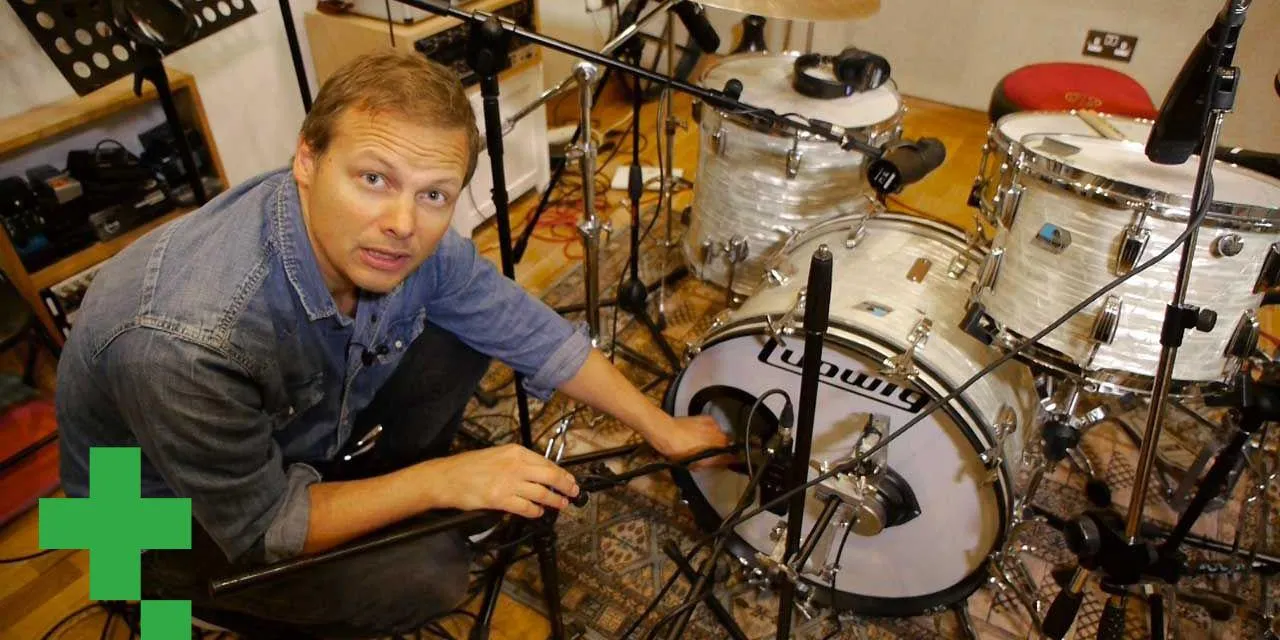
About the instructor
Nikolaj Bjerre est un batteur et producteur danois établi aux Tileyard Studios de Londres, qui a travaillé avec des artistes et des groupes tels que Lamb, le Ian Siegal Band, Ella Eyre et Heather Nova. Son travail couvre la batterie en direct, la production, la programmation et l'écriture, passant avec aisance d'un jeu organique et racé à des styles électroniques de pointe, et il est endorsé par Sabian, Hardcase et Protection Racket. Dans ce cours, il te montre comment enregistrer une batterie en direct avec une qualité professionnelle. read more