



Les II-V-I
Avec
Chris HaighNous avons vu plus tôt comment on peut construire un accord différent sur chaque degré de la gamme. L'accord de I est un major7 ; l'accord de II est un minor7, et l'accord de V est une septième. Ces trois accords apparaissent très souvent ensemble dans le même ordre – ce que l'on appelle un II-V-I
Le contenu du cours
28 leçons (1h 46min) · 1 gratuites
01. Bienvenue dans le cours !
1:09
02. Les bases des accords
9:05
03. Accords major7, minor7 et flat7
Leçon gratuite9:48
04. Exercice à faire
0:40
05. Les II-V-I
Tu es ici6:31
06. Exercice : II-V-I
0:21
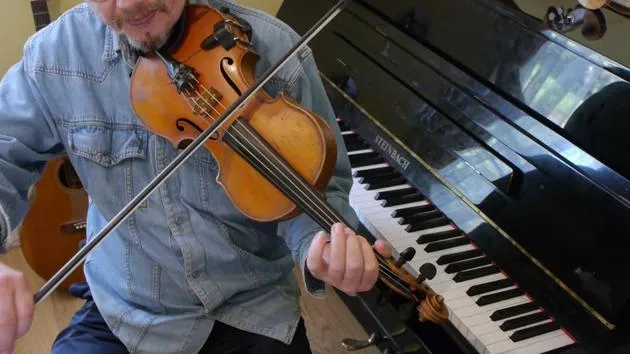
07. II-V-I mineurs
3:38
08. Exercice : II-V-I mineurs
0:18
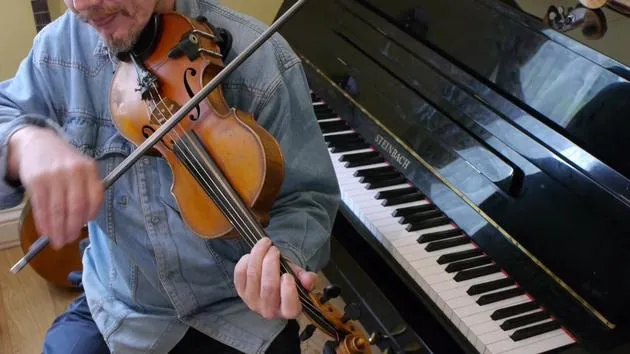
09. Le cycle des quintes
7:08
10. Exercice : Cycle des quintes
0:26
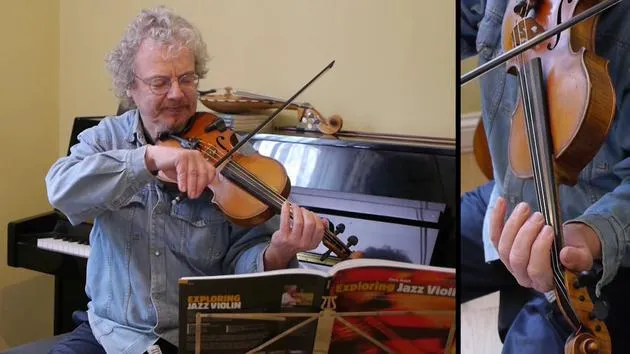
Transcription de la leçon
Understanding the 2-5-1 Progression
In this lesson, we're going to look at the two-five-one (2-5-1) we saw earlier. How a different chord can be built on each degree of the scale:
- The I chord is a major 7.
- The II chord is a minor 7.
- The V chord is a 7th.
These three chords very often appear together in the same order, known as a 251 in the key of G. This will be:
- A minor 7 (Am7)
- D7
- G major 7 (Gmaj7)
Importance of the 2-5-1 Progression
Understanding and recognizing the 251 makes it a lot easier to navigate through a chord sequence and helps you to play phrases with some logic and sense of direction.
What Does a 2-5-1 Look and Sound Like?
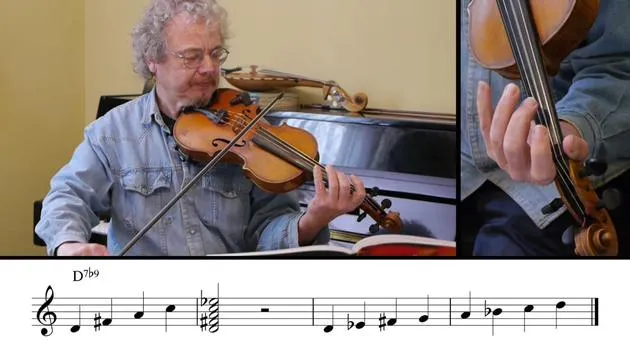
The 2 and 5 can either be half a bar each or a whole bar each. Because all three chords are created from the same scale, all the notes of each scale coincide. As you can see, this makes it easy to play a phrase that sits comfortably in each chord without having to change the scale as you go along.
Playing Techniques
Here are a few techniques you can try:
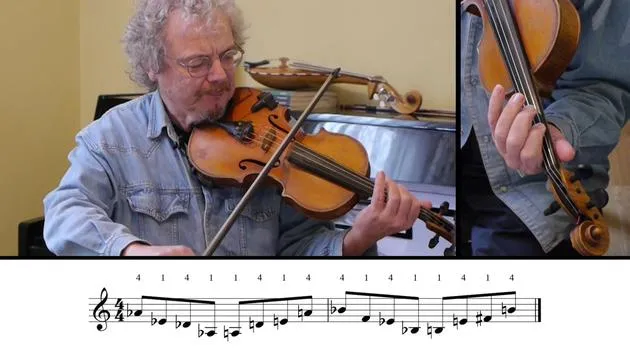
- Descending Line: Start on the root of a minor 7 and hit each new root as you arrive.
- Third of Each Chord: You can also start on the third of each chord.
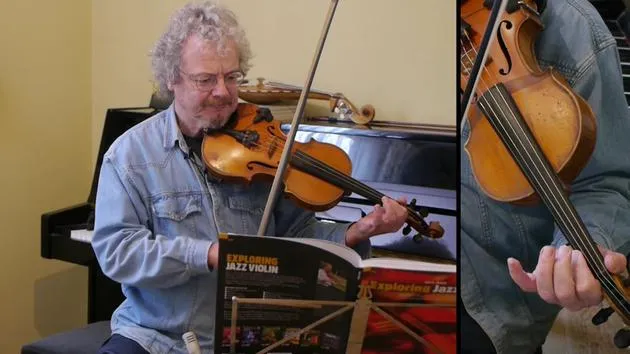
- Arpeggiating the Chord: Arpeggiating this way sounds very mechanical. It's much better to descend on the second arpeggio.
Experimenting with Notes
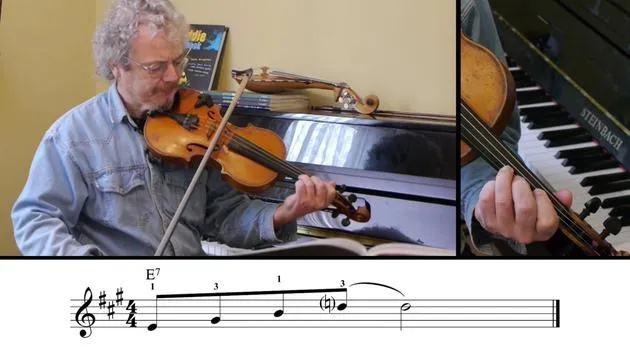
You get an interesting effect if you start the arpeggio on the third instead of on the root. So instead of 1-3-5-7, you now get 3-5-7.
- The ninth note of a minor 7 is B. This is an outside note. It's part of the scale, but it's not part of the chord, making it sound more colorful and interesting.
- You can take it even further, starting on the fifth of a minor 7, followed by 7, 9, and 11.
You don't have to play the D7 as an arpeggio. Adding these notes from outside the chord gives a more modern sound and an air of unpredictability.
Influences and Examples
A good example of a player who embraced this style was Stuff Smith.
- He was an American player who made his name in the 40s and was heavily influenced by bebop, which was much more adventurous in its approach to chords compared to the swing era.
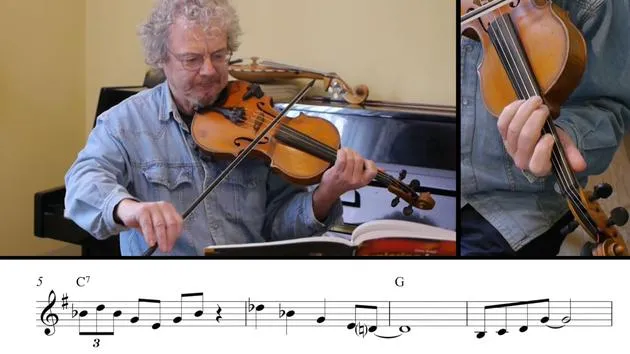
Stuff Smith Lick
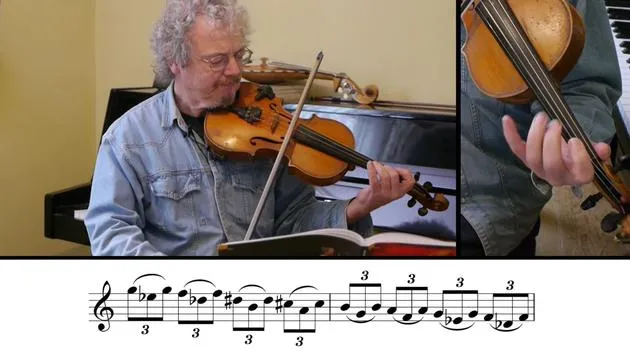
Here's a Stuff Smith lick which bounces around the chords:
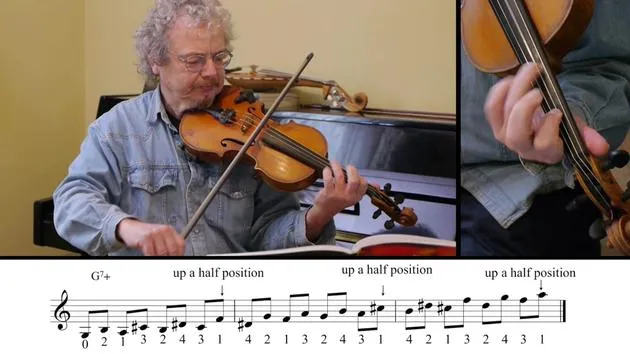
- He often used a three-note chromatic descending scale over the 251.
- This starts on the root of a minor 7, descends to the flattened fifth of D7 (an outside note), creating tension before resolving to the root of G major 7.
He extends this idea to include arpeggios and also moves upwards from the root of the A minor 7 to the sharp 5 of the D7 to the third of G major 7.
Simplifying Your Approach
If you think this is getting a bit technical, don't worry. You're not expected to work out the relationships of notes to their chords as you're playing. The point is to memorize phrases like this so they become second nature.
Gropelli often used a simpler approach, playing blues phrases through a II V I.
Practice Suggestions
Here's an extended series of II V I chords:
- Use this to practice the scales, arpeggios, and licks from this chapter.
- Try making up your own phrases that have an obvious endpoint at the I chord.
Happy practicing!
28 leçons
1h 46m de leçons vidéo structurées
Fonctions vidéo avancées
Ralentissez, bouclez un passage, suivez la partition
Mobile, tablette et ordinateur
Pratiquez où vous voulez
Satisfaction garantie à 100 %
Garantie remboursement 30 jours
Rencontrez votre guru
Rencontrez votre guru
Chris Haigh est violoniste professionnel depuis 25 ans et possède une expérience dans de nombreux genres. Il a joué sur plus de 75 albums, aux côtés d'artistes comme Alison Moyet, Bob Geldof, All About Eve, Michael Ball, David Soul, Oumou Sangare, The Quireboys, Riverdance, Morcheeba, James Galway et Steps.
Il a joué du swing et du jazz avec The Kimbara Brothers, Diz Disley, Le Jazz, The Hot Club of London et les Quecumbar Allstars, et dirige un ensemble de swing soviétique à sept musiciens, The Kremlinaires.
Chris donne des cours et des ateliers sur la technique du violon jazz et a enseigné le violon jazz aux universités de Middlesex, Brunel et Newcastle ainsi qu'au Truro College. Parmi ses ouvrages figurent neuf livres consacrés au violon, dont The Fiddle Handbook.
Il anime également Fiddling Around (fiddlingaround.co.uk), sans doute la source d'information sur le violon la plus complète et la plus consultée du web.







