



Introduction au blues
Avec
Chris HaighChris Haigh présente le blues pour les violonistes de jazz : la grille d'accords de 12 mesures, les gammes de blue notes et le feeling qui l'anime.
Le contenu du cours
26 leçons (1h 53min) · 1 gratuites
Transcription de la leçon
Understanding the Blues
Now it's time to move on to the blues. Blues is a separate and self-contained genre in itself, but it's also an essential element of jazz. There are three different aspects to what the blues is:
-
Chord Sequence:
Mostly 12 bars in length. -
Scales:
A series of scales containing flattened or blue notes. -
Emotional Expression:
A general feeling of angst and passion which you can put into your music.
The 12 Bar Sequence
Let's first of all look at the 12 bar sequence. Most jazz numbers follow a 32 bar pattern, certainly all the ones we've followed so far, and they have an A and a B section. The blues is quite different; it just has a single section which is 12 bars long.
This is what the 12 bar blues sounds like. I'll just give you the chords to hear to start with. Now, you've got to be able to really internalize this.
Arpeggios
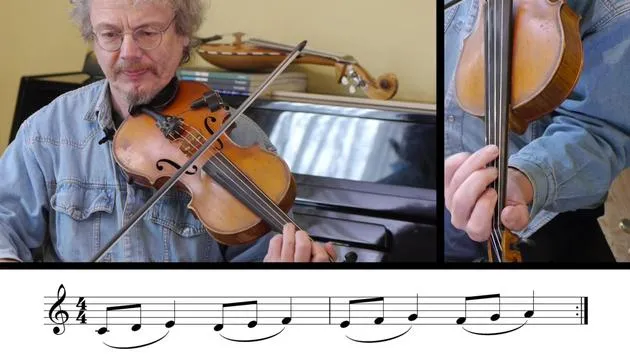
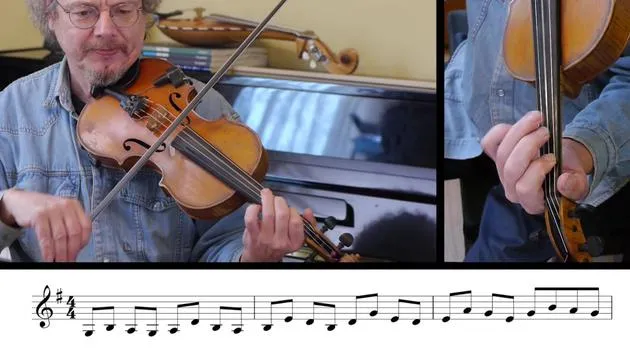
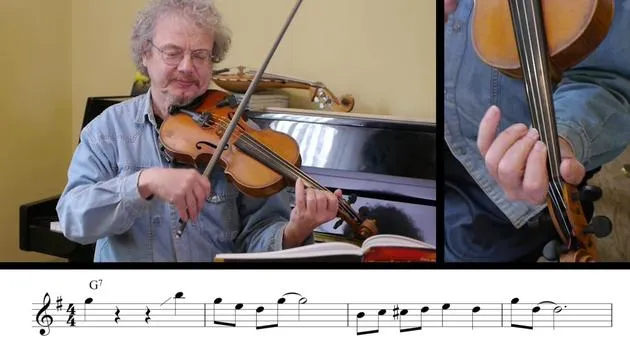
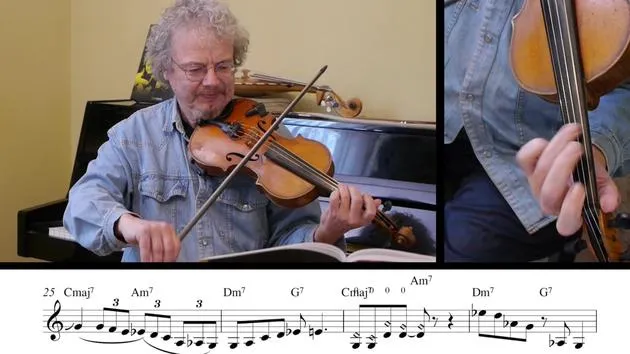
What we're going to do is play arpeggios (the 1, 3, and 5) for each of these chords. The three chords are:
- Tonic: G or the I chord
- Subdominant: C or the IV chord
- Dominant: D or the V chord
You need to get very familiar with this sequence, so play along with the arpeggios and memorize it so you don't need to look at the music as simple arpeggios.
"It sounds very staid and not at all bluesy."
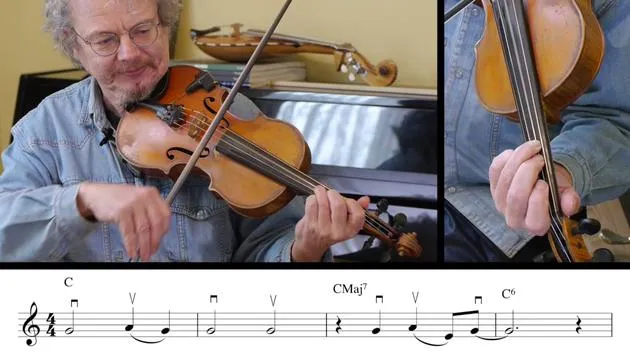
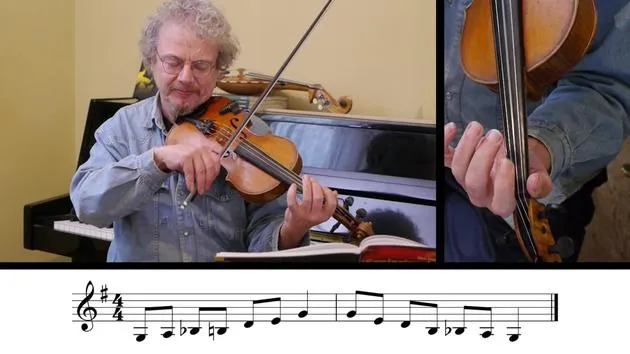
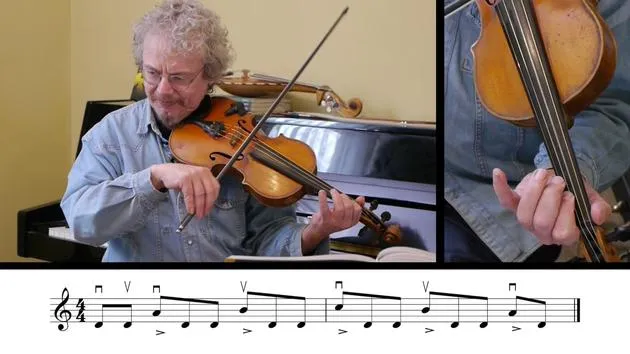
We can spice things up by adding a flattened seventh to each chord and turning the arpeggio into what's often called a boogie woogie pattern.
Swinging the Pattern
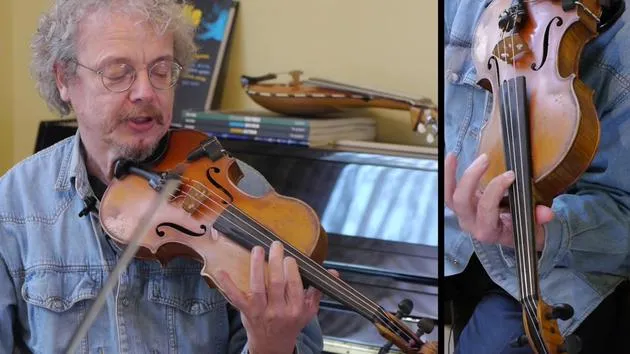
So, we're going to swing the first part of the pattern and we're going to put in that flattened note. This is a bass line, and it isn't normally what the fiddle would play. However, like the arpeggios we did earlier, it's very valuable for learning to navigate your way around a blues sequence.
Another approach is to play horn riffs that punctuate the rhythm and the chord.
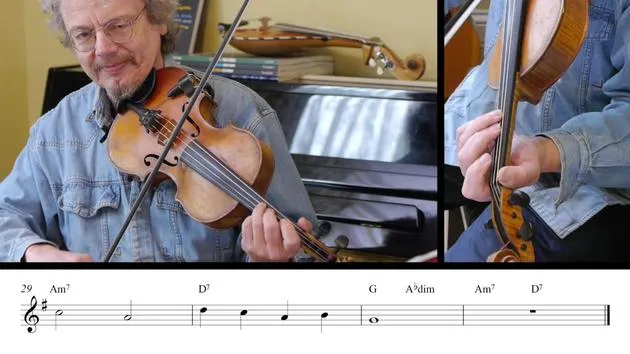
Simple Melody
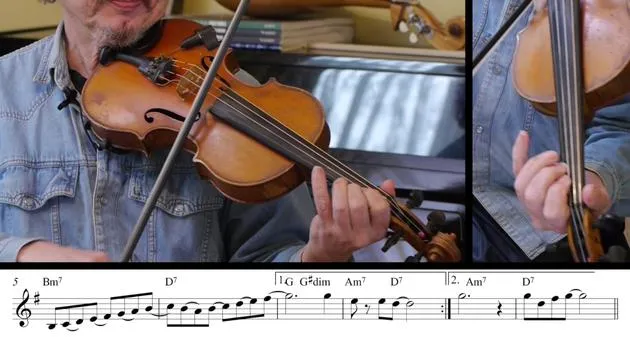
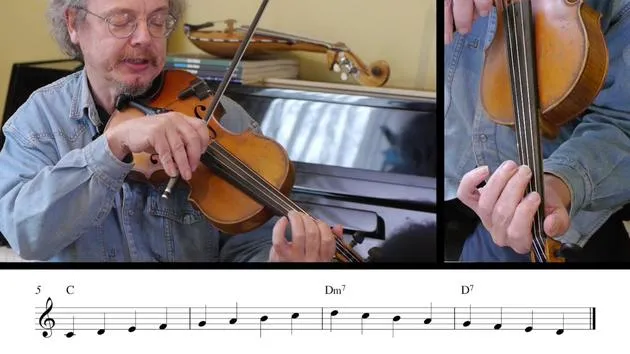
Now here's a very simple melody that will work over the blues sequence.
Common Variations
Finally, a quick look at some of the common variations to the blues sequence:
- It's common to make the second bar a two chord, returning to the I for the rest of the line.
- Also, the final bar is often a five chord, which helps to punctuate the sequence and mark the end of the 12 bar.
Here's the slightly more elaborate 12 bar blues sequence with the horn riffs.
26 leçons
1h 53m de leçons vidéo structurées
Fonctions vidéo avancées
Ralentissez, bouclez un passage, suivez la partition
Mobile, tablette et ordinateur
Pratiquez où vous voulez
Satisfaction garantie à 100 %
Garantie remboursement 30 jours
Rencontrez votre guru
Rencontrez votre guru
Chris Haigh est violoniste professionnel depuis 25 ans et possède une expérience dans de nombreux genres. Il a joué sur plus de 75 albums, aux côtés d'artistes comme Alison Moyet, Bob Geldof, All About Eve, Michael Ball, David Soul, Oumou Sangare, The Quireboys, Riverdance, Morcheeba, James Galway et Steps.
Il a joué du swing et du jazz avec The Kimbara Brothers, Diz Disley, Le Jazz, The Hot Club of London et les Quecumbar Allstars, et dirige un ensemble de swing soviétique à sept musiciens, The Kremlinaires.
Chris donne des cours et des ateliers sur la technique du violon jazz et a enseigné le violon jazz aux universités de Middlesex, Brunel et Newcastle ainsi qu'au Truro College. Parmi ses ouvrages figurent neuf livres consacrés au violon, dont The Fiddle Handbook.
Il anime également Fiddling Around (fiddlingaround.co.uk), sans doute la source d'information sur le violon la plus complète et la plus consultée du web.







