



YBB - Taller completo de Londres - Oct 2014
Lesson time: (82min 6sec)
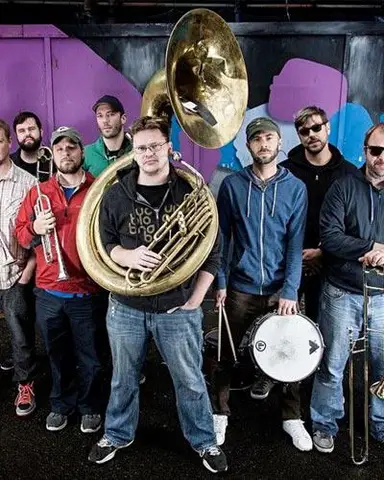
Un taller completo con Youngblood Brass Band, que abarca la tradición del brass de Nueva Orleans y la improvisación moderna para músicos de todos los niveles.
Course preview
This lesson is part of the course Musicalidad e improvisación de brass band con Youngblood
Watch a preview of the full course below.
Lesson transcript:
Welcome to the Workshop
Introduction
Yeah. Well, welcome to the workshop. We're Youngblood Brass Band. I'm sure you are all aware of that fact and what we like to do in this kind of scenario. One thing, I'm assuming most everyone here is a musician or some type of musician. We do a lot of work with really young musicians and also kind of college age or older or professional. I think there's kind of a varied group here. So a lot of the information that we give will be pretty general.
If anyone has any specific questions about the stuff we talk about, feel free to raise a hand and just shout, because we're going to blow through a lot of New Orleans music history really fast. We're going to talk a little bit about the music that inspired us to become the band we are and also kind of where our music comes from. But mostly, we're going to talk about things in a historical context.
Musical Presentation
First things first, though, we'll probably play a Youngblood tune, and then hopefully, by the end of this whole experience, what that tune entails will make a little bit more sense to everyone. This is one of the tunes on the new album. It's called "Overtime." Tony wrote it. Ready? Yeah. Cool.
So that's, you know, that's more or less what Youngblood does. But where we got inspired from and where, you know, this instrumentation, this type of band came from is obviously the New Orleans brass band tradition.
The New Orleans Brass Band Tradition
A lot of people are familiar with certain aspects of that culture, but maybe not all of it or the historical context in which it came from. So real quick, we'll just kind of breeze through some of it. This is a tradition which is more than 100 years old in New Orleans, but it's also not something that's totally antiquated. I mean, it's a tradition that's still totally alive and well, whether you're talking about the old school jazz funeral bands from whence you know this stuff comes, or the more modern groups like the Rebirth Brass Band.
Historical Overview
All these things are still alive and well and still a really vital part of brass band culture. So anyway, in the beginning, or what we'll call the beginning, more than 100 years ago or so in New Orleans, this whole thing got started as part of the jazz funeral tradition. There would be a band.
The signature thing about it is, you know, you've got sousaphone, you've got two marching drummers playing kick and snare, and you've got kind of an assortment of horns up here. If this were a jazz funeral band, in the event of someone passing, a lot of people were members of these organizations called social aid and pleasure clubs. This would be a community group that you would pay dues to be a part of.
Jazz Funeral Processional
That group would then help fund something like a funeral or kind of other community family life events. But in the event of a funeral or a jazz funeral, a band like this would be part of the processional to the cemetery and would play, or would still play at first, a really sad slow song, a mournful song called a dirge.
After arriving at the cemetery and coming back down the street, the band would play much more upbeat gospel music. That's the music that a lot of people associate with New Orleans jazz when they think of New Orleans jazz songs like "When the Saints Go Marching In," that kind of thing.
Celebrating Life
That whole dichotomy between celebrating someone's life while mourning their passing is something that's really important to the music. For us, I think it lent the music such weight. I mean, when we were younger and playing horns and drums, we could have started a ska band, we could have started a funk band. We were all playing jazz and a lot of other musics, too.
But when we heard New Orleans brass band music, it was kind of like not just a party. It was much heavier than a party because it's coming from this connection to celebrating the idea of even being alive. I think that distinction between music that is really fun and celebratory and music that is funny is something that gets lost sometimes.
The Importance of Distinction
We've done a lot of clinics with some brass bands where the idea is just that, like, oh, it's Mardi Gras culture, right? It's hilarious. Like, you dress up, you wear funny hats, and everybody's throwing beads everywhere. That is really something that's separate from the brass band culture from whence all this stuff comes.
We try to make a distinction between that the music should be fun, the music should be celebratory. It's not in any way, you know, silly. It's not in any way comedic. Even though I feel like we've all been told that in a way, or it's been construed that way for us by, you know, the media or whatever it is throughout the years.
Traditional vs. Modern
So what we're going to do is give an example of that traditional jazz funeral stuff. We'll start with the dirge, and then we'll go into the more upbeat gospel version.
Call and Response Tradition
There's also this connection to military band tradition. These songs being songs that are played on the street by bands, have roll-offs the way that, like, in a marching band, you would have a roll-off from the drums to tell the, you know, to tell everybody the song is starting. So there's like a certain kind of roll-off for the dirge. There's a roll-off for the gospel stuff.
If you guys ever hear a horn player do these four notes, that's basically the New Orleans signal for, like, everybody, pay attention. We're about to play. You can hear it all over records, modern records, old records. Even like Branford Marsalis starts a jazz record like that. And, of course, the Marsalis are a really famous New Orleans jazz family.
Musical Vocabulary
Those kinds of traditions, those little things that link the current music to the past, are one of the things that we think makes it really cool. I feel like the more you can kind of familiarize yourself with that vocabulary, the more you end up getting out of the music.
Example Play
So this will be a traditional called "Just A Closer Walk With Thee." If you're familiar with gospel music, you might be familiar with this song. Lots of those gospel songs and these songs, you know, intermix or are the same songs or traditional gospel songs are played as these songs. So anyway, we'll go with the dirge, and then we'll do the upbeat part, right?
Transitioning Through History
Now what we're gonna do really quickly is kind of breeze through a hundred years of New Orleans music history. That kind of takes us from that to modern brass band music.
Call and Response in Rhythm
An important aspect of all of what's going on that comes out of that gospel tradition is the idea of call and response as a really primary musical vehicle. One of the big call and response things happening is with the rhythm, is with the drums. If we were to play just straight beats, like 1, 2, 3, 4, on the snare drum, you'd still be really aware of where the beat is.
The music has this strong 1, 2, 3, 4 beat because it is music that's supposed to parade down the street. But there's also this constant call and response between the snare and the kick that is pushing every phrase forward.
Danceable Groove
In this music, it's like at the end of every two bars, there's a little bit of push on that and of four, at the end of the next two bars, there's kind of a bigger push. That ebb and flow to the groove is what makes it a lot more danceable.
If we were to play this music or dance to this music, just going like this, you'd probably fall asleep and be like, "That's really terrible dance music, everybody." There's plenty of dance music that's just like that in the world right now.
Example A and B
So here's an example:
- Example A: Boring dance music, which may be all the music we make all the time. More boring, right? Not terribly dancy.
- Example B: When you get this conversation going, it's basically like before Tom pushes. This is Tom. He plays a bass drum. Before Tom kind of pushes the ends of those phrases into the next phrase, there's a little call on the snare drum. It's like every time I'm saying, like, Tom's answering with boom, boom.
Those little conversations are what make things popular. There you go, right? Sure. There's this constant back and forth, and obviously, depending on the players, depending on how you want to make it feel, there are longer calls, shorter calls, just like any kind of communication in the music.
Improvisation and Communication
The improvisatory aspects are subtle, but it's not like we're taking solos. It's not like we're playing whatever we want. There's a basis to what we're doing, but how you kind of make little dynamic variations within that basis is what makes it both signature and danceable.
The Evolution of Music in New Orleans
Throughout the 20th century, a lot of stuff going on musically in New Orleans. One of the big revolutions was in piano playing. We start to see the roots of New Orleans R&B and funk in these piano players essentially creating dance music by themselves.
A lot of people, the most familiar figure for this would be Ray Charles. The idea was that the piano player would play a rhythmic bass line in their left hand, then play the rest of the tune in their right hand and sing, developing a way to make people dance just by playing piano.
Mardi Gras Indian Culture
There's also this entire culture in New Orleans that many people aren't familiar with: the Mardi Gras Indian culture. If you guys have seen the show Treme on HBO, you've probably been exposed to it, but that's probably the biggest exposure that culture's ever had.
There's a rhythm in Mardi Gras Indian culture that sounds like this. [Play Mardi Gras Indian rhythm]. The emphasis is still on those upbeats, but it's a rhythm that's much more clave-based. If you're familiar with Afro-Caribbean music, those rhythms are based more in the idea of something like this.
The Rolling Rhythm
Although this rhythm in New Orleans is kind of like that second half of the typical clave rhythm gets cut off, it just becomes this over and over. My personal philosophy is maybe one of the reasons that happened is that since this is all music that's meant to move down the street, that rhythm feels a lot more circular without that break in it.
Progression Through the 20th Century
All of this was happening. New Orleans R&B and funk is kind of happening. There's a band that comes along in the 70s called the Dirty Dozen Brass Band. That was really the first brass band that said, well, for one thing, we're going to incorporate all these jazz influences, all these New Orleans R&B influences, and these funk influences into the brass band culture.
They also established that it's totally viable for a brass band to play at a club and have people pay money to see a brass band and dance to a brass band. They were the first band to really take that leap. Then after them came the Rebirth Brass Band, which took these rhythms, especially the Mardi Gras Indian-style rhythm and those Afro-Caribbean rhythms, and applied them to brass band music in New Orleans.
Modern Influences
What we're going to do now is an example of one of those more modern Rebirth songs. This is a song that we would play at a show. We need to remember that whether it's that traditional stuff, this stuff, or Youngblood stuff, all this is totally happening right now as well.
Call and Response in Modern Music
A couple of things to observe in the music: the call and response thing is still really strong. One of the major parts of the song is just straight call and response from the trumpets to the rest of the instruments. Style-wise, the vocabulary developed in the traditional stuff is still the stylistic vocabulary of how the instruments are played.
The Role of Drums
It's just a bit different in the drums. The snares will be turned off, and it's played a lot more like a conga. What was happening in the traditional stuff with how everyone communicates is still how everyone communicates.
So one small thing to mention: the way we ended that tune right there in the drums is this rhythm, this little call from the drums. When the last note happens, the drum says [drum call]. Everybody knows the last note is there.
Youngblood Musical Direction
A couple different variations happen, but that's one of those little linguistic things where everyone involved in the music knows what those things mean. A lot of the music Youngblood makes comes from that type of thing but is influenced a lot more by modern jazz, hip hop, or even punk music and all that stuff.
It wasn't exactly a huge leap for us to take that type of beat and also include a hip-hop type beat. You can hear it in Rebirth songs or right after the Rebirth Band, like the Soul Rebels, who use a lot of this backbeat stuff.
Beat Variation Demonstration
It's interesting how all you have to do is change where you would clap your hands or where the strong beat is on the snare, and your body reacts to that beat in a totally different way. It becomes that heavy backbeat kind of hip-hop feel.
So we'll just give a quick example of that. Just the first version being the type of beat we were just playing. By just accenting 2 and 4 instead of the snare, it's hip-hop. It really doesn't take much. What Tom's playing is not changing at all; it's still that rhythm, and it makes for a really killer beat.
Early Days of Youngblood
When we started with Youngblood, we had the luxury of being part of a band called Mama Dig Downs in Madison, Wisconsin, where a lot of us met. They were playing traditional New Orleans brass band music and took us to New Orleans.
We had the total luxury of sitting at the feet of a lot of these musicians when we were 15 or 16 years old and having them show us exactly how to do it. We kept on going, trying and trying and trying, and I guarantee you we sounded really, really bad for quite some time.
Individual Style in Brass Bands
I don't know if a nat or horn player wants to talk a little more about stylistic things that are happening. Do I need your mic? No.
You probably noticed during that tune, we had everybody take a little bit of space during the solo section just to demonstrate the difference between the way that you present yourself as a horn player in a New Orleans-style band versus in a really jazz-focused band.
The Statement in Improvisation
Everyone here is real jazz players, and they all can play jazz, but they don't bring that to the table when they come here. In New Orleans, it's all about the statement that you make, and it's about the style that you can present a lot more than it's about the number of notes that you can play or the number of choruses you can take.
Everything is just about putting a statement out there. The statement generally is: "Just look what a badass I am." No, "Look what a badass I am." No, "Look what a badass I am." That's where all of this stuff comes from, which I think is important for improvisers.
The Focus on Rhythm
Do we have anybody out here who's kind of new to improvising and still working out the kinks? A couple people? Yeah. If you start from this viewpoint of, "What kind of statement can I make? What's the least number of notes I can use to make it?" and really focus on the rhythm and the groove first before you start trying to put all your hot licks into context, it really works out a lot better for all music.
It all just comes from that New Orleans style that we've been talking about, where everybody's playing. People are doing shakes, people are doing fall-offs, the saxophonists are going boom, and everybody's adding little extra stuff.
Song Teaching
I think what we're going to do now is teach a song, right? The song we're going to teach is called "Hurricane George," which is pretty much a brass band standard, kind of written about Hurricane George, which is a pre-Katrina hurricane. A lot of the elements we've talked about are going on in the tune: the Mardi Gras Indian type bass drum, clave-based rhythm.
We'll probably go into a little hip-hop beat at the end. There's call and response all throughout it, whether it's one voice calling and everyone responding or the individual sections kind of responding to each other. It's really pretty simple note-wise.
Sections and Structure
There are three total sections to this song: part 1, part 2, and part 3. So we'll do part 1, part 2, part 1, part 2, part 3, and then into the solo section. Then out of solos will be 1, 2, 3, and then 3 again.
Dynamics in Music
As long as we're being ultra musical about it, the part ones are quieter than the part twos, and part three, the first time is quietest of all. The drums will be able to kind of let you know how that's supposed to go. Just follow our lead.
Final Thoughts
A couple things to mention: obviously, I'm sure you guys know that we're playing the gig at Scala on Tuesday, and we'll do the full club show after this whole thing.
We do have all of our merchandise here, so this is a really good opportunity to get up close and personal with a guy like Zach Lucas and buy one of his albums at the same time. Youngblood is not what we all do full time. It's probably one of our priority commitments in our lives musically.
Band Projects and Collaborations
Many of these guys have other types of music and other projects they also do. We have those kind of things here. Some of you might be familiar with Nat's tuba quartet. Adam's got a big band. Tony and Zach both have solo albums. I have another band called Cougar. Connor plays drums on like three of these albums.
It's not like Youngblood isn't the sole thing we do musically, but we do have all that stuff. To finish up, we'd like to do a Q&A based on anything you guys might want to know.
Q&A Session
If you have any questions for either any individual in the band or just a general thing about the band, how it kind of got started in the beginning, and how it all works for us, feel free to ask!
About the instructor
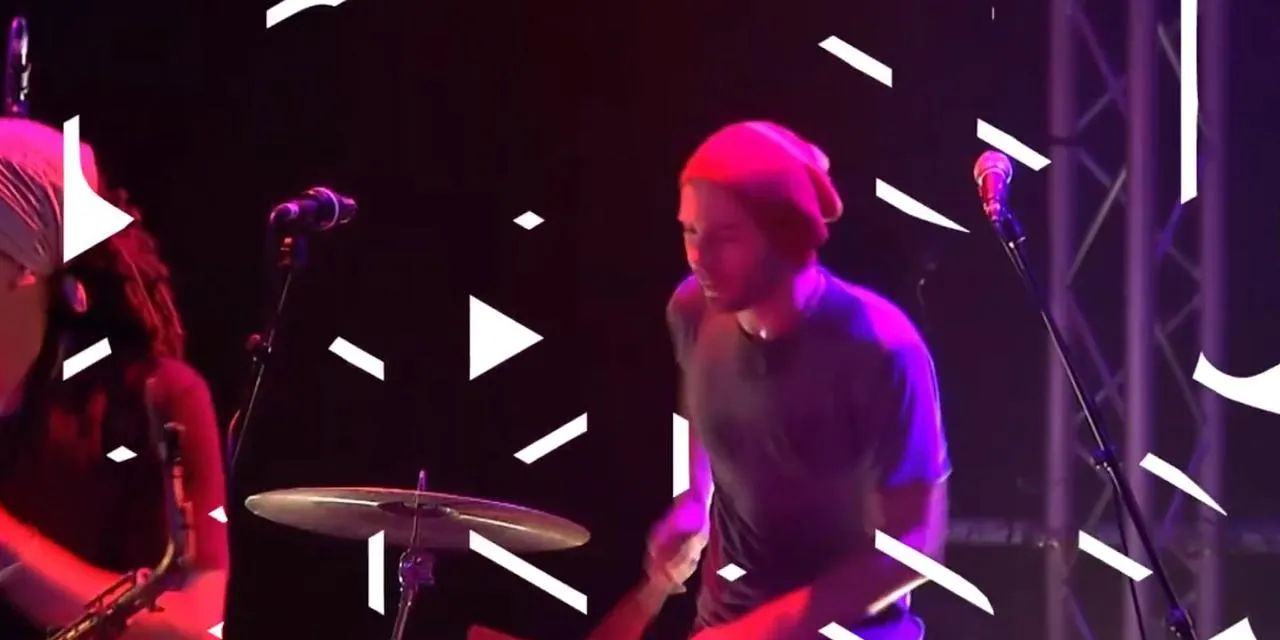
Youngblood Brass Band fusiona los metales sin concesiones de Nueva Orleans con la energía y el lirismo del hip-hop. Procedente de Madison, Brooklyn, Minneapolis y Chicago, este grupo de diez integrantes ha girado por todo el mundo desde 2000 y ha colaborado con figuras como Questlove y Talib Kweli. Se sienten igual de cómodos liderando una banda de marcha con sus propias composiciones que encabezando un festival de punk. En MusicGurus desglosan su sonido que mezcla Nueva Orleans y hip-hop: cómo componen y arreglan para los metales, el vocabulario rítmico y armónico que lo mantiene todo unido, y cómo tocar una línea de viento como parte de una sección compacta, incluidas las partes completas de su tema 'Brooklyn'. read more