



Trombón con Joe Goltz
Lesson time: (5min 37sec)
Course preview
This lesson is part of the course Musicalidad e improvisación de brass band con Youngblood
Watch a preview of the full course below.
Lesson transcript:
Welcome to the Lesson!
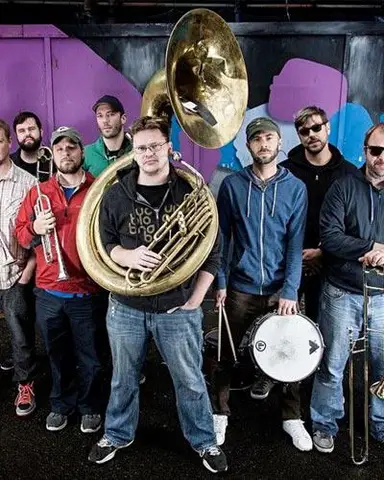
Hey, everybody! I'm Joe Goltz, and I'm the second chair trombone. But wait for it, I'm chair challenging Matt and hope to overtake first chair soon for the Youngblood Brass Band.
Today's Focus
I think you guys are here today to learn a little more about what I do. Maybe you like my style or the way I perform with the band, and I can extend some of that knowledge onto you.
Learning Through Experience
Basically, hear this: "It's a train led by train." Good real estate! I maybe can impart some of what I know onto you because, you know, I know a few things about a thing or two, and maybe I can teach you a thing or two about that.
The Essence of New Orleans Music
Melodies and Freedom
The first thing to understand: every time you approach New Orleans music, you have your melodies. You know the songs, like "When the Saints Go Marching In."
The cool thing about the New Orleans style of playing is that you don't just have the melody. It's not just about everyone trying to lock in and nail it according to the chart, there is no chart!
This music is largely learned by word of mouth:
- People hear the music.
- They learn the music.
- They put their own take on it.
Structure and Expression
Yes, there's definitely a set structure, a set of chord changes, and a set of notes. The lead voice will be playing these notes, and harmonies typically lock in on the third and the fifth. However, what brings something special to it is all the flourishes, the little flares, and the ideas that you bring to the mix. These elements are equally as important as the actual melody itself.
This is where your real personality comes through on your horn. What makes a certain horn player your favorite is how they add their own voice to the music.
Breath Control
What I just played was almost the exact basic melody, and you may have noticed it probably overmodulated and sounded fuzzy.
Practice with Purpose
So, the first thing we're going to work on is breath control.
- We're going to blow into our bells, get it all nice and puffed up, and use a practice mute.
- A lot of people don't like practice mutes because they alter your sound and your intonation.
- You practice one way but feel a different way on the gig.
It's something you should probably get used to, especially if you want to live in a cool city where you can get a lot of gigs without disturbing your neighbors.
Finding Your Voice
Let's put the most basic of flourishes on the ends of those phrases during those moments, opportunities to put yourself out there.
For example, let's try adding some slurs below the note and back up. It's simple stuff, but it adds something to your playing.
Listening and Responding
You're also probably playing in a band, and there will be others who think the same thoughts as you. It's important to have:
- Big ears
- Big ideas
Music in the New Orleans context is a lot less like improvisational jazz where you just have a line to fill with ideas. Instead, it resembles improvisational comedy. You want to say "yes, and..." and tell your bandmates:
- "I hear you."
- "I'm going to feed you a little lick."
Collaboration
You can pass the ball back and forth like the Globetrotters, musically speaking. But even if you're the only horn voice in your band, like just you, a piano, and a drum set, and you want to play "Saints Go Marching In," let's have fun and see how far we can take it while still maintaining that melody.
Conclusion
I'd really like to show you more about the means, ways, and tricks that I've learned to level up your improvisational skills and have more fun with this music.
Remember:
- In most music, you might be told to be quieter or tone it down.
- The great thing about New Orleans music is you can't bring enough to it!
A lot of the time, you can play as loud and proud as you want, and that's what's really cool about it. I look forward to working together, let's make some music!
About the instructor
Youngblood Brass Band fusiona los metales sin concesiones de Nueva Orleans con la energía y el lirismo del hip-hop. Procedente de Madison, Brooklyn, Minneapolis y Chicago, este grupo de diez integrantes ha girado por todo el mundo desde 2000 y ha colaborado con figuras como Questlove y Talib Kweli. Se sienten igual de cómodos liderando una banda de marcha con sus propias composiciones que encabezando un festival de punk. En MusicGurus desglosan su sonido que mezcla Nueva Orleans y hip-hop: cómo componen y arreglan para los metales, el vocabulario rítmico y armónico que lo mantiene todo unido, y cómo tocar una línea de viento como parte de una sección compacta, incluidas las partes completas de su tema 'Brooklyn'. read more