



¿Cómo se toca la trompeta tan aguda?
Lesson time: (8min 56sec)
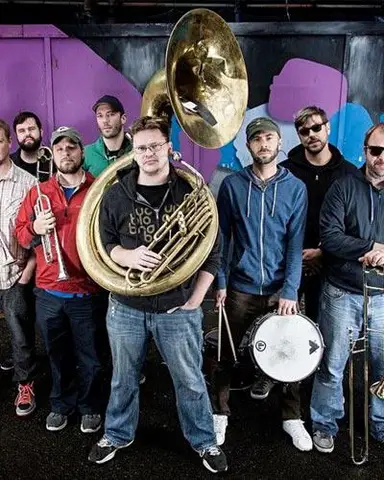
Charlie Wagner de la Youngblood Brass Band aborda la pregunta que se hace todo trompetista -cómo tocar en el registro agudo- centrándose en el enfoque más que en el equipo.
Course preview
This lesson is part of the course Musicalidad e improvisación de brass band con Youngblood
Watch a preview of the full course below.
Lesson transcript:
How to Play High Notes in Trumpet
Hi, I'm Charlie Wagner from Youngblood Brass Band. The number one question we get asked at the end of every show in the trumpet section is:
"How do you play so high?"
There are many reasons and answers we could discuss, ranging from equipment to the trumpet player mentality. It's essential to know how to play high, because what other point is there to playing the trumpet, right?
Equipment vs. Approach
I'm going to skip over the sometimes more fun conversation about equipment, like which mouthpiece I use or what kind of trumpet you have.
Take Arturo Sandoval, for example. He is one of the masters of high note trumpet playing of all time, and he uses what many consider a very standard mouthpiece. For most people playing lead trumpet or high-note trumpet stuff, it would be considered a big mouthpiece.
A Physiological Approach
What we all share as trumpet players is a physiological approach to playing. To start this conversation, let's discuss some fundamental concepts you were hopefully taught as a beginner:
-
Posture: Maynard Ferguson once told Miles Davis, who was struggling with high notes, to stop moving around while playing and to stand up straight with his feet firmly on the ground.
-
Horn Position: When you stand, make sure you're upright and have the horn pointing upwards. The trumpet is designed to be a declarative instrument, projecting sound over long distances despite background noise. Remember, we're not clarinet players; we live in a higher range.
Here's a common scenario: if your bell is pointing at the ground, who can hear what's bouncing off it? It's supposed to be pointed up in the air!
Breathing Techniques
Now, let's discuss breathing.
I'm using my good friend here (holds up a visual aid) to demonstrate the importance of proper breathing technique. Your sternum, the bone in the middle of your chest, should direct your breath down below your rib cage. It's unnecessary to focus on your stomach moving in and out; all breathing occurs with your lungs, which are located behind your rib cage.
- Tip: Think of your sternum going upwards to fill the lower part of your lungs. You should always have air in reserve. I don't like to drop below about 25-30% empty; you should always find a way to fit a breath into your music.
Pressure Management
Another common concern among trumpet players (and brass players in general) is how much pressure to use. There is constant obsession about it: too much pressure, not enough pressure.
Here's what I recommend:
- Be Strong, Yet Flexible: Trumpet players operate at a higher compression level, so while you should be strong, don't be rigid like concrete. You need to fit the physicality of your body to the music you are playing.
One famous brass player and philosopher, Arnold Jacobs, a long-time tuba player with the Chicago Symphony, wrote a book titled Song and Wind. He suggests that you should focus on the sound you desire. Your body will naturally react toward achieving that sound, similar to how athletes improve their performance through visualization and practice.
Practicing High Notes
For Youngblood, we strive for an aggressive tone in our music. The tune I'd like to use as an example is called Eric Owen from our last album, Pax Volumite.
- The horn solo you hear in the first half of this tune is played at about 90% strength.
However, in rehearsals, you're often told to "back off" your volume, especially when you're a beginner. This can disrupt your natural playing style, as brass instruments are inherently loud.
Tips for High Notes:
- Practice Loud: You cannot play loud if you don't practice loud.
- Balance: Also practice low notes. Engaging in a mix of high and low will strengthen your overall range.
Final Thoughts
Don't forget to explore classical music, there, you'll hear trumpet players producing a giant sound, different from what we create in Youngblood, but just as valuable.
Thanks for listening! I hope this was helpful.
Mr. Sternum says hi, and remember, the Packers are going to the Super Bowl!
About the instructor
Youngblood Brass Band fusiona los metales sin concesiones de Nueva Orleans con la energía y el lirismo del hip-hop. Procedente de Madison, Brooklyn, Minneapolis y Chicago, este grupo de diez integrantes ha girado por todo el mundo desde 2000 y ha colaborado con figuras como Questlove y Talib Kweli. Se sienten igual de cómodos liderando una banda de marcha con sus propias composiciones que encabezando un festival de punk. En MusicGurus desglosan su sonido que mezcla Nueva Orleans y hip-hop: cómo componen y arreglan para los metales, el vocabulario rítmico y armónico que lo mantiene todo unido, y cómo tocar una línea de viento como parte de una sección compacta, incluidas las partes completas de su tema 'Brooklyn'. read more