



RIFF EXTRA: Aprende a tocar Pride & Joy de Stevie Ray Vaughan

Con
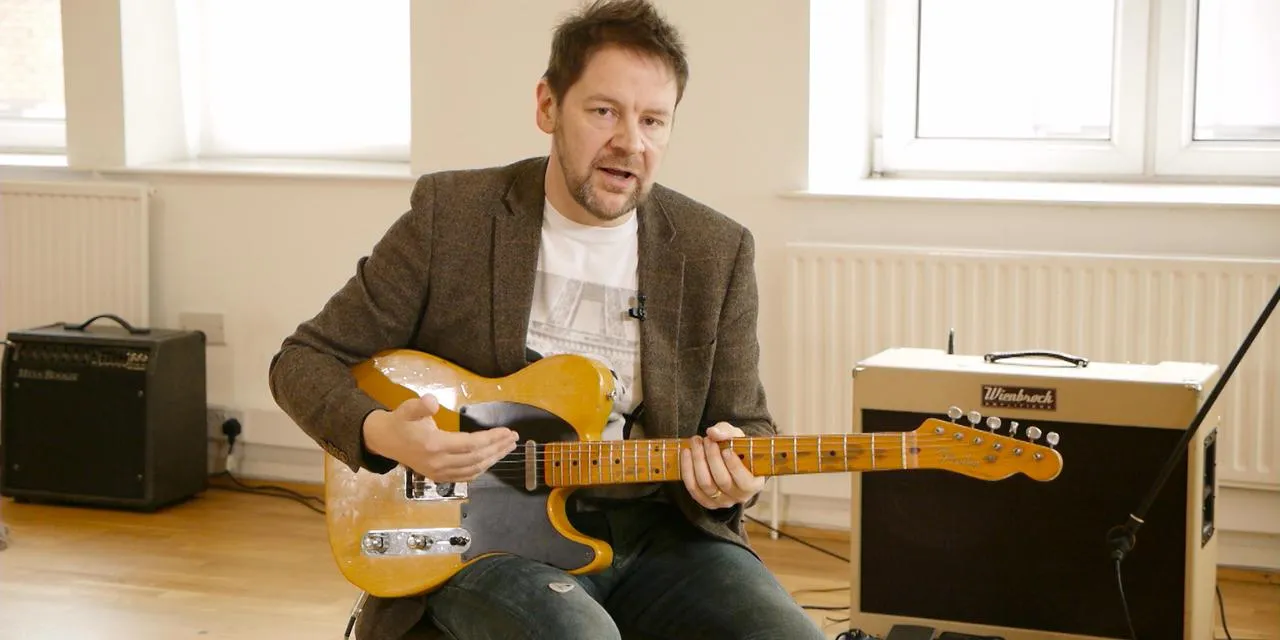
Ron SayerRon Sayer usa 'Pride and Joy' de Stevie Ray Vaughan para enseñar el apagado con la mano izquierda sobre un riff de boogie de 12 compases lleno de cuerdas al aire.
Qué incluye el curso
12 lecciones (1h 8m) · 1 gratis
01. Formas de escalas pentatónicas y de blues: un repaso
Lección gratis6:59
02. ¡Una forma pentatónica diferente!
5:10
03. Añadir la 5ª bemol y la 6ª mayor a la escala pentatónica
3:45
04. Mezclar pentatónicas mayores y menores.
4:41
05. La escala de blues híbrida
4:26
06. Usar double stops
6:35
07. Double stops con notas de paso
4:18
08. Formas de tocar: acordes de séptima
6:26
09. Formas de tocar: Acordes de novena
4:49
10. Acordes chulos
10:42
11. Variaciones de turnaround
5:25
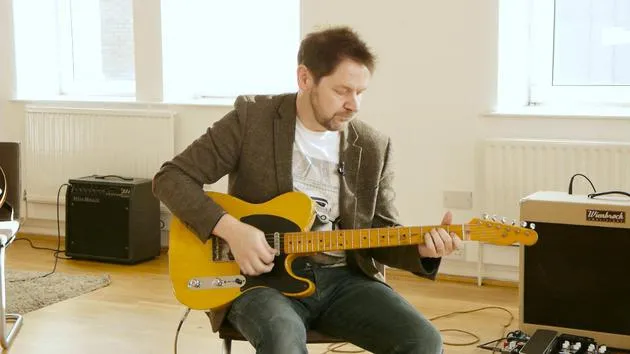
12. RIFF EXTRA: Aprende a tocar Pride & Joy de Stevie Ray Vaughan
Estás aquí5:30
Transcripción de la lección
Left Hand Damping with Ron Sayer
Hi, I'm Ron Sayer from musicgurus.com. Today, I'm going to use Steve Ray Vaughan's "Pride and Joy" to give you a little lesson on left hand damping.
Introduction to Left Hand Damping
Left hand damping is a tricky little technique, but it requires some work, like most things worth learning. Here's what you need to do:
- Ensure your left hand dampens all the notes that you're not going to use.
- In "Pride and Joy", the riff is a fairly standard 12-bar boogie, but it also includes quite a lot of open strings.
The Riff Explained
Let's break down the riff:
-
Starting Note:
- Begin with the low E string.
- The top strings of the guitar are hit in between every note.
For example:
- On the low notes, you'll play E, followed by an upstroke hitting the open strings.
Very slow version might not sound much like it, but that's how it goes. It starts off like this:
(Play the notes here) -
Technique:
- You can start with an upstroke hitting the open strings, then hit the low string.
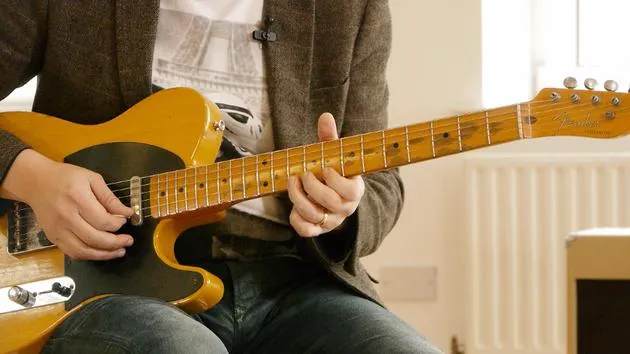
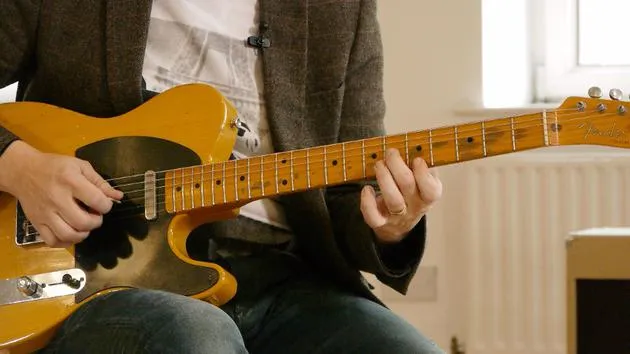
- Your left hand should dampen the first string across the A, D, G, B, and E strings, only allowing the E string to sound.
The goal is to create a "grunt" by hitting all the strings, not just going straight to the notes. If you are just hitting the low E, it won't sound the same.
- To practice:
- Hit a string, then damp the rest.
-
Continuing the Riff:
- The next note is on the third fret of the G string. Repeat the damping technique.
Remember to:
- Dampen every string that you're not using.
- Include an upstroke between each note to let the open strings ring.
E Sus Chord
Now, let's look at this part of the riff:
-
It incorporates an E sus chord, where you use your third finger across the A, D, G, and then go back to an E7.
So it goes:
(Play the E sus and E7 chords here)
Summary of the Riff
Putting it all together, it sounds like this when played slowly:
(Play the whole segment together slowly)
Key Takeaway
The essential part of left hand damping is that you can practice any scale while ensuring you hit one note each time and dampen the others. For example:
- Try practicing a G pentatonic scale with this technique.
Conclusion
I hope this lesson gave you some insight into left hand damping.
If you enjoyed this lesson and want to explore more techniques, pop over to musicgurus.com. There, you'll find plenty of interesting material to help make your guitar playing more engaging!
12 lecciones
1h 8m de lecciones en vídeo estructuradas
Funciones de vídeo avanzadas
Ralentiza, repite un pasaje, sigue la partitura
Móvil, tablet y ordenador
Practica donde quieras
Garantía de satisfacción 100%
30 días de garantía de devolución
Conoce a tu gurú
Conoce a tu gurú
Ron Sayer es un guitarrista de guitarristas del circuito de blues del Reino Unido y mentor de intérpretes como Oli Brown y Sol Philcox. Ha sido nominado cuatro veces en los British Blues Awards -por el álbum 'Better Side', el single 'Don't Make Me Stay' y su coautoría en 'Here I Am' de Oli Brown- y ha ganado el premio a Guitarrista del Año. En sus cursos desglosa el fraseo, el tono y el feeling que hay detrás del blues eléctrico como solista.







