



Ideas para finales
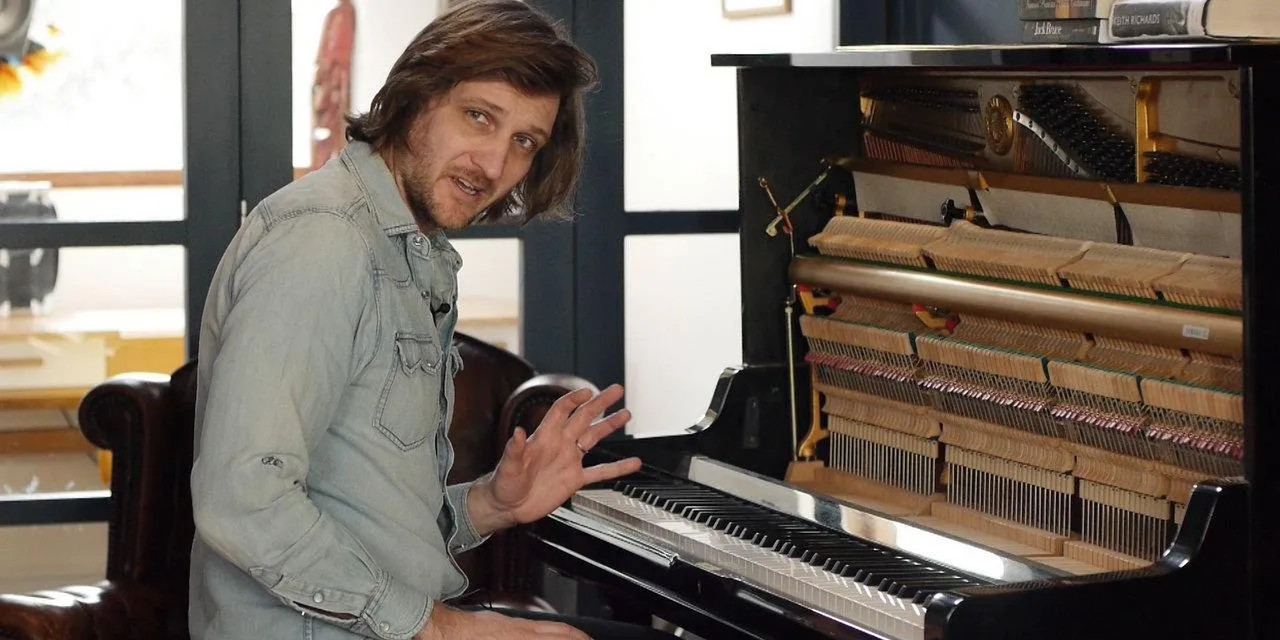
Paddy Milner comparte varias maneras de terminar un slow blues al piano, incluidos finales basados en turnarounds y un cierre al estilo de Robert Johnson.
Qué incluye el curso
14 lecciones (1h 47m) · 1 gratis
01. Demostración: toquemos un slow blues
Lección gratis4:30
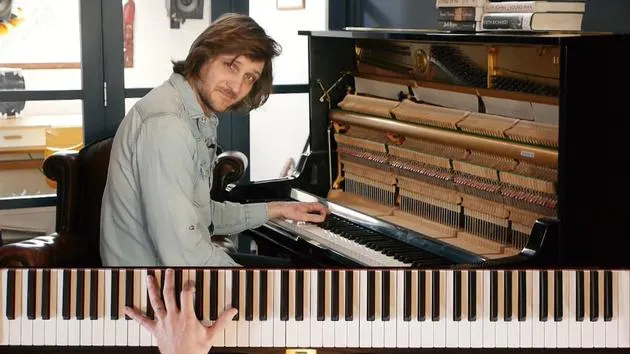
02. Ideas para la mano izquierda
11:26
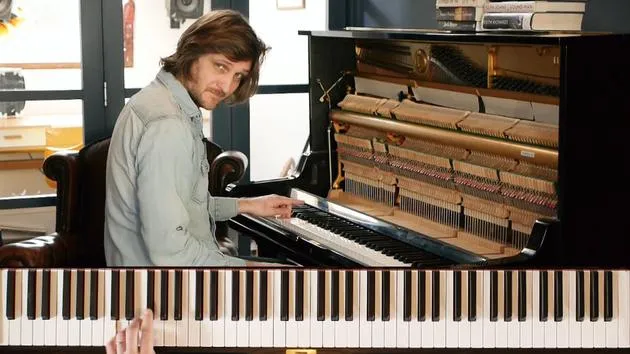
03. Ideas para la introducción
9:40
04. Ideas usando sextas
9:34
05. Riff estilo Memphis Slim
3:28
06. Acordes disminuidos
7:11
07. Notas y frases repetidas
8:34
08. Turnarounds
9:55
09. Ideas para una sección de breakdown
11:10
10. Mano izquierda al estilo de James Booker
6:58
11. Más ideas para la mano derecha
8:08
12. Trémolos
6:03
13. Ideas para finales
Estás aquí9:29
14. Slow Burn - El reto del blues lento
1:41
Transcripción de la lección
Ending Ideas for Your Tune
Let's look at how to end this tune again. There are all kinds of endings we could explore:
- Basic Endings
- More Involved Endings
- Approaching G from F to F#
For example, I'm playing 13s. You could use sevenths or even flat fives.
Underlying Harmony
Let's consider the underlying harmony of these endings, which is essentially the same as the turnaround we discussed earlier, apart from the very end. The ending can be:
- A 5:1
- A flat 2:1
As demonstrated, you might play something like that.
Rhythm Considerations
In this case, I'm playing around with the rhythm slightly. I've got a bit more of a straight feel, incorporating a triplet followed by something straight. This kind of movement can signal that something's coming up, in this case, it's the end.
You could also:
- Use Rolling Patterns: Like the voicing in the right hand, similar to an AB9 going to a G9, 7, 9.
Repetition
What other things could you do? You could repeat the end, why not do it twice or three times? This creates a false ending effect.
Adding Flavor
You'll hear that I incorporated a little Robert Johnson turnaround ending at the end. The ending can be:
- Emphatic: A strong impact, like this.
- Dramatic: A gentle reduction in intensity.
Consider a big last chorus, then, something that really changes the dynamic up.
Gospel-Inspired Endings
You might also use a slightly more gospel-harmonized ending. For example:
- A G7 to C to C# Diminished
- Change the bass to an A to get an A7 with a flat 9, similar to a 2, 5.
In fact, you could stay on the root note for a while, try something like this, a more bluesy kind of idea.
Variations and Ideas
Here's a little variation you might enjoy on the five, which sounds quite hip. And do something similar on chord four; just slightly alter it. Mixing it up is key, choose different riffs at different times.
- Playing the Same Riff with Both Hands: That's one option.
- Right-Hand Focus: Forget about the left hand for a moment and focus on the right hand.
Conversely, why not just do something with the left hand? See how that sounds!
Experimentation
There are all sorts of ways to vary your approach:
- Change the octave up. Why not play right at the top of the piano, and then back to the bottom?
- Add a little fill at the end, the options are endless.
Conclusion
We've explored tons of different ending ideas. Hopefully, this gives you good food for thought to work on your own endings.
As we wrap up the course, I hope you've enjoyed it and that your playing has improved, and will continue to improve.
Thank you for checking this out, and I hope to see you again soon!
14 lecciones
1h 47m de lecciones en vídeo estructuradas
Funciones de vídeo avanzadas
Ralentiza, repite un pasaje, sigue la partitura
Móvil, tablet y ordenador
Practica donde quieras
Garantía de satisfacción 100%
30 días de garantía de devolución
Conoce a tu gurú
Conoce a tu gurú
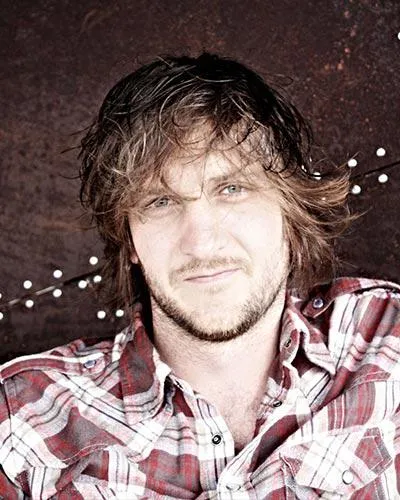
Paddy Milner está reconocido como uno de los mejores pianistas de blues del mundo: actualmente es el teclista de confianza de Sir Tom Jones, tras varios años con el gran y ya desaparecido Jack Bruce, pero también es un magnífico compositor original y un cantante con personalidad propia. ¡Basta con leer los elogios de figuras como Dave Brubeck que aparecen más abajo! Su forma de tocar apareció en la banda sonora de la exitosa película de 2019 'Rocketman'.
Ha ganado dos veces el premio al Mejor teclista en los British Blues Awards, y mantiene una residencia de larga trayectoria como miembro fundador de la Ronnie Scott's Blues Explosion en el mundialmente famoso club Ronnie Scott's.
Su grupo actual LONDONOLA toca música británica de cosecha propia con una buena dosis de espíritu de Nueva Orleans, y su grupo colaborativo JAWBONE va de fuerza en fuerza tras la publicación de su álbum de debut homónimo.
- "Me encanta... hay un tipo que sabe tocar de verdad el piano" - Dave Brubeck
- "Lo recomiendo encarecidamente. ¡De algún modo las cosas empiezan a sentirse mucho mejor!" - Jack Bruce
- "El mejor pianista de blues de Europa..." - Blues Access, EE. UU.
- "Impresionante y original" - The Times
- "Deslumbrante" - The Independent
A lo largo de sus cursos, Paddy desglosa el auténtico shuffle de blues, el slow blues, el boogie-woogie, el rock 'n' roll y el piano de Nueva Orleans -incluidas tres canciones clásicas de boogie-woogie- para que aprendas estos estilos de uno de los mejores del oficio.







